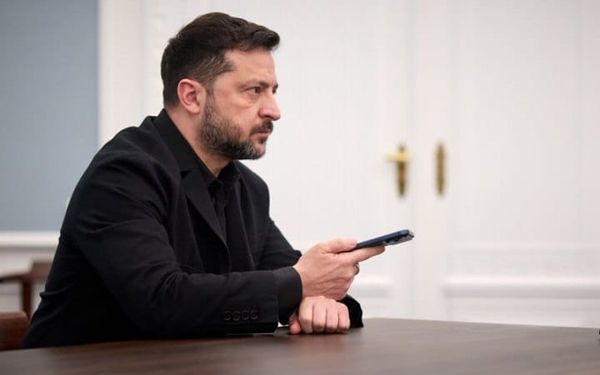
Volodymyr Zelenskyy, the Ukrainian president, said on 13 November that negotiating a new security order for Europe before a ceasefire in Ukraine was dangerous, and that U.S. negotiators had drawn Russia into doing so.
Zelenskyy told Ukrainian journalists at a closed briefing that the U.S. side had raised a different post-war security structure at the talks in Abu Dhabi on 10 and 11 November, for the world and for Europe above all. The Russian delegation had wanted exactly that agenda, he said, because the Russian government is seeking to revise the guarantees on which Europe's security rests. "That Putin wants to change borders in Europe is a fact," Zelenskyy said. He said he had warned Ukraine's negotiators against the U.S. proposal.
The Russian foreign ministry published a draft agreement with NATO on 17 December 2021 that would forbid the alliance's members as of 27 May 1997 from deploying forces or weapons elsewhere in Europe beyond those stationed there on that date. Exceptions would need Russia's consent. Sixteen of NATO's 32 members joined after May 1997. Poland, Hungary and the Czech Republic came in 1999 and Estonia, Latvia, Lithuania, Bulgaria, Romania, Slovakia and Slovenia in 2004. Albania, Croatia, Montenegro and North Macedonia followed between 2009 and 2020, Finland in 2023 and Sweden in 2024. Read literally, the clause would require the allied battlegroups in Poland and the Baltic states and U.S. forces sent to those countries since 1997, to withdraw.
Yury Ushakov, Putin's foreign policy aide, called before the Abu Dhabi round for NATO to return to its positions before 1997. Vladimir Medinsky, who led the Russian delegation, said afterwards on Russian state television that a new European security order had been the central theme of the two days, without giving details.
On the first day Russian negotiators set out the proposals Putin sent the U.S. in 2021, people in the talks told the Kyiv Post. On the second they refused to discuss territory or a ceasefire and returned to the 2021 demands, RBC-Ukraine reported, citing unnamed sources. The Russian government has not published the terms its delegation tabled, and no Russian official has said publicly which provisions of the 2021 drafts it now seeks.
Jared Kushner, one of the two U.S. envoys, set out the U.S. position in writing on 5 November. NATO would remain central to Europe's defence, each country would keep authority over its own alliances and no country would have a veto over another's choices, he wrote.
The 1997 line
Russia handed the drafts to Karen Donfried, the U.S. assistant secretary of state for European affairs, on 15 December 2021, eight days after a video call between Putin and Joe Biden, then U.S. president. A companion draft treaty with the U.S. barred further NATO enlargement, any U.S. bases or military cooperation in former Soviet republics outside the alliance and the deployment of U.S. nuclear weapons outside U.S. territory.
NATO had deployed virtually no troops or equipment in its new members from 1997 until Russia seized Crimea in 2014, the Brookings Institution wrote at the time, after which it placed rotating multinational battlegroups in Poland and the Baltic states. The same clause bound Russia, but Brookings wrote that it would require no Russian forces to move. The U.S. and NATO rejected the core demands in January 2022. Russia launched its full-scale invasion of Ukraine on 24 February 2022.
Putin appears to have brought Biden in 2021 the same idea now under discussion, Zelenskyy said: a redistribution of forces in Europe and the world, the weakening or withdrawal of NATO troops and the withdrawal of U.S. forces. Any such change would be dangerous, he said, and Russia could not decide on behalf of every society in NATO. If Russia wanted the forces that defend Europe withdrawn, he asked, what was its purpose.
Finland, Sweden and Hungary
Zelenskyy said he expected Putin to raise Finland and Sweden and was certain he would raise Hungary and the presence of U.S. troops in the Baltic states. He gave no indication that Russian negotiators had named any of the four in Abu Dhabi, and Russia has not publicly tabled demands about them. Finland and Sweden joined NATO after the full-scale invasion. Hungary has been governed since 9 May by Péter Magyar, whose Tisza party ended 16 years of rule by Viktor Orbán. In February 2025 Zelenskyy named Hungary, the Baltic states, the Czech Republic, Bulgaria, Romania and Slovakia as countries Putin believed should not be in NATO.
A Russian list of conditions included the removal of NATO bases from Estonia, Latvia and Lithuania and Finland's return to its pre-membership status, the German newspaper Bild reported this week. The account of the report comes from the Romanian outlet Spotmedia. Dmitry Peskov, Putin's spokesman, denied that Russia had asked for Finland to leave NATO and said no such condition had been discussed, Spotmedia reported.
Aleksei Drobinin, head of foreign policy planning at the Russian foreign ministry, made a separate public offer on 11 November. Russia could sign bilateral non-aggression pacts with individual NATO members, which would then receive additional security guarantees from Russia, he told a security conference in Moscow.
All European members of NATO had to decide any change to the alliance's posture together, not any one of them separately, Zelenskyy said, and only after the war, so that none of them negotiated from a weak position. Ukraine would not write neutrality into its constitution, he said.
Trump's Europe-wide agreement
President Donald Trump told reporters after meeting Kirill Dmitriev, Putin's special envoy, at the White House on 5 November that a big agreement could be close and would cover all of Europe, not only Ukraine. Kushner said as the talks opened that the U.S. wanted to create the right security relationships between Ukraine, Russia and Europe so that a settlement would last for decades. Steve Witkoff, the other U.S. envoy, said U.S., Ukrainian and European officials had discussed building on existing European security institutions after the war. The envoys told the Russian delegation that serious talks on Europe's security required European participation, a U.S. official told Axios.
Kushner's 5 November proposals were permanent security consultations between Russia and Europe, a crisis communications channel, greater military transparency and reciprocal steps to reduce the risk of escalation. U.S. officials have also floated phased sanctions relief and the revival of the NATO-Russia Council, suspended since 2022. NATO diplomats told Politico they had not been told of the plans in advance.
Kushner's pledge that no country would hold a veto over another's choices runs against the text Russia published in 2021. Under Article 4 of the NATO draft, allied deployments beyond the 1997 positions could take place only in exceptional cases and with the consent of every party, Russia included. Kushner's proposals contain no limits on where allied forces may be stationed.
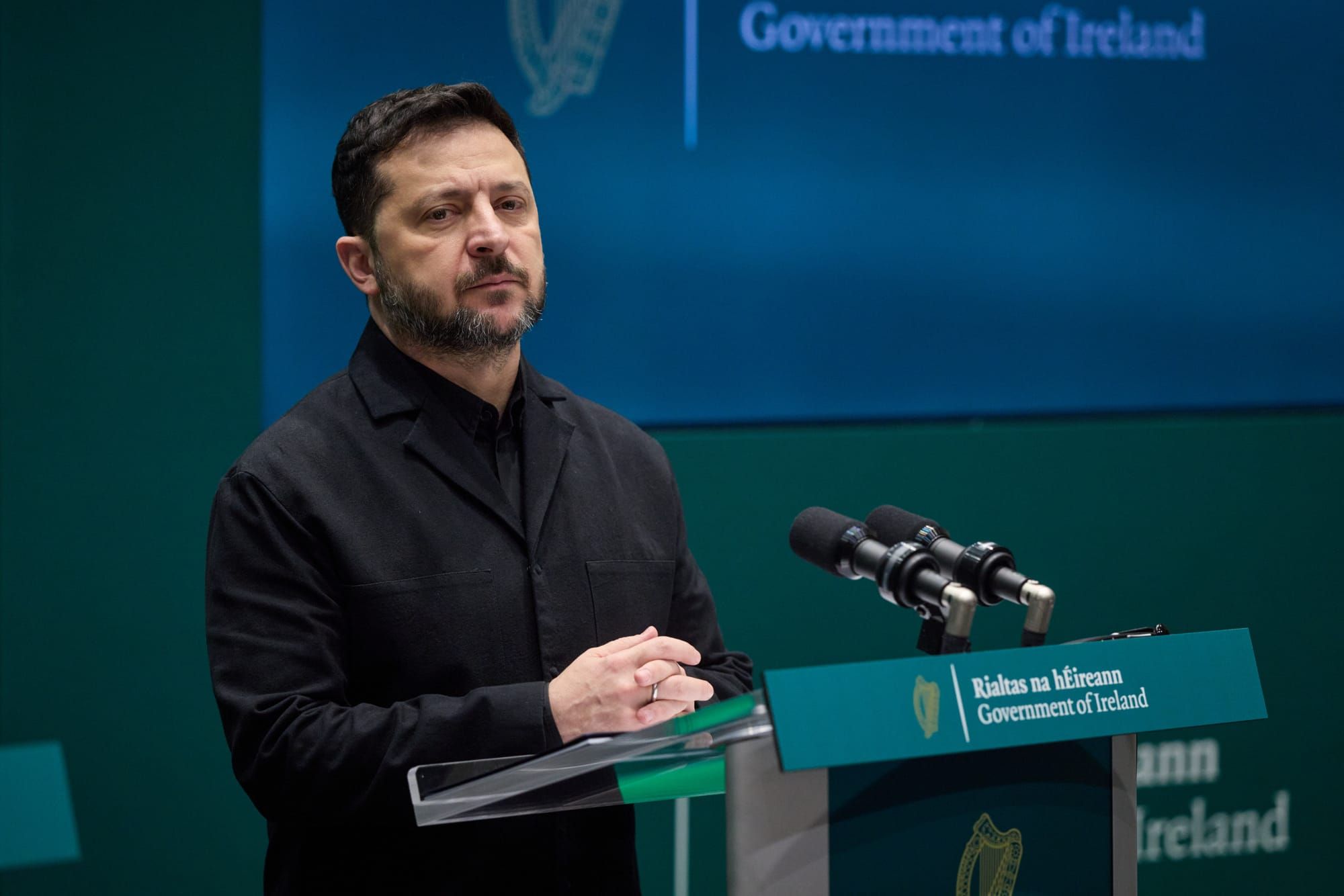
Zelenskyy said in Dublin on 12 November that U.S. and Russian officials who talked about security meant less a guarantee for Ukraine than a new model of relations between Europe and Russia, an approach he called strange. In an interview with CNN on 6 November he said Ukraine did not want a second Yalta. The order had to be a ceasefire, then the end of the war, then guarantees for Ukraine and only after that Europe's wider security, he said on 13 November.
Europe's answer
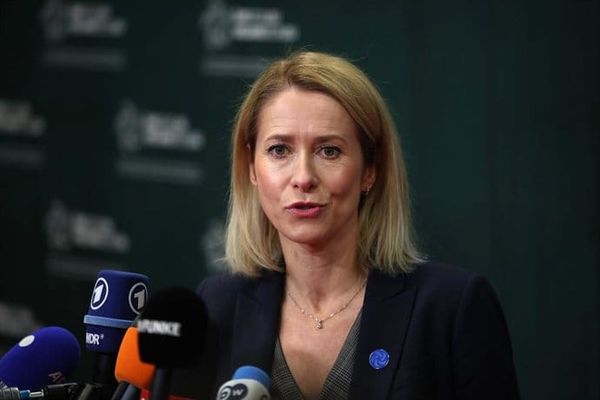
The EU, Britain, France, Germany, Italy, NATO, Ukraine and the U.S. committed in a joint statement on 10 November to a post-war European security architecture with NATO at its centre. Ursula von der Leyen, the European Commission president, said the day before that wider European security talks should come only once there is a ceasefire in Ukraine. Kaja Kallas, the EU's foreign policy chief, said on 6 November that Putin had no veto over European security. Taking up Russia's agenda before a ceasefire, she told reporters in Dublin on 13 November, meant that "we actually walk into the traps that Russia is setting us".
Donald Tusk, the Polish prime minister, said at the Warsaw Security Forum on 12 October that Russia aimed to dismantle the security architecture in Europe and restore its dominance to where it stood before 1989. Radosław Sikorski, his foreign minister, said before Abu Dhabi that Poland opposed Western European governments dealing with Russia over the heads of Eastern Europeans.
EU leaders agreed in Dublin on 13 November that Europe would be represented at the next round by Britain, France, Germany, Italy and Poland alongside the European Council and European Commission. Their national security advisers will attend, and no leader has been named to speak for Europe at the political level, Bloomberg reported. Zelenskyy said the U.S. side had agreed that European representatives would sit at the table next time, not in the next room as they had in Abu Dhabi.
Decisions on where allied forces are stationed are taken in NATO, where all 32 members must agree, and the EU institutions have no say over them. The six-member team cannot negotiate changes to NATO's military posture on the alliance's behalf. Estonia, Latvia, Lithuania, Finland, Sweden and Hungary, the countries whose forces or alliance membership Russia's demands would affect, have no seat on the team. Poland is the only post-1997 member that does.
Peskov said on 13 November that Putin "has never refused to engage with the Europeans". A decision on talks in a wider format would follow only once Europe showed it had a representative with authority and was willing to contribute to the peace process, he said.
The energy ceasefire
Russian negotiators in Abu Dhabi said they had no mandate to discuss halting strikes on energy infrastructure and told the Ukrainians to settle any ceasefire with Putin, Zelenskyy said. Putin personally does not support a ceasefire, he said, and Ukraine had answered that if Putin decided everything the two presidents should meet. The talks produced only a prisoner exchange, which Zelenskyy said was being settled at 1,200 to 1,300 people.
Putin told Witkoff and Kushner in the Kremlin on 12 November that the state border was Russia's only line of demarcation with Ukraine, rejecting demilitarised zones, and that European troops sent to Ukraine after a ceasefire would be legitimate targets. The Institute for the Study of War read the statement as a renewed claim to all of Donetsk, Luhansk, Zaporizhzhia and Kherson regions, which Russia declared annexed in 2022 without capturing them. It also said Russian negotiators had revived the 2021 ultimatums to roll back NATO.