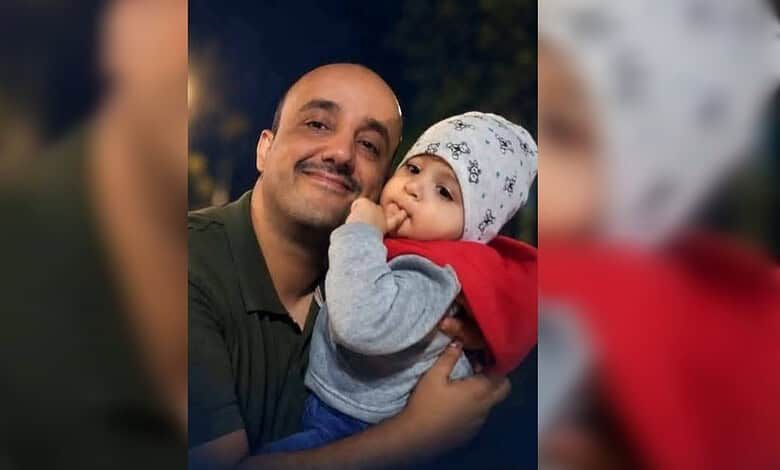
Mohammad el Shami, a Yemeni employee of the UN Human Rights Office, died in Houthi custody without learning that his father had died waiting for him, his family said on 1 November.
El Shami’s youngest child learned to walk and talk during his detention. He died without ever knowing, his family said. The Houthis detained him on 6 June 2024. For about 28 months, his family heard nothing from him. On 17 October, they published an appeal asking where he was being held and whether he was well. Thirteen days later, on 30 October, they were told he had died months earlier. The UN announced his death the following day.
In a statement on 1 November, the family warned that his case “may not be the first and may not be the last”.
Stéphane Dujarric, spokesperson for UN Secretary-General António Guterres, said on 5 November that the circumstances of el Shami’s death raised serious concerns about possible ill-treatment. His body had been returned to the family the previous week. Dujarric called for an investigation to establish when and how he died, whether he received medical care and why neither his family nor the UN had been promptly informed.
A father of three
Houthi security and intelligence forces arrested el Shami at about 7am on 6 June 2024, according to Mayyun Organization for Human Rights, a Yemeni group that gathered testimony from his relatives and colleagues. His youngest child was not yet 18 months old when he was taken. During his detention, his daughter finished secondary school; his son is in primary school. For more than two years, the family did not know where he was held or what he was accused of. He was never given access to a lawyer, Mayyun said.
Ahmed Bayder, a relative, told Mayyun that the arrest left el Shami’s children without their father and that his colleagues were also unable to contact the family for news. In their 1 November statement, the family said the children had struggled to understand their father’s disappearance before learning of his death. The U.S. Embassy to Yemen said in a statement on X, reported on 3 November, that he had been denied permission to visit his dying father or attend his funeral.
Eidi al-Munifi, who worked with el Shami, told Mayyun that colleagues had felt helpless during the two years they were unable to contact him. “We could do nothing worth mentioning for you, and you did everything for us,” he said, in a translation from Arabic. At a UN press briefing in Geneva on 3 November, Francesco Galtieri, the UN Population Fund’s representative in Yemen, paid tribute to el Shami, a former colleague at the agency.
Abdo Ali al-Hudhaifi, president of Mayyun, said el Shami’s only offence was his humanitarian and human rights work. He was arrested and kept from his family and colleagues, al-Hudhaifi said, “only to return to them as a body”.
The UN's demands
Volker Türk, the UN High Commissioner for Human Rights, said on 31 October that el Shami’s family had received no explanation of how he died and “deserve to know the truth”. He called on the Houthi authorities in Sanaa to release all medical and detention records, preserve evidence and allow independent scrutiny of any explanation they offered for his death.
El Shami is the second UN employee to die in Houthi detention, following the death of a World Food Programme worker in February 2025, according to a statement issued for Guterres on 31 October. Despite repeated UN requests, the Houthis had provided neither information about el Shami’s well-being nor proof of life since his arrest. The statement said 70 current UN personnel and five former staff remained detained, alongside humanitarian and civil society workers. Seven of the detained UN staff work for Türk’s office.
The Houthis accused el Shami and more than 60 UN and aid workers detained in June 2024 of belonging to an “American-Israeli spy network”. In December 2025, they referred UN staff to their special criminal court. Dujarric said on 9 December that UN personnel, including Yemeni nationals, are immune from legal proceedings for acts carried out in their official capacity.
Shaya al-Zindani, prime minister of Yemen’s internationally recognised government, said the Houthis “bear full responsibility” for el Shami’s death and continue to hold more than 70 UN staff and dozens of aid worker. The government’s human rights minister, Meshdal Mohammed Omar, said on 31 October that el Shami’s relatives had never been allowed to visit or speak to him by phone.
The body in Sanaa
The U.S. Embassy said the Houthis had killed el Shami after denying him all visits and phone calls. It accused them of keeping his body in a Sanaa morgue for months while assuring his relatives that he was alive and well. Irada, a Yemeni organisation documenting torture and enforced disappearance, said on 1 November that he had died on 21 August 2026 in a secret Houthi detention facility. Citing confidential sources, the group said it knew the prison’s location and called for his body to be examined before burial.
Tawfik Alhamidi, president of SAM Organization for Rights and Liberties, told Al Jazeera that “the group is the one that controls prisons, medical records and witnesses”. No judicial or human rights body inspects Houthi detention sites, he said, and deaths in custody are typically attributed to illness, sudden death or suicide.
Families of the detained
El Shami’s death has intensified fears among families still waiting for news of relatives in Houthi detention. Khaled Al-Yemeni, whose father Ahmed was detained on the same day as el Shami, told Arab News by phone from Paris that his family had been allowed just one visit in more than two years. Addressing the Houthi leadership by the movement’s formal name, Ansar Allah, he urged it to “act now before another family receives tragic news”.
His appeal echoes the warning from el Shami’s family that their loss “may not be the first and may not be the last”. With 70 current UN personnel and five former staff still detained, the unanswered questions extend beyond one death: whether detainees are receiving medical care, whether their families can contact them and whether independent monitors will be allowed to assess their treatment.
Nadwa al-Dawsari, an associate fellow at the Middle East Institute, told Arab News that the UN should have relocated its local staff from Houthi-controlled areas. Her criticism raises a wider question about how international organisations protect Yemeni employees who deliver humanitarian assistance but remain exposed to detention and prosecution.
Raids since May 2024
Houthi forces began a series of raids on 31 May 2024 that detained 13 UN staff and at least 50 people working for Yemeni and international civil society organisations, according to a joint release by Human Rights Watch and Amnesty International. Every UN and civil society worker still held is a Yemeni national, the two groups said. Four more staff from the human rights office and UNESCO had been held since 2021 and 2023, the UN said in August 2024. Guterres condemned the forced entry of Houthi forces into the human rights office's premises in Sanaa in the same statement.
Detentions continued after Houthi security forces entered UN offices in Sanaa in October 2025 and confiscated computer and communications equipment, Dujarric said at the time. The Houthis seized 10 more UN personnel on 18 December 2025, bringing the total to 69. Guterres said the detentions made delivering UN aid in Houthi-controlled areas "untenable". By mid-October 2026 the figure stood at 71, according to UN News.
Hans Grundberg, the UN special envoy for Yemen, told the Security Council on 9 October that many detainees had serious health problems. He said Yemen had "slid back into full-scale war, with hostilities spreading across multiple frontlines". The UN aid coordination office says more than 22 million Yemenis need assistance this year.
Ahmed Baalawi's death in Saada
Ahmed Baalawi, a 40-year-old information technology officer who had worked for the World Food Programme since 2017, was detained alongside six colleagues by the Houthis in Saada on 23 January 2025. He died in prison there on 10 February, Guterres said, as the New Arab reported. The day before his death was announced, the UN had suspended all operations in Saada governorate following further staff detentions.
Julien Harneis, the UN resident coordinator for Yemen, told a news conference in Amman on 16 February 2025 that Houthi foreign minister Jamal Amer had promised to investigate Baalawi’s death. “He made that commitment at the same time our colleague was buried,” Harneis said.
Espionage charges
Since 18 August 2026, the Houthis have referred at least eight human rights and humanitarian workers to the Specialised Criminal Prosecution in Sanaa, Human Rights Watch and Amnesty International said in a joint release on 6 October. Among them are two UN employees and a UN consultant. They face charges of espionage and aiding the enemy under articles 127 and 128 of the penal code, both of which carry the death penalty. Prosecutors accuse them of pursuing “hidden and malicious goals”.
Among those facing prosecution is Sami Kallabi, a 41-year-old UN employee arrested on 6 June 2024, the same day as el Shami. He has cancer and is receiving chemotherapy at a military hospital, Human Rights Watch and Amnesty International said. His family has been denied visits, and his place of detention remains undisclosed.