Two Democratic senators have told Elon Musk to preserve all SpaceX records on the cuts to Ukraine's Starlink and Starshield satellite links and to confirm in writing by 30 November that he has done so.
Jeanne Shaheen of New Hampshire is the senior Democrat on the Senate Foreign Relations Committee, and Chris Coons of Delaware is expected to chair it from January. They set out the demand in a letter to Musk reviewed by the Wall Street Journal. Its contents were reported on 13 November. The letter covers service cuts between 13 and 24 October and again on 12 November, which the senators said had disrupted Ukrainian military operations. Russia launched nearly 4,000 strikes on Ukraine during the October disruption, according to the letter.
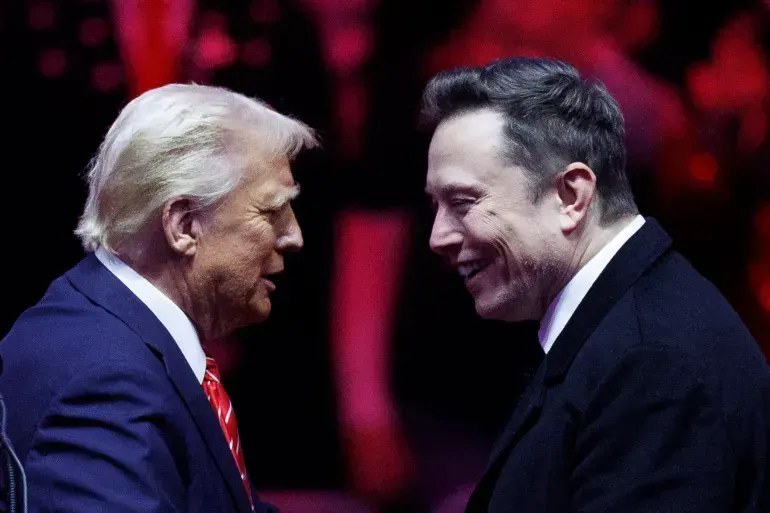
Musk has said the decisions were made by the U.S. government and ultimately the president. Donald Trump has denied ordering them, and Marco Rubio, the secretary of state, has said they were a matter for SpaceX and Musk. Nobody in the U.S. government or at SpaceX has publicly accepted responsibility for either restriction, and the letter asks SpaceX to keep the documents that would show who gave the order.
Shaheen and Coons wrote that the October and November restrictions raised "the disturbing possibility that these vulnerabilities persist" in systems the U.S. government relies on. They said the episode raised serious questions about the control SpaceX holds over communications the U.S. depends on for national security, and criticised what they called opaque decision-making. No public response from Musk or SpaceX to the letter had been reported by the morning of 14 November.
The records the senators want kept
Shaheen and Coons asked SpaceX to preserve everything dating from 1 September. That includes all communications about Starlink and Starshield service in Ukraine and all communications between Musk, SpaceX executives, the White House and the Pentagon. By 30 November SpaceX must confirm in writing that it has put every appropriate preservation measure in place, and answer the senators' questions about the restrictions.
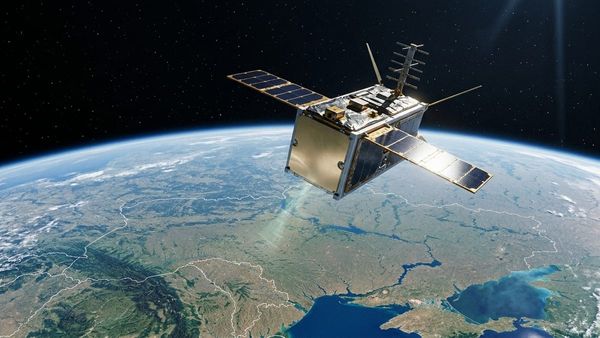
Starshield is the military version of Starlink, built by SpaceX for the U.S. government. Ukraine fits Starshield terminals to the interceptor drones it sends after Russia's jet-powered Shahed drones. When a terminal moving faster than 161 kilometres per hour lost its satellite link, those interceptors could no longer reach their targets.
A preservation letter carries no subpoena. Its purpose is to stop documents being deleted before a committee can compel their production, and it puts the recipient on notice that destroying them later would be difficult to explain. Democrats won control of the Senate in the 3 November midterm elections and will chair its committees when the new Congress convenes in January 2027. Congressional Democrats plan to open an investigation in January into the White House's handling of the war in Ukraine and Musk's part in it. Coons wrote on X after the election that Musk's contacts with Vladimir Putin were one more question to put to Musk "when I subpoena him".
Diesel deals and an earlier round of letters
A Democratic Senate aide said on 4 November that the Foreign Relations Committee had already sent record-preservation letters about the Starshield slowdown, with Musk among the recipients. Similar letters had gone to banks, ports and private companies involved in deals to supply Russian diesel, the aide said. A representative for a senator described the letters as standard committee procedure before possible investigations. The letter signed by Shaheen and Coons sets a deadline and names the restriction dates and the people whose communications must be kept.
The diesel letters followed demands the committee published on 26 October, asking banks, port authorities and fuel distributors to retain contracts, invoices, shipping documents, vessel movements and payment records for proposed or completed transactions. Lawmakers argued that the proceeds could pay for Russia's war against Ukraine. Trump announced on 9 October that Putin had agreed to supply Russian diesel to U.S. and world markets, and the first Starshield restriction began four days later.
Shaheen is retiring when her term ends in January. Coons is expected to take over the committee, which would put a signatory of the Musk letter in charge of any subpoenas that follow it.
Who ordered the October cap
Ukrainian units lost their Starshield link at speed overnight on 13 to 14 October, without warning. Terminals fixed to drones dropped off the network whenever they passed 161 km/h, which grounded the interceptors Ukraine uses against the faster Geran-4 and Geran-5 drones and cut into its medium-range strike missions.
Musk wrote on X on 14 October that Starshield limits are determined by the U.S. military and ultimately the president. Two U.S. officials and a Western official said on 15 October that Pentagon leaders had been told from inside the White House to limit the service, without naming who gave the instruction. Four sources said the next day that Musk had proposed the limits to Trump and Trump had agreed.
Trump said on 16 October that he had not ordered the restrictions and did not think Musk had. Rubio told reporters on 17 October that "no one at the White House ordered anyone to slow down internet", and said Ukraine did not have access to Starshield at all. President Volodymyr Zelensky has described disruptions to both Starlink and Starshield.
U.S. officials and people familiar with the matter said on 20 October that Musk himself had ordered the slowdown after discussing Ukraine's strikes on Russian oil refineries with Trump. Rubio said the next day, during a visit to India, that decisions on Ukraine's access were up to SpaceX and Musk. He said he was not aware that the administration had known of the decision beforehand, and that it was irrelevant whether it had.
Trump asked Musk by telephone on 21 October to lift the restrictions, according to U.S. administration officials. Asked about the call the next day, Trump would not confirm it. "The bottom line, he put it back," he told reporters. Ukraine's Defence Ministry said full service returned on 24 October. The same day Musk accused the Ukrainian military of breaching SpaceX's terms of service by using the system for offensive strikes.
The November cap
Zelensky said on 12 November that the speed limit had returned. Defence Ministry sources said it applied over all Russian-occupied territory and nowhere over land held by Ukraine. A Ukrainian official said the failure rate for affected drone missions rose from 10 per cent on the first day to 50 per cent on the second and 100 per cent by 12 November.
SpaceX denied that anything had changed. "This is false. There has been no change," the company said. Zelensky said on 13 November that the restrictions were still in place and that he expected the defence and foreign ministries to settle the matter with U.S. institutions.
Zelensky disclosed the November cap hours before Steve Witkoff, Trump's special envoy, and Jared Kushner, the president's son-in-law, met Putin in the Kremlin. The October cap was still in force when Witkoff met Putin in St Petersburg on 21 October. Neither the White House nor the Pentagon has said who ordered the November restriction. Both caps and the talks around them have been set out in earlier reporting.
Letters SpaceX has not answered
On 19 October Shaheen and Coons joined Richard Blumenthal of Connecticut and Sheldon Whitehouse of Rhode Island in a letter to Christopher Cardaci, SpaceX's vice-president of legal. They asked who had been involved in or told of the decision to restrict Starshield, who under the federal contract can revoke or limit Ukraine's access and whether SpaceX can decline or delay a change the government directs. They also asked when SpaceX had told Germany, which funds Ukraine's Starlink access according to the letter, that it was degrading the network. Answers and records were due by 2 November.
Blumenthal, the senior Democrat on the Senate Permanent Subcommittee on Investigations, sent a separate letter to Musk on 22 October opening an inquiry into the U.S. government's dependence on SpaceX. He asked for written answers by 5 November and a briefing by SpaceX staff with direct knowledge of the restriction by 12 November, and wrote to Pete Hegseth, the defence secretary, the same day. No reply from SpaceX to either letter has been made public.
Three House Democrats from California, Sam Liccardo, Ro Khanna and Jimmy Panetta, wrote on 23 October demanding a government-wide investigation into who authorised the restrictions, and whether Trump or Musk had directed them. They also asked how the restrictions were carried out and whether similar weaknesses existed in other systems, and said they would scrutinise federal money awarded to Musk's companies.
Musk answered the prospect of Democratic investigations on X on 21 October, before the election. "Live by the sword, die by the sword," he wrote, responding to a report that Democratic lawmakers planned to examine his role in the Starshield restrictions and his federal contracts.
The inspector general's refusal
Thom Tillis of North Carolina, Susan Collins of Maine, Lisa Murkowski of Alaska and John Cornyn of Texas, all Republicans, joined five Democrats including Shaheen and Coons in asking the Pentagon's inspector general on 15 October to investigate. Their letter asked whether any Pentagon or other U.S. government official had directed, authorised, approved or known in advance of changes to Starlink and Starshield services for Ukraine, and whether SpaceX had complied with its contracts.
Platte Moring, the inspector general, turned them down in a letter dated 27 October, saying the questions should go to the Air Force and the Space Force. His office had determined that the matters were best addressed by the department, Mollie Halpern, a spokeswoman, said, and might reconsider if new information emerged. Shaheen said it was concerning that the inspector general had apparently decided not to investigate disruptions Ukraine relies on to protect civilians. The Air Force did not answer questions about the decision when it was reported.
Denys Sienik, the chargé d'affaires at Ukraine's embassy in Washington, said on 5 November that the Ukrainian government had asked the Pentagon, the White House and SpaceX why its access had been restricted and received no answers. Ukraine's Starshield arrangement with the U.S. government expires in mid-2027, and Sienik said Ukraine wanted to start negotiating a replacement.
SpaceX's deadline to confirm that the records have been preserved falls on 30 November. The new Congress, in which Democrats will chair the committees that can compel SpaceX to hand the records over, convenes on 3 January 2027.