Ukrainian interceptor drones lose their military satellite link at 161 kilometres per hour once they cross into Russian-occupied territory, a limit that stops at the front line and remained in force on 13 November.
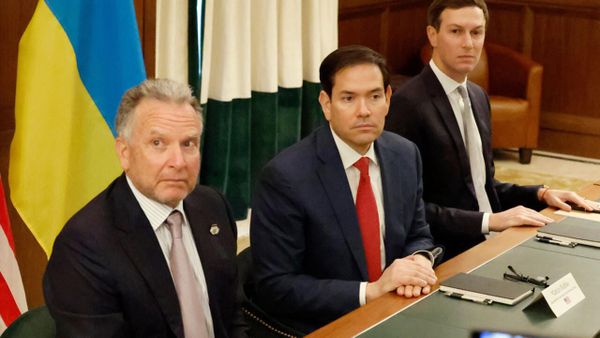
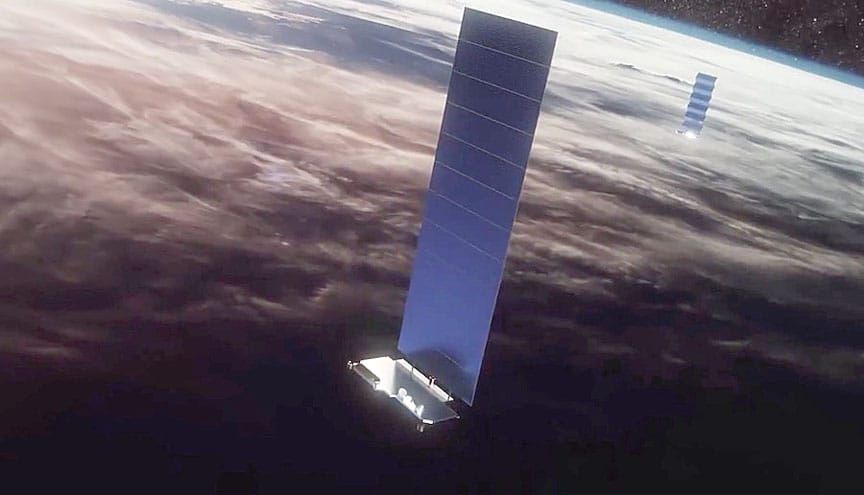
Starshield, the military version of SpaceX's Starlink network, has now been throttled twice in a month, each time while the Trump administration was negotiating with Vladimir Putin. President Volodymyr Zelensky disclosed the latest cap on the morning of 12 November, hours before Steve Witkoff, Donald Trump's special envoy, and Jared Kushner, the president's son-in-law, sat down with Putin in the Kremlin. Putin told them there that any settlement must rest on a clear state border with no grey zones.
Ukrainian forces first lost the link at speed overnight on 13 to 14 October, four days after Trump announced a diesel deal with Putin, and lasted until 24 October. Witkoff met Putin in St Petersburg on 21 October with the restriction still in place.
SpaceX called claims that the restrictions had returned "false". Specialists at the Defence Ministry and in the armed forces have measured the limit across every occupied region. A Ukrainian official said the failure rate for affected drone missions rose from 10 per cent on the first day to 50 per cent on the second and 100 per cent by 12 November. The Pentagon and the White House did not respond to requests for comment from Reuters. Deny Sienik, Ukraine's chargé d'affaires in Washington, said neither SpaceX nor the Pentagon had offered an explanation.
Zelensky told leaders at the European Political Community summit in Dublin that decisions taken in the U.S. which "treat Ukrainian territory as if it is not Ukrainian" showed where things were heading. Ukraine, he said, would never recognise Russia's occupation of its land in any form.
Interceptors over occupied land
Starshield's cap governs how fast a terminal may travel, not how much data it carries. A terminal fixed to a drone holds its link at low speed and loses it the moment the drone passes 161 km/h. Defence Ministry sources said on 13 November that no such limit had been recorded over Ukrainian-held territory.
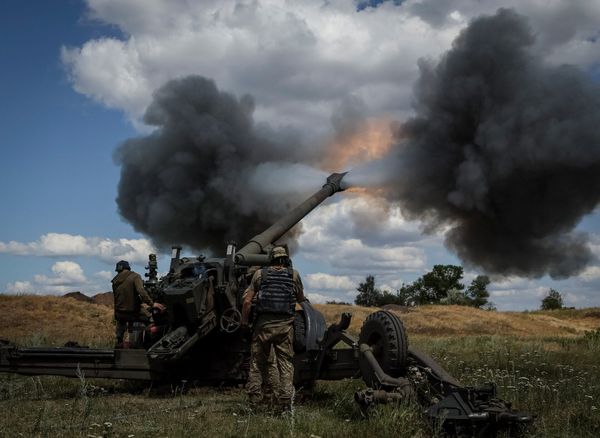
Ukraine fits the terminals to the interceptor drones it sends after Russia's jet-powered Shaheds, designated Geran-4 and Geran-5, which fly at roughly twice that speed and are launched from occupied areas. Ukrainian aircraft cannot operate near the front line, Zelensky told the summit, which leaves drone interceptors as the only defence there, and some Russian drones had already got through. A source in Ukraine's Defence Forces said medium-range strike drones had also lost their link.
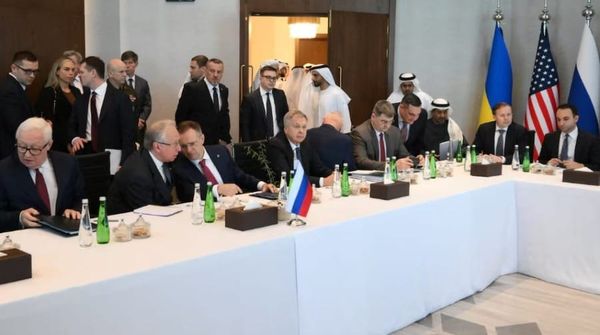
Serhiy Beskrestnov, a military communications adviser, confirmed on 12 November that "the speed of Starlink operation during movement was again limited". The failure figures put the start of the restrictions around 10 November, the day U.S.-brokered talks between Russian and Ukrainian delegations opened in Abu Dhabi. A Ukrainian official said the slowdown was never raised at those talks, which ended on 11 November, and that it was unclear who had ordered it. Thomas Regnier, a European Commission spokesman, said the service must be restored urgently.
The October order
Two U.S. officials and a Western official told Reuters on 15 October that Pentagon leaders had been instructed from inside the White House to slow Starshield for Ukraine. They did not say who gave the instruction, and a senior U.S. official said the president had made no such request. The next day the Telegraph reported, citing four sources, that Elon Musk, SpaceX's owner, had proposed the limits to Trump and that Trump agreed. On 21 October the Wall Street Journal reported that Musk had ordered the slowdown after discussing Ukraine's refinery strikes with Trump.
Musk wrote on X that Starshield is owned and controlled by the U.S. government and that its speed and usage limits are set by the U.S. military and ultimately the president. When another user wrote that the government had made the call, he replied "True". Trump said it was not him and that he did not think it was Musk. Marco Rubio, the secretary of state, said no one in the administration had asked for changes, but would not say whether the government knew of the decision beforehand.
Ukraine's Defence Ministry said service was restored on 24 October, with stable connections above 400 km/h, after contacts with the U.S. government. The same day Musk accused the Ukrainian military of breaching SpaceX's terms of service by using the system for offensive drone strikes that kill people. The Pentagon's inspector general has turned down a request from members of Congress to investigate. Senator Richard Blumenthal, a Connecticut Democrat, gave Musk until 5 November to answer questions in writing and asked for a briefing by SpaceX staff with direct knowledge of the incident by 12 November.
Musk and Ukraine since 2022
Musk ordered SpaceX staff in September 2022 to cut Starlink coverage over parts of Ukraine during the Ukrainian counteroffensive, leaving surveillance drones and artillery units without communications, Reuters reported. SpaceX disputed the report. Walter Isaacson's 2023 biography of Musk described his refusal to let Starlink be used for a Ukrainian drone attack on Crimea, which Musk said would have made SpaceX complicit in a major act of war. Mykhailo Podolyak, then an adviser to Zelensky, said Musk had enabled evil.
In October 2022 Musk posted a peace plan on Twitter under which Ukraine would permanently cede Crimea to Russia. Zelensky replied the next month by inviting him to see Russia's destruction in Ukraine before proposing how the war should end. In February 2025 Reuters reported that the U.S. had threatened to cut Ukraine's Starlink access unless the Ukrainian government signed a critical minerals deal. Musk called the report a lie, and on 9 March 2025 said the entire Ukrainian front line would collapse if he switched Starlink off.
Trump called on Ukraine in early October 2026 to stop striking Russian oil refineries. On 10 October Musk wrote on X that Zelensky had gone too far, and the first Starshield cap took effect three days later.
Diesel, Abu Dhabi and the Kremlin
Trump announced on 9 October that Putin had agreed by telephone to supply more than 300,000 metric tonnes of diesel to U.S. and world markets. The Treasury's Office of Foreign Assets Control issued a licence the same day permitting Russian diesel sales and imports until 7 April 2027. U.S. diesel averaged US$6.28 a gallon that day, against US$3.68 a year earlier, according to AAA, and Trump has blamed Ukraine's refinery strikes for the rise.
Ukrainian officials suspect the November restrictions are meant to push Ukraine towards concessions, the Financial Times reported. Neither the White House nor the Pentagon has said who ordered them, and SpaceX denies they exist.
Putin received Witkoff and Kushner in the Senate Palace with his aides Yuri Ushakov and Vladimir Medinsky and with Kirill Dmitriev, head of the Russian Direct Investment Fund, according to the Kremlin. He told the envoys Russia would regard foreign peacekeepers in Ukraine after a settlement as a continuation of the war, and proposed a humanitarian mission in Kostiantynivka, a Ukrainian-held city in Donetsk region, modelled on an earlier one in Oleshky. Witkoff said afterwards that progress had been made and a new meeting set. Ushakov confirmed that three-way talks would continue but cast doubt on a European role.
Dublin and the 2027 deadline
Witkoff and Kushner flew on to Dublin and met Zelensky at the airport late on 12 November. Zelensky said afterwards that the talks gave Ukraine hope of ending the war and that the prisoner exchange agreed in Abu Dhabi would be the largest since Russia's full-scale invasion in February 2022. Kushner wrote on X on 13 November that both sides had agreed to European participation in the next round. Russian officials did not confirm it, and no date or venue has been set. Ushakov said Putin would take up the talks with Trump at the Asia-Pacific Economic Cooperation summit in China later in November.
Zelensky said on 13 November that he expected the defence and foreign ministries to settle the restrictions with U.S. institutions. Every Starshield terminal Ukraine operates runs under an agreement with the U.S. government that expires in 2027, and Sienik said the Ukrainian government wanted urgent talks on a new one. On 22 October the Defence Ministry signed a letter of intent, short of a contract, with the Finnish companies ICEYE and Nokia to explore a satellite communications system that Ukraine would control itself.