An airstrike on a school for displaced children in eastern Loikaw Township, Kayah State, killed three pupils and injured five on 31 October, the UN Children's Fund (UNICEF) said on 3 November.
UNICEF said further airstrikes hit Rakhine State over the same weekend, including one on a temporary health facility that killed a newborn baby and health workers. Children in Myanmar are being "killed and injured in the very places where they should be safe", the agency said. It called on all parties to the war to protect schools and health facilities but did not say who carried out either strike.
The Karenni Human Rights Group (KnHRG) and the Karenni State Interim Executive Council, the resistance administration in the state, said the Myanmar military bombed the school. The military is the only side in the civil war that flies warplanes. It had made no public statement on either strike by 5 November. Its Ministry of Foreign Affairs has said in response to earlier UN allegations that the armed forces exercise maximum restraint to avoid harming civilians.
The Loikaw school
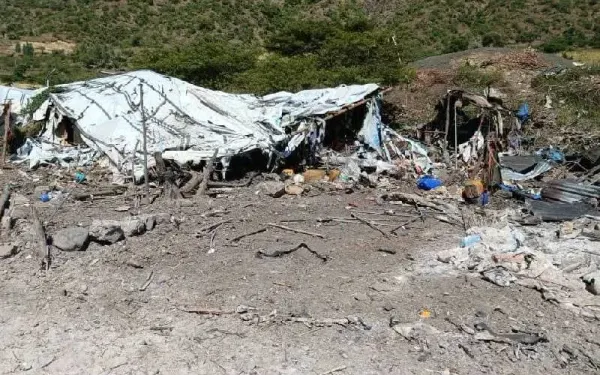
The school stood in forest in the east of Loikaw Township and taught children whose families had fled earlier fighting around Loikaw, the state capital. A Y-12 transport aircraft and a fighter jet dropped about 20 bombs on it at about 2 pm while classes were in progress, KnHRG said. Banyar Khun Aung, second secretary of the Interim Executive Council, said there had been no troop movements or clashes in the area.
One boy and two girls were killed. The five injured children were aged between nine and 16, and one was still in a critical condition on 3 November, the council said. The blast tore the roof and walls off the classroom.
Banyar Khun Aung said that bombing a school while young children were learning amounted to a war crime, and that other children in the area had become too frightened to go to classes. KnHRG called the attack a crime against humanity and asked foreign governments to pursue those responsible under international law. The council said the strike breached the UN Convention on the Rights of the Child.
Maw Pray Myar, chair of the Karenni National Women's Organization, said the international community "must do more than just express concern or condemn the attacks". She asked for independent investigations, the preservation of evidence and remedies for the families.
At least 15 airstrikes and up to 35 drone attacks hit Kayah State between July and September, according to KnHRG records. An airstrike in eastern Loikaw Township on 23 October injured three displaced people, the group said.
Kayah, which local groups and the resistance call Karenni State, has been fought over since Karenni forces launched an offensive they named Operation 1111 on 11 November 2023 and seized most of Loikaw. The military took the town back in mid-2024. It retook Demoso, south of Loikaw, in August 2025 and broke the resistance siege of Hpasawng in February 2026. Karenni forces still hold rural areas and the towns of Mese and Mawchi, and many displaced families have moved to forest camps east of the state capital.
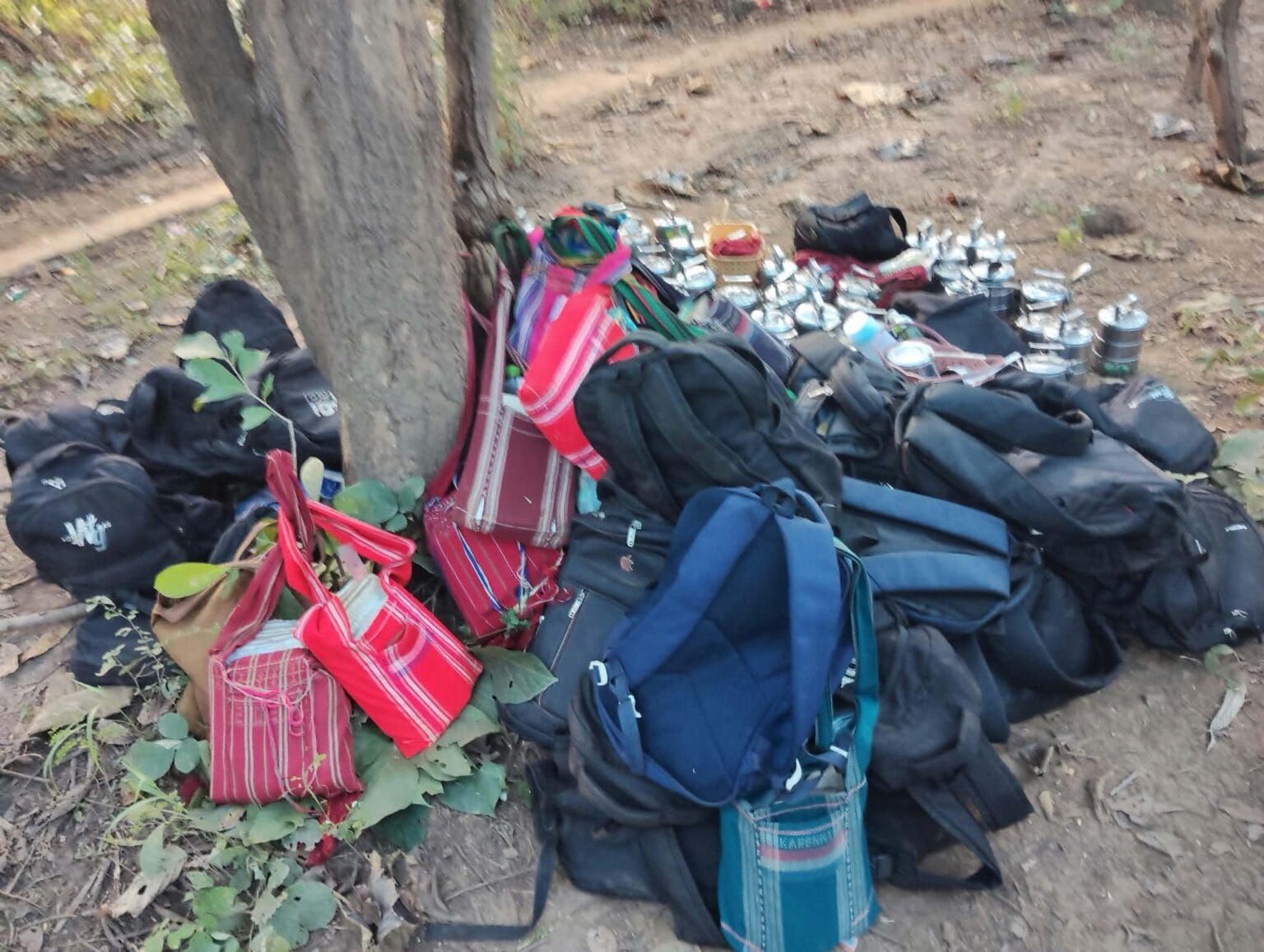
On 30 October, a day before the Loikaw strike, military aircraft bombed and machine-gunned a Karen school in Ka Nyin Chaung village, Thayetchaung Township, in the southern Tanintharyi Region, Myanmar Now reported. A 10-year-old girl, two young men and an elderly woman were killed, and the school and two houses were destroyed. Padoh Saw Eh Nar, secretary of the Karen National Union's Myeik-Dawei district, said the pupils had no time to get out.
Mrauk-U's maternity ward
Military aircraft bombed four townships in Rakhine State on 1 November, killing at least 12 civilians and injuring 32, the Arakan Army said. Narinjara, a Rakhine news outlet, published an hour-by-hour account of the strikes based on local witnesses and the armed group's figures.
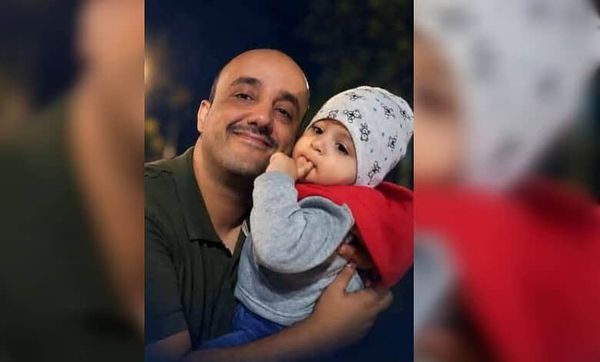
At 5.27 pm two jets dropped four cluster bombs near a temporary clinic and maternity ward in Thammaraj ward, Mrauk-U, according to that account. Five people were killed and nine injured, among them health staff. The blast badly damaged the clinic and the houses around it.
The dead included a week-old girl who was due to go home the following day. Wai Hun Aung, an aid worker based in Mrauk-U, told Reuters she was "crushed and killed when the building collapsed from the blast". Her twin sister survived. Four other people, including health workers, also died, he said.
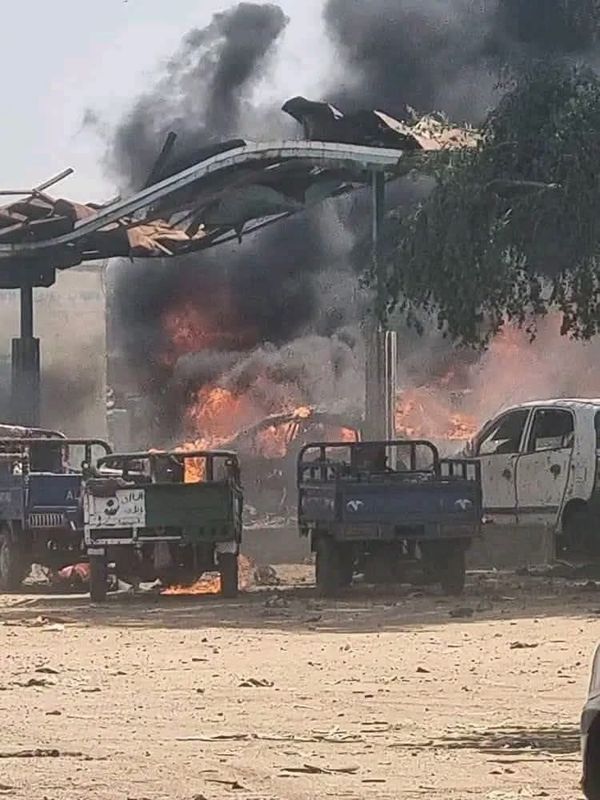
At about 5.25 pm a jet bombed the bridge between Wa Taung and Pan Phe Chaung villages in Kyauktaw Township, killing seven people on foot and injuring seven. A Kyauktaw resident said one jet dropped more than 10 bombs while a second aircraft, probably a Y-12, circled and dropped more. Two jets bombed Sane Min Pyin village in Kyaukphyu Township at about 5 pm, injuring five women and six men. Before dawn, at 3.58 am, a Y-12 bombed Pauktaw town and the nearby village of Ywa Chaung Gyi, injuring five people and damaging houses.
Mrauk-U, the 15th-century capital of the Arakan kingdom, has been held by the Arakan Army since February 2024. At about 9.13 pm on 10 December 2025 a military jet dropped two bombs on the town's general hospital, one of them on the recovery ward, killing at least 33 patients, staff and relatives and injuring about 80. The military acknowledged the strike and said armed groups, including the Arakan Army, had been using the hospital as a base.
The war since the 2021 coup
The military seized power on 1 February 2021, the day a new parliament was due to sit after Aung San Suu Kyi's National League for Democracy won the November 2020 election by a landslide. The generals said the vote had been rigged. Myanmar's election commission at the time said there was no evidence of fraud large enough to change the result.
Soldiers and police broke up months of street protests with live fire. Lawmakers from the ousted parliament formed a National Unity Government, which declared a "people's defensive war" in September 2021 and set up armed groups called People's Defence Forces. They fought alongside ethnic armed organisations, several of which, including Karenni, Karen, Kachin and Rakhine groups, had fought the central government for self-rule since the decades after independence in 1948.
On 27 October 2023 three ethnic armies, the Arakan Army among them, launched a coordinated offensive in northern Shan State called Operation 1027. Karenni forces attacked Loikaw two weeks later, and on 13 November 2023 the Arakan Army opened a front across Rakhine. The military lost dozens of bases and several towns. In February 2024 it began enforcing a 2010 conscription law requiring men aged 18 to 35 and women aged 18 to 27 to serve two years.
Conscripts, drones and air power have since helped the military retake some of that ground. In April 2025 the Myanmar National Democratic Alliance Army handed back Lashio, the largest city in northern Shan State, under pressure from the Chinese government. In Rakhine the Arakan Army holds 14 of the state's 17 townships and Paletwa in neighbouring Chin State. The military holds the state capital Sittwe and Manaung island, and both sides are fighting for Kyaukphyu, where Chinese oil and gas pipelines begin and a Chinese-funded deep-sea port is planned.
About 740,000 Rohingya Muslims fled Rakhine for Bangladesh during a military operation in 2017. Gambia's genocide case against Myanmar over those killings went to public hearings at the International Court of Justice in January 2026.
Three rounds of voting in the military's election took place on 28 December 2025, 11 January and 25 January, in 265 of the country's 330 townships. The National League for Democracy had been dissolved in 2023. The military-backed Union Solidarity and Development Party won 739 of the 1,025 seats, according to the monitoring group Data for Myanmar, and the UN described the vote as a sham.
On 3 April 2026 the new parliament elected Min Aung Hlaing president with 429 of 584 votes, after he stepped down as commander-in-chief. He moved Aung San Suu Kyi, 80, from prison to house arrest on 30 April after cutting her sentence from 33 years. Her son, Kim Aris, said the government had given no proof that she was alive and well.
The UN estimates the war has killed about 100,000 people and displaced more than 3.5 million. China, India and Russia have backed the military. Reuters reported earlier this year that the military relies increasingly on airstrikes, flown mostly on jet fuel shipped from Iran with falsified paperwork, and that U.S. officials had held talks with the government.
Strikes in Rakhine since September
A military jet bombed the area around the main market in Kyauktaw on 28 September, killing 50 people and wounding at least 58, the Arakan Army and Wai Hun Aung said. Six days later strikes on two camps for displaced people in neighbouring Ponnagyun Township killed eight people over two days, according to the Arakan Army and the Ponnagyun Youth Association. Kyaw Win Tun, a spokesperson for the youth association, said everyone in the camps was a displaced civilian.
On 12 September 2025 a military jet dropped two 500-pound (227-kilogram) bombs on two private boarding schools in Thayet Thapin village, Kyauktaw Township, shortly after midnight while students slept. The Arakan Army said 19 students aged between 15 and 21 were killed and 22 wounded.
UNICEF said in February 2026 that airstrikes in Ponnagyun Township and in Myinmu Township, in the Sagaing Region, had killed at least five children and injured three.
Thai fighter jets have flown patrols along Thailand's border with Myanmar as the fighting has spilled across it, damaging homes and injuring at least one person on the Thai side. Thai Prime Minister Anutin Charnvirakul said his government had urged Myanmar to make sure the fighting did not affect Thailand.
The UN evidence
The UN human rights office said in June that it had verified at least 702 civilian deaths between August 2025 and January 2026, the months around the election, including 153 children. Air strikes caused most of the deaths.
The UN Human Rights Council set up the Independent Investigative Mechanism for Myanmar in 2018 to gather evidence for future prosecutions. Its annual report, published on 11 August, found a pattern of deliberate aerial attacks on homes, schools, medical facilities, religious buildings and displacement camps between July 2025 and June 2026. Nicholas Koumjian, the head of the mechanism, said at a briefing in Geneva that many strikes hit schools and hospitals. "Children are often the victims of these airstrikes," he said.
The mechanism said it was prioritising cases in Rakhine State in which the military struck civilian areas, hospitals and schools, and that it had documented follow-up strikes on people trying to rescue victims of earlier ones. It said the military had never cooperated with it or answered its requests for information.