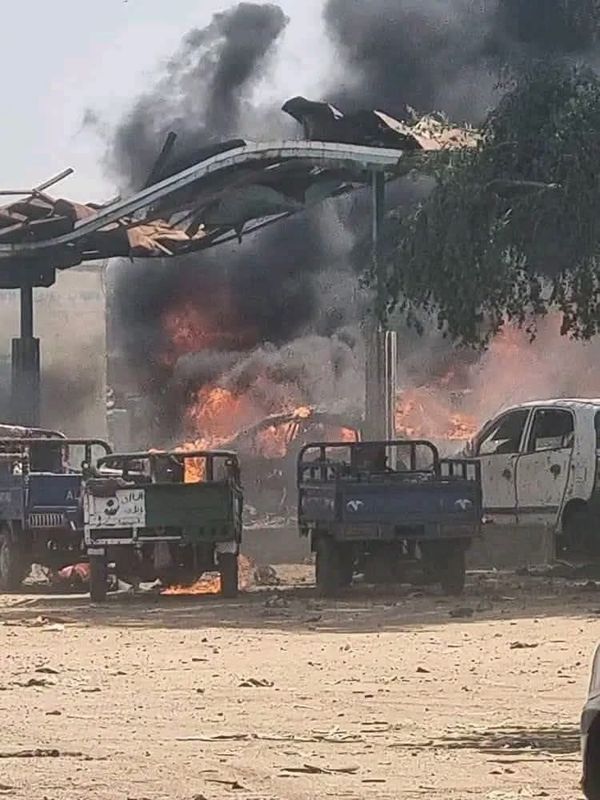
A drone killed at least 12 civilians collecting sorghum from a road in Rama, a Tigray town on the Eritrean border, on the morning of 30 October, residents and the conflict monitor ACLED said.
The grain had spilled from a privately owned truck carrying sorghum for local traders, which a drone hit in the centre of the town at about 21:00 the previous evening. "This morning, people were collecting the scattered grain when another strike hit them," a resident told AFP. ACLED recorded the second strike at about 08:00 and said it was believed to have been carried out by the Ethiopian National Defence Force.
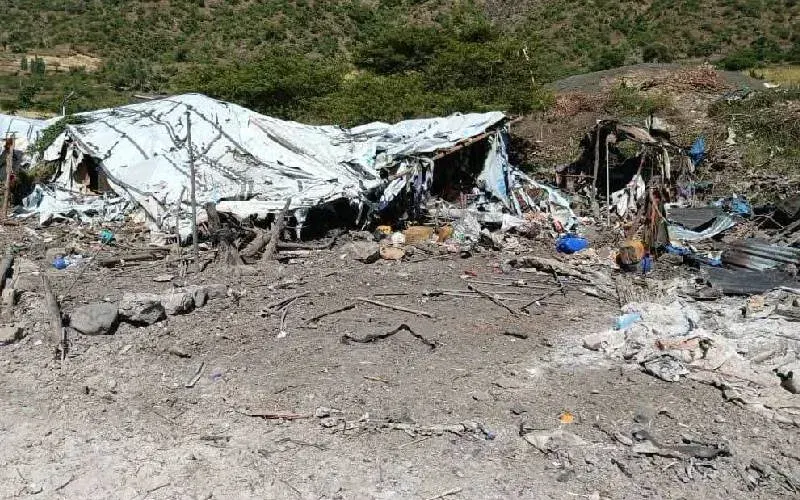
At about 11:00 on 29 October, less than a day before the Rama strike, drones struck the Jari 2 camp for displaced people near Hayk in Amhara region, about 400 kilometres north-east of Addis Ababa. Camp residents said 16 people were killed, among them three pregnant women and an eight-year-old girl, and 22 were wounded. Two people involved in the rescue put the toll at 15, five of them children.
Ethiopia's federal government has been at war since September with the Alliance for Survival, a rebel coalition led by Tigrayan forces that includes the Amhara Fano National Movement. Government forces have relied on a large fleet of armed drones to push the rebels back.
Neither the army's spokesperson nor the office of Prime Minister Abiy Ahmed answered journalists' questions about either strike.
Tedros Adhanom Ghebreyesus, director-general of the World Health Organization, wrote on X on 2 November that the reports from both regions were deeply disturbing and that a newborn was among the children killed at Jari 2. He wrote that "drone attacks and civilian casualties have tragically become frequent across Ethiopia", and that hospitals in the north were short of health workers, medicines and equipment.
Rama
Rama is the main town of Mereb Lekhe district in Tigray's Central zone. Tigray Defence Forces, the armed wing of the Tigray People's Liberation Front (TPLF), retook it on 22 October after federal troops withdrew, according to the Critical Threats project at the American Enterprise Institute. Fighting followed along the highway to the army-held town of Adwa, about 30 kilometres to the south.
Residents told BBC Amharic that drones struck the town on three consecutive days from 28 October and that the strike on 30 October was the deadliest. One witness, who asked not to be named for his safety, said the first strike on the sorghum truck damaged only the vehicle and its load. Witnesses put the toll from the second strike at between 12 and 15, most of them young day labourers.
A hospital confirmed 11 dead, and the resident who described the two strikes put the toll at 13. Another resident said a drone strike the day before had hit armed fighters, and that the attack on 30 October was different because it hit young civilians.
Salsay Weyane Tigray, an opposition party in the region, said in a statement that 12 people were killed and urged an end to attacks on civilians.
Federal troops retook Mekelle, the Tigrayan capital, in October and advanced towards the Eritrean border. The federal government accuses Eritrea of sending troops to support the rebels. Eritrea denies it and has said the Ethiopian government's accusations amount to a declaration of war.
The drone campaign
Human Rights Watch said on 25 September that an apparent government air strike on a residential compound in the Daero neighbourhood of Mekelle on 20 August wounded 13 civilians, seven of them children. The organisation found no evident military target in the area and said the strike should be investigated as a possible war crime. The army's spokesperson did not reply to its written questions.
Fano militias in Amhara have fought federal forces since the government moved in April 2023 to fold the regional special forces into the army and police. A drone strike on the Sanka health post in North Wollo on 27 September 2025 killed four civilians, among them a pregnant woman, eyewitnesses and health workers said. A federal drone strike in Wag Hemra zone on 15 January killed about 40 fighters at a camp of a pro-government militia, a local official said, and army officers later called it a mistake.
Field Marshal Birhanu Jula, then chief of the general staff, told state television in late 2023 that the army would strike extremist groups when it found them, Martin Plaut, a writer on the Horn of Africa, wrote on 4 November. Plaut wrote that Fano has told residents in parts of Amhara not to gather in large numbers or travel by vehicle, so as not to draw drones.
Jari 2 camp
Jari 2 holds more than 1,700 people who fled earlier violence, many of them Amhara families displaced from Kellem Wollega and other districts of western Oromia.
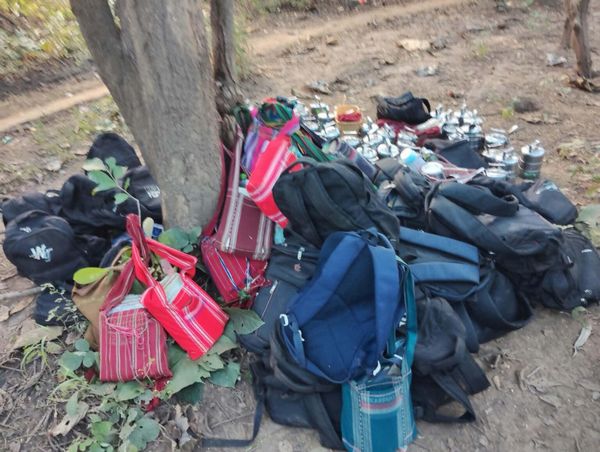
One witness said the camp was hit at least five times at intervals of about 15 minutes while people were inside their shelters, and that more than 20 shelters caught fire. Another counted four strikes in quick succession and said 14 people were buried at the camp and two more died in treatment. A third resident said the strikes came as students were walking home from school.
A man whose relative was killed said he had seen a drone circling over the camp on Wednesday 28 October before it returned the next day. Three people who spoke to Reuters said there had been no fighting in the area when the camp was hit, although members of the Amhara Fano National Movement had been nearby. The agency could not establish who carried out the attack. ACLED put the death toll at between 16 and 23.
The wounded were taken to the hospital in Hayk, 17 kilometres away, and the most serious cases were sent on to Dessie. A local official said the authorities were helping 36 injured people get treatment. Two of the wounded died in hospital in Hayk.
The death toll had risen to 18 by 3 November, Addis Standard reported. Support centres and the small food stalls run by residents had closed, and families were leaving for nearby host communities, survivors said. Those who stayed were sheltering in a school, a Hayk resident said, and some camp residents were discussing a journey to Bahir Dar, the regional capital, to ask the Amhara administration for help.