A bipartisan group of 14 U.S. senators urged Donald Trump on 24 September to withdraw Vladimir Putin's invitation to December's G20 summit at Trump's Miami golf resort, a day after Secretary of State Marco Rubio announced it.
Roger Wicker, the Republican chair of the Senate Armed Services Committee, and Jeanne Shaheen, the senior Democrat on the Foreign Relations Committee, led the letter. "President Putin bears sole responsibility for launching Russia's full-scale war of aggression against Ukraine," the senators wrote.
Putin is wanted by the International Criminal Court over Russia's kidnapping of Ukrainian children. ICC judges issued the warrant on 17 March 2023, finding reasonable grounds that he bears individual criminal responsibility for taking children from occupied Ukraine to Russia, charged under the Rome Statute as the war crimes of unlawful deportation and transfer. The U.S. is not a party to the Rome Statute and has no legal obligation to arrest him on its soil.
Rubio announced the invitation on 23 September at a press conference at the UN General Assembly in New York, after meeting Russian Foreign Minister Sergei Lavrov. "We think it's an opportunity for him to engage not just with the president," he said.
Dmitry Peskov, Putin's spokesperson, said on 23 September that Russia was grateful for the invitation and would reach a decision through diplomatic channels. On 12 September he had said no decision had been taken on travelling to Miami.
Canada, the United Kingdom, France, Germany, Italy, Japan, Australia, Brazil, Argentina, Mexico and South Korea, all G20 members, are parties to the Rome Statute and obliged to arrest Putin if he enters their territory.
The summit runs on 14 and 15 December at Trump National Doral, a property the president owns. Trump announced the venue in the Oval Office on 5 September 2025, and the White House said the resort would operate at cost. On 26 November 2025 Trump said South Africa, a founding G20 member, would not be invited.
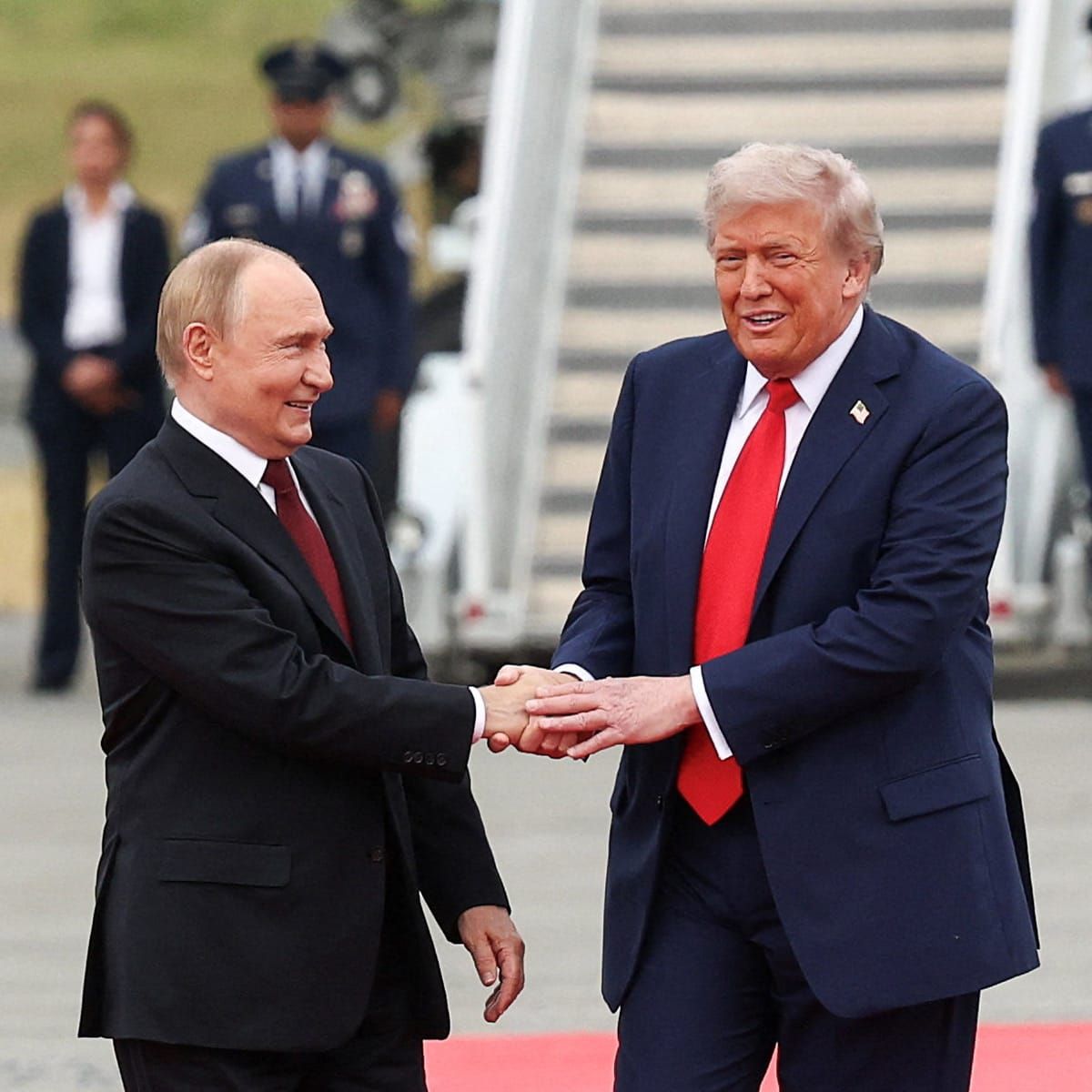
Putin has not met Trump since their summit in Anchorage, Alaska, on 15 August 2025, his first visit to the U.S. in a decade, which ended without a deal on Ukraine. Trump greeted him there with a red carpet, applause and a B-2 bomber flyover, then drove him to the talks in the presidential limousine.
Talks and the energy truce
Trump told Fox News on 26 September that he wanted Volodymyr Zelenskyy and Putin to settle with each other before the heavy winter. He said 25,000 people had died in the war the previous month and 32,000 the month before, 97 per cent of them soldiers. He gave no source for the figures.
Bloomberg reported on 25 September, citing unnamed sources, that Trump urged Zelenskyy to travel to Moscow to meet Putin when the two met at the UN General Assembly, and that Zelenskyy refused. Ukraine's presidential office denied the report and said the two leaders had discussed possible three-way talks.
Peskov rejected a proposal from Zelenskyy on 12 September to meet Putin at the G20 and restated the Russian position that any such meeting should take place in Moscow. "We have to meet, to speak and make decisions," Zelenskyy said.
U.S., Russian and Ukrainian officials are discussing a leaders' meeting in Abu Dhabi or at the Miami summit, Axios reported on 24 September. The U.S. is proposing a mutual halt to strikes on energy infrastructure and the reopening of the Black Sea grain corridor, and Zelenskyy said Ukraine was ready for an energy ceasefire.
Peskov called the energy truce a very good idea on 15 September, then set conditions: an end to Ukrainian attacks on oil tankers and the lifting of sanctions on Russian energy exports. Rubio said on 23 September that a limited ceasefire covering grain and energy would not end the war.
Trump's statements on Putin
On 22 February 2022, two days before Russia's full-scale invasion, Trump told the Clay Travis and Buck Sexton Show that Putin's recognition of two Russian-backed separatist regions in eastern Ukraine was savvy. "This is genius," he said.
At a joint press conference in Helsinki on 16 July 2018, Trump sided with Putin's denial of election interference over the findings of U.S. intelligence agencies and said he saw no reason Russia would have interfered.
At the G7 summit in Kananaskis, Alberta, on 16 June 2025, Trump said expelling Russia from the G8 in 2014 had been a very big mistake and that the war would not have happened had Russia stayed in. He blamed Barack Obama and Justin Trudeau. Stephen Harper was Canada's prime minister in 2014.
Trump told the World Economic Forum in Davos in January 2026 that he has always had a very good relationship with Putin and with Xi Jinping. In April 2026 he said Putin's presence in Miami would help, and the Kremlin then said Putin might attend.
Policy towards Ukraine
Trump said on 18 February 2025 that Ukraine should never have started the war, which Russia launched. The next day he called Zelenskyy a dictator without elections. Ukraine's constitution bars national elections under martial law, in force since the 2022 invasion.
On 24 February 2025, the third anniversary of the invasion, the U.S. voted against a UN General Assembly resolution condemning Russian aggression and demanding the withdrawal of Russian forces. Russia, North Korea, Belarus and Sudan voted the same way. The resolution passed 93 to 18, with 65 abstentions.
Days after Trump and JD Vance berated Zelenskyy in the Oval Office on 28 February 2025, the administration paused military aid and intelligence sharing with Ukraine. Both resumed on 11 March after Ukraine agreed to a U.S. ceasefire proposal.
Attorney General Pam Bondi disbanded Task Force KleptoCapture on 5 February 2025. The Justice Department unit, created in March 2022 to confiscate the assets of sanctioned Russian oligarchs, had indicted Oleg Deripaska and Konstantin Malofeyev and seized several yachts.
Sanctions relief
Treasury sanctioned the oil majors Rosneft and Lukoil on 22 October 2025, the first major Russia sanctions of Trump's second term, after the White House cancelled a planned Putin meeting in Budapest.
From March 2026 Treasury issued and repeatedly extended a general licence allowing purchases of Russian seaborne oil, citing supply disruption from the Iran war. Treasury Secretary Scott Bessent said in mid-April the waiver would not be renewed. Treasury extended it on 17 April and again on 19 May.
Russia was earning an extra $150 million a day in budget revenue from the relief combined with high prices, the Atlantic Council wrote in April, citing Bloomberg estimates.
On 31 March 2026 Treasury removed three Russian vessels from its sanctions list, including the Sv Nikolay, which had carried grain from occupied Ukrainian territory. A Treasury spokesperson said the removals did not signal a broader shift in Russia policy.
Trump signed the Lindsey O. Graham Sanctioning Russia and Iran Act on 18 September, a day after the House passed it 262 to 159. He made no public statement. The law authorises tariffs of up to 100 per cent on countries buying Russian oil and gas, and lets the president waive any of its measures by telling Congress that doing so is in the national interest. No sanctions had been imposed under it when RFE/RL reported on the signing on 19 September.
Envoys and back channels
Steve Witkoff, Trump's special envoy, advised Ushakov in an October 2025 call on how Putin should pitch Trump, including by congratulating him on the Gaza deal, according to a transcript Bloomberg published in November 2025. Trump defended the call and said Witkoff was doing what a dealmaker does.
The 28-point peace plan that surfaced that month emerged from talks in Florida between Kirill Dmitriev, head of Russia's sovereign wealth fund, and Witkoff and Jared Kushner, AP reported. The leaked text required Ukraine to cede territory and renounce NATO membership.
Kushner and Witkoff met Putin in Moscow on 5 September 2026 and held talks in Kyiv the next day. Trump and Putin spoke for an hour by phone on 8 September, a call Ushakov described as frank.
Family business ties
Umar Kremlev, president of the International Boxing Association, paid hundreds of thousands of dollars towards Donald Trump Jr.'s wedding in the Bahamas in May 2026, ProPublica reported on 14 September. Kushner was among roughly 50 guests.
Putin awarded Kremlev the Order of Friendship on 22 April 2026. Ukraine placed him under sanctions on 9 December 2024. Healthy Fatherland, run by his wife's twin sister and an organisation ProPublica reported he is heavily involved in, is on Ukraine's sanctions register over its alleged role in kidnapping children from occupied territory.
A spokesperson for Trump Jr. did not dispute the payments and told ProPublica that Kremlev is a personal friend with no business relationship to him.
U.S. businessman Todd Boehly has assembled a consortium backed by the U.S. government and Gulf investors with ties to the Trump family to bid for Lukoil's international assets, the Financial Times reported on 22 September. Treasury, which sanctioned Lukoil in October 2025, must approve any sale. Reuters said it could not immediately verify the report.
The Trump Organization pursued a Trump Tower Moscow project into June 2016, during the presidential campaign, Special Counsel Robert Mueller's report found.
Policy towards Europe
The White House National Security Strategy published in December 2025 said Europe faced "civilizational erasure" through immigration and described European allies as lacking self-confidence. Peskov said the changes were "largely consistent with our vision."
Trump said on 3 September 2026 that the U.S. would seek repayment from Europe for military aid and munitions previously supplied to Ukraine, largely under Biden. He claimed Europe “would have paid” had Biden asked—but identified no existing European debt or repayment agreement. Europe already pays for U.S. weapons for Ukraine under a separate NATO initiative.
Trump has also faced longstanding allegations that he is compromised by or acting for Russia.