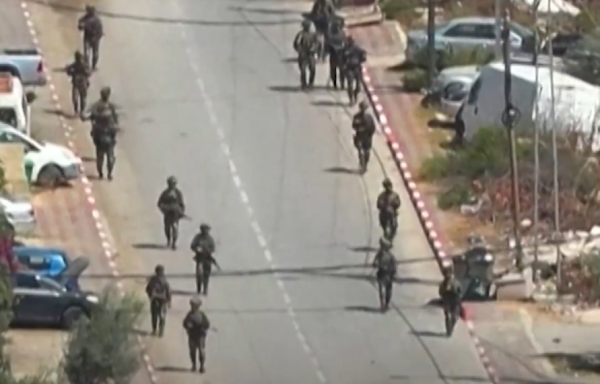
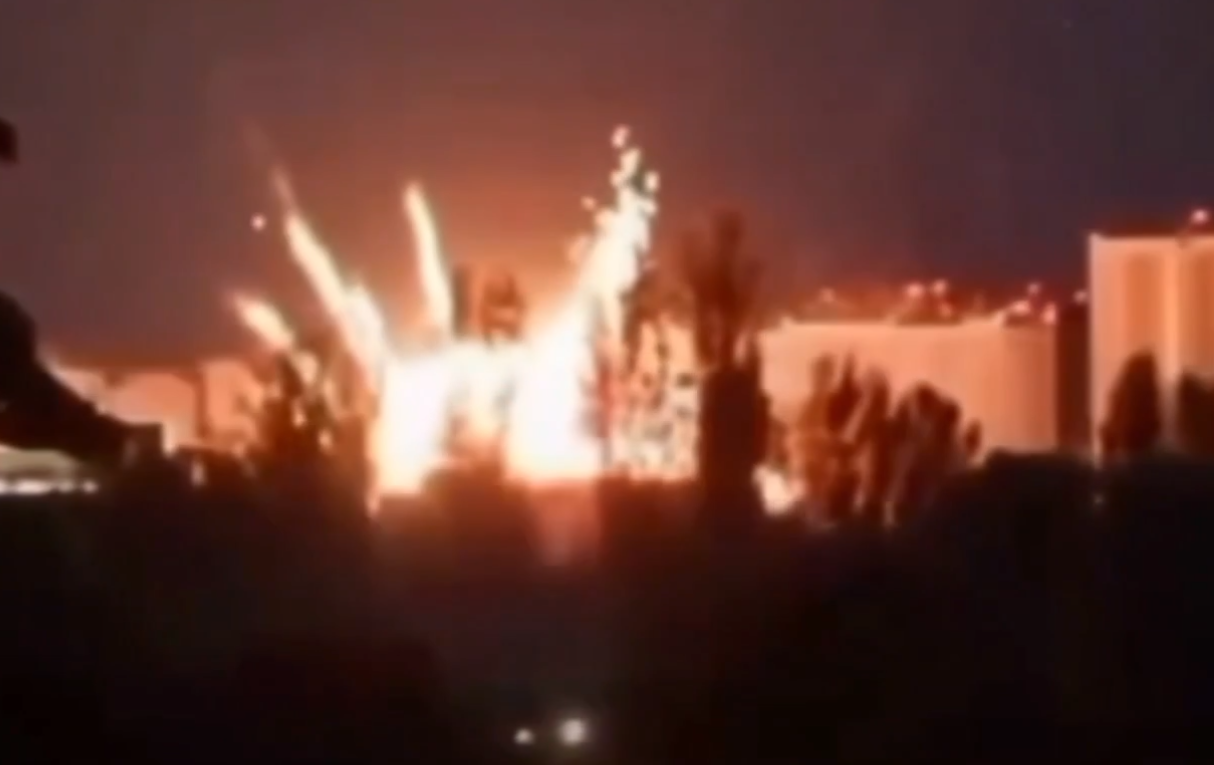
Four women and two men were sorting vegetables in a storage shed at the Druzhba farm cooperative in Stara Hnylytsia, in Kharkiv region, on the morning of 24 September when a Russian Banderol missile hit the building and killed them. Kharkiv governor Oleh Syniehubov said 12 of their co-workers were wounded.
Russia launched 655 attack drones and more than 20 missiles at Ukraine over three nights from 21 to 24 September, according to nightly figures from Ukraine's Air Force. At least 35 civilians were killed across the country in those three days, according to daily casualty reports from regional officials.
Four steelworkers died in Dnipro, a ship's captain was killed off Odesa and at least five people died in Oleksandrivka, a settlement in Donetsk region where guided bombs brought down a five-storey apartment block. Missile fragments damaged a maternity hospital in Kyiv as a baby boy was being born in its basement shelter.
Russian forces kept up the strikes while President Volodymyr Zelensky was in New York for the UN General Assembly and after he met US President Donald Trump there. Dmitry Peskov, spokesperson for Russian President Vladimir Putin, dismissed talk of a limited truce covering energy and grain as rhetoric.
Dnipro, night of 21 to 22 September
Russia fired 212 drones, four Kalibr cruise missiles, eight Banderol and Dan-T munitions, Oniks anti-ship missiles and Iskander-M or KN-23 ballistic missiles that night, the Air Force said. Air defences downed or suppressed 186 targets, 177 of them drones.
Ballistic missiles hit the Interpipe steel pipe and railway wheel plant in Dnipro, killing four employees and wounding seven, the company and Dnipropetrovsk governor Oleksandr Hanzha said. Rescuers pulled the four bodies from the rubble. Interpipe said the strike damaged its main production equipment and stopped the plant.
Ruslan Shvedun, 44, had worked at the plant since 2004, starting as a machine operator and rising to lead a pipe production brigade. "Ruslan was a bright, open person," said Volodymyr Lakhtiuk, a senior section master. Shvedun knew the shop and its equipment well and was the colleague others went to for advice, Lakhtiuk said.
Oleksandr Petrenko, 42, a pickling technician, had been at the plant for almost 10 years. "If an issue arose on the site, he could mobilise everyone and resolve it even at night," said Hryhorii Khyzhniak, a senior pickling technician who worked alongside him.
Hennadii Reshytilo, 56, had spent about 15 years in the plant's open-hearth shop before it closed, and returned in July 2026 to train as a pipe cutter. His wife, Liudmyla, also works at Interpipe. Yevhen Mendrukh, 41, from Prasyva in Dnipropetrovsk region, had repaired hydraulic equipment in the wheel shop since 2012. "Yevhen was an excellent specialist," said Yevhenii Horianyi, head of the repair shop. Mendrukh could advise even more experienced workers and never refused to help, Horianyi said.
Interpipe employs about 9,500 people and exports to more than 50 countries. Dnipro mayor Borys Filatov declared 23 September a day of mourning. "This is horror that one cannot get used to," Filatov said. Russian attacks have killed 14 residents of Dnipro since the start of September, according to city figures.
Nearly 100,000 people lost electricity in Chernihiv region after strikes on energy infrastructure the same night. Across Ukraine, Russian attacks killed at least eight people and wounded 37 in the 24 hours to 22 September, five of the dead in Dnipropetrovsk region, according to regional officials.
Russia's Defence Ministry said its forces had hit industrial and military sites and fuel and energy facilities.
Odesa and the Black Sea, 22 to 23 September
Russia launched 161 drones and three Banderol or Dan-T munitions from six directions starting at 18:00 Kyiv time on 22 September, the Air Force said. Air defences downed 119 drones and all three missiles by 08:00, and strikes landed at 18 locations.
A Russian strike set fire to a commercial cargo ship flying the Antigua and Barbuda flag in the Black Sea off Odesa region, killing its Ukrainian captain. Ukrainian Navy crews evacuated the rest of the crew and put out the fire. "This time, the Russian attack took the life of a Ukrainian sailor," the Ukrainian Sea Ports Authority said. The captain has not been publicly named.
Strikes on warehouses in Odesa region burned stocks of medicines, household goods and food, regional governor Oleh Kiper said.
Russian attacks killed 10 people and wounded 53 across Ukraine that day, according to regional officials. Donetsk region recorded four dead, Kherson region two, and Kharkiv, Zaporizhzhia and Kyiv regions one each.
Kyiv, 23 September
Drones struck Kyiv in waves from about 06:00 on 23 September into the afternoon, killing two people and wounding 43, Kyiv mayor Vitali Klitschko said. Residents went through eight air raid alerts after midnight.
Khrystyna, a resident of Solomianskyi district who gave only her first name, said the first blast came at about 06:00. "At night, first there was a very, very terrifying explosion," she said. By 10:00, she said, local channels were posting that Shahed drones were heading for the centre and for Solomianskyi. "This is a purely residential neighborhood," she said. "Here are apartment buildings, residential complexes, supermarkets, offices."
A drone set fire to the Shayba market beside Kyiv's central railway station. Architect Alla Anishchenko designed the round covered market, completed in 1973 on Mokra Street, with a cable-stayed roof spanning 52.4 metres over 140 stalls. It later housed a department store, a commodities exchange and a supermarket, which closed in 2021. Activists had applied to the city's cultural heritage department to list the building, and activist Dmytro Perov said the department returned the documents on formal grounds before the strike.
Drones and falling debris hit petrol stations, warehouses, a nine-storey apartment building, a four-storey business centre and railway infrastructure in Holosiivskyi, Darnytskyi and Solomianskyi districts. Ukrzaliznytsia chairman Oleksandr Pertsovskyi said one railway worker was injured. Ukrnafta's chief executive said one of the company's petrol stations was hit, the sixth in recent weeks.
Strikes on the Pavutina and UTELS data centres cut internet access to about 100,000 households.
Drones hit the Parkovyi congress and exhibition centre in Pecherskyi district at about 17:15, and Klitschko said a second strike hit the same site. Organisers of a business conference under way at the venue said no one there was hurt.
Zelensky said Russia had hit pharmaceutical sites, petrol stations, railways, communications and shopping centres. "Russia continues to turn civilian and critical infrastructure into targets," he wrote.
Oleksandrivka, 23 September
Russian aircraft dropped four aerial bombs on Oleksandrivka in Donetsk region at about 10:00 on 23 September, Donetsk governor Vadym Filashkin said. One bomb brought down a five-storey apartment block.
Filashkin first said four people had died and that up to eight more, among them two children born in 2024 and 2025, could be under the rubble. A child born in 2021 was among the wounded. "Search for people blocked under building rubble is under way," said Stanislav Baldin, a State Emergency Service spokesperson in Donetsk region.
Donetsk regional police later put the toll at five dead and six wounded, with seven people still missing under the rubble. The bombs, KAB-250 guided munitions according to police, destroyed the apartment block and damaged 12 other multi-storey buildings, 42 houses, a kindergarten, a shop, an administrative building and seven cars.
Filashkin urged families still in the region to leave. "Do not delay evacuation, especially if children are nearby," he said. "They should not live under aerial bombs."
Russian strikes killed eight people and wounded 19 in Donetsk region that day, police said, including two dead in Kramatorsk and one in Sloviansk. Police counted 1,195 Russian attacks on the region in 24 hours.
Night of 23 to 24 September
Russia launched 282 drones, four Zircon missiles, three Iskander-M, S-400 or KN-23 ballistic missiles and Banderol munitions from 18:00 on 23 September, the Air Force said. Air defences downed or suppressed 227 targets: 219 drones, all four Zircons, the three ballistic missiles and one Banderol. Strikes landed at 13 locations and debris fell at 10 more.
Ballistic missiles hit Kyiv shortly after 01:00, killing two people and wounding eight across five districts, Klitschko said. One of the dead was in a car park beside a medical facility in Podilskyi district, where missile fragments blew out windows and damaged the facade of a maternity hospital and a nearby diagnostic centre. Four of the wounded were in hospital, two in serious condition, city health director Tetiana Mostepan said.
Nine babies were born at the maternity hospital that night, some of them in its underground shelter, Mostepan said. A boy was born at 02:05, during the attack. "Even on such a terrible night, life continues," she said. No patients or staff were hurt.
Debris struck a 16-storey apartment building, private homes and an administrative building in Dniprovskyi district, where one house partly collapsed. Residents of the private houses there said they left their homes after the first explosion to check on one another, and a second blast followed shortly afterwards. The strikes left a large crater in one courtyard and wrecked garages, trees and the road surface. No one in the private houses was killed because families had gone to shelters, local officials said. Warehouses in Solomianskyi district were partly destroyed, and three people there were taken to hospital.
A Banderol hit the Druzhba vegetable store in Stara Hnylytsia, in Chuhuiv district, as workers arrived for the morning shift and began sorting the harvest. Mykola Semerianov, head of the Malynivka village council, said it was the deadliest attack on the community since the full-scale invasion, surpassing a strike on a glassworks in March 2026 that killed four. Regional police first said seven people had died, then corrected the figure to six. Semerianov counted three of the wounded in serious condition.
The Druzhba cooperative has farmed in Stara Hnylytsia since 1992. Russian strikes burned 10,000 square metres of its vegetable storage in 2022 and hit its grain store in 2024. "We somewhat recovered after those strikes, started working again," a representative of the farm's management said. "Today we don't yet understand how to continue, what to do next." The Kharkiv regional prosecutor's office opened a war crimes investigation under Article 438 of Ukraine's Criminal Code.
A 68-year-old man was killed and a 52-year-old woman wounded near Bezruky, in Kharkiv region's Derhachi community, the same day, Syniehubov said.
Banderol munitions tore into the roof and upper floor of a polyclinic in Odesa's Moldavanka district and broke windows in a school and about 10 apartment buildings, city military administration head Serhii Lysak said. No one was hurt there.
Russian forces struck 55 settlements in Zaporizhzhia region 690 times in a day, 524 of them with drones, wounding six people, regional governor Ivan Fedorov said.
Russian attacks killed at least 16 people and wounded 59 across Ukraine on 24 September, according to regional officials. Officials in Sumy, Kherson, Odesa and Dnipropetrovsk regions reported people wounded.
Zelensky said Kyiv and civilian infrastructure were again the main targets. "We need ballistic interceptors to protect lives," he said. "Russia will not end this war without pressure."
Russia's Defence Ministry said its forces had targeted military sites, telecommunications centres and military vessels.
Moldova and Romania
Four Russian drones entered Moldovan airspace on the morning of 24 September and at least one exploded in the north of the country, Moldovan President Maia Sandu said. A drone crashed in Romania's Suceava county, where schools in four communities suspended classes, and Romania scrambled fighter jets. Poland scrambled military aircraft twice during the attack.
Applicable law
Article 51 of Additional Protocol I to the Geneva Conventions prohibits attacks on civilians and indiscriminate attacks. Article 52 protects civilian objects, and Article 57 requires an attacking force to take every feasible precaution to spare civilians. Hospitals carry special protection under Article 18 of the Fourth Geneva Convention.
Intentionally directing attacks against civilians or civilian objects is a war crime under Article 8 of the Rome Statute. Ukraine became a state party to the International Criminal Court on 1 January 2025, and the court has jurisdiction over crimes committed on Ukrainian territory.
ICC judges issued arrest warrants in 2024 for four senior Russian commanders, among them former defence minister Sergei Shoigu and chief of the general staff Valery Gerasimov, over strikes on Ukraine's electricity grid.
Talks and the front
Ukrainian drones struck Russia's Samara region over the same period, killing one person and injuring four, the regional governor said.
US Secretary of State Marco Rubio said both sides had shown interest in a limited truce covering grain and energy. Putin said Russia could achieve its war aims on the battlefield.
The Institute for the Study of War said on 23 September that senior Russian officials had effectively rejected the proposed energy ceasefire. The institute recorded Russian advances near Kostiantynivka and south of Dobropillia and Ukrainian advances in the Kupiansk direction and near Chasiv Yar.