British counter-terrorism police arrested a 41-year-old U.S. Army soldier near Gloucester on Tuesday 10 November on suspicion of obtaining protected information and assisting a Russian intelligence service, the Metropolitan Police said.
Officers detained him under sections 1 and 3 of the National Security Act 2023. Section 1 covers obtaining, retaining or disclosing protected information for a foreign power and carries a maximum sentence of life imprisonment. Section 3 covers assisting a foreign intelligence service and carries up to 14 years. "The country to which the allegations relate is Russia," the force said in a statement that also carried comments from the FBI and U.S. Army Counterintelligence Command. The soldier has not been named or charged and was being held at a London police station on Wednesday.
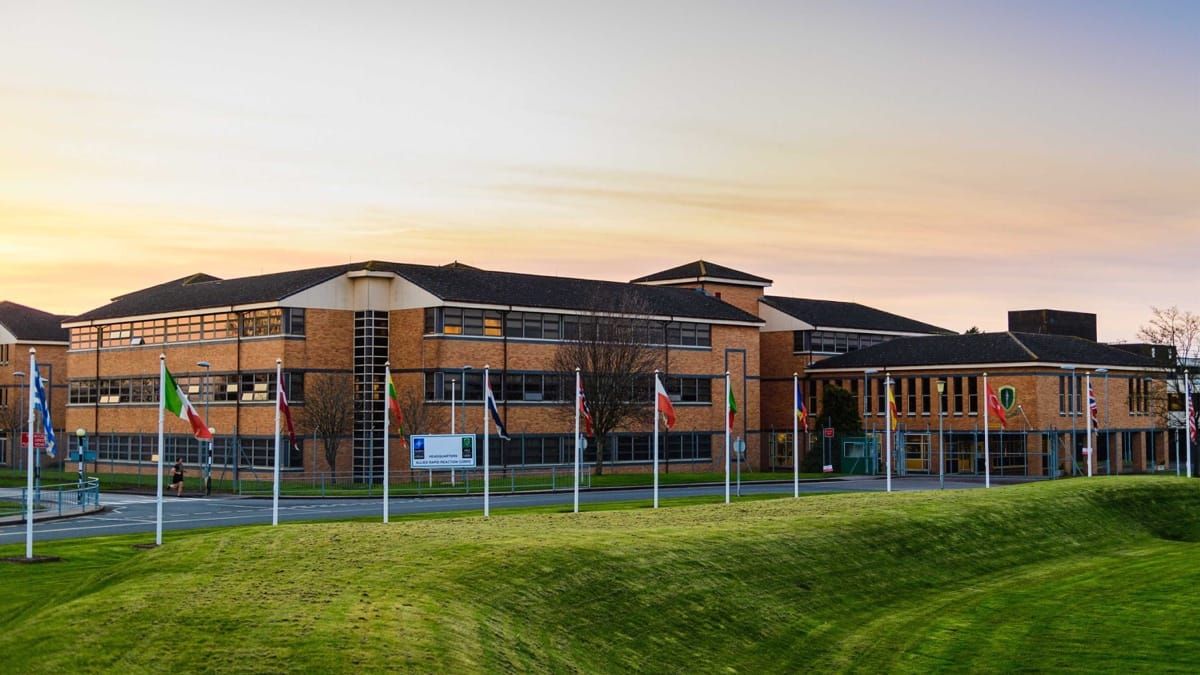
A senior NATO military official said the soldier was assigned to the Allied Rapid Reaction Corps, the British-led alliance headquarters at Imjin Barracks on the northern edge of Gloucester. The headquarters has more than 400 permanent staff drawn from more than 20 countries and is designed to command NATO land forces sent to a crisis at short notice. A U.S. official told CNN the soldier is a field grade officer, a band of rank that runs from major to colonel.
Brigadier General Sean Stinchon, commanding general of U.S. Army Counterintelligence Command, described the suspect in the police statement as a senior soldier entrusted with sensitive information. The case was "a sobering reminder that insider threats are real and persistent," he said. Stinchon asked anyone with concerns about a colleague to contact their local counterintelligence office.
Dmitry Peskov, spokesman for President Vladimir Putin, told reporters on Wednesday that Russia had "nothing to do with" the soldier's detention. The Russian government has denied earlier British accusations of espionage and sabotage.
Deputy Assistant Commissioner Vicki Evans, senior national coordinator for Counter Terrorism Policing, said the arrest followed close collaboration between British and U.S. authorities. "The allegations are serious and our investigation is very much ongoing," she said.
FBI Director Kash Patel said the bureau had "no tolerance for anyone who breaks their oath to the United States" and that the case was of the utmost concern to the United States and its allies. He thanked Counter Terrorism Policing, MI5, UK Defence Counter Intelligence and Army Counterintelligence Command.
Police said the arrest was not linked to any other live Counter Terrorism Policing investigation. Gloucestershire also contains RAF Fairford, the U.S.-operated air base where five men were detained in September over a suspected plot that the British prime minister, Andy Burnham, has said bore "strong indications" of Iranian involvement.
The officer at Imjin Barracks
U.S., NATO and British government officials have each confirmed that the soldier worked at the corps headquarters at Imjin Barracks, about 100 miles west of London. A source told ABC News that a small contingent of U.S. intelligence soldiers is stationed at the headquarters and handles part of the alliance's intelligence processing. The same source said the soldier faces charges from both British authorities and the U.S. Army, and that his name is expected to be released once he is charged. British police do not normally name suspects before charge. A separate NATO source said the soldier is not an intelligence officer at the base.
Neither the police nor the Army has said what post he held, what material he could reach, whether any information was passed to Russian officials or over what period the alleged conduct took place. U.S. European Command declined to comment on the investigation, and the Pentagon referred questions to the Army.
Imjin Barracks occupies the former RAF Innsworth, a non-flying Royal Air Force station between 1940 and 2008. The Ministry of Defence renamed the site on 21 November 2008 after the 1951 battle on the Imjin River in Korea, in which the 1st Battalion, Gloucestershire Regiment fought.
The corps is one of NATO's high-readiness land headquarters and is led by Britain. According to the British Army, it can deploy as a corps headquarters, as the land component command for an alliance operation or as a joint task force headquarters.
NATO formed the corps in Germany in the early 1990s from the former 1st (British) Corps. It commanded the alliance's land forces in Bosnia in 1995 and in Kosovo in 1999. In 2006 it took command of the International Security Assistance Force in Afghanistan, and in 2011 it returned there as the ISAF Joint Command, according to the corps. Its headquarters left Germany with a farewell parade at Mönchengladbach on 18 June 2010 and moved to Imjin Barracks.
Sections 1 and 3 of the 2023 Act
The National Security Act 2023 replaced the espionage offence in the Official Secrets Act 1911, which carried a maximum of 14 years. Section 1 makes it an offence to obtain, copy, record, retain, disclose or provide access to protected information for a purpose the person knows, or ought reasonably to know, is prejudicial to the safety or interests of the United Kingdom. The conduct must be carried out for or on behalf of a foreign power. Retaining the material can be enough to complete the offence.
Edward Devenney, a Royal Navy petty officer who had served on Trident submarines, was jailed for eight years at the Old Bailey in December 2012 after offering information on submarine movements to two men he believed were Russian intelligence officers. Both were MI5 officers. The Home Office cited his case, prosecuted under the 1911 Act, when it introduced the bill that became the 2023 Act.
Section 3 creates an offence of conduct intended to materially assist a foreign intelligence service, and a second offence where the person knows, or ought reasonably to know, that the conduct is likely to do so. Prosecutors do not have to identify which intelligence service benefited.
Suspects arrested under the Act can be held without charge for longer than the standard limit. Police need a court's approval to detain a suspect beyond 48 hours, and the total period cannot exceed 14 days from arrest, according to a Home Office notice on detention rights. For an arrest on 10 November, that limit falls on 24 November. Police can also release a suspect on bail while inquiries continue.
Teddy Young, a 24-year-old Royal Navy able seaman who worked as a warfare intelligence rating, is understood to be the first serving member of the British armed forces charged under the Act. He appeared at Westminster Magistrates' Court on 8 October 2026 charged with conduct preparatory to disclosing protected information and with an offence under section 1, covering the period from 26 November 2024 to 21 May 2025. Police first arrested Young on 21 May 2025 and released him on bail. His security clearance was suspended and he was removed from his duties. Detectives rearrested him at his home in Bedfordshire on 6 October, more than 16 months later.
Prosecutors allege that Young drafted a message in Russian containing classified information, took steps to contact Russian authorities and searched for a web portal that invites people to submit information to Russia, the court was told. Young has not entered a plea. A Royal Navy spokesperson said it would be inappropriate to comment while legal proceedings continue.
Two governments with a claim
The soldier's case falls under the NATO Status of Forces Agreement, signed in London on 19 June 1951, which sets out which country may try a member of one ally's forces stationed in another. Where both countries can prosecute the same conduct, Article VII gives the sending state, in this case the United States, the primary right over offences solely against its own property or security. The host country, Britain, has the primary right over every other offence.
Article VII lists espionage, sabotage and breaches of laws protecting official or defence secrets among the offences relating to a state's security. Which country goes first therefore turns on whose information is alleged to be involved: U.S. material, British material or alliance material held at a NATO headquarters on British soil.
A protocol agreed in Paris in 1952 extends the agreement to NATO's international military headquarters. It leaves criminal jurisdiction over their staff with the country whose military law each person serves under, which for a U.S. soldier is the United States. The state holding the primary right can waive it, and the agreement asks it to give "sympathetic consideration" to a waiver request from the other government. Under Article VII(8), a soldier tried and acquitted or convicted by one country cannot be tried again for the same offence by the other in the same territory, although his own military may still bring disciplinary proceedings.
Espionage by a U.S. service member is an offence under Article 103a of the Uniform Code of Military Justice. A court-martial may impose the death penalty where the information concerned nuclear weapons, war plans, communications intelligence or other specified categories. Article VII of the 1951 agreement bars the sending state from carrying out a death sentence in a host country whose law does not provide for one in a similar case. Britain abolished the death penalty for all offences in 1998.
Russia's campaign against Britain
Ken McCallum, director general of MI5, said on 13 October that Russia remained "aggressor number one" among the states threatening Britain. He told an audience at Thames House in London that the Security Service was devoting more resources to countering state threats than it had during the Cold War. Russian intelligence was turning to proxies while its military gains in Ukraine remained small and costly, he said.
British officials said in March that National Security Act investigations into hostile state activity, including by Iran, rose by 50 per cent in the six months to December 2025. In July 2025, three men were convicted over an arson attack on a warehouse in Leyton, east London, run by a Ukrainian man, which British officials said had been ordered by the Russian mercenary organisation Wagner Group. Britain has been one of Ukraine's largest backers since the full-scale invasion.
Commander Dominic Murphy, head of the Metropolitan Police Counter Terrorism Command, said in September 2025 that foreign intelligence services were recruiting an increasing number of proxies. He spoke after detectives arrested a 41-year-old man and a 35-year-old woman at one address in Grays and a 46-year-old man at another on 17 September 2025, all on suspicion of assisting Russian intelligence under section 3. All three were released on bail with conditions.
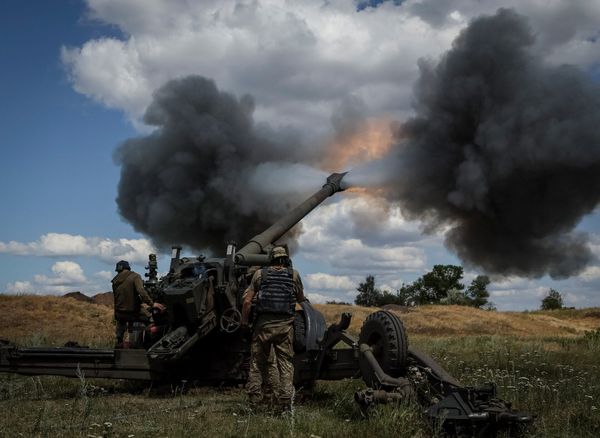
The Associated Press has counted more than 210 incidents of sabotage and other hostile activity in Europe that Western officials have blamed on Russia since the full-scale invasion of Ukraine in February 2022. They include arson, drone flights over military sites, assassination plots and the theft of defence technology.
Germany closed a Russian consulate after an attempted drone attack on a German airport in August. In September 2025, Lithuanian authorities accused Russia of being behind the detonation of parcels carried by DHL and DPD in Europe in 2024, as a test run for explosions aboard cargo flights to the United States.
Russia's Federal Security Service withdrew the accreditation of six diplomats in the political section of the British embassy on 13 September 2024, alleging intelligence and subversive work. The Foreign Office called the accusations baseless.
Taylor Adam Lee, a 22-year-old soldier at Fort Bliss in Texas who held a top secret clearance, was arrested by federal agents in August 2025. He was charged with attempting to pass national defence information about the M1A2 Abrams tank to the Russian government. Prosecutors said Lee handed an SD card of documents in July 2025 to a person he believed represented the Russian government and sought Russian citizenship in return.
Lee's SD card held material on the Abrams and another armoured vehicle, some of it controlled technical data and some marked Controlled Unclassified Information. Prosecutors said he later left a piece of hardware from inside an Abrams in a storage unit in El Paso and messaged the contact "Mission accomplished." Stinchon's command worked on that investigation with the FBI.
In August 2020, federal prosecutors charged Peter Debbins, a former Army Special Forces captain from Virginia, with spying for Russian intelligence. The indictment said his handlers paid him US$1,000 in 2000 and gave him a Russian military uniform at a meeting in 2003. Prosecutors said he passed information about U.S. special forces units and contact details for service members who could be recruited. Debbins served as an active-duty officer from 1998 to 2005.
Jack Teixeira, a former Air National Guardsman, was sentenced to 15 years in prison in 2024 for posting classified documents about the war in Ukraine on the messaging platform Discord. In July 2025, a retired Army officer working as a civilian Air Force employee pleaded guilty to sharing information about the war on a dating app.
Fairford, Mildenhall and the Iran threat
U.S. bases in England have operated under heightened security since September over threats that police and ministers have linked to Iran, a line of inquiry police say is separate from the Gloucester arrest. The United States and Israel went to war with Iran in February, and in March Keir Starmer, then prime minister, allowed U.S. aircraft to fly what the British government called defensive strikes against Iranian missile sites from British bases. Fairford hosts the U.S. Air Force's 501st Combat Support Wing and 420th Air Base Squadron.
Armed officers detained five British men in their mid-20s in the village of Whelford, beside the perimeter of RAF Fairford, in the early hours of 27 September after a call about three vans driving towards the base. Police evacuated about 85 households and later said they had found petrol, but no explosives, in the vehicles. Detectives arrested a dual UK-Iranian national in London on 1 October and a 22-year-old British man in Westminster on 6 October on suspicion of preparing terrorist acts. All seven were released on bail, police said. The Iranian embassy in London described attempts to link Iran to the arrests as fabricated speculation.
On 4 October, a dozen B-1B bombers that the U.S. Air Force had used for strikes on Iran left Fairford in a single day and returned to the United States. On 9 November, U.S. refuelling aircraft left RAF Mildenhall in Suffolk. The Wall Street Journal reported that the departures followed a threat from Iran. A U.S. Air Force official said enhanced force protection measures were in effect at Mildenhall and nearby RAF Lakenheath, and Lakenheath posted a public notice urging people to spot and report drones. U.S. European Command launched a security awareness campaign for its personnel, called See Something, Do Something, on 2 November. No official has linked the campaign to the arrest.
The U.S. Justice Department on 10 November announced charges against three people it described as Iran-backed operatives plotting an attack at Fairford. Fairford lies about 30 miles from Imjin Barracks.
Abu Dhabi and the custody deadline
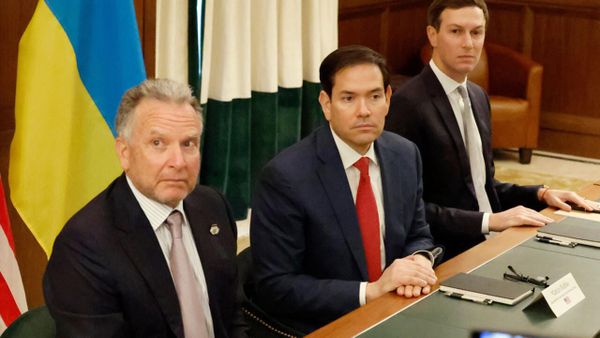
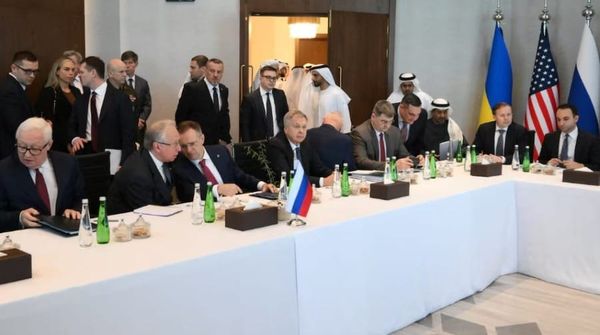
U.S., Russian and Ukrainian delegations opened talks in Abu Dhabi on 10 November, the day of the arrest, in the first round aimed at ending the war in Ukraine in about nine months. President Volodymyr Zelensky called the discussions constructive. Sergei Lavrov, the Russian foreign minister, rejected European demands for an immediate ceasefire. The talks ended on 11 November with a prisoner exchange agreed and no ceasefire. The U.S. envoys Steve Witkoff and Jared Kushner were due in Moscow on 12 November to meet Putin.
Police must charge the soldier, release him on bail or release him without further action by 24 November. Defendants charged under the National Security Act in London, Young among them, have made their first appearances at Westminster Magistrates' Court. Neither government has said what post he held at the corps or whose information is alleged to be involved, the question that decides under Article VII which country tries him first.