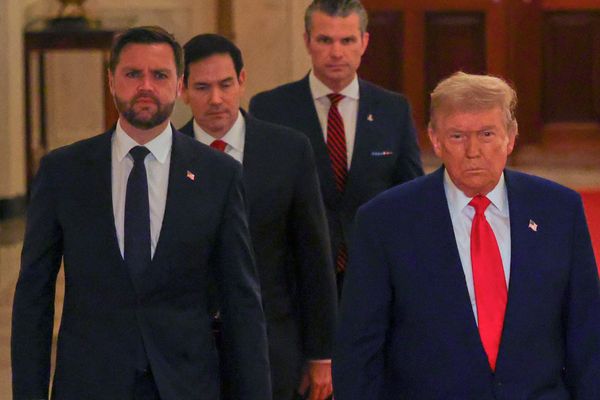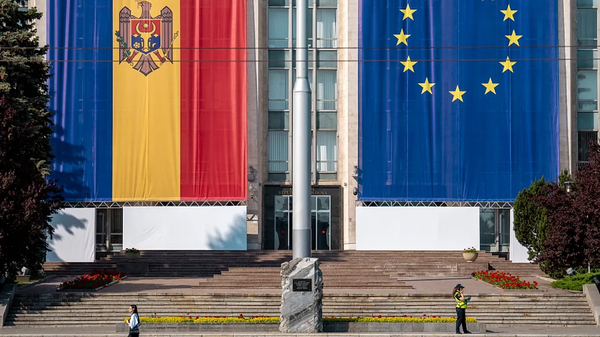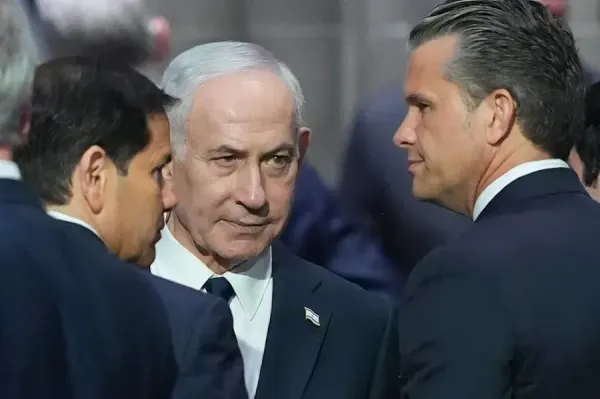
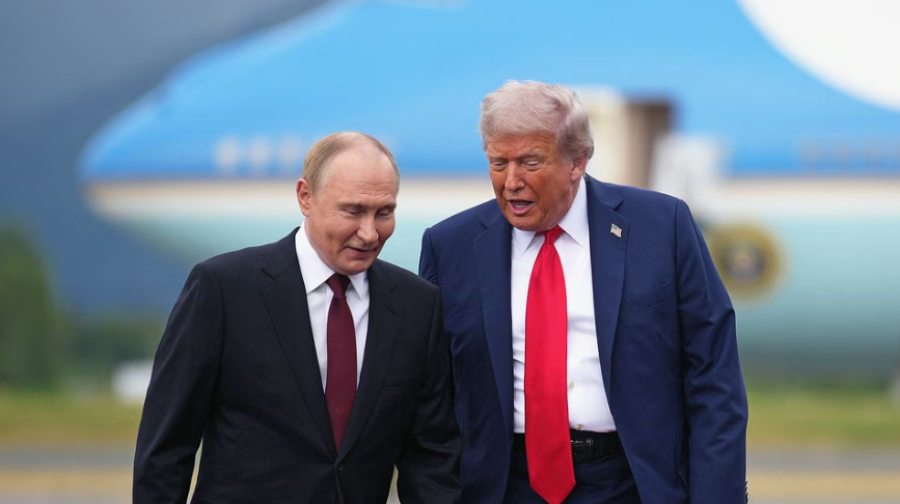
Estonia, Latvia and Lithuania spend a larger share of their economies on defence than any other NATO members, and Pete Hegseth, the US defence secretary, named the Baltic states among the United States' "model allies" in December 2025. All three have been left out of the Pentagon's new working group on the alliance's future, along with Britain and France, Europe's only nuclear-armed allies. Between 13 September and 1 October the Trump administration told Ukraine to stop striking Russian diesel plants, invited Vladimir Putin to Trump's golf resort, approved a path to sanctions relief for Russia, drew up options to pull up to half of the 80,000 US troops in Europe and warned France and Germany they could lose US diesel supplies.
Sanctions relief and a seat for Putin
John Coale, Trump's envoy and nominee for hostage affairs, proposed easing sanctions on Russia in return for the release of political prisoners "a few months ago" and Trump approved it, according to an account of the plan published on 29 September. The plan aims to bring Russia back into the global economy and expand US-Russian trade in oil, diesel, rare earth minerals and other commodities. "Economic ties usually result in normality," Coale said. Jared Kushner, Trump's son-in-law and envoy, has described such arrangements as "prosperity agreements" offering investment after a ceasefire. A White House official said the plan reflected a commitment to "playing a constructive role in ending the war". Volodymyr Zelenskyy said he would try to block sanctions relief before the war ends and acknowledged it would be "difficult".
Coale secured the release of 250 prisoners in Belarus in March 2026 after the United States lifted sanctions on the potash producer Belaruskali, the Belarusian Potash Company, Belinvestbank, the Development Bank of Belarus and the finance ministry. Coale called it "a significant humanitarian milestone and a testament to the President's commitment to direct, hard-nosed diplomacy". A December 2025 deal freed 123 prisoners, including the opposition leader Maryya Kalesnikava and the Nobel laureate Ales Bialiatski. Sviatlana Tsikhanouskaya, the Belarusian opposition leader, said: "This human trafficking costs them nothing... they can always arrest more people, while the West loses leverage."
Dmitry Peskov, Putin's spokesperson, said on 30 September: "We have not discussed this issue in those terms, nor could we have, because we categorically deny that there are any political prisoners and consider that framing entirely inappropriate." Memorial, the Russian human rights group, lists 1,368 political prisoners in Russia and describes the list as incomplete.
Marco Rubio, the secretary of state, said on 23 September that the United States had invited Putin to the G20 summit at Trump National Doral in Miami on 14 and 15 December. The ICC has sought Putin's arrest since March 2023 over the deportation of children from occupied Ukraine. The United States is not a party to the Rome Statute. Peskov said: "We're grateful to the U.S. for the invitation, and we welcome it." Fourteen senators, seven from each party, wrote to Trump on 26 September that Putin's attendance "raises serious concerns about legitimizing and normalizing a government that continues to attack Ukrainian civilian targets every day".
The Treasury issued General Licence 134 on 12 March 2026, allowing any buyer to purchase sanctioned Russian crude already at sea, and extended it in April days after Scott Bessent, the Treasury secretary, said it would not be renewed. The Atlantic Council estimated in April that the relief, with high oil prices, was bringing Russia an extra $150 million a day. Friedrich Merz, the German chancellor, said easing sanctions at that moment was wrong. The Treasury removed three Russian vessels from its sanctions list on 31 March, including the Sv Nikolay, which had carried grain from occupied Ukraine.
Trump told reporters at his golf club in Doonbeg, Ireland, on 13 September: "Mr. Zelenskyy has to do one thing. He has to stop knocking out diesel fuel in Russia." He also said: "We spoke to Mr. Zelenskyy about it. There are plenty of other targets. Don't hit diesel fuel, because that's hurting the world." Ukraine has struck Russian refineries to cut the oil revenue that funds the invasion.
Trump signed the Lindsey O. Graham Sanctioning Russia and Iran Act on 18 September. It requires sanctions by 18 October on Putin, Russian cabinet ministers and military leaders, on the shadow fleet and on Rosatom's leadership, and allows duties of up to 500 per cent on Russian goods and 100 per cent on goods from the largest buyers of Russian energy. The president can waive any measure by certifying that doing so serves the national interest. Congress can block the lifting of sanctions by joint resolution during a review period of 30 to 60 days. Treasury sanctioned the oil companies Rosneft and Lukoil in October 2025.
Steve Witkoff and Kushner met Putin in the Kremlin for more than three hours on 5 September. Putin told Witkoff: "We find it comfortable to work with you, and, of course, we have a very high level of trust doing this work." Russia fired 32 cruise missiles with ballistic missiles and drones at Kyiv on 8 September, killing at least five people. The US government is pressing both sides to halt strikes on energy infrastructure before winter. Oleksandr Merezhko, who chairs the Ukrainian parliament's foreign affairs committee, said: "There is a 100% certainty based on experience that Putin never keeps agreements."
Trump's ties to Russia
Witkoff advised Yury Ushakov, Putin's foreign policy aide, in an October 2025 call on how Putin should pitch Trump, according to a transcript published in November 2025. Trump defended the call. Kirill Dmitriev, head of Russia's sovereign wealth fund, drafted the 28-point peace plan that surfaced that month with Witkoff and Kushner; the leaked text required Ukraine to give up territory and renounce NATO membership.
Umar Kremlev, a Russian businessman whom Putin awarded the Order of Friendship in April 2026, paid hundreds of thousands of dollars towards Donald Trump Jr.'s wedding in the Bahamas in May. Ukraine has sanctioned Kremlev. A spokesperson for Trump Jr. did not dispute the payments and said Kremlev was a personal friend with no business relationship to him.
Robert Mueller's special counsel report, published in April 2019, found that the Trump Organization pursued a Trump Tower Moscow project into June 2016, during the presidential campaign. It also found that the investigation "did not establish that members of the Trump Campaign conspired or coordinated with the Russian government in its election interference activities". No public evidence of a criminal conspiracy between Trump and the Russian government has emerged since.
Trump stood beside Putin in Helsinki on 16 July 2018 and sided with the Russian leader's denial of election interference over the findings of US intelligence agencies. He called Putin's recognition of two separatist regions in eastern Ukraine "genius" on 22 February 2022, two days before the full-scale invasion. The United States voted with Russia, North Korea and Belarus against a UN General Assembly resolution condemning the invasion on 24 February 2025. Attorney General Pam Bondi disbanded Task Force KleptoCapture, the Justice Department unit that seized assets of sanctioned Russian oligarchs, on 5 February 2025.
Pressure on Europe
The White House National Security Strategy published in December 2025 said Europe faced "civilizational erasure" through immigration. Peskov called its changes largely consistent with the Russian government's vision. Pete Hegseth, the defence secretary, said that month: "Model allies that step up, like Israel, South Korea, Poland, increasingly Germany, the Baltic states and others, will receive our special favor. Allies that still fail to do their part on collective defense will face consequences."
Trump announced on 17 January 2026 additional tariffs of 10 per cent, rising to 25 per cent on 1 June, on Denmark, Norway, Sweden, France, Germany, the United Kingdom, the Netherlands and Finland after they sent troops to Greenland for exercises. "This tariff will be enforceable and payable until an agreement is reached for the full and complete purchase of Greenland," he wrote. Five of those eight are now members of the Bergen Group.
Trump told Mark Rutte, NATO's secretary general, on 8 April that he was seriously considering leaving the alliance and called it a paper tiger. The White House began ranking allies in April by their spending and their support for US strikes on Iran. Spain, France and the United Kingdom were among those that refused or delayed support. Hegseth told NATO defence ministers on 18 June that a review of US forces in Europe would be one that "some countries will fail and others will pass with flying colors". A US questionnaire sent to allies in August asked whether each had publicly supported US foreign policy.
The Pentagon is weighing the withdrawal of 25,000 to 40,000 of the roughly 80,000 US troops in Europe, according to seven current and former officials, with a recommendation due on 6 November. Congress set a floor of 76,000 in law. The Pentagon said on 1 May it would take about 5,000 troops out of Germany, and the United States cancelled the deployment there of a long-range fires battalion armed with Tomahawk and hypersonic missiles. Trump said on 3 September that the United States would ask Europe to repay aid sent to Ukraine and has put the figure at up to $500 billion. The audited value of US drawdowns for Ukraine authorised through January 2025 is $31.7 billion.
The US government asked the EU in late September to release 120 million barrels of diesel over six months and told France and Germany they could face a US diesel export ban if they did not draw on their stocks, according to three people familiar with the discussions. Chris Wright, the US energy secretary, said on 1 October: "Europe can help the situation as well, and I'm highly confident they will." Britain, France, Germany, Italy, Ireland and the European Commission agreed the same day to answer jointly and to decide any release through the International Energy Agency.
The Bergen Group
Six diplomats familiar with the planning said the Poland session would bring together the United States, Norway, Sweden, Finland, Poland, Germany and the Netherlands. It will be the third meeting in the format. Diplomats from participating countries said the group would produce proposals for the full alliance and would not form a separate bloc. Colby's aim is a NATO with more European military capacity that can "pull the whole alliance along", according to people familiar with the plan. The Pentagon declined to comment and the White House did not respond.
Colby wrote on X on 9 June after the first session in Bergen, Norway: "Last week, we held an exceptionally productive meeting in Bergen, Norway with NATO allies that are rapidly meeting their Hague spending commitments, have the scale to contribute, and are ready to get down to practical business." The talks focused on a phased transfer of defence responsibilities to Europe as the United States reduces its presence, according to participants. Oana Lungescu, NATO's former spokesperson, wrote the same day that "creating capability clusters to fill gaps in Europe's defence is the way to shift the burden within the alliance".
An official from one excluded country said: "We're doing everything that is being asked of us. We're trying to understand what the criteria is and what the purpose of these meetings are." Another diplomat said: "If they try splitting NATO into the good ones and the bad ones, it is dangerous for the US." Denmark could be invited next, according to the diplomats, after it signed an agreement with the United States and Greenland on 22 September that adds US defence areas at Narsarsuaq and Mestersvig and lets the United States block non-NATO military presence on the island.
NATO estimates published on 7 July put Lithuania's 2026 core defence spending at 5.33 per cent of GDP, Estonia's at 5.1 per cent and Latvia's at 4.92 per cent, the three highest in the alliance. Poland, the only one of the top five invited, is at 4.68 per cent and the United States at 3.17 per cent. Germany, a Bergen member, is at 2.69 per cent, the United Kingdom at 2.56 per cent and France at 2.22 per cent. Britain and France are NATO's only nuclear-armed European members.
Fewer than 100 US troops remained in Estonia in early July, down from 500 to 700. More than 1,000 US troops finished a rotation in Lithuania this summer with no replacement named. Kęstutis Budrys, the Lithuanian foreign minister, said on 18 September after meeting Rubio: "We received assurances that this gap, when we have a reduction in US troops, will not last long."
Robertas Kaunas, Lithuania's defence minister, told reporters on 1 October that the Poland meeting was "exclusively pragmatic in nature". "They invited those countries that have the capabilities, financial and otherwise, to implement the so-called burden-sharing solutions," he said. "I would urge to stop engaging in self-flagellation, as probably 80 percent of the problems that do not actually exist are created in our heads." No statement from the British, French, Estonian or Latvian governments on the group was found for this report.
Deadlines
Treasury must impose sanctions on Putin, his cabinet ministers and military leaders by 18 October under the law Trump signed on 18 September, unless the president certifies a waiver to Congress. The Bergen Group is due to meet behind closed doors in Poland in November, according to diplomats; the Pentagon has not announced dates. Americans vote in the midterm elections on 3 November, and the Pentagon's recommendation on US troop numbers in Europe is due on 6 November. Putin's invitation to Trump National Doral stands for the G20 summit on 14 and 15 December, to which Britain, France and Germany, all parties to the court that issued the warrant for his arrest, are also invited.