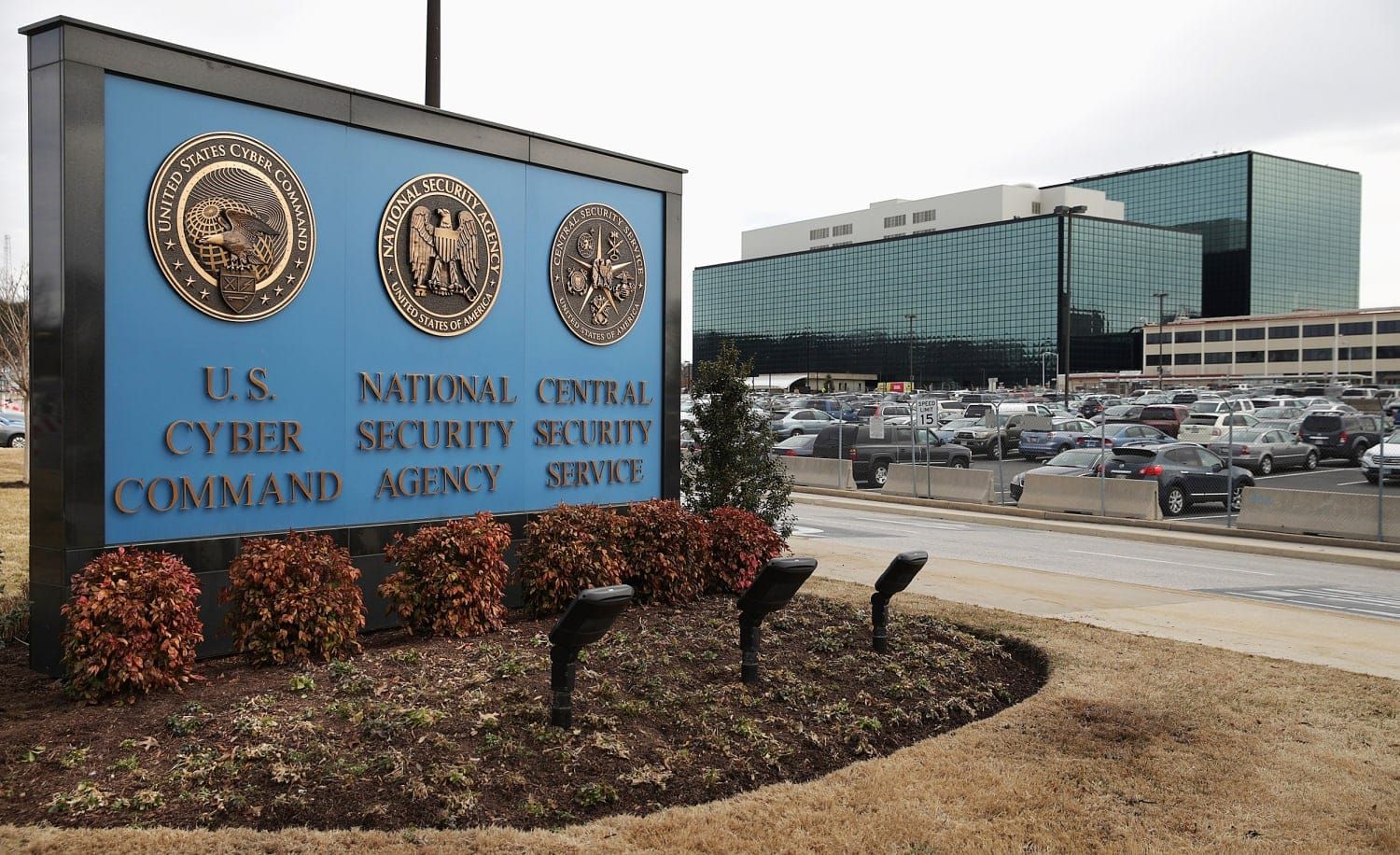
The National Security Agency's classified internal network failed on Tuesday morning, forcing the agency to stagger staff arrivals at its Maryland headquarters and move some work to other sites while technicians restored service.
NSA Net is the system the agency's employees use to send classified information to one another. Six people familiar with the matter told CNN on Tuesday that it was down. The agency later described a "temporary degradation during scheduled routine maintenance" and said some internal systems had been affected while the capabilities its mission depends on kept working. Two people familiar with the situation said the outage followed routine system patching, although the precise circumstances were still unclear on Tuesday afternoon.
White House spokesperson Lauren Bis said in a television interview that the White House saw no evidence of a cyberattack. "There is no crisis, or anything like that, for Americans to be worried about," she said.
Code Gray at Fort Meade
Non-emergency staff at Fort Meade were told to report at staggered times under a modified schedule that two sources called "Code Gray". The aim was to spread out the load of employees logging on to a network that was already struggling. Some activities were redirected to other NSA facilities around the country, the same sources said.
One person familiar with the situation said NSA Net was providing intermittent service rather than being fully shut down. Backup centres elsewhere in the U.S. were expected to absorb extra demand from the tens of thousands of staff at headquarters, the person said. Another person said the network had been unstable for weeks, frustrating employees, and a third gave the same account of weeks of instability.
President Donald Trump was in the Philippines when the network failed and is due in China on Wednesday for talks with Chinese President Xi Jinping and Russian President Vladimir Putin. A current and a former U.S. official said multiple backup networks would still carry urgent intelligence to him aboard Air Force One. A source from a Five Eyes country and a former U.S. intelligence official said exchanges with the alliance's other members, Britain, Canada, Australia and New Zealand, were unaffected and that the shared system was working.
Patching and the AI vulnerability surge
A U.S. official familiar with the matter told MS NOW later on Tuesday that routine patching was to blame. "There's just a lot more patching happening these days because AI is identifying more vulnerabilities," the official said, adding that the volume of updates can bring networks down. The official spoke about patching volume in general and named no specific flaw or update behind Tuesday's failure.
Mark Warner, a Virginia Democrat, is vice-chair of the Senate Intelligence Committee. He said at a Senate hearing on 11 June that the NSA had told him that Mythos, an AI model built by Anthropic, "broke into almost all of our classified systems, not in weeks, but in hours". Other accounts of the remark attribute the assessment to General Joshua Rudd, who directs both the NSA and U.S. Cyber Command. In a statement in April on Project Glasswing, an Anthropic programme to find and fix flaws in widely used software, Warner wrote that industry should speed up patching to match the pace at which AI was finding vulnerabilities.
Rudd took charge of both organisations after the Senate confirmed him by 71 votes to 29 on 10 March, ending almost a year in which they were run on an acting basis. Trump had fired the previous director, Timothy Haugh, in April 2025.
Microsoft, the FAA and Chase
NSA Net failed five days after Microsoft's Outlook email went down worldwide on 12 November. The Federal Aviation Administration halted departures nationwide on 13 November, and Chase customers had trouble reaching their accounts and moving money on 16 November. Microsoft and Chase blamed software defects for their failures.
Transportation Secretary Sean Duffy said on 14 November that an L3Harris contractor converting telecom lines from copper to fibre at a remote FAA site had set off the failure. The work flooded routers across the air traffic control system with more than 1,000 connection attempts every four to five seconds. Two newly installed routers, from sites in El Dorado, Arkansas, and Amarillo, Texas, were taken to L3Harris headquarters in Florida for testing by engineers from the FAA, Juniper Networks and Cisco. Officials at the agencies and companies involved have blamed each failure on technical faults.
The January 2000 failure
An earlier NSA network failure at Fort Meade began on 24 January 2000 and lasted until 28 January. The agency said at the time that the failure, confined to the headquarters complex, affected the processing of intelligence while leaving collection intact. A preliminary internal assessment dated 4 February 2000, later declassified, found nothing to suggest deliberate or malicious activity and called the outage a demonstration of the link between the agency's information infrastructure and its core business.
Calls for a briefing
House Minority Leader Hakeem Jeffries, a New York Democrat, said it was unclear whether the outages were all related to infrastructure or "whether there's some malignant activity". He said a briefing for the Gang of Eight, the congressional leaders cleared for the most sensitive intelligence, was needed before anyone could judge, and called for separate briefings for all House and Senate members.
Josh Hawley, a Missouri Republican on the Senate Homeland Security Committee, said that if the failures were a coincidence, "it's like the greatest coincidence in the history of the world". Mike Lawler, a New York Republican on the House Financial Services Committee, asked the administration to brief Congress on every outage of the past week so that the whole of government could coordinate its response.