
Min Aung Hlaing, commander-in-chief of Myanmar's armed forces, seized power on 1 February 2021, three months after Aung San Suu Kyi's National League for Democracy won the November 2020 election by a landslide. He accused her party of voter fraud and offered no evidence. Soldiers and police shot peaceful protesters in the weeks that followed, and thousands of young people left the cities for the border regions, where they formed People's Defence Forces (PDF) and joined ethnic armies that had fought the military for decades. Elected lawmakers formed the National Unity Government (NUG) to lead the resistance.
The military and its allies had killed 8,427 people by 25 September, according to the Assistance Association for Political Prisoners, which is still checking about 5,300 more deaths. More than 30,000 people have been detained since the coup. The UN counted 3.8 million people displaced inside the country in July and 16.2 million in need of aid. More than 130,000 men have been drafted into the army since it began enforcing a conscription law in February 2024.
Resistance forces held about 38 per cent of Myanmar's territory and 87 towns in 2025, according to ISP-Myanmar, a research institute. The army has retaken 22 towns since 2024, three of them, including Lashio, handed back by ethnic armies under pressure from China. The Arakan Army controls 14 of Rakhine's 17 townships, and the Kachin Independence Army has besieged the army garrison in Bhamo since December 2024.
Myanmar held elections between December 2025 and January 2026 in which no votes were cast in 67 townships and Aung San Suu Kyi's party was barred. The military-backed Union Solidarity and Development Party won 339 of 420 contested seats, and the new parliament elected Min Aung Hlaing president on 3 April 2026. Russia and China supply most of his weapons, and Thailand, India and Cambodia have received him on state visits this year.
The strike on the NUG
Myanmar air force aircraft bombed the headquarters of the National Unity Government's Special Region Command on 24 September, killing at least six people, among them Nay Win Aung, a former air force sergeant who defected after the 2021 coup. Four people were wounded, including the command's head, Aung San Shar. Some resistance sources put the death toll at 10 or more. The headquarters lies between Kyaikto in Mon state and Shwekyin in Bago region, inside territory held by Brigade 1 of the Karen National Union (KNU).
A source close to the resistance forces said: "The regime dropped six bombs on the headquarters and shelled it continuously with heavy artillery." Y-12 transport aircraft adapted to drop bombs carried out the raid, and Artillery Battalion 310 fired howitzers and 120mm mortars from Kyaikto and Theinzayat. It was the first direct air strike on one of the NUG's regional military commands.
The Special Region Command directs five tactical commands, 15 battalions, three columns of local defence forces and six drone units across Mon state, Karen state and the Dawei area of Tanintharyi region. Resistance sources said the army located the headquarters through intercepted walkie-talkie traffic, which an informant inside the army confirmed, and that the NUG has accepted that its communications security must improve. Aung San Shar was wounded in the head. The NUG formed the command in the first half of 2025 to coordinate resistance units from Bago to the Ye-Dawei corridor, working alongside the KNU's armed wing.
Nay Win Aung left the air force to join the Civil Disobedience Movement after the coup and became one of the resistance's most quoted analysts of the air war. He tracked the military's aircraft by their serial numbers, and in March he identified two Russian Su-30 fighters and two Chinese K-8W jets that the air force paraded at Meiktila as aircraft already in service. "The ceremonies are abnormal for the military. It also seems that the regime boss wants to demonstrate that its air force remains strong against the revolutionary forces," he said at the time. Resistance sources said photographs he posted on social media may have given away his location.
Dr Zaw Wai Soe, the NUG minister for the prime minister's office, said on 25 September: "I am deeply saddened, together with his family and the revolutionary people, to learn of the death of CDM Sergeant Major Nay Win Aung." The NUG promised support for his family.
The river to Bhamo
The Kachin Independence Army (KIA) says it has sunk, burned or disabled nearly 20 vessels from the military convoys sent up the Irrawaddy to relieve the army garrison in Bhamo since late August. "Nearly 20 junta vessels have been sunk, burned or forced in for repairs on the Ayeyarwady between Katha and Bhamo," said Colonel Naw Bu, the KIA's spokesperson. The flotilla lost more than half its boats before the survivors turned back to Mandalay on 21 September carrying more than 300 wounded soldiers, according to resistance reports. Hospitals in Mandalay could not take them all, and some were sent on to Pyin Oo Lwin.
Lieutenant General Gun Maw, the KIA's vice-chairman, said he regretted the loss of four privately owned boats that the military had commandeered for the convoy. The four boats were worth between 800 million and 2 billion kyat. The army had seized some of its convoy vessels from civilians in Shwegu.
KIA fighters and allied People's Defence Force (PDF) units have besieged Bhamo since 4 December 2024. They took the town's airport on 26 January 2025. The offensive followed the KIA's capture in October 2024 of the headquarters of all three army-aligned Border Guard Force battalions in Kachin state, which put the rare-earth mines around Chipwi and Pangwa under its control. The KIA collects a 20 per cent levy on rare-earth output, worth more than $200m a year, according to the Stimson Center. China closed its border gates with KIA territory in late 2024 and, in May 2025, told the group to pull back from Bhamo. "And if we did not accept, they would block exports from Kachin State, including rare-earth minerals," a KIA official said. China reopened four gates, including Laiza, on 25 October 2025. "They closed them first and now they have reopened them. We didn't make any deal with China," Naw Bu said. Air strikes during the month-long convoy battle, which ended in mid-September, hit 18 villages in Shwegu township. Seven of them, Lanku, Myaingthar, Pangtin, Zinbon, Weama, Nanpaung and Tawlang, were almost destroyed, and the other 11 lost about half their homes. An official of the Shwegu Township People's Administration, the resistance-led local government, said: "Villages with lighter damage are attempting to rebuild through community self-help. However, the communities that were virtually wiped out need extensive international and local donor support."
The army finished reopening the Mandalay-Myitkyina road in May to supply its Kachin garrisons. On 23 September an air force strike hit a truck stop on that highway near Sattawkone village in Indaw township, killing at least two civilians; some local reports put the toll at five dead and eight injured. A truck driver said "the airstrikes hit a resting place". Residents and rescue workers said there had been no fighting nearby. The aircraft flew from Tada-U airbase near Mandalay, according to local reports.
Northern Kachin and the China border
KIA fighters took positions at Kawnglanpu, near Border Marker 30 on the Chinese frontier, on 18 September, according to Kachin sources. The post controls the entry point for Chinese rare-earth mining in the area, and the army has launched a counter-offensive to retake it. Army-backed militias recruited more than 190 young people from the Putao, Machyangbaw and Naungmoon areas to reinforce the attack.
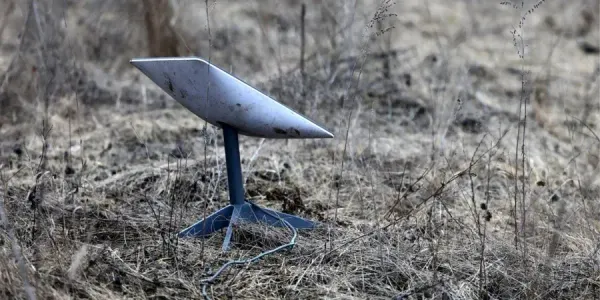
Militias in Putao district have seized more than 150 people aged 15 to 30 since 10 September, among them many Rawang and Lisu, including 15 taken at a Starlink wifi point on 19 September. "All of them have had their hair completely shaved. I heard that they will be sent south by plane," a source close to the militia said. A resident said: "Some of those abducted are over 50 years old. Relatives are under severe emotional distress." Families have been told to pay up to 20 million kyat to free a relative, and each village must pay 50,000 kyat a month for every porter it is ordered to supply, up to 15 porters a village.
Military jets circled Laiza, the KIA's headquarters on the Chinese border, on 23 and 24 September. Naw Bu said he heard several shots from the Chinese side as an army aircraft flew toward Laiza along the border. The jets did not strike Laiza, but aircraft bombed KIA territory in Hpakant township on the evening of 24 September. Schools in Laiza have been shut for one to two weeks, and the KIA has told residents to build bomb shelters and avoid large gatherings.
Prisoners
The KIA holds 151 prisoners from a boat convoy it ambushed near Shwegu on 2 September: 118 soldiers and 33 members of their families, among them a four-month-old baby. "Except for commanding officers and Navy personnel, almost all of them are conscripts," a KIA officer said. The KIA says 34 of the soldiers are aged 16 to 30 and were recruited by force, and that at least 80 per cent of the roughly 800 personnel sent toward Bhamo were conscripts.
Naw Bu said: "They are currently under the custody of our military division. It is too early to specify the exact ratio of active soldiers to non-combatants, but everyone has been relocated to a safe location, and questioning is underway." A KIA officer said all of them are being treated "in accordance with the Geneva Conventions".
Rakhine
The Arakan Army (AA) has held back Operation 4926, the offensive the military launched from Sittwe on 4 September under its new commander-in-chief, General Ye Win Oo. AA fighters took four army outposts near the Min Chaung bridge and Khamaungtaw on 15 and 16 September and seized 34 weapons, a drone and ammunition from Light Infantry Battalion 252. Fighting then moved to the outskirts of Sittwe as the AA advanced from Ponnagyun and took three villages. The AA took two more outposts on 23 and 24 September, bringing the number captured in its counter-offensive to eight, and recovered more than 50 soldiers' bodies after army assaults at Sittwe, Natyaykan and Mindon on 22 September, according to resistance reports.
The AA took the army's Western Command headquarters at Ann on 20 December 2024, and by the end of that year it held about 10 Chinese-backed projects in Rakhine, including the oil and gas pipeline station at Ann. The military still holds Kyaukphyu, where the Chinese state company CITIC holds 70 per cent of a deep-sea port whose first phase is costed at $1.3bn. In Sittwe, AA fighters were within two kilometres of the town by March, facing about 2,000 infantry and 1,000 naval personnel aboard 10 warships. More than 5,000 people fled fighting around Kyaukphyu after Operation 4926 began.
Zin Yaw, a former army captain who joined the resistance, said: "The only remaining ground footholds for the military regime in Arakan State are Sittwe and Kyaukphyu." The AA controls 14 of Rakhine's 17 townships, Paletwa township in Chin state and the whole of Rakhine's border with Bangladesh. Residents of Sittwe have been leaving for Yangon as gunfire reaches the town, and daily-wage workers who remain face hunger.
Soldiers captured by the AA say they were ordered to kill civilians. "We were ordered to execute all ethnic Rakhine people that we encountered. We were told to spare no one, including women and children," said Michael, a conscripted private. Aung Pyae Sone, another prisoner, said: "We were commanded to shoot everyone, including children and the elderly, and seize all livestock." Zin Yaw said their accounts were "almost certainly true". Yan Nyein Aung, a conscript captured near Sittwe, said officers shot their own wounded to stop them being taken prisoner and gave soldiers methamphetamine.
Army columns sent across the Rakhine Yoma range from Magway region attacked AA positions at Kankyoegyi and Point 948 near the Maei pass in Mindon township from 10 September and withdrew after about 10 days. "The military launched a large-scale offensive with significant troop numbers. However, after suffering heavy casualties, junta forces were forced to retreat," a fighter on the ground said. The AA said on 22 September that it had recovered bodies and weapons left behind. Two battalion commanders of the 55th Light Infantry Division, Lieutenant Colonel Tin Myo Htut and Lieutenant Colonel Myat Thin Kyaw, were killed in the corridor between 20 and 23 September, resistance sources said. Their deaths have not been independently confirmed. "Fighting along the Thahpanyaung-Talaingtaung mountain corridor has been intense over the past few days. The junta has suffered heavy casualties, including high-ranking command officers," a Magway resistance source said. Nearly 1,000 troops have been sent into the corridor since August.
AA fighters have pushed south into Ayeyarwady region and are within about a mile of Artillery Battalion 344 in Yegyi township, after taking at least six outposts around the base since May. The AA opened three routes east and south out of Rakhine in 2025: through Gwa into Ayeyarwady, through Ann and Padan into Magway, home to 15 of the military's defence industry factories, and through Taungup into Bago. AA and Bamar People's Liberation Army fighters attacked defence factory 16 in Padaung township on 27 March. For at least five nights the army has moved hundreds of dead and wounded soldiers from the fighting near Theaphyu, Thabaunglay and Kinmunchin to its Medical Corps 4 hospital in Pathein, which cannot cope. "Every night, about half an hour before the convoys arrive from Theaphyu, the military cuts electricity to the entire village," a resident of Kyetthunkwin said. A source inside the operation said: "In the dark, from a distance, loading the bodies looks like moving heavy logs." In Laymyethna township, where Light Infantry Division 66 and militias have launched an offensive to retake AA-held villages, troops arrested and shot dead Ko Kyaw Thet Oo, 21, on 21 September. "The military column marched toward Pandawgyi and shot him dead on their return," a resident said.
Aircraft bombed Ponnagyun, Pauktaw, Gwa and Minbya on 20 and 21 September, killing at least two civilians and injuring three. Two more villagers were killed at Phat Kya in Ponnagyun township on 23 September when fighter jets and a Y-12 dropped about 20 bombs. At about 1am on 26 September bombs fell on Kyeintali town and a monastery in Yekyaw village in Gwa township, injuring three people, among them a 74-year-old woman, and damaging 13 houses.
Drones over Mandalay
Resistance drone crews struck Tada-U airbase, beside Mandalay's international airport, on 10 September, targeting the Yak-130 jets the air force flies on bombing missions. Twelve units took part, according to the NUG, the civilian administration formed by elected lawmakers after the coup. It said two jets were destroyed and five air force personnel killed, among them Colonel Myo Hlaing Oo of Air Defence Unit No. 7, and that three of its own fighters died. The military said it intercepted all the drones. The crews used six fibre-optic drones, which cannot be jammed, against the hangars of an air force that has about 24 Yak-130s. The conflict monitor ACLED counted more than 2,100 resistance drone strikes between December 2021 and mid-2025.
Nay Phone Latt, the NUG's spokesperson, said: "We only attacked the section of the site where the military aircraft conducting airstrikes against civilians were stationed. We did not attack the civilian airfield site at all." Women led much of the drone piloting, a representative of the Myingyan District Drone Strike unit said. Its commander said male and female fighters had trained on equal terms before the operation. The NUG's defence ministry gave 100 million kyat, raised from public donations, to a drone team in Pauk township on 21 September for destroying an army Mi-17 helicopter in June. On 7 September it gave medals to about 1,800 fighters, and on 26 September it announced a committee to provide education, vocational training and jobs for fighters who have lost limbs.
The heartland
Resistance-held territory covered at least 256,000 square kilometres in 2025, according to ISP-Myanmar. The NUG's defence ministry counted 356 PDF battalions and local defence teams in 235 townships in September 2025 and said they had captured 173 army bases.
PDF fighters attacked a Pyu Saw Htee militia post near Pyin Taw village in Kanbalu township, Sagaing, killing about seven militiamen and seizing five carbines and five motorcycles. In western Bago, resistance forces fought seven battles against a 400-strong army column in Letpadan and Minhla townships, killing 32 soldiers for the loss of two fighters, according to resistance reports. Fighters in Wetlet captured a truck fitted with drone jammers and loaded with drones. Three conscripts in Minbu district defected to the resistance.
A platoon of 24 soldiers and their commander left the pro-military KTLA militia and joined Brigade 4 of the Karen National Liberation Army in Mergui-Tavoy district, Karen sources said. People's Goal, a group that helps soldiers leave the army, recorded 2,578 defections, surrenders and captures in 2025, 945 of them defectors. The group said about 80 per cent of them were new recruits.
Nine Mon, Karen and Pa-O youth organisations met in mid-September and agreed to coordinate their armed and political work. "We agreed to exchange ideas and support one another in resistance efforts across different sectors and regions," said Nai Peter, spokesperson for the New Rehmonnya Federated Force.
Thirty-eight people from two local resistance groups, among them three fighters from the Wetlet PDF, surrendered with 13 weapons to the army at Saltan in Sagaing on 22 September. One fighter said the NUG's order to stop collecting fees at road checkpoints had left them short of money: "The main problem is money. Roads had checkpoints collecting fees. When we stopped that activity, they began operations against us."
Resistance units in Taungtha township, Mandalay region, arrested four people on 26 September, Phoe Thar, John Soe, Thin Thin Mway and Theint Theint Moe, accused of 11 gang rapes and 51 robberies. Five suspects remain at large, among them Ye Yint Aung, who has reportedly joined the Pyu Saw Htee militia. The Chinland government's education ministry banned schools in its territory from any contact with military-controlled schools on 24 September and said "serious action would be taken if such contacts or cooperation were discovered". In Budalin, supporters opened a mobile library on 26 September, the 31st birthday of the jailed student leader Wai Moe Naing, who is serving more than 70 years.
Women in the resistance
Women made up more than 60 per cent of frontline protest leaders after the coup and 70 to 80 per cent of the leaders of the Civil Disobedience Movement, according to an estimate by the Gender Equality Network, a Myanmar women's rights coalition. More than 200,000 teachers, about half the profession and most of them women, refused to work under the military. Women held 27 per cent of the NUG's top posts when it was formed in 2021, among them Zin Mar Aung, now its foreign minister, and Ei Thinzar Maung, a protest leader who became deputy minister for women, youths and children.
Ma Wai was a chef at a four-star hotel in Dubai when the coup happened, and had come home to her village in Bago region during the pandemic. She joined the street protests and was tending a wounded protester when soldiers and police opened fire. "I saw the blood flowing with my own eyes," she said. She and her younger brother went to the jungle together in May 2021. "He told me, 'Sister, you're a girl, so don't go. As a boy, I can do more, so I'm supposed to go,'" she said. Their widowed mother told them both to go "as you made this decision for the people". Ma Wai now supervises the administration office of the Bamar People's Liberation Army, where she estimated in 2024 that women were about a tenth of the members and about a third of the leaders. "In the past, I neglected to know about the [other] ethnic groups, their suffering and losses, and I acted like it wasn't my business," she said. "I also didn't notice that I was privileged as a Bamar."
Anina, 18, a sniper with the Chin National Defence Force near Falam, said in 2025 of the soldiers she had shot: "I stopped counting after three." Her advice to other young women: "Don't tolerate being looked down on, or hit, or whatever they do because you're a woman. Fight back." GiGi, 20, a sniper and section commander with PDF-Zoland in Tedim township, was assigned to kitchen duty after finishing her sniper training. "I see it as men and women being equal. So I can't tolerate being looked down on. I came here to fight the military dictatorship," she said.
Women formed the Myaung Women Warriors, one of the first all-women resistance units, in Sagaing region in October 2021. "It's simply not a fact that if women are involved in operations that we will fail," said Amara, 29, one of its roughly 10 founding members. Women make up about 10 per cent of the Mandalay PDF, and some fly its drones. "Operating a drone on the frontline is a challenging task, but we've learned to stay calm under pressure, especially during enemy attacks," said Maria, a drone operator with the group.
Noble, a student union leader in Dawei, went into hiding after the coup. When soldiers and police raided her home in November 2021 and could not find her, they looted the house and arrested her mother and 17-year-old sister. Her mother was sentenced to two years for incitement. Noble joined the PDF in Dawei district a month later. "Sometimes, I even forget that I'm a woman," she said. In September 2022 troops surrounded her unit's camp; an 18-year-old scout was shot in the hip and died three days later as his comrades tried to carry him to a clinic in a hammock. "Sometimes, it is uncomfortable for me to continue fighting and I want to return home, but when I feel that way, I consider that my fallen comrades would feel I had retreated halfway, and I want to continue," she said.
Daw Su Su Yee, 45, and Ma Hnin Si Hlaing, 20, fighters with the Kawlin Revolution Team in Sagaing, blew themselves up on 7 January 2023 rather than be arrested by troops.
The military has arrested 6,337 women since the coup, 21 per cent of all political prisoners, and 40 have died in custody, according to the Assistance Association for Political Prisoners, which counts more than 2,100 women killed. The Burmese Women's Union counted 332 women killed in air and ground attacks in the first six months of 2026. The Women's League of Burma has documented nearly 1,000 cases of sexual violence linked to the conflict. "The widespread and systematic use of sexual violence as a tactic of war and political repression by the Myanmar military persisted," the UN secretary-general reported in April, and up to 25 women were reported raped by soldiers during raids in central Myanmar in a single month in 2025. "The scale and brutality of sexual violence perpetrated in Myanmar is horrifying," said Pramila Patten, the UN special representative on sexual violence in conflict. The military began listing single women aged 18 to 27 for conscription in January 2025. It has also blocked deliveries of menstrual products to areas it does not control. "They intentionally put in a policy to block the delivery of menstrual products," said Thinzar Shunlei Yi, a protest leader who founded the women's network Sisters2Sisters.
Maw Phray Myar, who chairs the Karenni National Women's Organization, said: "Addressing these issues requires more than just having structures and policies in place. We need to stand with survivors, provide psychological support, and assist their recovery and rehabilitation." The same UN report said some resistance groups were also implicated in sexual violence, including against women in their own ranks. A 25-year-old woman fighter in Battalion 20 of the NUG's forces in Yinmabin township, Sagaing, says she was detained, tortured and repeatedly sexually assaulted by members of her unit from 26 December 2025; the NUG said the suspects had been detained and were under investigation, and 149 organisations called on it to take decisive action. Sisters2Sisters wrote in February, on the fifth anniversary of the coup, that "the struggle for democracy is inseparable from the struggle against patriarchy".
Conscripts
The military activated its conscription law on 10 February 2024, making men aged 18 to 35 and women aged 18 to 27 liable for service, and set a target of 5,000 recruits a month. The NUG's defence ministry said on 18 September that the military had drafted 135,080 men in 27 intakes since it began enforcing its conscription law on 10 February 2024. Between July 2024 and August 2026, it said, 20,383 soldiers were killed, 9,792 were wounded, 3,874 defected to the resistance and about 20,000 deserted. Resistance forces have captured more than 500 conscripts since late 2025. "The forced recruitment of young people to extend the military dictatorship has become a major means of sustaining the regime," the ministry said.
Sai Murng, 35, the main earner for his family in Mong Nai, Shan state, was stopped on the road and taken on 3 September. "They intercepted and arrested him on the road under the pretext of military conscription. They neither sent a letter nor notified the family at home," a family member said. A relative said: "We went to see the relevant authorities in the village and downtown, but they wouldn't even let us see them. To this day, we haven't been able to contact him." Families in the area say officials demand 30 million to 40 million kyat to release detainees.
About 200 travellers have been taken on the Bagan-Nyaung-U highway in the past year. "They used to make arrests before, but now they are seizing so many people daily that drivers don't dare use this road anymore," a resident said. People in Mon state have stopped travelling at night for fear of being taken, and 222 men were seized for the 28th training intake. "About five police vehicles have been patrolling together. If they spot anyone out past 11:00 PM, they arrest them," a resident of Paung said. The army has moved about 700 more troops to Phayathonzu, at the Three Pagodas Pass on the Thai border, since 2024, many of them in civilian buses. "The soldiers are coming from Kyainseikgyi to Phayathonzu in civilian vehicles, batch after batch," a driver said.
Civilians under the bombs
Gyrocopters and helicopters have attacked Myit Chay in Pakokku township since 13 September, driving about 4,000 people from the town and 2,500 to 3,000 more from five oil-field villages. Four civilians were killed on 17 and 18 September. Soldiers and militia killed more than 40 civilians in and around the town in May. "There is no active fighting. We believe they are doing this simply because committing inhumane acts has become their norm," said an official of the relief group Anya Taw Ein. A police captain from Myit Kye station in Pakokku, Thant Zin, told his resistance captors that army columns burned villages under orders for "area clearance".
Air and drone strikes killed more than 450 people in March 2026, the highest monthly toll since the coup, according to ACLED. The NUG's human rights ministry recorded 5,608 air attacks in 2025, 3,952 by jets and the others by drones, paramotors and gyrocopters, killing 2,181 civilians. The air force has adapted Chinese-made Y-12 transport aircraft to carry between four and 45 bombs a sortie from bases at Hmawbi, Magway, Naypyitaw, Monywa, Mawlamyine and Taungoo.
Artillery from a battalion based in Myingyan killed a seven-year-old child and wounded two pupils at Da Kyaung village on 23 September, where there was no fighting. Attacks on villages near the 115-Mile rest stop on the Yangon-Mandalay expressway in Bago region killed seven people and drove more than 1,000 from their homes, and troops looted the empty houses.
An air strike and shelling in Bawlakhe township, Karenni state, on the afternoon of 24 September killed two men, aged 63 and 30, and critically injured the younger man's four-year-old son. "The community is in severe distress," a resident said. Drones and artillery have killed at least 20 civilians in Karenni state since early September. A drone hit an orphanage in Demoso township on 16 September and killed a nine-year-old child. Artillery killed a 50-year-old displaced woman collecting firewood near Mobye on 21 September. "Farmers are terrified to tend their terrace fields, which will inevitably impact crop yields and trigger a food crisis," a relief worker said.
Army artillery fired near Zee Pyaung village in Kyaikto township on 22 September killed U Than Soe, 45, a rubber worker, and injured another person, the KNU said. A drone struck a monastery in Kanbalu township at about 9am on 26 September, wounding the abbot and a villager. Bombs destroyed five houses in Kanpetlet in southern Chin the same day, and a jet strike in Hpruso township, Karenni, injured a civilian.
Four 500-pound bombs fell on Kyathaungseik village in Bilin township, Mon state, at about 11pm on 19 September, damaging 42 buildings, among them five schools and 38 homes. "The military bombed both sides of the village, directly striking the areas where the schools are located," a villager said. Air strikes on Manlei village in Nyaung-U township killed two elderly women, and more than 140 homes, 82 shelters for displaced families and a monastery were burned in Letpadan township, according to local reports.
Staff at Kalay prison in Sagaing demand bribes of up to 1.5 million kyat before sending sick prisoners to hospital. Hospital doctors found 80 prisoners there who need outside treatment, 50 of them political prisoners, and nine have been referred, according to the Political Prisoners Network Myanmar. The prison's medical budget is 1 million kyat a month for about 1,000 inmates. Salai Van Ceo Thawng, 32, and Soe Moe Naing, 60, have died in custody there. Data for Myanmar, a research group, has counted 2,029 people arrested or prosecuted over social media posts in 227 townships, 1,315 men and 714 women.
Naypyitaw and the resistance leadership
Duwa Lashi La, the NUG's acting president, said: "Our strategy has been expanding our territory and providing necessary social welfare and essential services. We also protect the public from the junta's attacks." Dr Sui Khar, foreign minister of the Chinland Council, said: "The peace offers from coup leader Min Aung Hlaing are not genuine." The KIA said it had received no official invitation to the talks the military announced in early September.
A delegation of the Myanmar National Democratic Alliance Army (MNDAA), led by its general secretary, began talks in Naypyitaw on 24 September with Lieutenant General Yar Pyae and Lieutenant General Min Naing of the military's peace negotiation committee. It was the MNDAA's first visit to the capital since the Brotherhood Alliance's Operation 1027 offensive in 2023. The MNDAA asked for "Special Region" status, and the talks, which ended on 26 September, focused on reopening border trade routes. Trade through the Chinshwehaw crossing into China reached 42.8 billion yuan in the first seven months of the year. Both sides agreed to meet again. "The MNDAA's trip to Naypyidaw almost fell through at the last minute. However, after the Chinese government intervened and pressured the Brotherhood Alliance... the trip proceeded as planned," a source in northern Shan said. David Gum Awng, the NUG's deputy foreign minister, said: "It is not the case that we have absolutely no engagement with China." Min Aung Hlaing said: "We don't rely solely on China."
Min Aung Hlaing, 69, was born into a family from Dawei, studied law in Yangon and entered the Defence Services Academy on his third attempt. In 2009, as a regional commander, he led the offensive in the Kokang region of Shan state that drove tens of thousands of people across the border into China. He became commander-in-chief in 2011. "He will not trust anybody [enough] to take orders from [them]; he would want to deliver the orders," said Yanghee Lee, a former UN special rapporteur on Myanmar. On a visit to Moscow in 2025 he told Putin that the Buddha had foretold the friendship between their countries in an age when the Russian president was a "rat king" in a previous life. "I don't think he sees that as [being in] contradiction with his role as a brutal leader," Richard Horsey of Crisis Group said of the pagodas and giant Buddha statue Min Aung Hlaing has built in Naypyitaw.
Min Aung Hlaing, who led the 2021 coup and was installed as president in April, told Time magazine in an interview published on 23 September that he had been "extremely lenient" toward Aung San Suu Kyi, who is held under house arrest in Naypyitaw. Asked about the Rohingya, he said: "We have not committed any such acts against the Bengalis in Rakhine state… Our conscience is entirely clear." On 24 September his government banned Time and blacklisted its reporter, Charlie Campbell, saying the interview "did not accurately reflect the responses given". The military also recalled its ambassador to Thailand, Zaw Zaw Soe, to Naypyitaw. Members of the Myanmar community in Japan protested against visits to Naypyitaw by two lawmakers from Japan's governing Liberal Democratic Party, Shunsuke Takei on 14 September and Hiromichi Watanabe on 22 September.
José Ramos-Horta, Timor-Leste's president, raised Myanmar in his address to the UN General Assembly on 23 September. Duwa Lashi La said on 26 September: "He is not only a good friend of Myanmar, but also a great leader who stands for the dignity and aspirations of the people. We are deeply grateful for his compassion, leadership and commitment to the people of Myanmar." Anutin Charnvirakul, Thailand's prime minister, told the assembly on 24 September that Thailand supported "peace and national reconciliation in Myanmar".
Supporters of Aung San Suu Kyi have launched a "Free Her" campaign, and the National League for Democracy has written to the UN credentials committee in support of Kyaw Moe Tun, the ambassador who has held Myanmar's UN seat for the civilian government since the coup. "We hope that Ambassador Kyaw Moe Tun will continue to represent Myanmar at the U.N. as he has done previously," said Zin Mar Aung, the NUG's foreign minister. Kyaw Moe Tun told a rally in New York on 19 September that conditions were "favourable" for him to keep the seat for a sixth year, and said of the military's attempt to have it left empty: "If you look at this, it shows how much desperation the junta is now in." The committee usually meets at the end of November and has deferred a decision on the seat every year since 2021.
Who arms and funds the military
Russia signed a five-year defence cooperation pact with Myanmar's military on 3 February, during a visit to Naypyitaw by Sergei Shoigu, secretary of Russia's Security Council. "Russia fully supports the Myanmar leadership's course to protect territorial integrity and strengthen national sovereignty," Shoigu said. Russian special forces held a joint exercise, "Tropical Storm", with Myanmar troops in Naypyitaw from 6 to 17 July. Vladimir Putin received Min Aung Hlaing in the Kremlin on 18 August and called the relationship "especially trusting". The two governments signed 10 documents, among them a joint declaration against Western sanctions, a plan for Rosatom, Russia's state nuclear company, to build a small nuclear reactor and an agreement on a deep-sea port at Dawei. Russia has delivered six Su-30SME fighter jets under a 2018 contract worth about $400m, the last pair in January 2025.
Xi Jinping hosted Min Aung Hlaing in Beijing on 16 June, when the two governments signed 18 cooperation documents. Xi said China "supports Myanmar's new government in coordinating development and security" and that the two countries had "stood together through thick and thin". China has supplied FTC-2000G jets, armed CH-3A and CH-4 drones and a Y-8 cargo aircraft since the coup, and has trained military drone crews in Tianjin and Kunming. "The regime is using various types of advanced drones in the battle for Bhamo," Naw Bu said. Beijing restricted exports of drone parts from November 2024, cutting supplies to resistance drone units. Deng Xijun, China's special envoy, supervised the MNDAA's handover of Lashio to the army in April 2025. Jason Tower, a researcher on transnational crime in Myanmar, said: "China has delivered to the Myanmar military an outcome it did not have the capacity to achieve through force of arms." China, Russia and India abstained when the UN Security Council passed its only resolution on Myanmar since the coup, in December 2022.
Tom Andrews, then the UN special rapporteur on Myanmar, found in May 2023 that the military had imported at least $1bn in arms and materials since the coup: $406m from Russia, $267m from China, $254m from Singapore, $51m from India and $28m from Thailand. "The Myanmar military and its arms dealers have figured out how to game the system. That's because sanctions are not being adequately enforced," Andrews said. A second report in June 2024 found 16 banks in seven countries had processed the military's payments. Transfers through Singapore fell by nearly 90 per cent after the first report, while those through Thai banks rose to about $130m; Siam Commercial Bank's share grew from $5m to more than $100m. Justice For Myanmar, a group of activists who track the military's business, said in June that 13 of the 33 Singapore companies it had exposed as suppliers were still operating. "It is unacceptable that, nearly four years since exposing Singapore companies enabling the Myanmar military's international crimes, so many businesses continue to operate with impunity," said Yadanar Maung, its spokesperson.
Narendra Modi hosted Min Aung Hlaing in New Delhi on 1 June, on his first foreign trip as president. "History has shown that disengagement doesn't give us any results that are better than engagement," said Vikram Misri, India's foreign secretary. The state-owned Bharat Electronics has sent radar, sonar and radio parts worth more than $5m to military arms brokers since late 2022. Belarus has supplied an air-defence system and radar through its state arms firm BSVT and trains military personnel in Minsk, and Alexander Lukashenko visited Naypyitaw in November 2025, the second foreign head of state to do so since the coup.
Myanmar imported 109,604 tonnes of jet fuel in 2025, 69 per cent more than in 2024 and the most since the coup, according to Amnesty International. At least nine shipments arrived on four vessels, two of which were seen by satellite at Bandar Abbas in Iran. Montse Ferrer of Amnesty International said the military was finding new ways to import the fuel it uses to bomb civilians and that 2025 was the deadliest year for air attacks since the coup.
Anutin Charnvirakul welcomed Min Aung Hlaing to Bangkok on 6 August and said the two countries were ready to "step into the new chapter of economic cooperation". Cambodia hosted him on 11 and 12 September. "In Cambodia, we stand by ASEAN's principle of non-interference in each other's internal affairs," said Chea Thyrith, spokesperson for the Cambodian Senate. The US Treasury removed sanctions from several military allies in July 2025, among them KT Services and Logistics, its owner Jonathan Myo Kyaw Thaung and Myanmar Chemical and Machinery. "It is unconscionable to undermine these efforts by rolling back sanctions on Myanmar arms dealers and junta cronies," Andrews said. The military has since hired the Washington lobbying firm DCI Group on a contract worth $3m a year.
Roger Stone, a longtime friend and adviser of Donald Trump, is paid $50,000 a month as a consultant for DCI Group to provide "public affairs services" to Myanmar's ministry of information, according to filings made under the US Foreign Agents Registration Act. The filings say the work is aimed at "rebuilding relations between the Republic of the Union of Myanmar and the United States", with a focus on trade, natural resources and humanitarian relief. Stone, 73, was convicted in 2019 of obstructing a congressional investigation into whether Trump's 2016 campaign colluded with Russia and was sentenced to 40 months in prison; Trump granted him clemency in 2020 before he served any of it. Justice For Myanmar said DCI Group and Stone were profiting "from a heavily sanctioned junta that is committing war crimes and crimes against humanity with total impunity". Gas sold through the state-owned Myanma Oil and Gas Enterprise, which the US barred from its financial system in October 2023, is "the Myanmar junta's single-largest source of income", according to Fortify Rights.
The case against the regime
A UN fact-finding mission named Min Aung Hlaing and five other commanders in August 2018 for investigation and prosecution for genocide against the Rohingya, citing "the level of organization indicating a plan for destruction". Karim Khan, prosecutor of the International Criminal Court, asked the court on 27 November 2024 for a warrant to arrest Min Aung Hlaing for the deportation and persecution of the Rohingya. "It is unknown if the Court issued an arrest warrant under seal or if it is still considering the application," Fortify Rights said on 9 September. A court in Argentina issued arrest warrants on 14 February 2025 for Min Aung Hlaing, his deputy Soe Win and other officials for genocide and crimes against humanity. "If you commit genocide, you will have to be held to account, whether in your country or in any country in the world," said Tomás Ojea Quintana, the lawyer who brought the case and a former UN special rapporteur on Myanmar.
Nicholas Koumjian, head of the UN's Independent Investigative Mechanism for Myanmar, said on 11 August that evidence from more than 1,600 sources and 750 witnesses showed deliberate air attacks on homes, schools, hospitals, religious buildings and displacement camps. "Behind every piece of evidence we collect are people whose lives have been devastated by these crimes," he said. The mechanism has described "mass killings of detainees, dismemberment and desecration of bodies, rape and the deliberate burning of entire villages" since the coup as "a manifestation of an organisational policy". The UN human rights office verified 702 civilian deaths between August 2025 and January 2026, 476 of them in air strikes. Volker Türk, the UN High Commissioner for Human Rights, told the Human Rights Council on 7 September: "Airstrikes remained the main cause of civilian deaths, confirming the military's disregard for calls to end hostilities and protect civilians." He said: "We need more than so-called 'calibrated engagement'; we need human-rights-based engagement."
Telenor, the Norwegian telecoms company whose majority owner is the Norwegian state, complied with 96 per cent of the 153 requests for customer data it received from the military in 2021, according to its own transparency reports. The Justice and Accountability Initiative, a Swedish rights group, filed a class action in Norway on 8 April on behalf of 1,253 customers whose data was allegedly passed to the military, including addresses and last-known locations, and is seeking at least €11m in compensation. The customers include Aung San Suu Kyi and Phyo Zeya Thaw. His wife, Tha Zin, says he was arrested in the safe house where they were hiding three weeks after the military requested his data. Aung Thu, an activist, was freed in an amnesty in October 2021 and rearrested at the prison gate on terrorism charges after Telenor handed over his data in late September. "Some of the people I worked with have disappeared; I can't find any trace of them," he said. Nini Sandborg, a human rights lawyer who worked for the UN in Myanmar, said the company sent "every little detail of every telecom data they had on the users", and that "it was days and hours from the details that the junta received to them coming to actual houses, picking up young politicians, and detaining them". Telenor said it shared historical metadata as the law required and that "we could not take risks with our employees' safety; their lives were at stake". It left Myanmar in 2022. Norway's parliament is expected to hold an inquiry into the government's role.
The military hanged four political prisoners on 25 July 2022, among them the former lawmaker Phyo Zeya Thaw and the democracy activist Kyaw Min Yu, known as Ko Jimmy, the first executions in Myanmar in more than 30 years. More than 30,000 people have been detained since the coup, among them about 6,600 women and 640 children, and former prisoners describe beatings, electric shocks and up to nine months in solitary confinement at Insein, Obo and Daik-U prisons, according to Human Rights Watch. More than 130,000 people have been conscripted since 2024, and brokers sell recruits to the army for 10 million to 30 million kyat each. "This is modern day slavery. They are trading people like goods," said Major Naung Yoe, an army officer who defected.
The US designated the Karen National Army, which became a military-backed Border Guard Force in 2009, a transnational criminal organisation in May 2025 and sanctioned its leader, Saw Chit Thu, and his two sons for operating scam compounds on the Thai border. The US Treasury sanctioned nine targets linked to the Shwe Kokko scam city in September 2025 and four leaders of the Democratic Karen Buddhist Army in November 2025, saying the DKBA "has supported Burma's ruling military regime". Americans lost $10bn to scams based in Southeast Asia in 2024. "Criminal networks operating out of Burma are stealing billions of dollars from hardworking Americans through online scams," said John Hurley, the Treasury's under secretary for terrorism and financial intelligence.
Myanmar is the world's main source of illicit opium. Poppy cultivation rose 17 per cent in 2025 to 53,100 hectares, the highest in 10 years, the UN Office on Drugs and Crime reported. Police in East and Southeast Asia seized a record 349 tonnes of methamphetamine in 2025, much of it from what the agency called "industrial-scale clandestine drug laboratories in Myanmar". "The co-location of drug labs and scam infrastructure is not a coincidence," said Delphine Schantz, the agency's regional representative.
The US sanctioned Min Aung Hlaing's son, Aung Pyae Sone, and daughter, Khin Thiri Thet Mon, and six of their companies in March 2021. The Financial Action Task Force, the global anti-money-laundering body, has kept Myanmar on its blacklist since October 2022 and said in June: "If no further progress is made by October 2026, the FATF will consider countermeasures."
Rohingya
Tarique Rahman, Bangladesh's prime minister, told the UN General Assembly on 24 September: "The safe return of the displaced Rohingya population to their homeland in Myanmar is the only solution to this problem." About 1.2 million Rohingya live in camps in Bangladesh, where more than 30,000 children are born each year. "An entire generation is growing up in exile," said Barham Salih, the UN High Commissioner for Refugees. The UN human rights office has also documented arrests, torture and forced labour of Rohingya by the AA in northern Rakhine.
Rohingya survivors expect a judgment soon in The Gambia's genocide case against Myanmar at the International Court of Justice, which heard the merits in January. "We want justice, for us and to improve the lives of the next generation," said Salma, a Rohingya survivor. Yanghee Lee, a former UN special rapporteur on Myanmar, said: "The international community failed to prevent Myanmar military atrocities against the Rohingya nine years ago. It must seize this opportunity to finally secure justice."
Malaysia plans to return 1,476 people to Myanmar on 29 September, the first of about 5,000. "People without a country like us, we have nowhere to come back [to]," said Ismail, 25, a Rohingya refugee in Malaysia. Mohammad, 26, a Rohingya activist, said: "I feel extremely helpless. They don't recognise us as human." More than 160 civil society groups have asked Malaysia to stop the returns.