Canada and 13 other governments told Myanmar on 23 November that it must comply with the International Court of Justice's finding that it committed genocide against the Rohingya.
The foreign ministers of Australia, Belgium, Canada, Cyprus, the Czech Republic, Estonia, Iceland, Latvia, Luxembourg, New Zealand, Portugal, Spain, The Gambia and the United Kingdom said Myanmar had violated its obligations under the Genocide Convention. The court's judgment "is binding upon Myanmar", the ministers wrote. Denmark, France, Germany and the Netherlands, which joined Canada and Britain in intervening in the case in November 2023, are absent from the list. Of the 11 states that intervened, only Canada, Britain and Belgium signed.
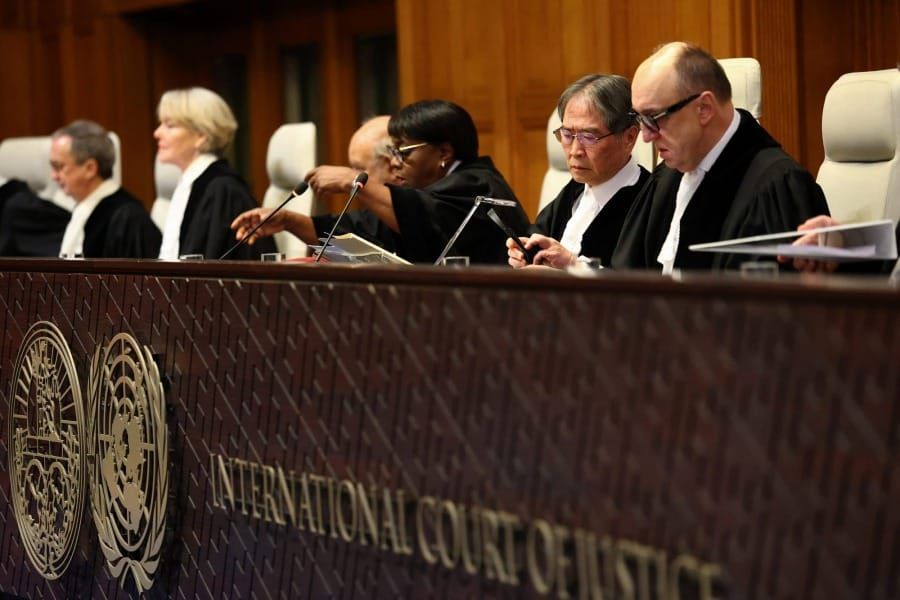
Nine of the court's 15 judges found on 19 November that Myanmar's security forces committed genocide in northern Rakhine State during the military's 2016 and 2017 "clearance operations". It is the first time the court has held a state responsible for the crime. Yuji Iwasawa, the court's president, said the security forces killed about 10,000 Rohingya. The 2017 campaign drove about 730,000 people into Bangladesh, where nearly a million Rohingya now live in camps.
Antony Blinken, then U.S. secretary of state, determined in March 2022 that Myanmar's military had committed genocide against the Rohingya. On 19 November a State Department spokesperson said the government was studying the court's decision and that the proper interpretation of the Genocide Convention mattered, as did "preventing politicization of the ICJ". On the day of the ruling, President Donald Trump signed a declaration in Shenzhen with Xi Jinping and Vladimir Putin stating that the International Criminal Court and other similar bodies must not abuse their jurisdiction.
Khine Khine Soe, a spokesperson for Myanmar's president, Min Aung Hlaing, told reporters in Naypyitaw on 20 November that "not all 15 judges agreed with the decision". Myanmar's agent at the court, Ko Ko Hlaing, told the judges at hearings in January that the 2017 operations targeted terrorists after attacks on security posts, a defence the court rejected.
Canada's record on the case
Anita Anand, the foreign affairs minister, wrote on 19 November that Canada welcomed the ruling and recalled that Parliament had recognised the genocide in 2018. The Carney government has announced no new measures. The Rohingya Centre of Canada has asked it to coordinate a diplomatic response with allies, increase pressure on Myanmar and expand opportunities for refugee youth.
The House of Commons voted unanimously on 20 September 2018 to recognise the crimes against the Rohingya as genocide, making it the first parliament to do so. The motion came from Andrew Leslie, then parliamentary secretary to the foreign minister. The House also voted to strip Aung San Suu Kyi of her honorary Canadian citizenship. Bob Rae, appointed the prime minister's special envoy to Myanmar in 2017, had reported in April 2018 under the title "Tell them we're human", quoting a refugee in Cox's Bazar.
Justin Trudeau, then prime minister, answered the report on 23 May 2018 with a strategy worth C$300 million over three years for humanitarian aid, development and accountability. A second phase committed C$288.3 million from 2021 to 2024. Global Affairs Canada's own evaluation found in April 2024 that the humanitarian share fell in the second phase while needs rose.
Canada and the Netherlands announced on 9 December 2019, a month after The Gambia filed its case, that they considered it their obligation to support The Gambia. Rae attended the January 2020 hearing at which the court unanimously ordered Myanmar to prevent genocidal acts and preserve evidence. The two governments declared their intention to intervene in September 2020, and the joint declaration with Denmark, France, Germany and Britain followed on 15 November 2023.
The six states' declaration set out how sexual and gender-based violence and crimes against children bear on proof of intent to destroy a group. Iwasawa wrote in a separate opinion that some intervening states had urged the court to adopt a less stringent approach to inferring intent. The majority kept its existing test: genocidal intent must be the only reasonable inference from the evidence, and it found that test met.
Canadian sanctions on Myanmar date to the Special Economic Measures (Burma) Regulations of 13 December 2007, which impose an arms embargo and asset freezes. The government added two rounds after the 2017 operations and seven more after the 2021 coup by January 2023. A ban on exporting or supplying aviation fuel to Myanmar took effect on 27 January 2023, and in October that year Canada barred Canadians from insuring ships carrying the fuel and listed 39 more people and 22 entities. Britain announced on 23 November that it intends to legislate a fuel restriction of the kind Canada adopted almost four years ago.
The statement and the British measures
The joint statement calls on Myanmar to comply with the judgment and with its other obligations under international law. It announces no collective sanctions, funding or enforcement steps. Britain announced national measures the same day.
Britain's Foreign Office froze the assets of five senior commanders and formally recognised the genocide. Maj Gen Kyaw Swar Oo, who led the Western Command in Rakhine until June, is accused of repression including the airstrike on Mrauk-U General Hospital. His successor, Maj Gen Kyaw Soe, is accused over airstrikes on civilian sites and medical facilities. Brig Gen Myo Htut Hlaing of Northwestern Command was listed over the treatment of prisoners in Chin State. The others are Maj Gen Myo Min Tun of Eastern Command and Maj Gen Myat Thet Oo, a former Kachin commander and ambassador to Laos. All five face travel bans and disqualification as company directors.
Ed Miliband, the foreign secretary, said the government would legislate against the export and supply of aviation fuel to Myanmar, whose air force has bombed a hospital and schools in Rakhine. Britain will give £5 million for services reaching about 350,000 people in the state and £3 million for evidence collection and survivor support. It will double its support for the UN's Independent Investigative Mechanism for Myanmar, whose evidence was used in the case. "The horrific violence and persecution inflicted on the Rohingya cannot go unanswered," Miliband said. He had expelled Myanmar's defence attaché and summoned its chargé d'affaires on 19 November.
Norway's foreign minister, Espen Barth Eide, issued his own statement on 19 November. The European Union took note of the ruling.
The judgment
By the same nine-to-six vote the court found that Myanmar failed to prevent genocide, and by 11 votes to four that it failed to punish it, according to its press release. Iwasawa said the scale and nature of the atrocities were "characteristic of an intent to destroy a substantial part of the group". The court found that the evidence excluded Myanmar's alternative explanations, including counter-insurgency and forced displacement.
Myanmar must investigate everyone reasonably suspected of genocide or related acts in 2017 and prosecute where the evidence warrants, the court ruled by 13 votes to two. By 10 votes to five it ordered restitution, including the safe, voluntary and dignified return of Rohingya and the reunification of families, and compensation for damage restitution cannot repair. Myanmar must report on those measures by 19 November 2028, after which the court will fix the amount of compensation. The judges also found, by 11 to four, that Myanmar breached the court's January 2020 order.
Vice-President Julia Sebutinde and Judges Peter Tomka, Ronny Abraham, Xue Hanqin and Georg Nolte, with Judge ad hoc Claus Kress, dissented on the central finding. The court rejected by 14 votes to one The Gambia's claim that Myanmar directly and publicly incited genocide. The judgment is final and cannot be appealed.
Criminal tribunals had convicted individuals of genocide for Rwanda, for Srebrenica and for Cambodia under the Khmer Rouge. In the Bosnia case in 2007 the ICJ found that genocide was committed at Srebrenica and that Serbia had failed to prevent it, but not that Serbia committed it.
Dawda Jallow, The Gambia's justice minister and attorney general, said after the reading that the court had found Myanmar in breach of the convention and ordered reparations. Bangladesh's state minister for foreign affairs, Humaiun Kobir, welcomed the verdict the same day. Volker Türk, the UN high commissioner for human rights, said the State of Myanmar stands responsible for one of the gravest crimes.
U.S., Russian, Chinese and Israeli opposition to the courts
Mike Waltz, the U.S. ambassador to the UN, accused Navi Pillay, the judge ad hoc chosen by The Gambia, on X in October of tilting the Myanmar proceedings. "The ICJ must not be allowed to lower the legal threshold for proving genocide," he wrote, adding that a weaker standard could be used against U.S. and allied soldiers, meaning Israel. Pillay, who won the 2026 Nobel Peace Prize, chaired the UN Commission of Inquiry that found on 16 September 2025 that Israel had committed genocide in Gaza. Israel rejects the finding.
Human Rights Watch said before the judgment that U.S. officials had sought to pressure the court and its judges over the threshold for genocide. The Foundation for Defense of Democracies, a think tank in Washington that backed the U.S. warnings, wrote on 5 November that the court could find against Myanmar without lowering the bar.
State Department lawyers have filed to intervene on Israel's side in South Africa's genocide case at the same court. Its declaration, made public in March, said civilian casualties are not necessarily evidence of genocidal intent. Reed Rubenstein, the State Department's legal adviser, said a finding against Israel would be a "radical repudiation" of the court's precedent. Trump had cut U.S. aid to South Africa in February 2025, citing the case among his reasons.
Executive Order 14203, signed on 6 February 2025, began the administration's measures against the International Criminal Court, a separate tribunal that prosecutes individuals. Karim Khan, then prosecutor, was listed first, over the court's arrest warrants for Israel's prime minister, Benjamin Netanyahu, and former defence minister Yoav Gallant. Four judges followed in June 2025, two more judges and both deputy prosecutors in August 2025, two judges in December 2025 and the court's president, Tomoko Akane, in August 2026. The State Department sanctioned Francesca Albanese, the UN special rapporteur on the occupied Palestinian territories, in July 2025. On 9 October 2026 it designated the court itself.
Marco Rubio, the secretary of state, said on 9 October: "Either the ICC will end its threats, or we will end the ICC." He cited the Israeli warrants and the court's Afghanistan investigation, which could reach U.S. military and intelligence personnel. Nine of the court's 18 judges are now under U.S. sanctions, the ICC said. Tajikistan this month became the fourth country to start leaving the court since the U.S. urged states in July to withdraw.
Kimberly Prost, a Winnipeg-born judge, was sanctioned on 20 August 2025 for authorising the ICC's investigation of U.S. personnel in Afghanistan. Anand said she had the utmost confidence in Prost and raised the matter with Rubio, but did not publicly criticise the sanctions. Anand has rejected Rubio's call to dismantle the court and said Canada supports all ICC judges regardless of nationality. The NDP wrote to her on 21 July asking the government to use the Foreign Extraterritorial Measures Act to protect Prost. A U.S. federal judge, Jesse Furman, on 23 November refused to lift the sanctions on Prost and two other judges pending their lawsuit.
Ben Saul, the UN special rapporteur on counterterrorism and human rights, reported in September that U.S. strikes had hit 68 boats in the Caribbean and Pacific between September 2025 and August 2026 and killed at least 223 people. He found that the strikes plausibly constitute crimes against humanity. Human Rights Watch says there is no armed conflict in those waters that could make the people killed lawful targets. Trump and his officials say the strikes have saved lives from drug overdoses.
Annalena Baerbock, president of the UN General Assembly, called coercion and sanctions against the ICC assaults on the very principles of international law in November 2025. The Shenzhen declaration of 19 November described respect for state consent and the immunities of state officials as "of paramount importance", according to its published text. The U.S., Russia and China are not members of the ICC.
Putin has been the subject of an ICC arrest warrant since March 2023 over the deportation of children from occupied Ukraine. The Moscow City Court sentenced Khan and eight ICC judges in absentia on 12 December 2025 to prison terms of three and a half to 15 years for "unlawfully prosecuting Russian citizens", and the Russian government requested their extradition in October. UN human rights experts called the convictions a flagrant violation of international law.
Israel, which is also outside the Rome Statute, disputes the ICC's jurisdiction over the warrants for Netanyahu and Gallant. Its foreign ministry said a ruling against its appeal showed the court's "blatant disregard for the sovereign rights of non-party states". Netanyahu thanked Trump and Rubio when the U.S. designated the court itself on 9 October. After the UN Commission of Inquiry found that Israel had committed genocide in Gaza, the Israeli government called for the commission to be abolished.
China declared the 2016 arbitral award in the Philippines' South China Sea case null and void on the day it was issued and said it neither accepts nor recognises it. On the award's ninth anniversary in July 2025 the foreign ministry called it illegal and non-binding.
Russia, China and the U.S. outreach
Russia and China have been the Myanmar military's main foreign arms suppliers since the 2021 coup. Tom Andrews, then UN special rapporteur on Myanmar, traced at least US$1 billion in weapons and materials to the military between February 2021 and December 2022, including US$406 million from Russia and US$267 million from China. Rosoboronexport, Russia's state arms exporter, supplied Su-30 fighter jets and rocket launchers worth US$227 million. Both governments said Andrews had exceeded his mandate.
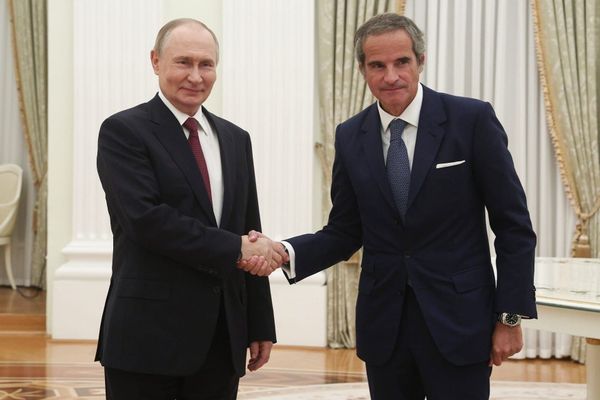
The Myanmar government signed a military cooperation agreement with Russia in February that runs to 2030. When Putin received Min Aung Hlaing in the Kremlin on 18 August, on his seventh visit to Russia, he said the two countries had established close military and military-technical cooperation. Rosatom expects to start building a 110-megawatt nuclear plant in Myanmar in 2027 under an agreement signed in March 2025. Russia is also offering liquefied natural gas and a deep-sea port at Dawei.
Xi gave Min Aung Hlaing a state welcome in Beijing on 16 June, two months after Myanmar's new parliament elected him president. The two governments signed 18 agreements and pledged to revive the China-Myanmar Economic Corridor, including the Kyaukphyu deep-sea port in Rakhine and the Muse-Mandalay railway. Chinese oil and gas pipelines start at Kyaukphyu. China's foreign ministry said in December 2025 that Myanmar's election stemmed from an agreement between Xi and Min Aung Hlaing.
Guo Jiakun, a Chinese foreign ministry spokesperson, said rulings such as the Myanmar judgment were "not conducive to the settlement of disputes".
China and Russia vetoed a Security Council draft on Myanmar in 2007 and refused to engage on a British draft after the 2017 operations, which was never put to a vote. After the court's 2020 order, Council members failed to agree a statement when China and Vietnam objected. The Council's only resolution on Myanmar since the coup, Resolution 2669 of December 2022, passed 12 to none with China, India and Russia abstaining. A British draft was withdrawn in 2024 after China and Russia declined to negotiate.
The U.S. Treasury removed sanctions on four junta-linked businesspeople and their companies in July 2025, two weeks after Min Aung Hlaing wrote to Trump asking for sanctions to be eased. Michael Vance, the assistant secretary of state for intelligence and research, met Min Aung Hlaing in Naypyitaw on 15 and 16 September, Reuters reported, and led talks in Tokyo in October. Officials discussed access to Myanmar's rare-earth deposits, according to the same report. The State Department says it raises the need to end violence and release political prisoners.
Enforcement and the alternatives
Article 94 of the UN Charter lets The Gambia ask the Security Council to act if Myanmar ignores the judgment, and the Council may recommend or decide on measures to give it effect. A binding measure needs nine votes and no veto from the U.S., Russia, China, Britain or France. Nicaragua invoked the article in 1986 after the court ruled against the U.S., which vetoed the draft calling for compliance. The General Assembly then adopted a resolution demanding compliance by 94 votes to three.
Britain has requested Council closed consultations on Myanmar for 25 November and a private meeting on 7 December. Britain is the Council's penholder on Myanmar and drafts its texts on the country. Any veto would trigger a General Assembly debate within 10 working days under Resolution 76/262. Lawyers writing for the American Bar Association have proposed that the Assembly use the 1950 Uniting for Peace procedure to recommend measures if the Council is blocked.
Amnesty International has asked the Council to impose a global arms embargo and refer Myanmar to the ICC. Fortify Rights urged Britain in June to lead states in referring Myanmar to the ICC themselves under Article 14 of the Rome Statute, which does not need the Council. A federal judge in Buenos Aires issued arrest warrants for Min Aung Hlaing and 24 other officials in February 2025 under universal jurisdiction.
Karim Khan, then the ICC prosecutor, asked judges on 27 November 2024 for a warrant to arrest Min Aung Hlaing for the deportation and persecution of the Rohingya. The court's spokesperson said in April that his presidency gives him no immunity. The application sits with Pre-Trial Chamber I, whose members include Judge Reine Alapini-Gansou. The U.S. sanctioned her in June 2025, the Moscow City Court sentenced her in absentia in December 2025 and Furman refused her request for relief on 23 November.