Ukraine refused a U.S. request to hand Russia the part of Donbas that Russian forces have failed to capture since 2014 in return for guarantees resembling NATO membership, President Volodymyr Zelenskyy told Danish broadcaster DR.
Zelenskyy posted excerpts of the interview on X on 10 November. He did not identify the negotiators or say when the conversation took place. The U.S. side asked whether Ukraine could exchange Donbas for security, he said, and when he asked what security meant and whether it meant NATO, he was told it would not be NATO but something similar. He replied that the U.S. wanted a clear answer on Donbas, which was also Russian President Vladimir Putin's goal, while offering Ukraine only something similar to membership. He asked what the U.S. would do if Ukraine had guarantees but was not in NATO.
"Nobody trusts Putin to stop if we leave Donbas," Zelenskyy said, adding that Putin would pause and come back in one, two or five years. Russia took Ukraine's nuclear weapons, he said, then halted its integration into Europe, kept it out of NATO and occupied it.
The U.S. government has suspended its own military and financial aid to Ukraine. In October U.S. President Donald Trump granted a waiver letting Russian oil and diesel reach world markets, which he defended in a television interview broadcast on 8 November. Steve Witkoff, his envoy, called Putin a humanitarian after meeting him outside St Petersburg on 21 October. On 5 November Trump received Kirill Dmitriev, a Putin envoy under U.S. Treasury sanctions, at the White House.
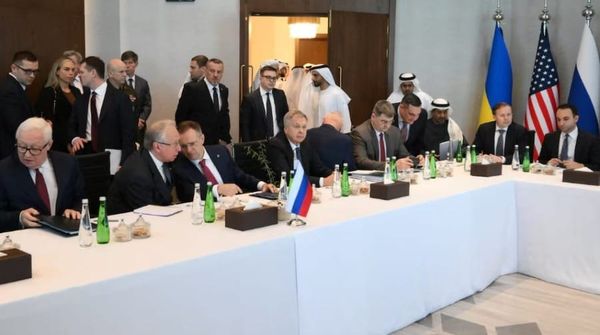
Zelenskyy's account was published as Ukrainian, Russian and U.S. delegations opened two days of talks in Abu Dhabi, the first three-way round since February. A separate report covers the negotiations.
What U.S. officials have said
A U.S. official said on a background call with reporters on 9 November that the U.S. had asked Russia to accept guarantees for Ukraine modelled on Articles 4 and 5 of the North Atlantic Treaty. Such guarantees would be "effectively very similar to NATO", the official said, and any U.S. guarantee would be for Trump and Zelenskyy to decide. Senior U.S. officials also told reporters that territorial and security arrangements would have to be negotiated in parallel and finalised together, and that both sides had privately shown a little flexibility on territory. None of those officials was named.
Zelenskyy's account describes a U.S. request that Ukraine give up Donbas for guarantees. U.S. officials have publicly described guarantees they asked Russia to accept and have said territory and security must be settled together, without saying in public that a Ukrainian withdrawal from Donbas is a condition. Neither government has published an agreed proposal. A reported outline of a U.S. plan, published on 22 October, which included a demilitarised zone in Donbas, has not been confirmed by either side.
U.S. negotiators made a similar demand in December 2025, when they told Ukraine it must withdraw its forces from Donetsk region under any deal, according to an official familiar with the matter. On 10 November the U.S. joined Ukraine, the EU, NATO, Britain, France, Germany and Italy in a joint statement in Abu Dhabi saying any future agreement must respect Ukraine's sovereignty and territorial integrity and provide credible security guarantees.
What Articles 4 and 5 commit members to
Article 4 of the North Atlantic Treaty, signed in 1949, obliges members to consult whenever one of them believes its territorial integrity, political independence or security is threatened. Article 5 treats an armed attack on one member as an attack on all. Each member commits to take "such action as it deems necessary, including the use of armed force". NATO's own guidance says that assistance may or may not involve armed force. Article 5 has been invoked once, after the attacks on the U.S. on 11 September 2001.
U.S. officials have not said which countries would give a guarantee modelled on those articles or whether it would include foreign troops in Ukraine. Nor have they said what kind of attack would trigger it, or whether it would cover drone strikes, sabotage and cyber attacks. U.S. officials at talks in Berlin in December 2025 said guarantees of this kind would not be open-ended.
Zelenskyy said on 23 October that any U.S. guarantee would need approval from Congress to avoid a repeat of the 1994 Budapest Memorandum. Under that agreement Ukraine gave up the nuclear arsenal it inherited from the Soviet Union in return for assurances from the U.S., Britain and Russia that its borders would be respected. Russia annexed Crimea in 2014 and launched its full-scale invasion in 2022.
The land at stake
Donbas is the industrial region made up of Donetsk and Luhansk regions. Russia holds almost all of Luhansk region and held about 80 per cent of Donetsk region in August, by the count of the Institute for the Study of War, a Washington research group.
Putin wants Ukraine to withdraw from the parts of Donetsk, Luhansk, Zaporizhzhia and Kherson regions that Russia proclaimed as its own in September 2022 but has never fully captured. He also wants Ukraine to drop its bid to join NATO, accept limits on its armed forces and ease restrictions on the Russian language and on the Orthodox church linked to the Moscow Patriarchate. The cities of Zaporizhzhia and Kherson, the capitals of the two southern regions, are held by Ukraine. A settlement confined to Donbas would leave the Russian claim to those regions unresolved.
Sloviansk, Kramatorsk and Druzhkivka in the north of Donetsk region remain in Ukrainian hands, and Ukrainian forces still hold positions in Kostiantynivka to the south. Ukraine's General Staff rejected Russian claims on 17 October that Kostiantynivka had been captured. The four cities form a fortified belt that has held since 2014, and Kramatorsk has served as the administrative centre of Ukrainian-controlled Donetsk region since Russian-backed separatists seized the city of Donetsk that year. Zelenskyy has said that if Ukrainian forces left the region, Dnipro and Pavlohrad would be Russia's next targets.
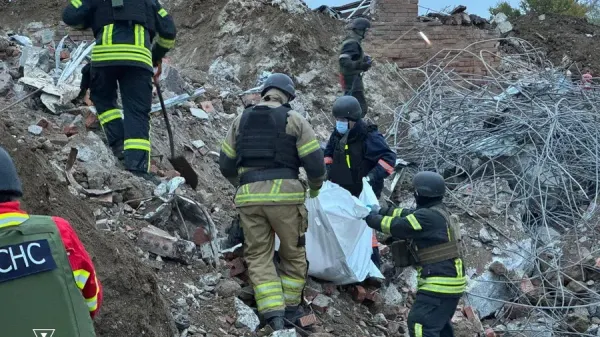
About 78,300 civilians remained in the Kramatorsk and Sloviansk communities in August, according to the Donetsk regional military administration, down from 113,500 earlier in the year. A Russian bomb hit two buses in Kramatorsk on 8 October and killed 30 people, after which Vadym Filashkin, the regional governor, halted public transport in both cities. On 22 October he ordered all families with children to leave the two communities. Since 1 November most of the Ukrainian-held part of the region has been under a curfew from 4pm to 11am.
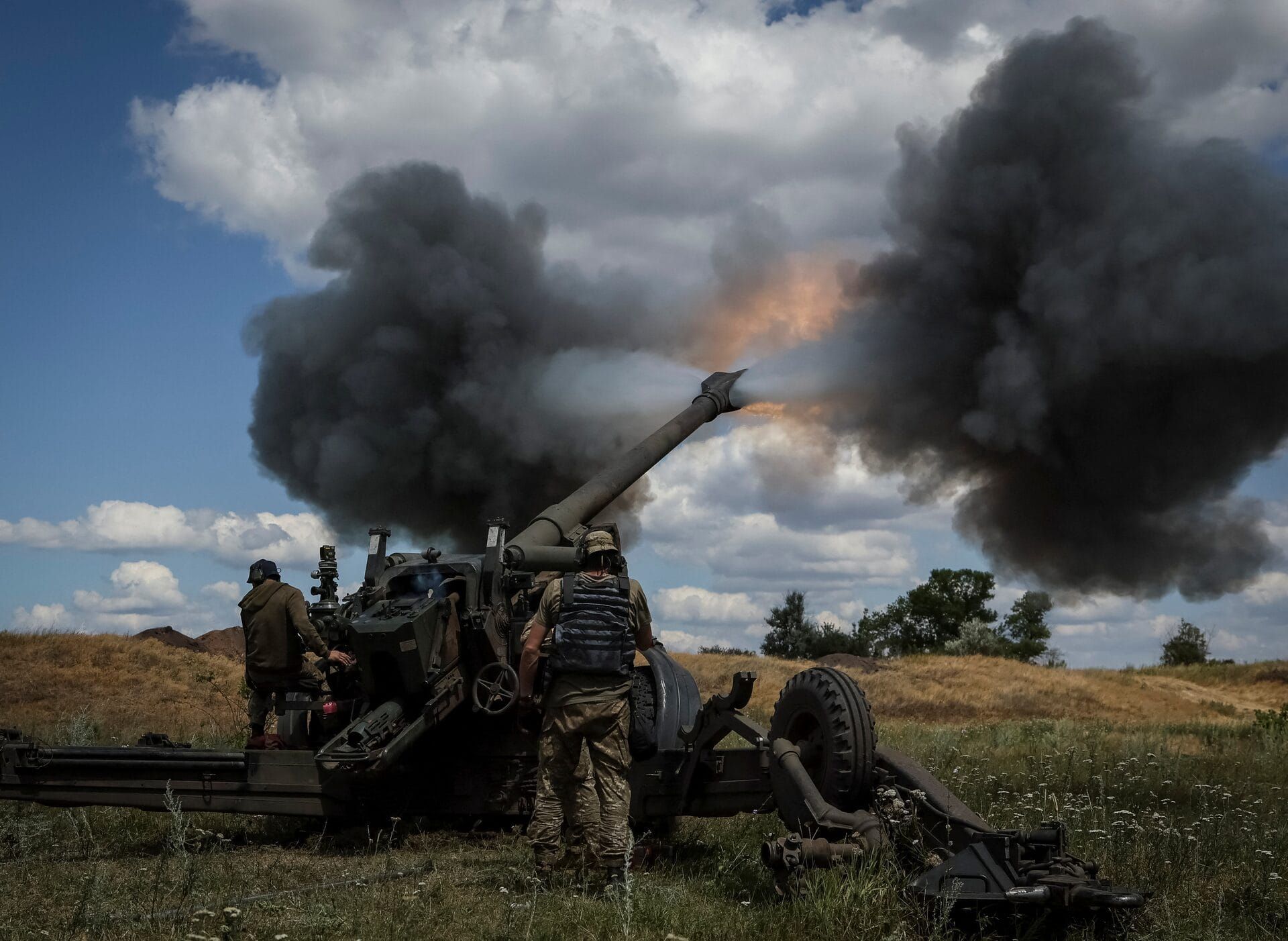
Russian forces have not broken through to the cities. The Institute for the Study of War reported that Russian forces lost more ground than they took in October, a net loss of 27.29 square kilometres. Russian units averaged 0.4 attacks a day towards Kramatorsk that month, against about 30 a day around Dobropillia to the south-west. Russia had set the capture of all of Donetsk region as its main objective for 2026, with a target date of 1 April.
A ceasefire on the current line
Zelenskyy said in the interview that the quickest way to end the war was to stop on the current line of contact and move to talks. A ceasefire could last a month, a year or longer, he said, and would slow mobilisation, let the economy recover and stop the killing. If Putin demanded a long settlement plan before any ceasefire, it would mean he did not want to stop the war.
Sergei Lavrov, Russia's foreign minister, said on 10 November that Russia would not agree to an immediate ceasefire without knowing what would happen next, and that the outlines of Europe's future security architecture should be discussed first. Putin has said that a general halt would let Ukrainian forces rest and resupply.
Zelenskyy said in December 2025 that Ukraine was prepared to give up its NATO bid in return for guarantees modelled on Article 5. In October he set out his conditions in Washington: a ceasefire first, then firm security commitments, a strong Ukrainian army and at least 10 years of international funding for it. Without European help, he said, Russia would at least step up hybrid attacks of the kind it has carried out in Moldova, Romania, Bulgaria, Germany, Finland and Denmark, and could move against the Baltic states and Moldova.
Unanswered question
Neither the U.S. nor Ukraine has said whether Ukraine would be asked to withdraw from Sloviansk, Kramatorsk, Druzhkivka and Kostiantynivka, and the boundaries of the demilitarised zone in the reported U.S. plan have not been published. U.S. officials have not said who would give a guarantee, whether Congress would vote on it or what would trigger it. Russia has not said publicly whether it would accept a guarantee for Ukraine modelled on Articles 4 and 5. Yury Ushakov, Putin's foreign policy aide, has called for NATO to return to the positions it held before 1997, when it began admitting former Warsaw Pact states, and Lavrov wants European security arrangements agreed before any ceasefire.