Ukraine lost high-speed access to the U.S.-funded Starshield satellite service on 14 October, five days after President Donald Trump eased sanctions on Russian diesel and U.S. officials pressed Ukrainian negotiators to stop striking Russian refineries.
Two U.S. officials and a Western official told Reuters that the instruction to slow the service reached Pentagon leaders from inside the White House. The Wall Street Journal later reported that Elon Musk ordered the cap himself, citing U.S. officials. Musk, whose company SpaceX sells Starshield to the Pentagon, and the administration have each said the decision belonged to the other.
Elbridge Colby, the Pentagon's policy chief, told a Baltic official in the same weeks that there should be no "poking" of Russia, according to a person who spoke to Reuters. He also organised a NATO working group in Poland that left out Britain, France, Estonia, Latvia and Lithuania.
Russian oil exporters gained a U.S. sanctions licence. Ukraine lost speed on its drone links for 10 days and, early warning of at least one ballistic missile attack.
The diesel licence
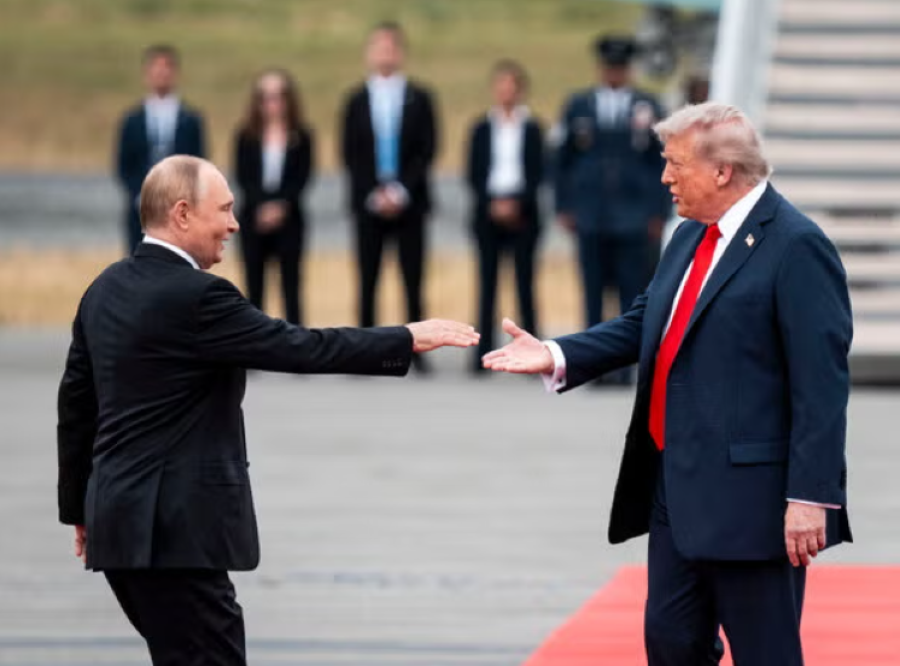
Trump spoke to Russian President Vladimir Putin on 9 October and announced that Russia would supply 300,000 tonnes of diesel to U.S. and global markets immediately, 500,000 tonnes in November and 1 million tonnes after that. Minutes later the Treasury's Office of Foreign Assets Control issued a general licence permitting transactions in Russian-origin diesel until 7 April 2027.
U.S. diesel averaged $6.28 a gallon that day against $3.68 a year earlier, according to AAA, after the U.S. and Israeli war on Iran that began on 28 February. Kirill Dmitriev, Putin's investment envoy, had asked U.S. officials during a September visit to Washington for licences covering all major Russian oil companies, people familiar with the request told Reuters.
The tanker Agioi Fanendes loaded 40,000 tonnes of Russian diesel at Primorsk on 22 October and is due in the U.S. on 7 November. Russian refiners raised diesel output after their government issued export quotas to supply the deal, two industry sources told Reuters.
Ukrainian drones had resumed strikes on the refineries that make that fuel after Russia kept hitting Ukrainian power plants despite an announced energy ceasefire. U.S. representatives complained about the continuing strikes at a meeting with Ukrainian officials in Miami on 9 October, Reuters reported, and Trump called the attacks a disgrace.
The Washington Post reported on 14 October that U.S. officials had told Ukraine they would cut off all intelligence sharing if the refinery attacks went on. CNN and the Financial Times described threats to suspend intelligence and the arrangement through which European governments buy U.S. weapons for Ukraine.
Volodymyr Zelensky said Ukraine received no warning from partners before a Russian ballistic missile strike on Kyiv on the evening of 12 October. Trump said the U.S. was still sharing intelligence. Zelensky said early warnings resumed after a call with Secretary of State Marco Rubio the following week.
The satellite cap
From the night of 14 October, Starshield terminals moving faster than about 160 kilometres an hour lost service, Ukrainian officials said. Ukraine uses Starshield-linked interceptor drones against Russia's jet-powered attack drones, which fly at about 300 kilometres an hour, and told U.S. officials it needed links at up to 450 kilometres an hour. Zelensky said the restrictions contributed to civilian deaths.
SpaceX sells Starshield, the military version of Starlink, to the Pentagon under a 2023 agreement. The Pentagon has paid for Ukraine's satellite service since 2023 and in August 2024 extended Starshield access to 2,500 more terminals in Ukraine on top of 500 already connected, Bloomberg reported. The contract terms that decide who may restrict that service have not been published.
Musk wrote on X on 14 October that the U.S. government owns and controls Starshield and that the U.S. military, with the president having the final say, set any limits on speed or use. On 15 October Reuters reported the White House instruction. A senior U.S. official told the agency that "No such request was ever made by the president," and the White House did not say whether another official had made it.
Ukrainian officials who called the White House, State Department and Pentagon on 13 and 14 October were told it was a White House decision, a senior Ukrainian official told Reuters.
Trump said on 16 October: "It wasn't me. It probably wasn't Elon either." Defence Secretary Pete Hegseth said on 20 October that the U.S. had not withdrawn Ukraine's access and pointed to terms of service Ukraine had to follow.
The Journal's 20 October report, which CBS News corroborated, said Musk ordered the cap on 14 October. Its sources disagreed about whether he acted alone; one said Musk had spoken with several senior officials, including Trump, before the limit took effect. On 22 October the Journal reported that Trump had called Musk and asked him to lift the restriction and that speeds rose after the call.
Defence Minister Yevhen Khmara said on 24 October that ministry monitoring showed Starlink and Starshield speeds restored, and Zelensky said both were back at pre-restriction levels. Hours later Musk wrote that Ukraine's military had broken Starlink's terms by using the civilian service for offensive drone strikes. "That loophole was closed last week," he wrote.
Serhii Beskrestnov, Zelensky's defence technology adviser, said civilian Starlink terminals in Ukraine had been capped at 70 to 90 kilometres an hour since February 2026 and did not work over Russia, so Ukraine could not have used them for deep or medium-range strikes. Serhii Sternenko, a former defence ministry adviser, said drones that need satellite links already ran only on Starshield. Musk has not identified the operations or the terms he says were breached.
The pricing dispute
SpaceX executives told Pentagon officials weeks after U.S. strikes on Iran began on 28 February that the military was paying about $5,000 a month per terminal for LUCAS attack drones while using an aviation-grade tier worth closer to $25,000, according to Pentagon documents and sources cited by Reuters in May.
Musk wrote on 1 March that using commercial Starlink terminals in weapon systems broke its terms, and later blamed the drone maker SpektreWorks for connecting to civilian Starlink. Pentagon spokesman Sean Parnell denied any dispute. Pentagon documents reviewed by Reuters showed the department weighing more than 3,500 further Starshield subscriptions, 100 of them at the aviation tier.
SpaceX decides, in Ukraine as over Iran, which terminals count as civilian Starlink and which as military Starshield, and it can change what each will do. The Pentagon has not published any contract clause giving it or Ukraine the power to override such a change.
Hegseth named Musk on 30 September a co-lead of Project Meridian, a 120-day study of future warfare, alongside Anduril founder Palmer Luckey and former House Speaker Newt Gingrich. SpaceX is the Pentagon's main launch provider and is building satellites for the Golden Dome missile-defence programme. The Pentagon has not said whether Musk serves as a special government employee or what ethics limits apply to him.
The Journal reported in October 2024 that Musk had been in regular contact with Putin since late 2022; the Kremlin called the report false. Reporting on the October 2026 cap does not connect it to any Russian contact.
The oversight request
Nine senators, five Democrats and four Republicans led by Jeanne Shaheen and Thom Tillis, wrote to Pentagon Inspector General Platte Moring III on 15 October. They asked him to investigate whether the Department of Defense, other agencies or contractors directed or knew in advance of the Starshield limits and the missing missile warnings. The letter asked him to preserve correspondence, contract files and technical orders and to confirm the status of an inquiry by 1 November.
Moring declined in a letter dated 27 October. He wrote that Colby had informed him the disruptions "concern a contractual matter" for the Department of the Air Force and the Space Force, Bloomberg reported, quoting the letter. Moring had earlier referred the senators' questions to Colby.
Mollie Halpern, a spokesperson for the inspector general, said the office had decided the matters were best handled by the department.
Colby runs the Pentagon policy office whose role the senators wanted tested; senators had questioned whether Hegseth, Colby or other senior officials played a part in the limits, The Hill reported. Shaheen said it was concerning that the inspector general had decided not to investigate.
The Air Force inspector general works under 10 USC 9020 at the direction of the Air Force secretary and service chiefs, and its deputies are serving officers detailed by the secretary. The Inspector General Act lets the defence secretary stop a Pentagon inspector general investigation only to protect national security, and Moring has cited no such order. Senator Richard Blumenthal has written separately to Musk and Hegseth seeking SpaceX's Defense Department contracts and its ability to change Starshield access.
The Baltic pressure
Pentagon officials asked several NATO governments, including Lithuania, Latvia and Estonia, in bilateral meetings in recent weeks to tone down public warnings about Russia, four people familiar with the discussions told Reuters on 30 October. The officials argued that some statements by European leaders had undermined European security. Colby was among those delivering the message.
One of the people said Colby pointed to European descriptions of Russia as cornered like a rat as an example of unhelpful talk. Estonian Prime Minister Kristen Michal called Putin a "rat in a corner" in late September, after Estonia said Russia had ordered an arson attack on Milrem Robotics, a Tallinn company that supplies ground robots to Ukraine. Reuters could not establish whether Colby meant Michal.
Reuters' sources described no condition or consequence attached to the request. Colby is leading the Pentagon review of U.S. force levels in Europe, which could produce a large troop drawdown.
The Pentagon declined to discuss private conversations among allies and the Baltic defence ministries did not reply. Lithuanian President Gitanas Nausėda's office said neither he nor his aides had received any request to soften their language.
A European official told Reuters the advice was puzzling because Baltic intelligence services have generally played down the chance of Russia directly testing NATO's mutual defence pledge. Estonian Foreign Minister Margus Tsahkna rebuked Zelensky in April for warning that Russia might attack the Baltic states, saying Estonia saw no Russian military preparation to do so.
Colby urged Baltic officials to take a less confrontational line towards Russia during an August visit to NATO headquarters, NATO sources told Euronews. The Quincy Institute, a U.S. think tank that favours military restraint, recommended early this year that the U.S. privately urge Baltic leaders to soften their rhetoric, the Latvian outlet bb.lv reported. Colby presented his NATO 3.0 plan to alliance defence ministers on 12 February, calling for an alliance built on partnership with Europe leading its own conventional defence.
The Poland meeting
Colby organised a meeting in Poland of a select NATO working group and invited Norway, Sweden, Finland, Poland, Germany and the Netherlands, six diplomats told Politico on 30 September. Britain, France, Estonia, Latvia and Lithuania were not invited. An official from one excluded country told Politico: "We're doing everything that is being asked of us."
The Pentagon declined to comment and the White House did not respond.
Bergen Group meetings began on 4 June at Haakonsvern naval base outside Bergen, with a second session, joined by Denmark and Türkiye, on the sidelines of NATO's summit in Ankara, the Institute of Central Europe in Lublin recorded. Colby wrote on X after the first meeting that it gathered allies quickly meeting their Hague spending pledges, with enough scale to contribute and readiness for practical work.
Fabrice Pothier, a former NATO director of policy planning, told Euronews that the exclusions might reflect Trump's anger at Britain and France for initially refusing to join the Iran war and at France's push for European weapons purchases. Politico reported that the excluded countries were among those the administration considered to have acted against the president's priorities. British diplomats said they remained in regular contact with U.S. counterparts.
The Pentagon has published no date, attendance list or readout for the Poland meeting. The Lublin institute wrote in late October that its participants, at a meeting it understood to be set for November, had not been announced.
The nuclear exercises
Russia sent NATO a diplomatic note on 30 September saying it would be ready to use its entire arsenal, including nuclear weapons, if the alliance tried to isolate Kaliningrad, the Russian Baltic exclave between Poland and Lithuania. Putin repeated the warning at the Valdai Discussion Club on 1 October, saying a direct attack on Russian territory would put all available weapons on the agenda. NATO Secretary General Mark Rutte told Russia to stop its nuclear threats, and the alliance went ahead with its Steadfast Noon nuclear exercise.
On the evening of 20 October, RAF Typhoons escorted French Rafales from Saint-Dizier air base over the Mediterranean on a simulated nuclear strike in Rummy, an exercise of France's airborne nuclear force. The French and British defence ministries said on 23 October that British jets had never before taken part in a French nuclear exercise; no nuclear weapons were carried. Defence Secretary Wes Streeting said the exercise opened a "new chapter" in UK-France nuclear relations.
Britain and France agreed in July 2025 to coordinate their independent nuclear forces, and British personnel observed France's Poker exercise in December 2025. Emmanuel Macron announced what he called "forward deterrence" at the Île Longue submarine base on 2 March 2026, saying nuclear-capable Rafales could deploy to partners such as Germany and Poland while France kept sole authority over their use and offered no explicit guarantee.
Poland and France held the first meeting of a nuclear steering group on 10 July. The Journal reported this week that France is working with 10 European countries on the plan, with France keeping full control of its weapons.
Macron's speech came seven months before the Kaliningrad note and the Poland invitations. The French and British statements on Rummy spoke of NATO security and European coordination and did not mention the Starshield cap, Colby's Baltic message or the Poland meeting. Coverage of the March speech placed it amid European doubts about U.S. commitments that had built since Trump's return to office in January 2025.
The Finnish satellites
ICEYE, a Finnish radar-satellite operator, and Nokia announced on 1 October that they would jointly build low Earth orbit communications systems that customer governments would own, including satellites, ground stations and terminals, with a first satellite planned for 2028. Ukraine's defence ministry signed a letter of intent with the two companies on 22 October during Finnish Prime Minister Petteri Orpo's visit to Kyiv.
An ICEYE spokesperson told Breaking Defense that the letter "does not imply an ordering of any system for Ukraine". The companies have disclosed no price, satellite count, spectrum plan or date for Ukrainian service, and the 2028 target applies to their joint product with no Ukrainian network yet scheduled.
ICEYE has supplied Ukraine with radar imagery since 2022, including a satellite bought with UAH 600 million raised by the Serhiy Prytula Charity Foundation. Zelensky said the letter was important for Ukraine's defence and resilience.
The records
White House and Pentagon communications from 13 and 14 October would identify the official who gave the instruction Reuters' sources described; the senators asked the inspector general to preserve them. SpaceX's change log and the Air Force and Space Force contract for Ukraine's Starshield service would show who set the speed limit, under which clause and whether the Pentagon was told first.
Colby's written advice to Moring would show what review, if any, preceded his statement that the disruption was a contractual matter. Pentagon notes of the bilateral meetings with Baltic officials would record Colby's words and whether they were linked to the force-posture review. The Office of Foreign Assets Control licensing file would show whether Dmitriev's September request for licences covering all major Russian oil companies shaped the 9 October general licence.