Two USians whom US officials identify as CIA employees worked with Chihuahua state police for months without the federal authorisation Mexican law requires, until a crash after an April drug raid killed them and two Mexican officers. On 25 October a federal judge sent César Gustavo Jáuregui Moreno, the state's former attorney general, to trial for treason; he denies authorising the USians' participation.
Mexico is prosecuting a former state attorney general for treason after a drug raid in Chihuahua exposed CIA personnel working alongside state police without the federal authorisation that Mexican law requires.
On 25 October federal judge Ricardo Alfonso Santos Dorantes sent César Gustavo Jáuregui Moreno to trial. Jáuregui ran the Chihuahua attorney general's office, whose State Investigation Agency (AEI) led the raid. Treason carries five to 40 years in prison.
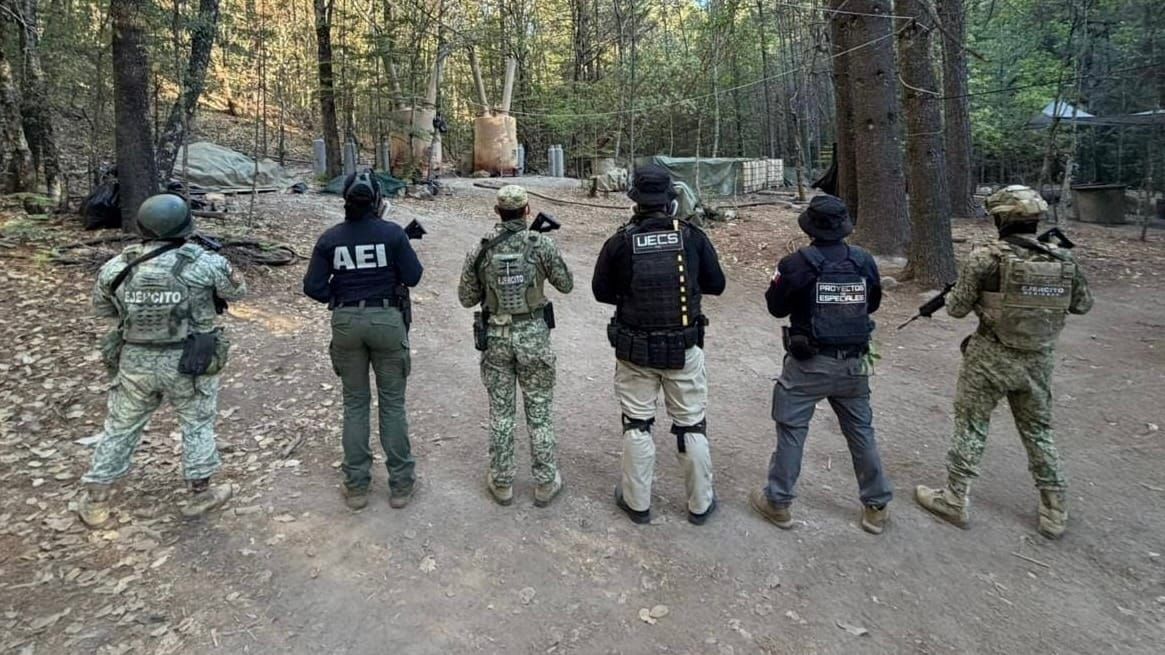
The raid, at El Pinal in the Sierra Tarahumara in April, ended with four people dead. Two were US citizens whom a US official and two other people familiar with the matter told the Associated Press were CIA employees. The CIA declined to comment.
The USians' work with Chihuahua's police began well before that raid. State prosecutors have placed one of them in the state from October 2025, and police witnesses describe foreigners in AEI insignia on an earlier operation in March. Mexico's Security Ministry told federal prosecutors it holds no authorisation for the state to deal with foreign agents.
Prosecutors accuse Jáuregui and his former subordinate, Guillermo Arturo Zuany Portillo, of bringing the foreigners into state operations while evading federal oversight. Zuany is a fugitive. Jáuregui denies authorising the foreigners' participation.
The USians were in Chihuahua before the raid
Richard Leiter Johnston III, one of the two dead USians, had repeated contact with Chihuahua's security apparatus for six months before the raid.
State prosecutors presented hotel bookings, car-rental contracts and geolocation data in court on 18 October. They place him in the state capital in October 2025 and again from 21 to 31 January 2026. His rental cars made long stays at the state security complex, near the office of the Special Prosecutor for Strategic Operations.
Zuany had headed that office since 5 September 2025, a month before Johnston's first documented stay. The appointment was inside Jáuregui's office.
Foreigners were joining state operations before April. An AEI agent told state prosecutors that two hooded men wearing AEI insignia, one with a red-and-white flag patch, took part in an operation in Nonoava and San Francisco de Borja on 19 March; Zuany's own escorts placed him coordinating it. The Los Angeles Times, citing people familiar with the operations, reported that El Pinal was at least the third operation in 2026 in which CIA personnel joined Chihuahua authorities.
On 14 April, four days before the raid, a truck registered to Johnston entered the state's C4 security complex for a "Cita Zuani", an appointment logged under Zuany's name, with the AEI as the area visited. Security cameras filmed unidentified armed men at AEI premises on 9 and 16 April, one with a long gun.
The hotel, rental and C4 files establish repeated contact between Johnston and Zuany's office. They do not show who authorised his part in operations.
The raid that exposed them
About 40 AEI officers left the state capital for the army base at Guachochi on 16 April. Four outsiders joined them over the next two days, according to a 27 April report by a special unit under state prosecutor Wendy Chávez Villanueva: Johnston, John Dudley Black and two men the unit could not identify but described as presumably US citizens. About 50 soldiers joined at Polanco.
The column found the laboratories on foot on 18 April, and the federal attorney general's office (FGR) later seized more than 50 tonnes of chemical precursors and almost 2,000 litres of methamphetamine there.
At about 01:50 on 19 April the AEI truck carrying Johnston and Black fell into a ravine near Polanco and burned. The crash killed both USians, along with Pedro Román Oseguera Cervantes, the AEI's director, and Manuel Genaro Méndez Montes, his bodyguard. The truck was carrying cans of petrol, and an expert examination released on 26 May found the deaths accidental. At about 02:00, one agent told investigators, an order came "from chief Zuany" to take no photographs and release no information about the crash.
Witness accounts differ over what the USians did. A tactical-group officer told federal investigators they left with the convoy from the prosecutor's garage, checked coordinates on tablets, joined tactical patrols and reported directly to Oseguera. Prosecutors presented an image from 17 April that they say shows the USians heading towards El Pinal in state tactical uniforms, and the Los Angeles Times reported that they wore AEI uniforms to blend in.
Five other state officers told the FGR they never saw the foreigners armed, and the state's 27 April report described them as unarmed and without command. A convoy officer said one foreigner asked for a Starlink terminal and said they were embassy staff. The evidence leaves unresolved how directly the USians took part in the raid; it is not in dispute that they travelled with an armed state police column on a drug operation.
Jáuregui's account changed in the days after the crash. He first described the dead men as US Embassy instructors on "training work", giving a drone course. His office's release of 20 April then ruled out the involvement of foreign personnel altogether. He had told reporters the raid followed months of planning between the AEI and Zuany's office, and he resigned on 27 April, accepting political responsibility for omissions in information and internal controls.
Operations without federal authorisation
Mexican law limits foreign agents to liaison and information exchange. They may not carry out functions reserved to Mexican authorities, and may carry only weapons authorised by the Defence Ministry. State officials need advance approval from the federal High-Level Security Group for any meeting with foreign agents, and must report every contact in writing to the Foreign and Security ministries within three days. A 2025 reform of constitutional Article 40, passed by deputies 417 votes to 36, bars foreign intervention in any investigation or prosecution without the Mexican state's express authorisation.
The federal agencies the FGR consulted hold none of the required approvals. The Security Ministry has no authorisation for the state to meet or share information with foreign agents, and no entry data on Johnston or Black. The Defence Ministry said its soldiers provided only perimeter security from 16 to 18 April and were never told foreigners were present. The National Intelligence Centre said on 30 April that it had no data on the two men's addresses, passports, activities or contacts.
The federal security cabinet found that one man had entered Mexico as a visitor without permission to work and the other on a diplomatic passport, and that neither was accredited for field activities.
Zuany's office told the FGR it kept no entry or exit log, and the attorney general's office said camera footage for part of the period was lost to a power cut from 3 to 6 March. A Federal Ministerial Police report dated 11 September found that the office had opened no investigation file that could have justified the El Pinal deployment.
President Claudia Sheinbaum said on 21 April that her government had not been informed and that the operation was "a decision by the Chihuahua government". Two days later she said the state had requested the collaboration and that the US ambassador should also have informed federal authorities.
Who authorised the USians
State prosecutors told the court on 22 October that the chain of command for the operation led to Jáuregui, including the decision to bring in the foreigners, and that he let Zuany coordinate AEI work after Zuany had left the agency. They allege that the two men agreed in April to incorporate the four foreigners while evading federal control.
Ernestina Godoy, the federal attorney general, said on 17 October that the foreigners' participation had no justification whatsoever. "The State Attorney General's Office, through its head, was required to inform the federal government [about the operation]. It did not do so," she said.
Jáuregui says there is "ni una orden, ni un WhatsApp", not one order or WhatsApp message, tying him to the decision. His lawyer, Héctor Villasana, says the testimonies in the file point to Oseguera.
Oseguera dealt with the foreigners directly, the state unit found, and sought no authorisation that its investigators could find. Zuany left his post in May after an administrative procedure over an alleged omission and is a fugitive from both the state and federal warrants.
Governor María Eugenia Campos told Omar García Harfuch, the federal security secretary, that she had no knowledge of an operation with US agents in the field. Sheinbaum said on 23 October that at a meeting at Ciudad Juárez airport on 19 September, Campos told her: "It wasn't me, it was my ex-attorney general", and said Campos also told her that Jáuregui "has casinos". Campos denies blaming him. The FGR has opened a separate investigation into Jáuregui over casinos and the use of front men.
The treason prosecution
Santos Dorantes ordered the case to trial at 00:35 on 25 October after a hearing held behind closed doors on national-security grounds, on more than 150 items of evidence filed by the FGR. He kept Jáuregui in pretrial detention at the Altiplano maximum-security prison and gave both sides two months, to 25 December 2026, to complete their investigations. The federal warrant also names Zuany.
The illegality of the operations and the treason charge are separate questions. Article 123 of the Federal Penal Code punishes acts against the nation's independence, sovereignty or integrity carried out "con la finalidad de someterla a persona, grupo o gobierno extranjero": with the purpose of subjecting it to a foreign person, group or government. The FGR argues that the conduct endangered national security without needing to cause direct damage. Baldomero Mendoza, who teaches criminal law at the National Autonomous University, told El Universal that prosecutors must prove that purpose and that unauthorised entry of foreign agents does not establish it on its own.
The office Jáuregui once ran is prosecuting him too. State judge Luis Alberto Simental Ortega signed a warrant on 16 October for illegal exercise of public service, 27 days after the airport meeting, and state police stopped Jáuregui's car the next morning. Federal agents arrested him on the treason warrant minutes after a state hearing on 18 October, and on 22 October a state judge bound him over on the illegal-exercise count.
Sheinbaum said on 19 October that the state and federal prosecutors had worked jointly, and on 20 October she denied any political pact with Campos. Jáuregui, who had been seeking the PAN's nomination for mayor of the state capital against Campos's preferred candidate, has suggested a political motive for both prosecutions and offered no evidence of one.
What the US government has not explained
The US Embassy said on 20 April that the two men were "supporting Chihuahua state authorities' efforts to combat cartel operations" and declined to name their employer. Ronald Johnson, the US ambassador and a former CIA employee, first described the dead as embassy personnel and praised their "tireless efforts".
The embassy's statement confirms that US government employees were working with a state government that, under Mexican law, had no authority to receive them without federal approval. The Foreign Ministry wrote to Johnson in April seeking information on US security collaboration with Chihuahua. The federal government later ordered the two surviving US personnel out of Mexico, and the State Department said after the treason charge that it was aware of the case.
The Senate approved, at Sheinbaum's request, the entry of 139 soldiers of the US 101st Airborne Division, the lawful route for foreign forces, for joint exercises in Chihuahua from 20 to 30 September. Matías Gómez Leautaud, an analyst at Eurasia Group, told Reuters the treason charge seeks to stop states cooperating with the US government without federal approval.
By 26 October the US government had not publicly said who authorised the officers' deployment to Chihuahua, what instructions governed their part in state operations, why they wore Mexican police uniforms, what they did in the state between October 2025 and April 2026 or whether it received reports on the earlier operations. The embassy's accreditation file for Johnston and Black and any reply to the Foreign Ministry's April letter would show what the US government declared, who in it approved its officers' part in Chihuahua's police operations and whether those officials knew that Mexico's federal government had never authorised it.