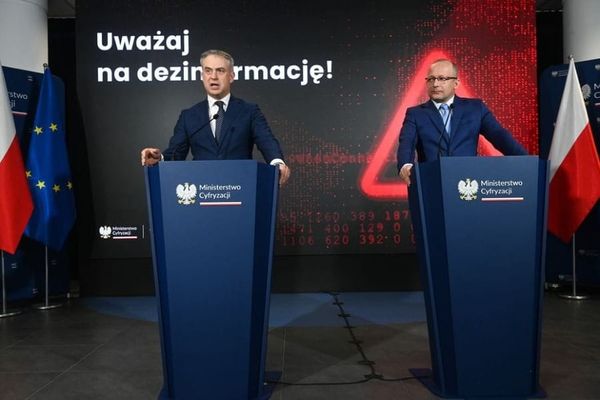
NATO's top commander in Europe and allied intelligence services warned Poland that armed groups could cross from Russia's Kaliningrad exclave in the first half of November, Prime Minister Donald Tusk said on 3 November.
Independence Day on 11 November falls inside the warning period. It is the date by which President Karol Nawrocki said he expected Tusk to curb his use of power in the dispute over the Constitutional Tribunal. Police, border guards and counterterrorism officers have been sent to the north-eastern provinces of Warmia-Masuria and Podlaskie since 2 November. The U.S.-led NATO battlegroup in Poland is based in the same region, at the Bemowo Piskie training area near Orzysz.
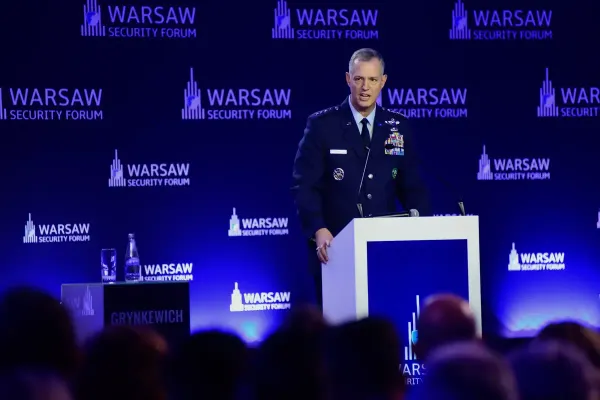
Tusk said the warning came from Gen. Alexus Grynkewich, who is both NATO's supreme allied commander Europe and head of U.S. European Command. He did not say what the intelligence contained, and by the afternoon of 3 November the government had published no evidence of a specific plan originating in Kaliningrad.
Border guards reported troubling movement on the Polish-Russian border in the early hours, Tusk said, and forces were sent to the spot. The group, seen near the town of Sępopol, went back into Kaliningrad without crossing. Tusk told reporters: "We managed to prevent attempts at provocation, if that was indeed the intention."
The operation in the north-east
Marek Boroń, the national police chief, said on 2 November that a special operation headquarters in Warsaw was coordinating the police, the army, the Border Guard and the intelligence services. He said the operation was preventive and tied to sabotage and the activity of eastern intelligence services. The provincial police commands in Olsztyn and Białystok are running it on the ground, with reinforcements drawn from several other provinces.
Tomasz Michułka, a deputy national police chief, had ordered officers on 29 October to be on full readiness from 2 to 8 November. The police said on X that the order concerned current threats of sabotage, and Boroń said the operation had no connection with the tribunal. The Military Intelligence Service and allied services had passed on their warning about a week before the operation began, RMF FM reported.
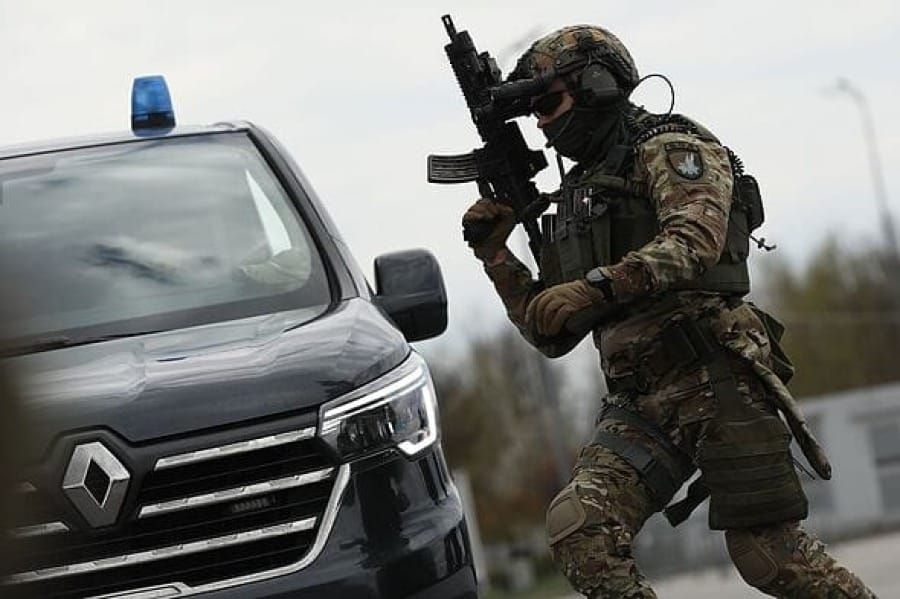
Soldiers of the GROM special forces unit were also sent to the border area, Wirtualna Polska reported. Police said the operation is meant to protect residents, detect suspicious activity early and prevent attacks on infrastructure. U.S. European Command started a campaign on 3 November urging its personnel to vary their commuting routes and times, switch off geotagging on fitness apps and post less about travel plans.
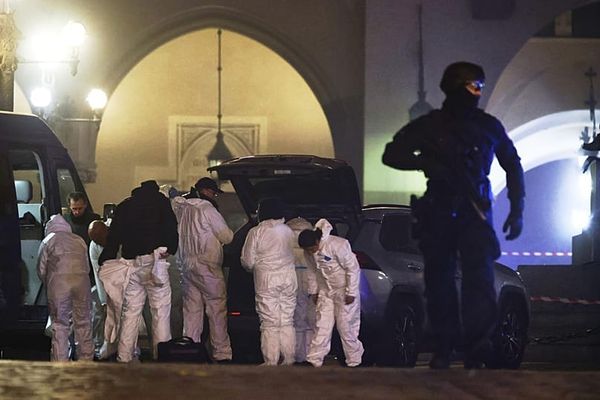
Polish prosecutors treated an explosion on the Warsaw to Lublin railway in November 2025 as sabotage of a terrorist nature. Foreign Minister Radosław Sikorski told lawmakers it was likely carried out on the orders of Russian military intelligence. The Polish government also blamed Russia for a fire at a drone and military components factory in August and an arson attack on a Starlink ground station in September.
Grynkewich's October visit
Grynkewich gave Tusk the warning while he was in Warsaw in October, Tusk said, and told him events could escalate as early as this autumn. Tusk said his own warnings had become more specific as he received intelligence from NATO, Ukrainian and U.S. services, including the CIA.
During the same visit Grynkewich set out NATO's plan for an attack on alliance territory: stop the invasion, destroy the attacking forces and dismantle the military systems supporting them. "If someone is foolish enough to attack us, we will fight," he said. At a news conference with Lithuania's prime minister on 13 October, Tusk said his concerns included provocations involving aircraft and attacks on border crossings.
Kaliningrad lies between Poland, Lithuania and the Baltic Sea and is the base of Russia's Baltic Fleet and of nuclear-capable Iskander missiles. Immediately to its east is the Suwałki corridor, the short stretch of Polish-Lithuanian border between Russian and Belarusian territory that forms the only land link between the Baltic states and the rest of NATO.
The nuclear note
Russia sent NATO a diplomatic note on 30 September stating that it would be ready to use its entire arsenal, including nuclear weapons, if alliance members tried to isolate the Kaliningrad region from the rest of the country. The note said the Russian government had information that NATO was preparing an air and naval blockade of the exclave. Russian embassies in at least three European countries issued similar statements that week.
Allison Hart, a NATO spokesperson, said the alliance had replied that it was not targeting Kaliningrad and that none of its activities or exercises posed a risk to any part of Russia. Mark Rutte, the NATO secretary general, told Russia to stop the nuclear threats. President Vladimir Putin said at the Valdai Discussion Club in Moscow on 1 October that Russia was prepared to use all weapons in its arsenal if Kaliningrad were attacked. Dmitry Peskov, the Kremlin spokesman, said there had been "rampant statements" from Poland and other European countries about the exclave.
Nawrocki and 11 November
Nawrocki opened a National Security Council meeting on 3 November, the day of the border sighting, by blaming Tusk for what he called an illegal takeover of the Constitutional Tribunal. Bartosz Grodecki, head of the National Security Bureau, had said the session would discuss the current security situation and a permanent U.S. military base. Nawrocki told the council it was irresponsible to put security and the presence of U.S. forces at risk over the tribunal.
Tusk had accused the Russian government that morning, before the cabinet meeting, of exploiting the dispute to fuel instability in Poland. After the council session he offered Nawrocki a one-to-one meeting that week.
Zbigniew Bogucki, head of the president's chancellery, wrote on X on 6 November that the president's position was that police cordons should leave the tribunal and "lawful judges" should enter it. Jan Grabiec, head of the prime minister's chancellery, said in response that the two should be able to talk without conditions. In the Sejm that evening Tusk said the president had for now withdrawn from the invitation, and said a growing threat from the east was a reason for the two sides to agree on security.
Nawrocki put the "eastern social and business contacts" of Włodzimierz Czarzasty, the speaker of the Sejm, on the agenda of a council session in February. Jacek Dobrzyński, spokesman for the minister coordinating the special services, said Czarzasty held clearance for top-secret information and the services had no reservations about him.
Korwin-Mikke in Minsk
Tusk used his 3 November remarks to warn Polish politicians not to serve as useful idiots for foreign services, a term he said Lenin had used. He said the open involvement of pro-Russian politicians was more dangerous, pointed to a photograph of Grzegorz Braun with Jarosław Kaczyński outside the tribunal and said Janusz Korwin-Mikke had decided to travel to Belarus.
Korwin-Mikke, 84, is a former member of the European Parliament who leads the KORWiN party. He posted a photograph that afternoon with the message: "Greetings from Minsk in Belarus." He wrote that elections were a year away and that what could still be saved had to be saved. Adam Szłapka, the government spokesman, wrote that Korwin-Mikke had been with Braun and Kaczyński on the Friday and in Minsk on the Tuesday.
Korwin-Mikke wrote in reply that those criticising him should decide whether he supported Russia, which he said wanted to absorb Belarus, or Belarus, which he said had resisted that for more than 20 years. Wirtualna Polska reported doubts about whether the photograph was taken in Minsk. Korwin-Mikke has not said publicly why he went.
Bundeswehr vehicles on Polish motorways
Video of German military vehicles on Polish roads spread online from 2 November with claims that they were heading to the tribunal. Konkret24, the TVN24 fact-checking unit, rated the claim false on 4 November. One clip showed seven vehicles, several marked Feldjäger (military police), on the A2 motorway near Trzciel heading towards Poznań and Warsaw, and drew more than 380,000 views on TikTok. Another showed two Bundeswehr vans parked near Złota Street in central Warsaw. Dariusz Matecki, a Law and Justice (PiS) member of parliament, shared it and asked Tusk whether reinforcements had arrived from the "Vaterland".
Three Bundeswehr lorries collided on the A4 near the Kostomłoty junction on 4 November, and three people were taken to hospital. Miguel Berger, the German ambassador, wrote on X on 5 November that the embassy was marking the Bundeswehr's 71st anniversary with an exhibition. He wrote that any disinformation suggesting German involvement in Poland's internal affairs would be firmly rejected.
Poland's defence ministry has announced an exercise running from 9 to 22 November. Nearly 3,000 soldiers from 11 countries of the coalition supporting Ukraine are taking part, Germany among them. On 2 November the General Staff deleted a post on X about "astroturfing", the faking of grassroots protest by outside actors. Col. Marek Pietrzak, its spokesman, said the post was educational and had been prepared more than a week in advance, and that it was removed because it was drawing the army into a political dispute.
The police readiness order covered 2 to 8 November, and the services have not said how long the border operation will last. The allied warning runs to 15 November.