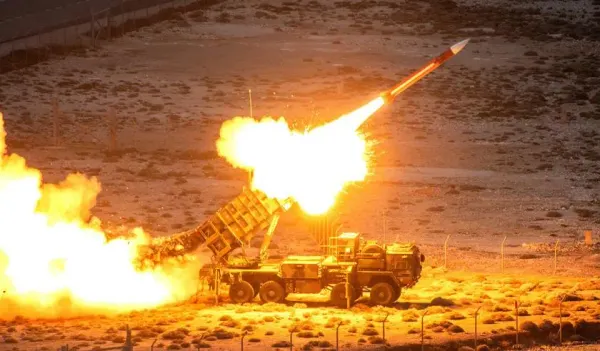
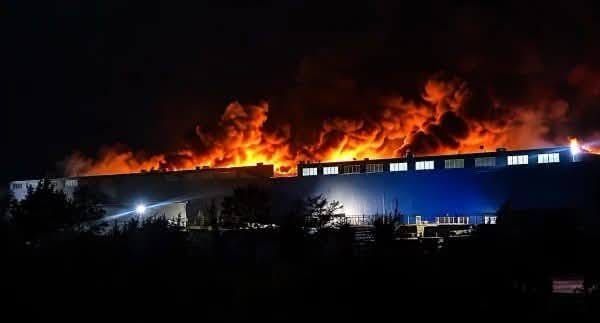
Drones hit Yandex data centres in Sasovo, Kaluga and Vladimir between 8 and 11 October, shutting two of the sites down entirely, disabling several modules at the third and disrupting cloud, transport, banking and media services across Russia.
Russian forces had damaged or destroyed data centres belonging to at least eight Ukrainian companies since late September. No major Ukrainian drone attack on a Russian data centre had been confirmed before 8 October.
Volodymyr Zelensky, Ukraine's president, told reporters in Kyiv on 8 October that Russian forces had struck and were still striking Ukraine's data centres and that Ukraine had responded. "We always respond in mirror-like fashion," Zelensky said. He did not name Yandex and said he could not share all the details.
Fire Point, the Ukrainian maker of the FP-1 long-range attack drone, wrote on Telegram on 9 October that Ukraine's defence forces had used FP-1s against the Kaluga site. Russia's defence ministry said it intercepted 479 Ukrainian drones over 16 regions, including Vladimir, overnight into 11 October.
Three sites in four days
Yandex said a drone attack overnight on 7 to 8 October caused a fire at its Sasovo data centre in Ryazan region, about 300 kilometres east of Moscow, and that the site had stopped working entirely. Pavel Malkov, governor of Ryazan region, wrote on Telegram that two Ukrainian drones had been shot down over the region and that the roof of a business had caught fire in the Sasovo area.
Sasovo holds tens of thousands of servers and two of Yandex's three supercomputers, Chervonenkis and Lyapunov, which the company has used to train its AI models. Chervonenkis, rated at 21.53 petaflops, ranked 101st on the June 2026 Top500 list of the world's fastest supercomputers. Yandex said on 8 October it could not yet confirm whether the Sasovo equipment could be restored and has declined to say whether the supercomputers were damaged.
Yandex has occupied part of the former premises of the Sasta machine-tool plant in Sasovo since 2014. Sasta's complex includes machining and assembly workshops and a foundry and serves Russia's defence industry. Whether the data centre, the plant or both were the intended target is unclear.
Yandex's Kaluga data centre, in the Grabtsevo industrial park, lost several modules completely overnight into 9 October, the company said. Yandex designed the Kaluga campus as its largest, with 63 megawatts of capacity and room for more than 3,800 server racks across 130,000 square metres, and brought it into service in 2023.
Vladislav Shapsha, governor of Kaluga region, said air defences shot down 26 drones over the city of Kaluga and three surrounding districts on 9 October and that the attack injured nine people.
Yandex said on 11 October that drones had damaged infrastructure at its Vladimir data centre and that work at the site had been completely suspended. The site, in the Energetik neighbourhood of Vladimir about 180 kilometres north-east of Moscow, hosts the Yandex Cloud availability zone ru-central1-a and houses Galushkin, the third Yandex supercomputer.
Alexander Avdeev, governor of Vladimir region, said drones had attacked infrastructure in the suburbs of Vladimir and confirmed a fire. The strikes damaged electrical substations and cut power to parts of the city.
Yandex reported no injuries at any of the three sites. The company removed its data centres in four regions from its own mapping service after the Sasovo strike.
Outages across Russia
Yandex Cloud lost availability zone ru-central1-b to a power failure from 01:31 Moscow time on 8 October and reported power disruptions in zone ru-central1-a from about 04:00 on 11 October. After the Vladimir strike Yandex told customers the platform was running in emergency mode and advised them to activate disaster-recovery plans.
NetBlocks, the internet monitoring group, reported that connectivity on the Yandex network fell to about 70 per cent of normal levels on 8 October. Downdetector logged more than 1,300 user reports of disruption to Yandex Cloud, Yandex Documents and Yandex Tables the same day.
Russian Railways, the mobile operator MegaFon, the classifieds site Avito, the video service Ivi, T-Bank and the property portal Cian all suffered failures on 8 October, as did several Russian media websites. MosTransAvto, the state bus company for Moscow region, said online ticket sales were unavailable because a data centre had been temporarily shut down. Outage monitors recorded wider failures across Russian internet services from about 16:00 that day.
More than 80 Yandex services went offline after the Vladimir strike, including search, ride-hailing, e-commerce, food delivery and Yandex Cloud, with problems also reported in Kazakhstan.
Yandex shares fell more than 3 per cent on the Moscow Exchange on the morning of 8 October and about 4 per cent after news of the Kaluga strike on 9 October.
Yandex said on 9 October that it had agreed with Selectel, K2Cloud and VK Cloud, three Russian rivals, to speed up the transfer of affected customers' data and services, with extra specialist teams, flexible financial terms and simpler onboarding. Yandex Cloud had offered customers dedicated bare-metal servers as a fallback on the evening of 8 October. Yandex said on 9 October that it could not yet give a timeline for restoring equipment at the damaged data centres.
Russia's strikes on Ukraine's internet
Russian strikes since late September have damaged facilities run by Datagroup, De Novo, MiroHost, Parkovy, Ukrtelecom, Vodafone Ukraine, Cosmonova and Omega Telecom. One attack cut internet access to about 100,000 households. Parkovy's Kyiv data centre stopped working on 1 October, and Omega Telecom said on 6 October that its Kyiv data centre had closed.
Russia's defence ministry said a data centre it struck in Kyiv on 25 September processed and transmitted intelligence for Ukraine's armed forces. The ministry has called its campaign against Ukrainian data centres a "forced digital detox".
Zelensky ordered stronger protection for Ukraine's data centres and other communications sites on 25 September, after Russian strikes on Kyiv damaged several internet and hosting providers.
Vladimir Putin, Russia's president, gave the state power in August to take control of critically important infrastructure judged to be poorly protected against drone attacks.
Ukraine's parliament passed a law about a week before the full-scale invasion of February 2022 that let government and private-sector data move to the cloud. More than 10 petabytes from 42 Ukrainian government authorities, 24 universities and dozens of private companies had moved to Amazon Web Services by June 2022, according to AWS.
Russia's data-localisation law
Federal Law 242-FZ, in force since 1 September 2015, requires operators to record and store Russian citizens' personal data using databases located inside Russia. Roskomnadzor, the Russian communications regulator, permits copies abroad only where the primary database remains in Russia.
Yandex has run a separate cloud region, kz1, from a data centre in Karaganda, Kazakhstan, since April 2024. Selectel, K2Cloud and VK Cloud, the providers Yandex named for customer transfers after the strikes, are all Russian companies.
Data centres as targets in 2026
Drones directly struck two Amazon Web Services data centres in the United Arab Emirates on 1 March, and a strike close to an AWS facility in Bahrain damaged its infrastructure, AWS said. Two of the three availability zones in the AWS UAE region, mec1-az2 and mec1-az3, were severely impaired, and a second Bahrain availability zone was disrupted in April.
Iran's Fars News Agency wrote on Telegram that the Bahrain facility had been targeted because of its role in supporting US military and intelligence activities. Fortune reported that the US military used Anthropic's Claude model, running on AWS, for intelligence assessments, target identification and battle simulations during US strikes on Iran.
AWS said in a status update nearly six months after the strikes that it could not restore access to resources and data hosted only in its Bahrain region, where the damage "exceeded what our regional and multi-AZ services are designed to withstand". AWS also could not restore access to resources hosted only in mec1-az2 in the UAE.
Legal status of data centres
Article 52 of Additional Protocol I to the Geneva Conventions bars attacks on civilian objects and limits lawful targets to objects that make an effective contribution to military action and whose destruction offers a definite military advantage. Where there is doubt over whether an object normally dedicated to civilian purposes is being used to contribute to military action, the protocol requires the attacker to presume it is not.
Russia ratified the protocol in 1989 and in 2019 withdrew its declaration accepting the competence of the treaty's International Fact-Finding Commission. Ukraine ratified the protocol in 1990.
Russia's defence ministry cited intelligence processing to justify its strikes on Ukrainian data centres, and Fars cited US military and intelligence use to justify the attack on AWS in Bahrain. Neither the Ukrainian government nor Fire Point has publicly identified a military function at the three Yandex sites, though the Sasovo data centre shares its grounds with a plant that serves Russia's defence industry.
Yandex has not given a repair date for any of the three sites.