Ukrainian drone crews lost their satellite links in mid-flight overnight on 13 to 14 October 2026 after SpaceX capped its military Starshield service at 160 km/h. On the same night Russian forces fired 39 ballistic missiles and more than 120 drones at Ukraine's power grid, cut electricity to at least 600,000 people and killed three people in Kyiv. In the four days before the cap, Donald Trump told Ukraine to stop striking Russian refineries and to replace its president. Elon Musk, the largest known donor to Republicans in next month's midterm elections, publicly backed Trump on both counts. Ukrainian officials say the Trump administration has also threatened to stop sharing intelligence on Russian missile launches.
Starshield cap grounds high-speed drones
SpaceX cut connectivity on Starshield, the military version of its Starlink service, for Ukrainian terminals moving faster than 100 mph (about 160 km/h) overnight on 13 to 14 October 2026. Serhii Beskrestnov, Volodymyr Zelenskyy's adviser on defence technology, confirmed the restriction on Telegram on the morning of 14 October. He wrote that Ukraine's defence forces had received no warning and that several missions had been disrupted. A Defence Ministry source said Ukraine had detected the restrictions above 160 km/h, was investigating the root cause and had asked US officials, SpaceX and NATO for clarification. Static Starlink terminals used for front-line communications kept working, and Ukraine's missile and drone detection runs on other systems.
Serhii Sternenko, a drone-warfare activist and former adviser to ex-defence minister Mykhailo Fedorov, reported the cap first on X. He wrote that SpaceX "likely took these measures at the request of the Trump administration" and offered no evidence. Beskrestnov wrote that the move could not be a coincidence and was connected to "the current political situation". He offered no evidence either. Sternenko later wrote that the speed at which links dropped had fallen further. SpaceX did not respond to requests for comment.
A drone unit commander supplied video of two Ukrainian drones above cloud cover losing their link and abandoning their mission. The 7th Air Assault Corps said its drones lost connection for 10 to 20 seconds at 110 to 120 km/h, below the stated threshold, which made them harder to control and easier to shoot down. The corps said unstable links could make it impossible to launch high-speed drones, mid-range strike models among them. Unit reports put the dropout point anywhere between about 72 and 161 km/h.
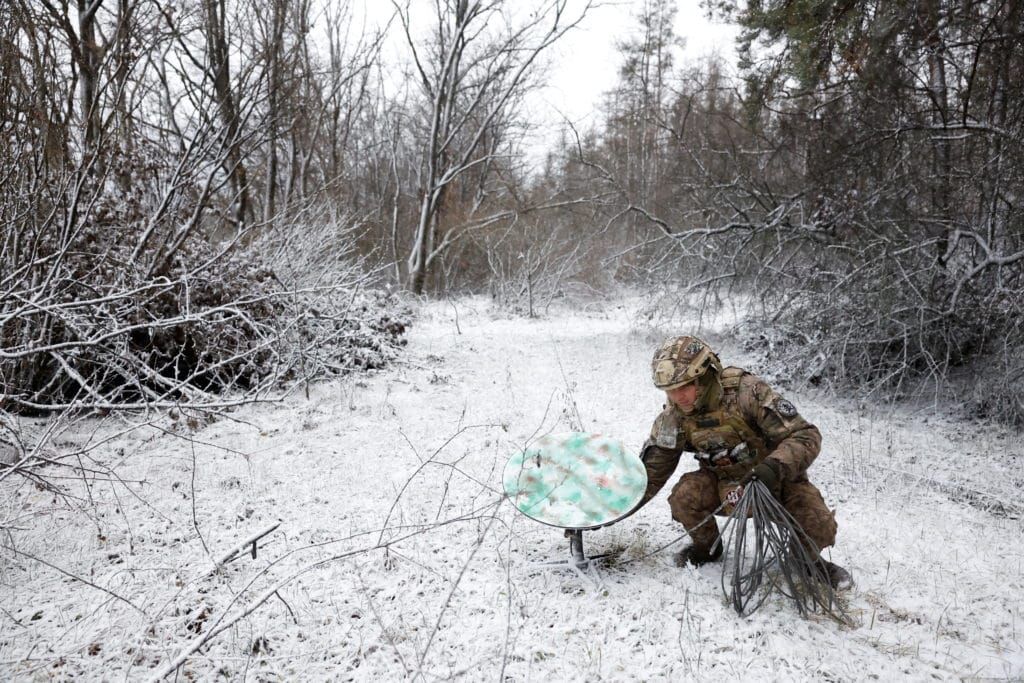
Starlink Mini terminals fitted to drones already stop working above 160 km/h, so faster aircraft need Starshield, which Ukraine began using in 2024. Ukrainian units use it to guide mid-range strikes on Russian supply lines in occupied southern and eastern Ukraine and to fly interceptor drones against Russia's jet-powered Shaheds. Beskrestnov called those interceptors the most effective defence Ukraine has against the jet drones and wrote that partners were "depriving us of one of the few chances we have to defend ourselves." Ukrainian interception rates against Shaheds fell from more than 90 per cent to about 60 per cent after Russia fitted them with jet engines in early summer 2026. The US Department of Defense pays for the service; two US contracts disclosed in December 2024 covered Starshield access for 3,000 terminals in Ukraine. Starlink does not work inside Russia, and the drones Ukraine sends against Russian refineries use other links.
Trump's demands and threats
Trump said on 10 October that he had told Zelenskyy to stop striking Russian oil refineries, that Zelenskyy "could have settled this war many, many times" and that it was time for Ukraine to get a new president. US retail diesel prices were nearing US$6 a gallon, a month before the midterm elections. Trump has blamed Ukraine's refinery strikes for the price; most analysts point instead to the closure of the Strait of Hormuz during the US war with Iran.
Trump spoke to Putin for 90 minutes on 9 October and announced afterwards that Russia would supply more than 300,000 tonnes of diesel immediately, rising to 1 million tonnes through 2027. The US Treasury issued a sanctions waiver allowing Russian diesel into the United States until April 2027. Putin declined during the call to commit to resuming peace talks, and his adviser Yuri Ushakov blamed Ukrainian drone strikes on Moscow during Russia's parliamentary elections. A US official said Trump made the diesel deal after Zelenskyy ignored about six US requests to stop the refinery strikes, and that the strikes hurt the United States as well as Russia. Zelenskyy called the deal unfair and dishonest.
Steve Witkoff and Jared Kushner, Trump's envoys, met Ukrainian negotiators in Miami on 9 and 10 October to discuss security guarantees and territorial proposals. The talks ended early. A Ukrainian official said the envoys threatened to cut Ukraine off from US intelligence if the refinery strikes continued. A US official denied that and said the envoys had stressed that the United States supplied Ukraine with munitions and intelligence.
US representatives called Ukrainian officials, among them Pavlo Palisa, as well as several European governments to warn that intelligence sharing and the PURL scheme could be suspended unless the refinery strikes ended, European officials briefed on the calls said. Under PURL, European governments buy US weapons for Ukraine, Patriot air defence interceptors among them; it had funded more than US$6 billion of US military equipment by June 2026.
Zelenskyy said in an interview broadcast on 14 October that Ukraine's military advisers had been warned the United States could limit intelligence sharing. He indicated that sharing was continuing, which Trump has also said.
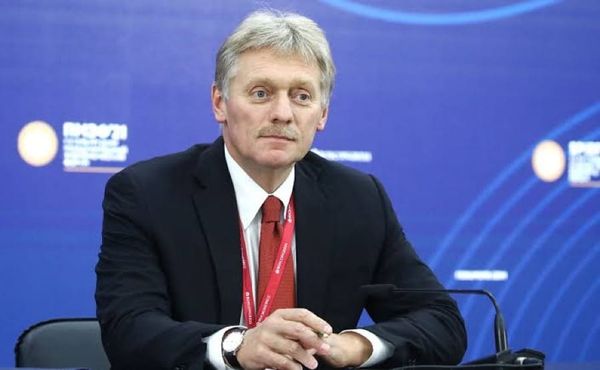
Ukraine has not struck Russian refineries since Trump announced an energy ceasefire on 11 October. Russian forces kept striking Ukraine's grid. Dmitry Peskov, Putin's spokesman, said on 14 October that Russia was not breaking the truce because Trump had not specified which energy facilities it covered. Zelenskyy has said Ukraine will resume refinery strikes if Russia ignores the ceasefire. Sternenko wrote on 14 October that Trump had begun sanctioning Ukraine while easing sanctions on Russia. No formal US sanctions on Ukraine have been announced; the threats over intelligence and weapons purchases are the measures he described.
Zelenskyy arrived in London on 14 October for talks with Prime Minister Andy Burnham and an audience with King Charles. He has sent proposals to Witkoff and Kushner saying Ukraine is ready to work towards a ceasefire that Russia must also join.
Missile warnings go quiet
Ukraine relies on US and allied intelligence to learn when Russia launches ballistic missiles, from where and towards which targets. The warnings reach Ukrainian air defence through the Battlespace Command and Control Center, a system run by the US military with NATO members among its other participants. They normally let sirens sound before the missiles arrive, which gives air defence crews and civilians a few minutes to react.
Russian forces fired about six ballistic missiles at Kyiv shortly after 22:00 on 12 October. Explosions hit central Kyiv before air raid sirens and mobile alerts went out, which has rarely happened in the war. The Air Force said its radar picked up the missiles only during the attack and that it had received no data on launches from Russian territory. Missiles hit a transport site in Dniprovskyi district and a four-storey warehouse in Desnianskyi district. At least 12 people were injured, among them a 17-year-old. Zelenskyy said five ballistic missiles struck civilian infrastructure and that Ukraine had received no early warning from partners.
Beskrestnov said Russian forces may have fired S-400 air defence missiles at ground targets, launches that partner intelligence services had not recorded. An unnamed official cited bad weather; Ukrainian officials doubted that explanation. Colonel Yurii Ihnat, the Air Force spokesperson, said the warning system had failed to pass on information before and that specialists would work with international partners to fix the technical problems.
Trump told reporters at the White House on 13 October: "We are helping them, and we are sharing intel." He said Russia and Ukraine had both violated the energy ceasefire. Andrii Sybiha, Ukraine's foreign minister, said the same day that intelligence sharing through the platform was continuing.
Russian ballistic missiles hit the CHP-4 combined heat and power plant in Kyiv's Darnytsia district on the evening of 13 October, along with a residential building in Desnianskyi district. Zelenskyy wrote that Ukraine again had no early warning from partners and that its own systems picked up the missiles only as they neared the city. He called it "absolutely unjust" that Ukraine was not receiving warnings of ballistic launches.
Ihnat said Ukraine received no warning before the first ballistic barrage on the evening of 13 October but did receive warnings from foreign partners before three later barrages that night. Sternenko had written that Ukraine received no launch intelligence at all. Ukrainian air defences shot down four of the 39 ballistic missiles fired that night, about 10 per cent.
The United States stopped sharing intelligence with Ukraine in the first week of March 2025, after Zelenskyy's Oval Office clash with Trump and Vance on 28 February. The cut-off included alerts on Russian missile and drone launches and targeting data for HIMARS strikes. CIA Director John Ratcliffe confirmed the pause and said it could be short if Ukraine returned to negotiations. Sharing resumed on 11 March 2025, after Ukrainian and US officials met in Jeddah and Ukraine accepted a proposal for a 30-day ceasefire.
Ukrainian air defences stopped about 29 per cent of the ballistic missiles Russia fired in July 2026, 36 of 126 by one count, amid a shortage of Patriot interceptors, the main system Ukraine uses against ballistic missiles. Demand for Patriots in the Middle East has risen during the US war with Iran. Zelenskyy has asked the Trump administration for 300 Patriot interceptors before winter.
39 ballistic missiles on the grid
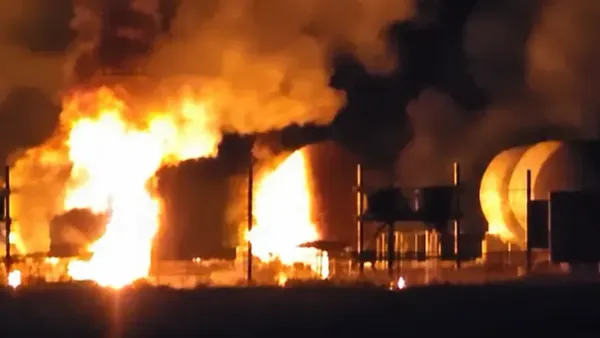
Russian forces fired 39 ballistic missiles and more than 120 attack drones and loitering munitions at energy and critical infrastructure in Kyiv, Kyiv region and Kharkiv overnight, Zelenskyy wrote on X. Ukraine's Air Force counted 167 aerial weapons launched from 18:00 on 13 October: 39 missiles and 128 drones. It said 119 were shot down. At least 600,000 people lost power. Facilities were damaged at 26 sites in the power system and four in the oil and gas sector, five large power plants among them. Russia's Defence Ministry said it hit four power plants in and around Kyiv and two in Kharkiv, along with communications and energy facilities it said served Ukraine's military.
Three people were killed in Kyiv, local officials said. Two of them died and 21 were wounded when a missile hit a residential building, where rescuers carried the injured from the wreckage overnight. Later on 14 October a Russian drone strike on a warehouse in Lutsk, in north-western Ukraine, killed at least six people.
Zelenskyy wrote that Russia had struck "the very infrastructure covered by the ceasefire announced by the American President." He asked Trump to impose strong sanctions under the Lindsey O. Graham Sanctioning Russia and Iran Act of 2026 and asked for more Patriot interceptors.
Poland asks Musk if he is playing politics
Radosław Sikorski, Poland's foreign minister, addressed Musk on X on 14 October as "big man" and asked whether he was "playing politics with your products again". He added: "As your European customers, we are watching you." Sikorski had spoken the day before at the Warsaw Security Forum on a panel about Europe between war and great-power rivalry. Musk had not replied by publication, and SpaceX did not respond to requests for comment.
Poland is the largest single supplier of Starlink terminals to Ukraine. It had delivered about 29,500 by April 2025, roughly half of those then in use. Polish officials put the yearly subscription bill at about US$50 million. By September 2025 more than 50,000 terminals were active in Ukraine, over 29,000 of them supplied by Poland. The Ministry of Digital Affairs, led by Deputy Prime Minister Krzysztof Gawkowski, pays the subscriptions.
Sikorski's "big man" jibe answers Musk's "be quiet, small man" from March 2025. Sikorski used it again in June 2025, during Musk's public split with Trump, when he wrote that politics was harder than Musk had thought.
Polish payments for Ukraine's Starlink service were briefly in doubt in 2025. President Karol Nawrocki vetoed a bill extending aid to Ukrainian refugees on 25 August 2025, and Gawkowski said the veto also removed the legal basis for paying for Starlink from 1 October. The president's office said Ukraine would not lose access. Poland then passed a separate law, and Mykhailo Fedorov, then Ukraine's digital transformation minister, announced on 29 September 2025 that the payments would continue.
Gawkowski said on 12 August 2026 that SpaceX had left Poland out of the European zone in which Starlink customers can use their terminals while travelling, with new restrictions due from 17 August. Sikorski told Musk on X to stop discriminating against Polish users and suggested Poland might reconsider the roughly US$50 million it pays each year. Gawkowski said the next day that SpaceX had reversed the change. Prime Minister Donald Tusk said Starlink had called the exclusion a mistake.
Fire damaged a Starlink ground station at Wola Krobowska, about 50 km south of Warsaw, on 23 September 2026. The station is run by the state-owned operator Exatel and serves much of central and eastern Europe, Ukraine included. Gawkowski said many indications pointed to Russia's new doctrine of attacks. The Polish Interior Ministry said on 12 October that German police had detained two Turkish citizens in Nürtingen on European arrest warrants, and Interior Minister Marcin Kierwiński said they would face charges of sabotage on behalf of a foreign intelligence service.
Eutelsat, the French operator of the OneWeb constellation, confirmed in March 2025 that it was in talks with the European Union about replacing Starlink in Ukraine. Finnish President Alexander Stubb urged Musk in September 2026 to extend Starlink coverage to areas around Russian ballistic missile launchers so that Ukraine could strike them.
Musk's money and Trump
Musk spent at least US$277 million backing Trump and other Republicans in the 2024 election, federal filings show. He then ran Trump's Department of Government Efficiency. He broke with Trump in June 2025 after leaving the post, attacking Trump's tax bill and posting, then deleting, a claim that Trump appeared in the Epstein files. The two have since reconciled.
Files the Justice Department released on 30 January 2026 under the Epstein Files Transparency Act included at least 16 emails between Musk and Jeffrey Epstein from 2012 and 2013. In November 2012 Musk asked Epstein which day or night would be "the wildest party on your island", and the two discussed a helicopter trip there. In December 2012 Musk wrote that he wanted to hit the party scene on St Barts rather than spend a quiet day on the island. The emails do not show that Musk visited; several planned meetings were cancelled. Musk has denied attending Epstein's parties, has said he refused Epstein's invitations to the island and has not been accused of wrongdoing.
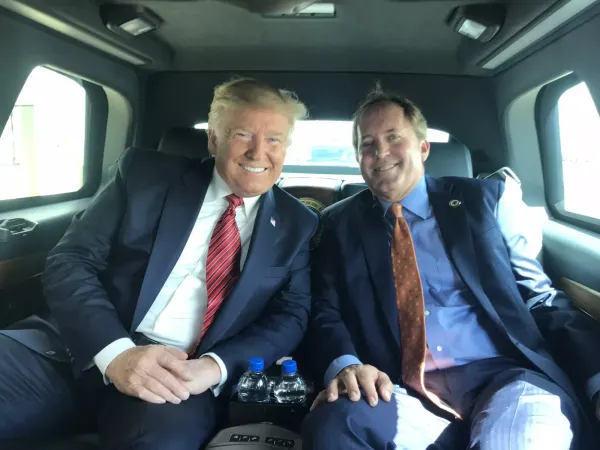
Musk has given more than US$276 million to Republican groups since July 2025 to help the party keep control of Congress, making him the largest known donor of the 2026 midterms. The total includes US$158 million to the Senate Leadership Fund, US$76 million to his own America PAC and US$10 million to Lone Star Liberty PAC, which backs Ken Paxton's Senate campaign in Texas. Andrew Romeo, a spokesperson for America PAC, confirmed the figures on 12 October.
SpaceX listed on the Nasdaq on 12 June 2026 after merging with Musk's artificial intelligence company xAI. The offering raised US$85.7 billion. The company was worth about US$2.2 trillion at the close on 9 October. Musk holds about 82 per cent of its voting power. SpaceX's prospectus warns that Musk's statements and actions, including those unrelated to the company, could affect its relations with regulators.
SpaceX won more than US$6 billion in multi-year Starshield contracts from the US government in the second quarter of 2026 and more than US$8 billion in contracts this year for Golden Dome, Trump's missile defence programme, about a third of its budget.
Musk and Russian officials
Ian Bremmer, president of the Eurasia Group consultancy, wrote in a client note on 10 October 2022 that Musk had told him about two weeks earlier that he had spoken with Putin and other Russian officials about Ukraine and learned Putin's minimum conditions for ending the war. By Bremmer's account, the conversation came days before Musk's 3 October peace poll. Musk replied that he had spoken to Putin only once, about 18 months earlier. He said the subject was space. Bremmer stood by his account.
Musk had been in regular contact with Putin since late 2022, several current and former US, European and Russian officials told the Wall Street Journal in October 2024. They said Musk also held regular conversations with other senior Russians, among them Sergei Kiriyenko, Putin's first deputy chief of staff, while Russian officials put pressure on his businesses that included implicit threats against him. The contacts covered personal matters, business and geopolitical tensions. They continued while Musk criticised US military aid to Ukraine and endorsed Trump. Two officials said Putin once asked Musk not to activate Starlink over Taiwan as a favour to Xi Jinping. Dmitry Peskov first told the newspaper there had been a single call about space and technology, then called the report untrue and said that call took place before 2022. Musk did not respond.
Bill Nelson, then NASA administrator, said on 25 October 2024 that the reported conversations were concerning and should be investigated, because NASA and the Defense Department rely on SpaceX.
Senators Jack Reed and Jeanne Shaheen asked the Defense Department's inspector general and the attorney general on 15 November 2024 to determine whether Musk's reported contacts with Russian officials warranted a review of SpaceX's federal contracts. They wrote that the contacts raised serious questions about his reliability as a government contractor and holder of a security clearance. In a separate letter to Air Force Secretary Frank Kendall, they raised concern about the Space Force's reliance on SpaceX. Democrats on the House Oversight Committee demanded Musk's security clearance forms on 1 May 2025.
Kirill Dmitriev, head of the Russian Direct Investment Fund and Putin's special envoy for international economic cooperation, proposed on X on 15 March 2025 that Russia and the United States fly a joint mission to Mars in 2029, tagging Musk. Dmitriev, one of Russia's negotiators with the Trump administration, said on 18 March that he expected Russian officials to hold talks with Musk soon on Mars flights and that Russia wanted to work with Musk and SpaceX on developing the state space agency Roscosmos and the state nuclear company Rosatom. Musk did not comment.
Putin told students at Bauman Moscow State Technical University on 16 April 2025 that Musk was a rare kind of person driven by an idea, and compared him to Sergei Korolev, who led the Soviet space programme.
SpaceX decisions in 2022 and 2023
SpaceX switched on Starlink over Ukraine in late February 2022 after Russia's full-scale invasion knocked out internet services. Musk wrote on 7 October 2022 that the service had cost SpaceX US$80 million and would pass US$100 million by the end of the year. On 14 October he wrote that SpaceX could not fund it indefinitely, and the Department of Defense confirmed he had asked it to take over the cost. He reversed himself the next day: "The hell with it."
Musk ordered SpaceX engineer Michael Nicolls in September 2022 to cut Starlink service across an area north of the Black Sea near Kherson as Ukrainian forces advanced, three people familiar with the command told Reuters in July 2025. At least 100 terminals went dark, along with service in parts of occupied Donetsk province. Ukrainian troops lost communications, surveillance drones dropped offline and artillery units struggled to aim. A Ukrainian military official said an attempt to encircle Russian positions at Beryslav failed. A SpaceX spokesperson called the account inaccurate without naming an error.
Walter Isaacson's 2023 biography of Musk reported that Musk had blocked Starlink near Crimea in 2022 to stop a Ukrainian sea-drone attack on the Russian Black Sea Fleet at Sevastopol. Musk wrote on 8 September 2023 that coverage there had never been switched on and that he refused an urgent Ukrainian request to activate it, because SpaceX would then be "explicitly complicit in a major act of war and conflict escalation." Mykhailo Podolyak, adviser to the head of Zelenskyy's office, said the refusal left the fleet free to fire Kalibr missiles at Ukrainian cities.
Gwynne Shotwell, SpaceX's president, said in February 2023 that Starlink was never meant to be weaponised and that the company had taken steps to restrict Ukraine's military use of it, including on drones.
Musk on Crimea, aid and Zelenskyy
Musk posted a poll on 3 October 2022 proposing that Ukraine cede Crimea to Russia permanently, hold UN-supervised referendums in occupied territory and accept neutrality. Dmitry Peskov, Vladimir Putin's spokesman, praised the effort and said peace was impossible unless Russia's conditions were met. Zelenskyy replied with a poll asking which Musk users preferred, the one who supported Ukraine or the one who supported Russia. About 60 per cent of more than 2.5 million votes on Musk's poll went against his plan.
Musk hosted a discussion on X on 12 February 2024 with Republican senators Ron Johnson, JD Vance and Mike Lee as the Senate weighed a US$95 billion foreign aid bill that included US$60 billion for Ukraine. He said there was "no way in hell" Putin would lose, that Putin would be assassinated if he backed down and that the spending did not help Ukraine. Vance was sworn in as vice-president 11 months later.
Musk wrote on 20 December 2024 that only the Alternative für Deutschland could save Germany. On 9 January 2025 he hosted AfD co-leader Alice Weidel in a live conversation on X and urged Germans to vote for the party, which opposes arms deliveries to Ukraine and sanctions on Russia.
Musk wrote on 20 February 2025 that Zelenskyy was "feeding off the dead bodies of Ukrainian soldiers" and was despised in Ukraine. Trump had called Zelenskyy a dictator and put his approval at 4 per cent; the Kyiv International Institute of Sociology had measured it at 57 per cent. Ukrainian law bars national elections under martial law, in force since 24 February 2022. Ukraine's parliament voted 268 to 12 on 25 February 2025 to keep Zelenskyy in office until a peace settlement, and Musk replied: "Hold an election."
US negotiators seeking access to Ukraine's critical minerals raised the possibility of cutting off its Starlink access in February 2025, three people familiar with the talks told Reuters on 21 February. The subject first came up after Zelenskyy turned down an initial proposal from Treasury Secretary Scott Bessent under which the United States and US companies would have received 50 per cent of Ukraine's critical minerals, among them graphite, uranium, titanium and lithium. It came up again on 20 February when Zelenskyy met Keith Kellogg, Trump's special envoy for Ukraine. One source briefed on that meeting said Ukraine was told it faced an imminent shutoff if it did not reach a minerals deal. The Trump administration was then demanding US$500 billion in mineral wealth as repayment for wartime aid, and Zelenskyy said it offered no specific security guarantees in return.
Musk wrote on X that the report was false and that Reuters was lying. He did not answer the agency's request for specifics, and Reuters said it stood by its reporting. Krzysztof Gawkowski, Poland's deputy prime minister, said on 22 February that Poland paid for Ukraine's Starlink subscription and would keep doing so. Zelenskyy said on 23 February that US officials had given no hint of a shutdown and that Ukraine paid for the service every month.
Musk wrote on 9 March 2025 that Ukraine's front line would collapse if he switched Starlink off. Sikorski replied that Poland might look for other suppliers if SpaceX proved unreliable. Marco Rubio, the US secretary of state, said nobody had threatened to cut Ukraine off and accused Sikorski of making things up. Musk told Sikorski to "be quiet, small man," then wrote that Starlink would never turn off its Ukrainian terminals or use them as a bargaining chip, however much he disagreed with Ukraine policy. Musk was running Trump's Department of Government Efficiency at the time.
Musk endorsed a post in early March 2025 calling for the United States to leave NATO and the United Nations.
2026: whitelist, speed cap and a new leader
Russian forces fitted Starlink terminals to strike drones in early 2026, and one hit a passenger train in Kharkiv region on 27 January. Fedorov, then defence minister, asked SpaceX to block Russian use. SpaceX imposed a cap of roughly 75 km/h on terminals over Ukraine at the Ukrainian government's request, and on 2 February Fedorov announced a whitelist under which only registered terminals would work. Musk wrote that the measures appeared to have stopped unauthorised Russian use and told Fedorov to let him know if more was needed. Fedorov said no Ukrainians had been killed by Starlink-guided Russian drones since the first steps were taken.
Zelenskyy said on 3 October 2026 that he had asked Trump to sanction Russian and Chinese companies building Rassvet, a Russian satellite network meant to rival Starlink, which he expected to start working around the turn of the year.
Trump presented Musk with the National Medal of Science on 8 October. On 10 October Musk posted "Zelensky has gone too far" beside a video of Trump saying Ukraine needed a new president, and agreed with another post on X that it was time for Ukraine to get a new leader. Andrii Sybiha, Ukraine's foreign minister, said on 11 October that only Ukrainian voters could decide who governs the country.
Deadlines on 18 October and 3 November
Trump signed the Lindsey O. Graham Sanctioning Russia and Iran Act, H.R. 5334, on 18 September, after the Senate passed it 86 to 11 on 7 August and the House 262 to 159 on 16 September. Section 112 directs the president to raise duties on Russian imports, petroleum products included, by up to 500 per cent within 30 days. That deadline and a first review of sanctions targets fall on 18 October. The president can waive any duty by certifying to Congress that the waiver serves the national interest. Treasury Secretary Scott Bessent said on 11 October that the law did not bar purchases of Russian diesel.
The Treasury waiver allowing Russian diesel into the United States runs until April 2027. US voters elect the whole House of Representatives and a third of the Senate on 3 November 2026.