
Maurício Kertzman Szporer, president of the Bahia Regional Electoral Court, ordered Pablo Souza's arrest on 25 October, a day after a judge ordered São Paulo to run its full bus fleet for Brazil's presidential runoff. Salvador's mayor says union activists stuck Workers' Party stickers on the buses and the operator held them back, while the Superior Electoral Court replaced 900 of 499,248 voting machines by noon.
Maurício Kertzman Szporer, president of the Bahia Regional Electoral Court (TRE-BA), ordered the arrest of Pablo Souza, Salvador's municipal secretary of mobility, on the morning of 25 October after at least 75 city buses stayed in their garages as Brazil voted in its presidential runoff. A day earlier, Judge Tiago Ducatti Machado of São Paulo's 1st Electoral Zone had ordered that city to put its whole fleet on the streets, and on Sunday allies of President Luiz Inácio Lula da Silva told the court that about 60 per cent of São Paulo's buses were running. By noon the Superior Electoral Court (TSE) had replaced 900 of the 499,248 voting machines in use, and by 11:00 the Justice Ministry had counted 58 incidents and three arrests in the act. Lula faces Senator Flávio Bolsonaro, who won the first round on 4 October by about 2.2 million votes.
Buses in Salvador
Szporer wrote in his decision that the request to hold the buses came from Salvador's Municipal Mobility Secretariat (Semob) and called it an "evident violation of the Electoral Code", Gazeta do Povo reported. He ordered the whole fleet back on the streets free of charge and at weekday frequency until voting ended and voters had returned home. The Brasil da Esperança federation of the Workers' Party (PT), PCdoB and PV had asked the court to act, saying the city was running less than half its usual fleet.
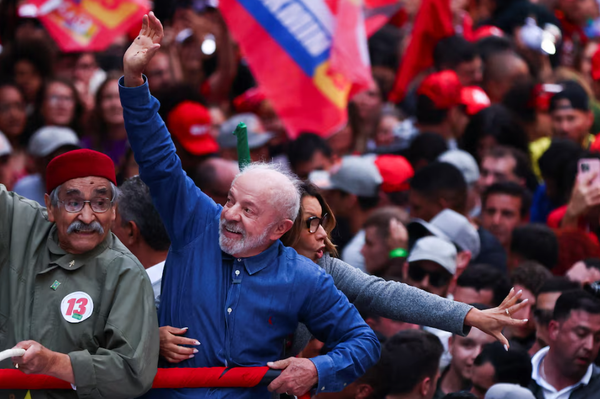
Bruno Reis, Salvador's mayor, of União Brasil, says union activists went into the garages early in the morning and stuck PT stickers on the buses, and that the bus company's owner refused to send them out because the stickers were illegal campaign material. The stickers carried a star and Lula's ballot number, 13. Reis said the trouble was confined to buses run by the Plataforma consortium. Semob said it began at garage G5 in Caminho de Areia and that Souza had ordered every bus released. Souza apologised to passengers. Reis told Metrópoles that Souza is in France for a G7 event at the invitation of President Emmanuel Macron and is due back on 26 October.
Bahia's consumer protection agency, Procon, found 55 roadworthy buses parked in one garage, and the state public defender's office said it had received reports of missing buses in Salvador, Feira de Santana and Santo Antônio de Jesus. Semob said services were back to normal by about 13:00. Rui Costa, the PT's senator-elect for Bahia, told Mônica Bergamo of Folha de S.Paulo that Reis should be arrested, and Reis called Costa a "vagabundo", a bum, and said he was lying.
São Paulo's fleet
Ducatti Machado's order of 24 October applied a TSE resolution that requires free public transport on voting days at weekday frequency. On Sunday Sâmia Bomfim, a PSOL federal deputy, and two co-signatories filed a complaint for Lula's campaign saying the city of São Paulo had kept only about 60 per cent of its buses in service, with the worst gaps in Itaim Paulista in the East Zone. The cut hits "above all lower-income voters", the complaint says, because they depend on buses to reach their polling stations.
Mayor Ricardo Nunes's administration (MDB) called the order needless and said it came less than 24 hours before polls opened, leaving bus operators under 12 hours to call in more than 10,000 workers. It said it would comply. On 4 October the city ran 6,900 buses, 40 per cent more than its usual Sunday fleet, for 3.4 million passengers, and it planned the same service for the runoff.
Voting machines
The TSE replaced 467 machines between 08:00 and 10:00, 0.09 per cent of those in use, and 900 by noon, 0.18 per cent. São Paulo state accounted for 163, Paraná for 103, Rio de Janeiro for 95 and Minas Gerais for 75. Polling stations abroad swapped 23 of their 1,351 machines. The court holds 48,815 spare machines. In the first round it replaced 1,904 over the whole day. Kassio Nunes Marques, the TSE president, told reporters the court had no report of any section switching to paper ballots, the last-resort fallback.
Nunes Marques said the court had approved 2,500 transport requests for voters with disabilities or reduced mobility and for quilombola, Indigenous and riverside communities, in what he called the electoral courts' first national action on voter transport. He said difficulties in Salvador, São Paulo and other cities were being corrected. More than 2 million voters had filed justifications for missing the vote by early afternoon, he said.
Security
The Justice Ministry counted 32 incidents by 09:00 and 58 by 11:00, in 19 of Brazil's 27 federative units. Rio Grande do Sul had 16, Minas Gerais 12 and Paraná five. The 11:00 tally listed three arrests in the act, 10 summary offence reports and 11 people taken to police stations, along with two road blockades and two seized vehicles.
André Garcia, the ministry's national secretary for penal policy, said it was a calm election compared with others in recent years and that irregular campaigning was the commonest offence. Federal Police figures put the number detained at 22 by mid-afternoon. The force has opened 1,608 inquiries into electoral crimes this year and seized R$51.9 million in goods and cash, R$31.7 million of it in banknotes.
Nunes Marques gave the TSE's own count of 138 suspected electoral crimes: 40 attempts to violate ballot secrecy, 19 cases of irregular propaganda, 16 of electioneering at polling stations and three of vote buying. He said suspicious messages had risen considerably in the second round and that the court's disinformation situation room had added staff.
Up to 100 officers guard the TSE building in Brasília, drawn from the judicial police of the TSE, the Supreme Federal Court and the Superior Labour Court, the Federal District military police and fire brigade, the army and the Federal Police tactical unit. Three sniffer dogs trained to detect explosives, Mali, Nix and Jetro, on loan from the labour court and the Senate, swept the building including the justices' chamber. Federal Police drones watch the perimeter and the operation has a jammer to block radio signals. The Justice Ministry's noon bulletin put 319,665 security personnel on duty across the country.
Montes Claros
Men throwing bricks and glass bottles attacked a PT sound truck on Avenida Sanitária in Montes Claros, in northern Minas Gerais, on the night of 24 October after a rally for Lula, and hit Iara Pimentel, a PT city councillor, in the face. She lost consciousness and an ambulance took her to hospital. Videos circulating online show a group of men dressed in green and yellow throwing objects at the truck.
Andrei Rodrigues, director-general of the Federal Police, called the attack the most serious case of the weekend and said the force would open an inquiry. "Having different opinions is a right," Pimentel said, and she asked for a rigorous investigation and for those responsible to be held to account.
Platforms
Ricardo Villas Bôas Cueva, the TSE's inspector-general, ordered Meta and X on 23 October to report every six hours, until voting closed, on the reach of posts by Nikolas Ferreira, a PL federal deputy for Minas Gerais, and Pablo Marçal, an influencer and businessman. The order came in an electoral misconduct case Lula's coalition brought against the two men, Flávio and his running mate Alfredo Gaspar, alleging that Ferreira and Marçal spread false information to help Flávio and that Meta's algorithms favoured them.
Since midnight on 24 October Meta has been barred from recommending to non-followers any post by Ferreira or Marçal that mentions candidates, parties or the election, on Instagram, Facebook or Threads. The two men face fines of R$100,000 for each post that breaks the rules on disinformation, manipulated images or artificial intelligence, and the platforms face fines of up to R$500,000 per breach. Cueva wrote that the evidence in the case did not prove that the algorithms had favoured the two accounts, and he refused requests to remove them from recommendations entirely or to bar in advance a video Marçal had announced.
The candidates
Flávio, the Liberal Party (PL) candidate, voted at about 08:20 at the Barão Homem de Mello municipal school in Vila Isabel, in Rio de Janeiro's North Zone, with his wife Fernanda, his mother Rogéria and Douglas Ruas, the PL's governor-elect of Rio de Janeiro, and arrived wearing a bulletproof vest. "Brazil can't take four more years the way it is," he said, before leaving for Brasília to follow the count. Lula voted at about 10:00 at the João Firmino Correia de Araújo state school in São Bernardo do Campo and again called Flávio a "miliciano", a militiaman.
Datafolha and Quaest polls published on 24 October both put Flávio on 51 per cent of valid votes and Lula on 49, inside their margins of error. Flávio won the first round with 47.03 per cent to Lula's 45.16. The runoff also decides governors in five states and the Federal District, and 158,745,463 voters are registered in 517,179 polling sections.
The law
Article 297 of the Electoral Code makes it a crime to prevent or hinder the exercise of the vote, punishable by up to six months' detention and a fine, and article 304 covers withholding on election day transport that is normally provided to all, or reserving it for one party or candidate. TSE Resolution 23.751/2026 requires free public transport at weekday frequency on voting days. Semob's instructions to the Plataforma consortium and the dispatch logs of garage G5 for the morning of 25 October would show who ordered the 75 buses held and for how long. SPTrans dispatch data for 25 October, set against the 6,900 buses it ran on 4 October, would confirm or contradict the 60 per cent figure in the São Paulo complaint.
The count
Polls close at 17:00 Brasília time and Nunes Marques expects the result between 20:30 and 21:00. Meta and X owe the TSE their reports on Ferreira's and Marçal's posts through the close of voting, and Rodrigues has said the Federal Police will open its inquiry into the Montes Claros attack. Souza is due back in Brazil from France on 26 October, according to Reis, with the TRE-BA order for his arrest outstanding.