Senator Flávio Bolsonaro fled Brazil while under investigation for money laundering, defied a court order barring his departure and reached Miami on 28 October 2026 through Argentina and Ecuador.
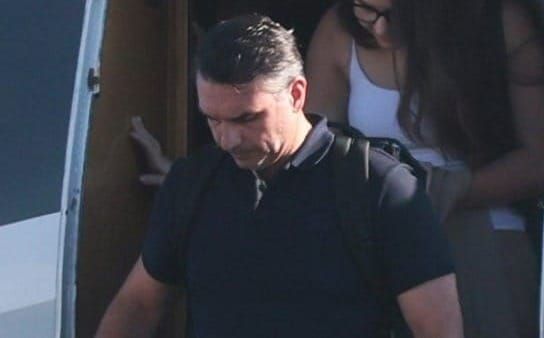
Brazil's Federal Police said his departure did not appear in its immigration system. Argentine authorities said the family entered late on 27 October and boarded a Baires Fly charter bound for Guayaquil. AFP journalists saw Bolsonaro disembark in Florida the following morning.
Santiago Caputo, an adviser to President Javier Milei, helped arrange the family's transfer to the Argentine airport, according to UOL columnist Janaína Figueiredo. Her account, based on Argentine sources, also described an escort by Argentina's Airport Security Police. A day before the arrival, a senior State Department official told the Associated Press that the U.S. government would grant visas to Bolsonaro and his family.
The crossing
Argentina's National Directorate of Migration put the family's arrival at the Tancredo Neves bridge at 22:50 on 27 October. They crossed from Foz do Iguaçu into Puerto Iguazú in Misiones province and boarded the charter at 23:30. The agency said they had valid travel documents and faced no legal impediment to entering Argentina. La Nación put the aircraft's departure at 00:21 on 28 October.
Brazilian police had entered an immigration alert in their SONAR system. They said Bolsonaro had failed to surrender foreign passports after being served with the court order on 26 October. Brazilian authorities have not explained how he crossed the border without appearing in their departure system.
La Nación journalist Diego Cabot wrote that a flight declaration listed Bolsonaro as an Italian national travelling on an Italian passport, with his wife and daughters using Brazilian documents. It listed four passengers and three crew members aboard the Baires Fly Gulfstream G400, registration LV-JQW, from Iguazú to Guayaquil.
The Argentine assistance
Figueiredo wrote that Caputo travelled to Puerto Iguazú, crossed into Foz do Iguaçu and helped arrange the transfer of Bolsonaro's family to the airport. The family's vehicle received an escort from the Airport Security Police, known as the PSA, after entering Argentina, according to her account. The officers and whoever authorised the escort were not identified.
People close to Caputo denied collaboration, according to Matutino's account of the Argentine reporting.
Earlier on 27 October, Argentine immigration authorities said their immigration system showed no entry by Bolsonaro that morning. The family crossed that night.
The charter broker
La Nación journalist Diego Cabot traced the booking to two calls on the evening of 26 October. Someone using a telephone linked to Santiago Caputo's circle contacted Baires Fly about a forthcoming request from a U.S. broker. The broker then called to arrange transport for a Brazilian family from Iguazú to Florida. Cabot wrote that the route avoided Brazilian airspace and included refuelling in Guayaquil.
TN journalist Bruno Yacono had described the intermediary on 27 October as someone with whom Baires Fly regularly did business. According to his account, the request was for four Brazilian passengers and the discussions specifically raised whether the company could carry Bolsonaro. The company said it could if he passed immigration checks. That report concerned an initially cancelled departure, before the family crossed the border that night..
Clarín linked the booking to unnamed companies associated with the U.S. embassy, citing Argentine presidential sources. The broker's name, company and client remain unidentified in these accounts. The broker's instructions to Baires Fly, the charter contract and proof of payment are needed to identify the customer behind the booking.
The Ecuador stop
The jet landed in Guayaquil shortly before 04:00 local time on 28 October and left less than an hour later, according to AFP journalists at the airport and flight-tracking data cited by the agency. AFP's Portuguese-language dispatch said it stopped to refuel. The refuelling stop allowed the aircraft to continue to Florida.
Ecuador Chequea wrote on 28 October that the Ecuadorian government had issued no public explanation for the Guayaquil stop. The stop nevertheless provided fuel for the next leg to Florida after Flávio Bolsonaro had left Brazil in defiance of the travel ban. Establishing Ecuador’s role means identifying who arranged the airport services, what passenger information reached the authorities and whether anyone alerted them to the Brazilian court order before the aircraft departed.
The U.S. preparations
Preparations began weeks before Bolsonaro lost the presidential runoff on 25 October, according to Bela Megale's O Globo column, reproduced by O Cafezinho. Megale identified Eduardo Bolsonaro as a principal organiser and Paulo Figueiredo as another participant in discussions with Trump administration officials about receiving Flávio if he lost.
The State Department promised visas on 27 October, after the Brazilian court had prohibited the senator from leaving. The U.S. government thereby offered admission to a politician under a judicial travel restriction. Its official did not identify the visa category in the AP report.
After the arrival, Paulo Figueiredo said Bolsonaro was safe and resting with his family. He also said a press conference would take place in Miami on 29 October.
The U.S. legal obligations
Section 212(a)(2)(I) of the Immigration and Nationality Act bars admission when responsible officials know or have reason to believe that an applicant engaged in qualifying money laundering. It also covers knowing assistance to that activity. A conviction is not required. If the restriction applied, issuing a visa or granting admission without a lawful exception or waiver would breach immigration law.
Applying that rule requires the evidence available to officials, the visa category and any waiver authorisation. Criminal charges would require additional proof: the relevant financial conduct, knowledge or intent and U.S. jurisdiction. The charter contract, payment trail and communications are central to determining whether participants knowingly facilitated an offence. The legality of the U.S. assistance remains unresolved.
The financial support for Milei
Javier Milei's relationship with Donald Trump had already brought direct U.S. intervention in Argentina's currency market before the country's legislative election on 26 October 2025. Argentina's central bank announced a US$20 billion currency-swap agreement with the U.S. Treasury on 20 October, six days before the vote. Treasury's accounts show that Argentina exchanged pesos for US$2.5 billion that month. The larger figure was the facility's ceiling, not a US$20 billion cash payment.
Trump explicitly tied his support to the political outcome. At his meeting with Milei on 14 October, he said: "If he loses, we are not going to be generous with Argentina." The statement attached the prospect of continued U.S. assistance to the success of a favoured political ally, putting financial pressure on the electorate as Milei sought to preserve his economic programme.
The money gave Argentina access to dollars during a currency crisis and helped sustain the government's exchange-rate policy. The central bank said in January 2026 that it had settled the transactions in December 2025. Repayment did not erase the political value of providing dollar support immediately before the vote.
Noboa's U.S. backing
Daniel Noboa cultivated access to Trump during his own re-election campaign. Ecuador's embassy signed a US$165,000 contract with Mercury Public Affairs on 5 March 2025 to seek high-level contacts with the new administration, including a presidential visit, according to documents described by Primicias. The objectives included restoring security assistance and expanding military financing. Noboa subsequently met Trump at Mar-a-Lago on 29 March, before Ecuador's runoff on 13 April.
The lobbying contract committed Ecuadorian public money to securing access to the U.S. administration. The immediate political benefit was the opportunity to present a relationship with Trump to voters while seeking outside backing for Noboa's security policies.
The State Department later committed resources to those policies. At a joint press conference in Ecuador on 4 September 2025, Secretary of State Marco Rubio announced US$13.5 million to combat drugs and crime and a further US$6 million in drones for the Ecuadorian navy.
Military cooperation followed. U.S. Southern Command announced that Ecuadorian and U.S. forces began joint operations on 3 March 2026 against groups designated as terrorist organisations. Four days later, Noboa joined the Shield of the Americas summit convened by Trump in Florida. Ecuador's foreign ministry listed Argentina among the participating governments and described subsequent talks with Rubio on security and economic cooperation.
The right-wing networks
The relationships also run through the Conservative Political Action Conference, known as CPAC. Argentina's presidency said Milei addressed its Buenos Aires gathering on 4 December 2024, attended by Eduardo Bolsonaro and Lara Trump. The event brought the Argentine president into the same political forum as the Bolsonaro family and Trump's daughter-in-law, well before the arrangements for Flávio's departure.
Noboa's connection to that network includes Erik Prince, the founder of Blackwater and a Trump ally whom CPAC identifies as one of its board members. Noboa met Prince on 11 March 2025 and announced a security partnership. On 5 April, eight days before the presidential runoff, Prince appeared in a security operation in Guayaquil, according to CNN's account of material released by Ecuador's government.
The OAS election-observation mission discussed those publicised operations in its assessment of campaign inequality. Its report described Prince as a foreign consultant hired by the government who publicly expressed a political preference. It also examined the use of state resources and official publicity that advantaged the incumbent. Prince's involvement gave Noboa a highly visible connection to a U.S. security contractor with access to Trump's political movement during the campaign.
The investigation
The Federal Police said it sought judicial restrictions on 25 October after identifying a risk that Bolsonaro would leave Brazil. It placed the investigation under petition PET 16877/DF and said he failed to surrender foreign travel documents as required. Police also said passport restrictions alone did not authorise arrest or permanent surveillance or make an investigated person a fugitive.
Argentine deputy Marcela Pagano sought a federal investigation into her government's role in the escape, alleging people smuggling and abuse of authority, according to AP. Her complaint seeks scrutiny of officials who may have helped the senator evade the Brazilian travel ban. The complaint contains allegations awaiting judicial determination.
On 28 October, the Supreme Federal Court denied ordering searches at addresses linked to Bolsonaro, according to Agência Brasil.
The reports do not name the charter's payer, the broker or whoever authorised the police escort. Pagano sought airport camera footage, flight plans, passenger lists and the charter contract.