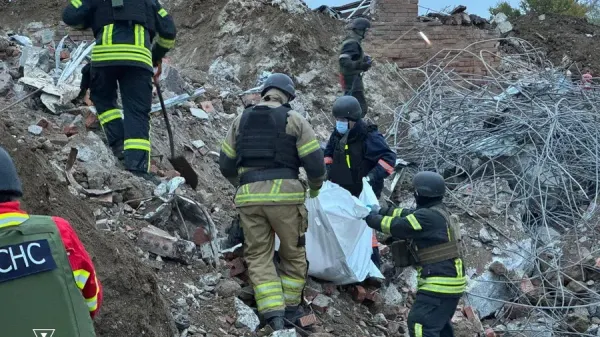
A mother in southern Iran identified her nine-year-old daughter by her earrings and a bracelet after a U.S. Tomahawk missile struck the girl's primary school on 28 February.
Masoumeh Zakeri had spent the previous night with Motahreh and then sent her to the Shajareh Tayyebeh school in Minab on the first morning of the U.S. and Israeli war on Iran. "I never saw her again," she told Agence France-Presse six months later. Iranian officials say 156 people died at the school, 120 of them children and 26 of them teachers. The New York Times reported in March that a preliminary U.S. military inquiry had found U.S. forces responsible, and in September a UN fact-finding mission found reasonable grounds to believe the strike was a war crime.
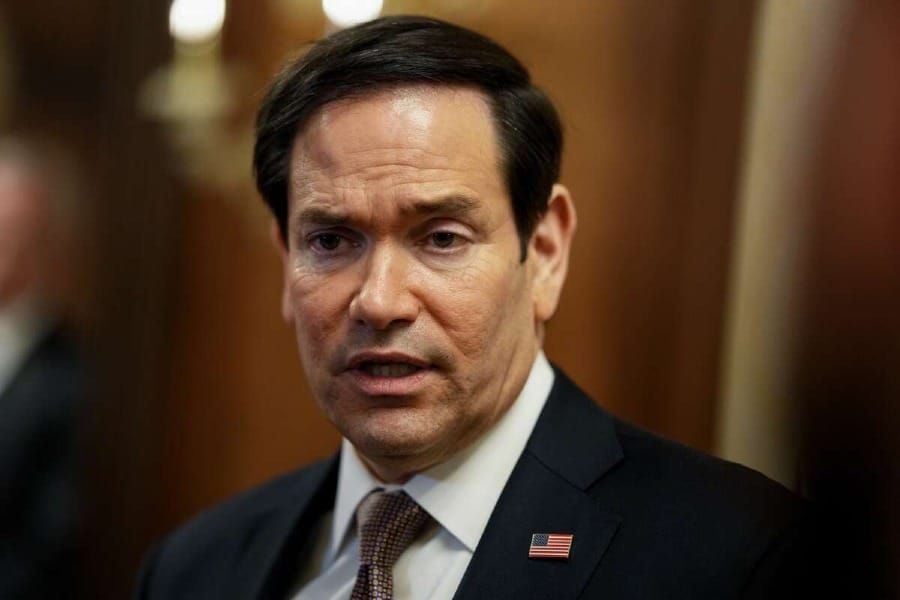
Marco Rubio, the U.S. secretary of state, said in Paris on 9 November that the U.S. could inflict "tremendous damage" on the International Criminal Court (ICC) unless it dropped its claims over nationals of countries that have not joined it. The court, based in The Hague, is the only permanent international tribunal that can try individuals for war crimes, crimes against humanity, genocide and aggression. On 9 October the Treasury placed the court itself under sanctions.
U.S. forces have killed at least 243 people in strikes on small boats in the Caribbean and the eastern Pacific since September 2025, according to running counts by InSight Crime and Just Security. Thomas Massie, a Republican congressman from Kentucky, filed eight articles of impeachment against Pete Hegseth, the defence secretary, on 9 November. The fifth, headed "Extrajudicial Killings", accuses him of ordering the strikes without authorisation from Congress and of a second strike on the survivors of a boat already destroyed. Hegseth told reporters at the Pentagon the next day that every strike was a lawful operation ordered by the president. "These are not high crimes," he said.
No U.S. court has tried anyone over the Minab school, the boat strikes or the 2021 drone strike in Kabul that killed 10 members of one family, seven of them children. The relatives of the dead in all three cases have asked for the people responsible to be identified and prosecuted.
The Shajareh Tayyebeh school
Nasim Neyestani, a second-grade teacher at the school, heard the news of attacks on Tehran that morning and urged the principal to cancel classes, her mother, Fatemeh Barani, told the Associated Press. Neyestani telephoned the parents of all 22 of her pupils. Fourteen were collected before the missile hit. She took the other eight into the schoolyard, and she and all eight children were killed. Barani has not been able to enter her daughter's bedroom since. "Every day, this grief feels fresh again," she said.
Heydar Sadeghi lost his 11-year-old grandson, Hami, and Hami's mother, Neda Salehizadeh, who also taught at the school. He visits the ruins every day, the AP reported. A father, Yaghoub Yazdanpanah, told Drop Site News that he waited at the rubble for rescuers to bring out his daughter, Fatemeh. Ehsan Mohsen, who took part in the rescue, described a father who sat beside a recovered school bag and a pair of shoes and talked to them, because nothing else of his child had been found.
Amina Karimi, 42, whose seven-year-old daughter Leila died in the strike, spent the nights of Ramadan at the girl's grave in the section of Minab's cemetery set aside for the school's dead. "Sometimes I close my eyes and recall her laugh," she told Drop Site News. Reyhana Akbari Far, 40, whose eight-year-old daughter Zahra was killed, told the same outlet that she sometimes lies down beside the grave and closes her eyes. The painter Javad Shahrjou was thrown from his motorcycle by a second missile as he arrived to search for his youngest son, Alireza, AFP reported.
A parent told Drop Site News that his daughter survived the first missile and was killed by a second before he reached the school. Minab's mayor and Iran's education ministry said the school was struck three times, and later analysis confirmed two missiles hitting the building. The Mizan news agency, run by Iran's judiciary, put the dead on 3 March at 66 boys, 54 girls, 26 teachers and four parents.
Rubio told the BBC on 2 March that the U.S. would not deliberately target a school and that he did not have the details of what had happened. Donald Trump said Iran had hit the school, a claim the U.S. military's preliminary inquiry contradicted. CNN reported that U.S. Central Command had built the target coordinates from outdated Defense Intelligence Agency information about a neighbouring naval base of the Islamic Revolutionary Guard Corps. Satellite imagery from 2013 shows that the school and the base were once part of the same compound, CNN reported. The Intercept reported that the strike came after a year in which Hegseth cut Pentagon programmes intended to reduce civilian casualties.
The UN Independent International Fact-Finding Mission on Iran reported in September that there were reasonable grounds to believe the U.S. committed the war crime of launching indiscriminate attacks at Minab. It reached the same finding for Lamerd, where a U.S. strike on a sports centre and homes killed 22 civilians. At Minab, the mission said, the U.S. failed to do everything feasible to verify that the target was a military objective. Sarah Yager, Washington director of Human Rights Watch, said in March that the strike "cannot be boiled down to a blameless mistake". Yassamin Ansari, a Democratic congresswoman from Arizona, demanded an immediate and transparent investigation the same month.
Anna Kelly, a White House spokeswoman, told CNN that Iran was "the only party in this conflict that has committed war crimes". A State Department official said the administration gave the mission's report no credibility. The U.S. withdrew from the UN Human Rights Council, which set up the mission, in February 2025. The Defense Department had not published its own investigation by September and said only that it was continuing. As of July, according to sources cited by CNN, the third stage of a standard review, an analysis of satellite imagery and intelligence by the Defense Intelligence Agency, had not been ordered.
The same UN mission found that Iran's own crackdown on protesters in late 2025 and early 2026 may have amounted to crimes against humanity, describing it as a widespread and systematic attack on civilians. Ben Saul, the UN special rapporteur on counter-terrorism and human rights, said in March that Iran's attacks on its Gulf neighbours since 28 February were clearly illegal. He also criticised the UN Security Council for condemning Iran's response while passing over the U.S. and Israeli attacks that preceded it. A separate group of UN experts said in July that describing civilian deaths as a mistake did not rule out individual criminal responsibility.
Iran is not a party to the Rome Statute, the treaty that created the ICC, so the court has no jurisdiction over Minab unless the Iranian government accepts it by a declaration under Article 12(3). Nema Milaninia, a partner at the law firm Freshfields, wrote in Just Security in July that civil society groups had urged Iran and Cuba to ratify the treaty or lodge such declarations. He wrote that the effort may have prompted Rubio's campaign and called the prospect fanciful.
Fishermen and farm workers
The first boat strike, on 2 September 2025, hit a vessel that had left Venezuela. Nine people died in the initial blast. Two survivors clung to the wreckage for about 45 minutes before they were killed in a follow-up strike ordered by Adm. Frank Bradley, then head of Joint Special Operations Command, The Intercept reported. Several U.S. officials told CBS News that the aircraft used in that attack was painted to look like a civilian plane.
The Washington Post reported that Bradley was carrying out a verbal order from Hegseth to kill everybody aboard. Both men denied it, and Bradley told lawmakers in a closed briefing in December 2025 that Hegseth gave no such order. Hegseth said he watched the first strike live and then went to other meetings. Trump said in December 2025 that he had watched the video and that the men appeared to be trying to turn the boat back over.
Tom Cotton, the Republican chairman of the Senate Intelligence Committee, told reporters after watching the video that all the strikes that day were lawful and that the survivors had been trying to right the boat and load it with drugs. Senator Richard Blumenthal, a Democrat, said Hegseth was responsible even if he did not order the second strike. "He may not have been in the room, but he was in the loop," Blumenthal said.
The Washington Post reported in December 2025 that the guidelines Hegseth approved for the campaign required only reasonable certainty that a crew member belonged to a designated organisation, a lower bar than the near certainty applied in strikes on al-Qaeda. A confidential assessment by the Drug Enforcement Administration in July found that the strikes had not reduced the amount of cocaine entering the U.S., Task & Purpose reported.
Among the dead in that first strike was Luis Martínez, a 60-year-old smuggler from the Paria peninsula in Venezuela's Sucre state, the AP found after dozens of interviews in the villages the boats left from. Relatives identified him from a photograph of a mutilated body that washed up in Trinidad, by the watch on his wrist.
In a later strike the U.S. military killed Robert Sánchez, 42, a fisherman from Güiria who earned about US$100 a month and had agreed to pilot a drug run so he could save for an outboard engine of his own. His youngest son, a third-grader, asked adults for days whether his father might have survived the explosion and still be at sea.
The AP found that most of the nine men it traced were labourers, a fisherman and a motorcycle taxi driver making their first or second run for about US$500. "I want an answer, but who can I ask?" a relative of one of them said. Sean Parnell, the Pentagon's chief spokesman, told the AP that U.S. intelligence had confirmed the men were narco-terrorists and that the department stood by that assessment.
Alejandro Carranza, 42, left Santa Marta on Colombia's Caribbean coast in mid-September 2025 and told his father he was heading for a spot with good fish. His family learned of his death from television reports of a U.S. strike on 15 September that killed three people. Katerine Hernández, the mother of three of his four children, told The New York Times that he rarely earned more than Colombia's monthly minimum wage of about US$382. If he was a narcoterrorist, she asked, "why are we living in misery instead of a mansion?" President Gustavo Petro said Carranza's boat had been adrift with engine failure.
Dan Kovalik, a U.S. lawyer hired by the family, said that even if Carranza had been piloting a boat carrying drugs, killing him was illegal. "They should have been arrested, not killed," he told The New York Times. Leonardo Vega, who leads a fishermen's association in Santa Marta, said the strikes had made fishermen there afraid to go to sea. Carranza's family filed a petition with the Inter-American Commission on Human Rights in December 2025 accusing the U.S. government of murder.
Chad Joseph, 26, and Rishi Samaroo, 41, were among six people killed on 14 October 2025 while returning from Venezuela to Las Cuevas in Trinidad and Tobago, where their families say they worked as fishermen and farm labourers. Trump posted video of the strike on Truth Social the same day and described the dead as narcoterrorists. Joseph's mother, Lenore Burnley, and Samaroo's sister, Sallycar Korasingh, sued the U.S. government for wrongful death in federal court in Boston on 27 January, the first court challenge to any of the strikes, Reuters reported. "We know this lawsuit won't bring Chad back to us," Burnley said.
The Pentagon said it does not comment on pending litigation. On the anniversary of the strike in October 2026, the families called again for the officials responsible to be held to account.
Ecuadorian fishing crews say that since March 2026 drones have hit their boats in the eastern Pacific, after which U.S. personnel took them aboard a U.S.-flagged vessel, handcuffed and hooded them and later handed them to El Salvador's coast guard. The Don Maca, with about 20 men aboard, lost contact with port on 26 March, and its crew was found alive on 2 April. Palacios, one of the crew, said U.S. personnel pointed guns at them and pushed them around after cuffing and hooding them. "They knew we were fishermen," he told The Guardian. U.S. Southern Command told The Guardian it had no information about any U.S. personnel involvement.
The 16 crew of La Negra Francisca Duarte II had been cleared to continue by Ecuador's coast guard at a checkpoint near the Galápagos hours before their boat was attacked, they told Drop Site News. They said they were held hooded and handcuffed for more than 24 hours on the metal deck of a U.S. vessel, which blistered their skin, before El Salvador's coast guard took custody of them on 23 March. Lawyers for the crews are also investigating the disappearance of another Ecuadorian boat, the Fiorella, The Guardian reported.
José Hernán Flores, a fisherman from San Mateo, told Al Jazeera that drones exploded on his boat, injuring two of his crew, and that it was destroyed. He is still repaying the loan he took out to buy it for about US$400,000. In Santa Marianita, families protested in September to demand news of fishermen who had not come home. "Please return my family to me," a woman named Mero, whose husband has heart disease, told Al Jazeera.
President Daniel Noboa told NPR in May that Ecuador had received no report on one of the attacks and that it had not happened in Ecuadorian waters. On 9 September, a day after U.S. personnel sank the Ecuadorian boat Don Rufo, Noboa awarded Rubio Ecuador's highest honour, the Grand Cross of the National Order of Merit, in Quito.
U.S. Southern Command's announcements of each lethal strike say that "confirmed intelligence" showed the vessel was trafficking drugs, and have not been accompanied by published evidence or the names of the dead. The administration has told Congress that the U.S. is in a non-international armed conflict with drug cartels it has designated as terrorist organisations. Kingsley Wilson, the Pentagon press secretary, said in December 2025 that the strikes were "lawful under both US and international law".
A group of UN special rapporteurs and independent experts said in October 2025 that even if the trafficking allegations were substantiated, lethal force in international waters without a proper legal basis amounted to extrajudicial execution. Saul and George Katrougalos, another UN-appointed expert, later said those who ordered and carried out the killings "must be investigated and prosecuted for homicide".
Saul published a briefing note on 21 September covering 68 attacks that killed 223 people between September 2025 and August 2026. He found reasonable grounds to believe the killings were crimes against humanity of murder and called on the U.S. government to prosecute those responsible. U.S. military law itself prohibits murder and manslaughter abroad, he wrote, and the government had penalised former service members who called on troops to refuse illegal orders.
Trump told a meeting during the UN General Assembly in September that earlier administrations brought suspects to court in Miami, where judges released them. "But now, we don't waste our time doing it," he said. The Pentagon's inspector general said in May that it would examine whether commanders followed the military's targeting process. Its review will not assess whether the strikes were legal.
Catia La Mar
U.S. forces struck targets around Caracas before dawn on 3 January with more than 150 aircraft and seized President Nicolás Maduro and his wife, Cilia Flores. The couple were flown to New York and pleaded not guilty to narcoterrorism charges two days later. Monitor de Víctimas, a Venezuelan monitoring group, and La Hora de Venezuela counted 55 dead by 5 January and later 77, at least 43 of them military personnel.
At about 2am a missile hit block 12 of the Rómulo Gallegos housing complex on Soublette Avenue in Catia La Mar, a coastal parish west of the capital's airport, near a naval installation on the Mamo plateau. It killed Rosa González, who had lived in the building for more than half her life and was 80, according to her family. Tibisay Suárez, also 80, was injured in the same building and died of her wounds four months later, her family told Airwars, the London-based monitor. Bellingcat identified remnants of an AGM-88 missile, a weapon designed to destroy air-defence radars, inside the apartment block.
Airwars has also recorded the deaths of two people in their car near the airport at Charallave, whom it describes as air traffic control employees. It recorded a woman killed when a strike hit a television and telephone antenna in El Volcán in Miranda state. U.S. officials said on the day of the raid that civilians had not been intentionally targeted, according to an account published by Airwars. On 7 January a group of UN experts said the operation breached the UN Charter's ban on the use of force against another state's territorial integrity and may constitute the international crime of aggression.
Venezuela notified the UN on 24 July that it would leave the ICC, and its withdrawal takes effect on 24 July 2027. Under Article 127(2) of the Rome Statute, leaving does not end the court's authority over crimes committed while a state was a member. Under Article 12(2)(a), the court can try anyone, of any nationality, for genocide, crimes against humanity or war crimes committed on a member state's territory. Article 15 bis(5) bars it from trying nationals of non-member states for aggression, the charge the UN experts named. Any war crimes committed during the raid would fall within its jurisdiction.
The CECOT deportations
The Trump administration sent 252 Venezuelans to the Terrorism Confinement Center (CECOT) in El Salvador in March and April 2025, after labelling many of them members of the Tren de Aragua gang. Human Rights Watch and Cristosal, a Central American rights group, interviewed 40 of them and 150 relatives, lawyers and acquaintances and published an 81-page report in November 2025 titled "You Have Arrived in Hell". They found that roughly half had no criminal history and 3 per cent had been convicted in the U.S. of a violent or potentially violent offence.
Prison guards and riot police beat the men during daily cell searches, for speaking loudly, for showering at the wrong time and for asking for medical help, the report found. The prison's director told Gonzalo Y., 26, that he had arrived in hell, according to the report, and detainees were punished in an isolation cell the guards called la isla. Daniel B., 24, from Miranda state, described choking on his own blood after punches left his nose crooked. Three men said they were sexually abused, one of them by four guards. The two organisations concluded that the abuse was systematic and that the U.S. government, which paid El Salvador to hold the men, was complicit in torture and enforced disappearance.
The men were returned to Venezuela in July 2025 in an exchange for U.S. citizens held there. The Department of Homeland Security said in a statement to CNN that the men sent to CECOT were Tren de Aragua and MS-13 members who were now held "where they no longer pose a threat to the American people". El Salvador has been a party to the Rome Statute since 2016.
The Gaza complaint
The Taxpayer Alliance Against Genocide, a group of U.S. taxpayers, plans to deliver evidence to the ICC prosecutor's office in The Hague on 11 November. It is asking for arrest warrants against Trump, Rubio and other officials for aiding and abetting crimes in Gaza through arms transfers and diplomatic cover. Article 25(3)(c) of the Rome Statute makes aiding and abetting a crime within the court's jurisdiction, and the Palestinian territories joined the court in 2015. Francesca Albanese, the UN special rapporteur on the Palestinian territories, whom the U.S. sanctioned in July 2025, is to speak at the group's press conference. Its lawyers are Curtis Doebbler and Maria Kari.
The U.S. provided at least US$21.7 billion in military aid to Israel between October 2023 and September 2025, according to a study by William Hartung of the Quincy Institute published by the Costs of War Project at Brown University. Of that, US$17.9 billion was provided in the first year of the war, under President Joe Biden. The Gaza health ministry put the number killed in Gaza at 67,160 by early October 2025. A UN commission of inquiry led by Navi Pillay, a former ICC appeals judge, found that Israel committed genocide in Gaza. Israel disputes the finding. Pillay was awarded the Nobel Peace Prize on 9 October, hours before the Treasury's designation of the ICC was announced.
On 14 October Judge Jesse Furman of the federal court in Manhattan barred the administration from enforcing the sanctions order against the taxpayer group and Democracy for the Arab World Now. He found they were likely to win their argument that it violated the First Amendment. Federal judges in New York and Maine had already blocked enforcement against other plaintiffs on free speech grounds.
Outside groups have sent the prosecutor's office thousands of communications under Article 15 of the Rome Statute, and none has ever led to an investigation, Milaninia wrote. Opening one requires the prosecutor's own determination and the authorisation of a pre-trial chamber. The office has had no elected prosecutor since 24 July, when member states voted 82 to 13, with 15 abstentions, to remove Karim Khan over sexual misconduct allegations, which he denies. Both deputy prosecutors running the office are under U.S. sanctions. The Bureau of the Assembly of States Parties opened nominations on 27 October and has scheduled the election of Khan's successor for December 2027.
Kabul, Baghuz and Mosul
Zemari Ahmadi, an aid worker, pulled his white sedan into the family courtyard in Kabul's Khwaja Burgha neighbourhood at about 4.50pm on 29 August 2021, during the final days of the U.S. withdrawal from Afghanistan. A Hellfire missile from a U.S. drone hit the car. It killed Ahmadi and nine of his relatives, among them seven children. The youngest was two. U.S. Central Command first said the strike had destroyed a vehicle carrying suicide bombers of the Islamic State group's Afghan branch, and then called it a tragic mistake.
Emal Ahmadi, whose three-year-old daughter Malika died in the car, told the AP that the family wanted the person who fired the missile found and punished. "That is not enough for us to say sorry," he said. The family had worked for USians and were applying for visas, fearing the Taliban. The Pentagon announced in December 2021 that no U.S. troops or officials would face disciplinary action.
On 18 March 2019 the Islamic State group was making its last stand at Baghuz in eastern Syria. An F-15E dropped a 500-pound bomb on a crowd of people by the Euphrates river and then a 2,000-pound bomb on the survivors. A drone feed had identified the crowd as mostly women and children, The New York Times reported in November 2021. "We just dropped on 50 women and children," an analyst wrote in a secure chat after the first bomb, according to the newspaper.
An Air Force lawyer flagged the strike as a possible war crime. The Defense Department inspector general's report on the incident was stripped of any mention of the bombing, and no independent investigation took place, the Times found. A military review in May 2022 concluded that the strike killed 52 Islamic State fighters and four civilians and did not violate the laws of war.
On 17 March 2017 a U.S. aircraft dropped a precision-guided bomb on a building in the al-Jadida neighbourhood of west Mosul to kill two Islamic State snipers. The Pentagon's own investigation concluded that 105 civilians died, 101 of them sheltering on the lower floors of the building and four in a house next door, and that 36 more were unaccounted for. It attributed the collapse to explosives the Islamic State group had placed inside.
Iraqi civil defence officials said they recovered more than 500 bodies from the neighbourhood over the following days, a figure that may include other strikes. The coalition dropped 81 bombs on west Mosul that day, 12 of them on al-Jadida, its spokesman said, and had made no condolence payments for the al-Jadida strike although it had paid them for others. "Entire families are being killed inside their homes," Samah Hadid of Amnesty International said after the findings were published.
Raqqa and Yakla
U.S., British and French air and artillery strikes killed more than 1,600 civilians in the battle to take Raqqa from the Islamic State group between June and October 2017. Amnesty International and Airwars reached that figure after an 18-month investigation published in April 2019. The coalition had acknowledged 159. In one case, four families sheltering in a basement were killed, at least 32 civilians including 20 children, and the coalition dismissed the report as not credible. Fatima, a girl injured on a street where 16 civilians were killed in one day, lost her right leg and now uses a wheelchair, Amnesty reported. Jim Mattis, then defence secretary, had described the campaign as a war of annihilation.
On 29 January 2017, nine days after Trump first took office, Navy SEALs raided the village of al-Ghayil in the Yakla district of Yemen's al-Bayda province. Between 10 and 30 civilians were killed, according to differing local, medical and journalistic counts, among them Nawar al-Awlaki, an eight-year-old U.S. citizen. "She was hit with a bullet in her neck and suffered for two hours," her grandfather, Nasser al-Awlaki, a former Yemeni agriculture minister, told Reuters.
A U.S. drone had killed her father, the preacher Anwar al-Awlaki, in 2011, and another killed her 16-year-old half-brother, Abdulrahman, two weeks later. Chief Petty Officer William Owens, a SEAL, also died in the raid. The Intercept found that at least six women and 11 children died. The Pentagon said civilians were likely killed.
Kunduz and the drone programme
A U.S. AC-130 gunship fired on the Médecins Sans Frontières trauma hospital in Kunduz, Afghanistan, for about half an hour on 3 October 2015, killing 42 patients, carers and medical staff. Some patients burned in their beds, Human Rights Watch wrote. The hospital was on a no-strike list. MSF staff telephoned U.S. officials about 10 minutes into the attack to plead for it to stop, and the message never reached the aircrew, Gen. Joseph Votel said.
The Pentagon disciplined 16 service members administratively in April 2016 and brought no criminal charges, and Votel said the strike was not a war crime because it was unintentional. John Sifton of Human Rights Watch called that assertion "flatly wrong". The U.S. offered up to US$6,000 to the relatives of each person killed. President Barack Obama apologised. MSF closed its work in Kunduz after the hospital was destroyed. MSF asked the Pentagon who in the chain of command was responsible for the 42 deaths and how that person was being held to account.
The U.S. carried out 563 strikes, mostly by drones, in Pakistan, Somalia and Yemen during Obama's two terms, against 57 under George W. Bush, according to the Bureau of Investigative Journalism. The Bureau counted between 380 and 801 civilians killed in those three countries under Obama. The U.S. government's own estimate for the strikes outside areas of active hostilities was between 64 and 116. In Pakistan alone, the Bureau recorded between 2,342 and 3,789 people killed by CIA drones from 2004 to July 2014, among them between 416 and 957 civilians and at least 168 children. A Pew Research Center survey that year found majorities in 39 of 44 countries opposed to U.S. drone strikes in Pakistan, Yemen and Somalia.
Black sites and Abu Ghraib
Gul Rahman was detained in Afghanistan on what the Senate Intelligence Committee later found was a case of mistaken identity. At a secret CIA prison north of Kabul known as the Salt Pit, he was stripped below the waist, chained to a concrete floor and left in near-freezing temperatures. He died of hypothermia in November 2002, according to the committee's report published in December 2014. John Durham, the federal prosecutor assigned to the CIA interrogation programme, recommended full criminal investigations into Rahman's death and the death of Manadel al-Jamadi in Iraq in 2003. The Justice Department under Attorney General Eric Holder declined to prosecute in either case in August 2012.
Fatou Bensouda, then ICC prosecutor, reported in November 2016 that there was a "reasonable basis to believe" U.S. forces had subjected at least 61 detainees in Afghanistan to torture, cruel treatment and outrages upon personal dignity. The abuse she described took place between May 2003 and December 2014. She found the same basis for believing CIA officers had subjected at least 27 detainees to torture, cruel treatment, outrages upon personal dignity or rape. Those acts took place in Afghanistan and at secret sites in Poland, Romania and Lithuania, all members of the court.
The Trump administration sanctioned Bensouda and a senior aide, Phakiso Mochochoko, in September 2020 under Executive Order 13928. Mike Pompeo, then secretary of state, called the court "a thoroughly broken and corrupt institution". A federal judge in New York blocked parts of that order on free speech grounds in January 2021, and the Biden administration revoked it in April 2021. Her successor, Khan, announced in 2021 that the Afghanistan investigation would focus on the Taliban and the Islamic State group and deprioritise U.S. conduct.
A federal jury in Alexandria, Virginia, found CACI Premier Technology, the contractor that supplied interrogators to Abu Ghraib prison, liable on 12 November 2024 for conspiring to torture three Iraqi men there in 2003 and 2004. They were Suhail Al Shimari, a middle school principal, Asa'ad Al Zuba'e, a fruit seller, and Salah Al-Ejaili, a journalist. Al Shimari described sexual assaults, beatings and electric shocks and being dragged around the prison by a rope tied around his neck, the AP reported. Al-Ejaili, a former Al Jazeera journalist who travelled to Virginia to testify in person, described being stripped naked, threatened with dogs and forced into stress positions.
The jury awarded the three men US$42 million. CACI denied that its employees took part in torture, and the Court of Appeals for the Fourth Circuit has since upheld the verdict. It was the first time a U.S. jury had heard claims from Abu Ghraib survivors, 20 years after photographs of the abuse were published. The U.S. government has compensated none of the Abu Ghraib victims, according to Human Rights Watch.
Nisour Square, Haditha and the pardons
Guards from the private security company Blackwater, escorting U.S. diplomats in a four-vehicle convoy, opened fire with machine guns and grenades in Baghdad's Nisour Square at about noon on 16 September 2007. Iraqi authorities say they killed 17 civilians, among them a nine-year-old boy, Ali Kinani. The U.S. Justice Department counted 14 and said none of the victims was armed. A U.S. federal jury convicted four of the guards of murder and manslaughter, and one, Nicholas Slatten, was sentenced to life in prison.
Blackwater had paid compensation to all but one of the victims' families, US$100,000 for each person killed. Trump pardoned all four guards on 22 December 2020. Mohammed Kinani, Ali's father, said the news felt like losing his nine-year-old son a second time, ABC News reported. "I lost hope a long time ago," Fares Saadi, the Iraqi police officer who led the investigation, told AFP.
U.S. Marines killed 24 unarmed Iraqis, among them women and children, in house raids in Haditha on 19 November 2005, after a roadside bomb killed a Marine. The Marine Corps first described the deaths as the result of an ambush.
Eight Marines were charged. One was acquitted, six had their cases dropped, and the squad leader, Staff Sgt. Frank Wuterich, who had told his men to shoot first and ask questions later, pleaded guilty in January 2012 to negligent dereliction of duty and served no time in prison. Ali Badr, a relative of one of the dead, called the outcome "an insult to all Iraqis". Naji Fahmi, a government employee who was shot in the stomach during the raids, told the AP he blamed Iraqi officials for failing to press for a trial.
In November 2019 Trump pardoned two Army officers, 1st Lt. Clint Lorance, who was serving a 19-year sentence for the murder of two Afghan civilians, and Maj. Mathew Golsteyn, who was awaiting trial for the murder of an unarmed Afghan man in 2010. He also restored the rank of Chief Petty Officer Edward Gallagher, a Navy SEAL who had been acquitted of murdering an Islamic State prisoner in Iraq. The Pentagon had advised against all three decisions. Hegseth, then a Fox News host, said on air that the president had emboldened soldiers making decisions in combat.
Kofi Annan, then UN secretary-general, was asked by the BBC in September 2004 whether the 2003 invasion of Iraq had been illegal. "Yes, if you wish," he said, adding that it had not been in conformity with the UN Charter. Colin Powell, then secretary of state, said the invasion had been consistent with international law.
The Costs of War Project estimates that at least 408,000 civilians in Afghanistan, Pakistan, Iraq, Syria and Yemen were killed by direct violence in the wars that followed the attacks of 11 September 2001. It puts the total death toll in those war zones, including deaths from disease, hunger and destroyed infrastructure, at 4.5 million to 4.7 million, and says 38 million people have been displaced by the wars.
U.S. soldiers of Charlie Company killed 504 villagers, most of them women, children and elderly men, in My Lai and a neighbouring hamlet in South Vietnam on 16 March 1968, according to the Vietnamese count. The U.S. Army counted 347. Of 26 officers and soldiers charged over the killings or the cover-up, one, Lt. William Calley, was convicted. He was sentenced to life imprisonment for 22 murders and served about three years, mostly under house arrest, after President Richard Nixon intervened. Article 11 of the Rome Statute limits the ICC to crimes committed after the treaty came into force on 1 July 2002, so My Lai and every other case before that date are beyond its reach.
The administration's case
No U.S. service member or commander will stand trial before the ICC, Rubio told reporters in Paris, because it claims authority over people from countries that never ratified the Rome Statute. His statement announcing the October designation said the U.S. government expected allies that rely on U.S. troops for their defence to rein the court in.
Every U.S. administration since 2002 has rejected the court's authority over U.S. nationals. John Bolton, then an under secretary of state, informed the UN secretary-general on 6 May 2002 that the U.S. did not intend to become a party to the treaty Bill Clinton had signed. The American Servicemembers' Protection Act, which Bush signed that August, authorises the president to use "all means necessary and appropriate" to free U.S. or allied personnel held by the court.
Todd Blanche, then acting attorney general, wrote to Akane on 29 June that the ICC has no jurisdiction over U.S. persons anywhere in the world. In 2025, 45 Democrats in the House of Representatives joined Republicans in passing the Illegitimate Court Counteraction Act, which would require sanctions on the court, according to Milaninia. Rubio said on 13 July, in a video statement and a Wall Street Journal essay, that the court had moved beyond its role as a narrow backstop for the gravest crimes and that the administration would dismantle it.
Rubio said in the video that the court and its supporters were waging a war on the U.S. using statutes and international law. The State Department has urged member states to withdraw, and when Venezuela gave notice it said the court had spent years investigating Maduro with no result. The court has been investigating alleged crimes against humanity by Venezuelan state forces since 2021. Mali, Burkina Faso and Niger gave notice in June, followed by Venezuela and Chad in July, and Venezuela and Chad both accused the court of political and geographic bias.
No investigation of U.S. personnel was pending in July and none appeared planned, Milaninia wrote. Khan, the court's third prosecutor, was removed after a two-year inquiry into the sexual misconduct allegations. His lawyers said the Assembly of States Parties ignored due process concerns and changed its procedure during the case.
Complementarity and ratification
Article 17 of the Rome Statute makes a case inadmissible at the ICC when a state with jurisdiction is genuinely investigating or prosecuting it. The court acts only when national authorities are unwilling or unable to, and Article 17(2) lists proceedings designed to shield a person from criminal responsibility among the tests of unwillingness. A U.S. government that ratified the treaty would keep first claim over any allegation against its own personnel, and could close off the court's involvement by trying cases in its own military or civilian courts. Ratification would require the votes of two-thirds of the Senate.
The International Court of Justice ruled in 2002 that a sitting foreign minister is immune from arrest by another state's courts, a principle the UN experts on Venezuela restated in January. Article 27 of the Rome Statute removes that protection before the ICC for heads of state, ministers and other officials. Milaninia wrote that trying a non-member's nationals for crimes on a member's territory follows the same principle U.S. courts apply when they try foreign nationals for crimes committed in the U.S.
The U.S. government supported the ICC's 2023 arrest warrant for Vladimir Putin over the deportation of Ukrainian children, and Milaninia wrote that Rubio's campaign would weaken the court's work on Ukraine. Rodrigo Duterte, the former Philippine president, was committed to trial in April on three counts of crimes against humanity over killings in his anti-drug campaign, after his own government surrendered him in March 2025. The court has recognised 539 victims of the killings as participants in the case. One of the Treasury's licences lets the court keep holding him.
Pew Research Center surveyed 42,151 adults in 36 countries between 8 February and 13 May 2026. A median of 23 per cent had confidence in Trump to do the right thing in world affairs, lower than for any leader in the survey except Benjamin Netanyahu. Favourable views of the U.S. fell by double digits over the year in Indonesia, Italy, Nigeria, South Africa, South Korea and Turkey. Half of those surveyed said the U.S. was not a reliable partner, and 66 per cent said it did not take other countries' interests into account.
The 7 April deadline
The Treasury's Office of Foreign Assets Control (OFAC) added the ICC to its list of blocked entities under Executive Order 14203, which Trump signed in February 2025. The designation freezes the court's assets under U.S. jurisdiction and generally bars USians and U.S. companies from dealing with it. Nine of the court's 18 judges, among them its president, Tomoko Akane, both deputy prosecutors and its former prosecutor were already under personal sanctions.
Court staff spent months switching from Microsoft software to open-source alternatives and arranging new banks and health insurance, The Times of Israel reported. The court called the designation an assault on the rule of law and asked its 125 member states to guarantee its funding. "The Court cannot stand alone," it said.
OFAC issued four general licences with the designation. General License 13, which covers member states' contributions, salaries, rent and supplier invoices, expires on 7 April 2027, according to an analysis by Alfred Reboul, a Paris lawyer who specialises in sanctions. Without a renewal, contracts with the court would have to be unwound that spring. Rubio did not say in Paris what further measures the administration was preparing. France, which hosted the G7 foreign ministers' meeting, had indicated before it opened that it would end without a joint communiqué.
The foreign ministers of Canada, Denmark, France, Germany, Italy, Japan, the Netherlands and the U.K. said on 9 October that they "regret and strongly disagree" with the designation and that it would hit the court's work, staff and families. UN Secretary-General António Guterres said through his spokesman that he was alarmed at the effect on the court's mandate, and Volker Türk, the UN high commissioner for human rights, called the sanctions unacceptable.
Tom Berendsen, the Dutch foreign minister, whose country hosts the court, said the Netherlands would stand firm in its defence and that the six-month delay created room for dialogue. Switzerland, which is not in the EU, said it opposed sanctions and threats aimed at the court's independence. The Coalition for the International Criminal Court and 136 other organisations from 56 countries called on member states in August to respond collectively.
Fatou Bensouda, the former prosecutor, called the U.S. measures "thuggish" in May and urged the EU to protect the court's banking and supply channels. Member states meet in The Hague from 30 November to 7 December for the Assembly's annual session, which its Bureau moved from UN headquarters in New York in September, and are due to elect six of the court's 18 judges.
Belgium and Slovenia have asked the EU to extend its Blocking Statute, a 1996 regulation that forbids EU companies to comply with listed foreign sanctions and lets them recover damages, to cover Executive Order 14203. The European Commission said on 9 October that it stood ready to take any necessary measures. The Commission can add the order to the regulation's annex by a delegated act, as it did for U.S. sanctions on Iran in 2018, but it had not done so by 3 November, Reboul wrote. If it did, banks and suppliers in the EU that cut off the court would have to show a judge that they had reasons other than U.S. sanctions.
Three of the sanctioned judges, Kimberly Prost of Canada, Solomy Balungi Bossa of Uganda and Reine Alapini-Gansou of Benin, sued Trump and other officials in Manhattan on 24 June, arguing that the sanctions exceed the president's emergency economic powers. Their complaint calls the sanctions a financial death penalty. A federal judge in Maine found on 29 September, in a separate case brought by two human rights advocates, a strong likelihood that the executive order violated the First Amendment. OFAC can amend or revoke General License 13 at any time before it expires in April.