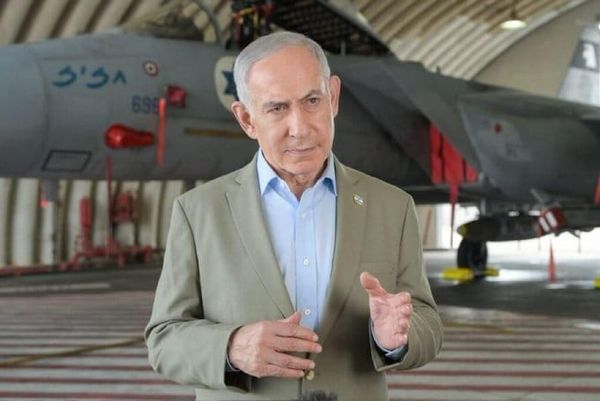
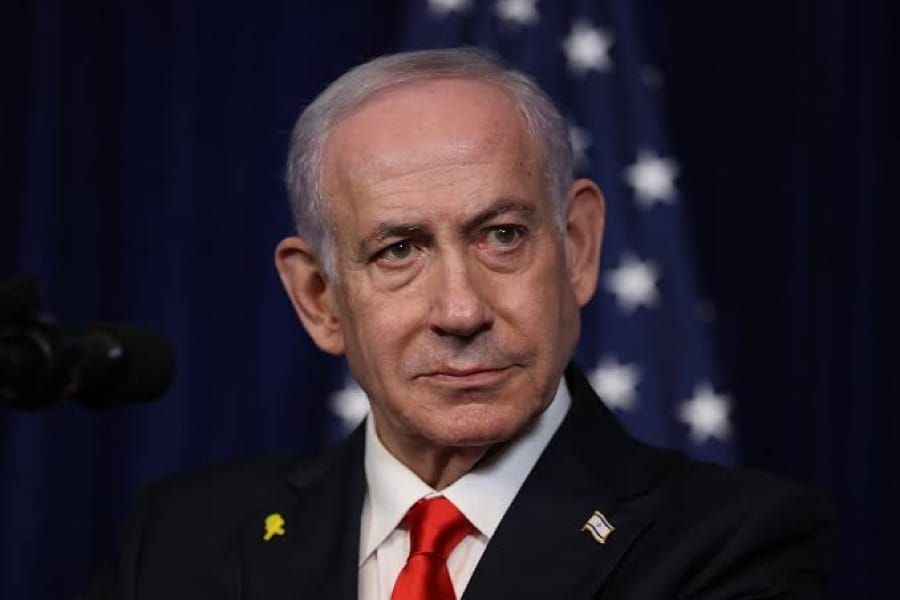
Benjamin Netanyahu flew secretly to Abu Dhabi on 27 September and met Mohamed bin Zayed, president of the United Arab Emirates, for about an hour at the airport. People familiar with the visit said Netanyahu asked bin Zayed to deny reports that the Emirati leader had warned him of a coming Hamas attack before 7 October 2023. Netanyahu's office said on 28 September that he had made no such request. "The visit dealt only with strengthening bilateral ties and regional challenges," it said. The UAE said in a statement carried by its state news agency: "During the meeting, the two sides discussed bilateral relations between the UAE and Israel and ways to strengthen and develop them." Bin Zayed had made no public statement on the warning by 29 September.
Abbas Kamel, then director of Egypt's General Intelligence Service, telephoned Netanyahu's office in early October 2023 to warn that an attack from Gaza appeared to be coming, officials in an Arab government said in an account published by The Wall Street Journal on the evening of 27 September, US Eastern time, after Netanyahu had returned from Abu Dhabi. Kamel made the call after two earlier Egyptian warnings had gone unheeded, the officials said. Hamas-led fighters crossed into southern Israel on 7 October 2023, killed about 1,200 people and took 251 hostages into Gaza.
Netanyahu's office said on 28 September: "In the months preceding October 7, Prime Minister Netanyahu did not meet or speak with Abbas Kamel." It said "no Israeli intelligence source conveyed an Egyptian warning to the Prime Minister" and that "Prime Minister Netanyahu has never met or spoken with the head of intelligence of a foreign country without their Israeli counterparts". The claim "was already refuted at the time, and now it is being recycled to mislead the Israeli public", the office said. "The Prime Minister instructed to file a libel suit on this matter." Netanyahu wrote on X the same day that "foreign and hostile states", including Arab countries, stood behind "false blood libels" against him, "with the aim of toppling Netanyahu's right-wing government and replacing it with an Eisenkot-Yair Golan-Liberman left-wing-Arab" government.
Egyptian officials kept warning Israel until 48 hours before the attack, one of the Arab officials said. None of the warnings gave a date or described the scale of what Hamas was preparing, according to the officials and other people familiar with the matter. The foreign ministries of Egypt and the UAE did not respond to requests for comment on the account. Cairo had not commented publicly by 29 September.
Bin Zayed also told Netanyahu in a call in September 2023 that there were signs of a Hamas attack, the Arab officials said. Netanyahu did not appear convinced, they said. An Emirati source confirmed that the call took place.
Abu Dhabi
Netanyahu's private plane landed in Abu Dhabi at 3.10 p.m. on 27 September, and he spent about four hours in the Emirates. Roman Gofman, director of the Mossad, Shmuel Ben-Ezra, head of the National Security Council, and Major General Guy Markizeno, Netanyahu's military secretary, travelled with him, according to Israeli reporting. Aircraft from Libya, Morocco, Qatar and Saudi Arabia landed in Abu Dhabi at the same time, and Netanyahu joined a wider meeting on Iran with officials from countries that have no diplomatic ties with Israel, Israel's public broadcaster reported.
An Israeli television channel reported the trip while Netanyahu was still in the Emirates. The Shin Bet filed a complaint with the military censor, saying the early disclosure created "a serious security threat". The UAE foreign ministry said it does not comment on "speculation" about its leader's conversations and that the country keeps "open and direct channels of communication" with Israel.
Netanyahu made an earlier secret visit to the UAE on 26 March 2026, meeting bin Zayed in Al Ain, and disclosed it in May. He did so partly after learning that Naftali Bennett, his opposition rival, planned to visit the Emirates for meetings with bin Zayed, according to Israeli reporting.
Three Egyptian warnings
Egyptian officials first told Israeli counterparts in June 2023 that the situation in Gaza was volatile and urged Israel to return to negotiations with Hamas, the Arab officials said. They described the June message as vague.
Kamel flew to Israel on 26 September 2023, 11 days before the attack. A chartered Cessna linked to Egyptian intelligence landed at Ben Gurion Airport and stayed on the ground for 67 minutes, according to a detailed account of the visit published on 26 September 2026. Kamel told the Israelis that Gaza was in a dire state and was "going to blow up in your faces" if Israel did not change course, and he urged economic concessions to head off a confrontation, according to people familiar with the meeting. The Israeli officials told him they had the situation under control, the Arab officials said. The identity of the officials Kamel met has not been made public. Tzachi Hanegbi, then national security adviser, has denied meeting Kamel or receiving any Egyptian warning.
A former Israeli official said of the visit: "There is no world in which senior Israeli officials would meet the Egyptian intelligence chief and Bibi is not aware." An Egyptian official said: "For Kamel to go to Israel for a single hour meant that al-Sisi himself felt: You need to go there and tell them yourself."
Netanyahu's office approved measures easing restrictions on Gaza on 27 September 2023, the day after Kamel's visit, according to Israeli reporting in December 2025. An Egyptian delegation also met officials of the Israeli foreign ministry about two weeks before the attack, according to the same reporting. "We said everything could blow up," an Egyptian source said of those contacts.
Netanyahu's office said on 9 October 2023: "The Prime Minister has neither spoken, nor met, with the head of Egyptian intelligence since the formation of the government." Egyptian media with close ties to the intelligence services quoted senior security sources on 11 October 2023 denying that Cairo had warned Israel. The same day, Michael McCaul, the Texas Republican who then chaired the House Foreign Affairs Committee, told reporters in Washington: "We know that Egypt had warned the Israelis three days prior that an event like this could happen." He said he thought "the question was at what level". An Egyptian official told Israeli reporters at the time that the warning may not have reached Netanyahu's office.
Netanyahu's office said on 26 September 2026 that the account of Kamel's visit was "a false claim" and that "recycled lies do not become true simply because they are repeated". It said the report was an attempt to manipulate Israeli public opinion before the election. Likud said Netanyahu's opponents "continue to spread the lie".
Kamel, born in 1957, was chief of staff to President Abdel Fattah al-Sisi from 2014 to 2018 and directed the General Intelligence Service from 28 June 2018. He was Egypt's lead mediator in the talks on a Gaza ceasefire and the release of hostages after the attack. Sisi replaced him with Hassan Rashad on 16 October 2024 and named him presidential adviser and coordinator of the security agencies.
The Emirati warning
Bin Zayed called Netanyahu on 15 September 2023 and told him that Yahya Sinwar, the Hamas leader in Gaza, was planning "major action against Israel that would lead to bloodshed", according to "843 Days of Abandonment and Resilience", a book by the Israeli journalists Shlomi Eldar and Ruth Yuval published in September 2026. Netanyahu told him Israel was "on top of things in Gaza" and that any Hamas action would more likely come in the West Bank, according to the book. A Fatah official had passed the warning to an adviser to bin Zayed, who briefed the Emirati president. Sinwar had told associates to tell the Israelis "to expect an earthquake" and that he was "preparing a huge surprise for them", the authors wrote.
Netanyahu's office said on 8 September: "A total lie! Prime Minister Netanyahu did not speak with the president of the United Arab Emirates during the period in question." It said the report was "fabricated" and "politically motivated" and threatened legal action against the journalists. Bin Zayed later told the director of the CIA that he had discussed Hamas's preparations for a major attack with Netanyahu, according to Israeli reporting on 26 September 2026.
Emirati officials were discussing their intelligence assessments of Hamas among themselves in 2023 and sharing them with the United States, the Arab officials said. Sinwar's tone and threats had changed, and Arab intelligence services had identified frequent meetings in Gaza between Hamas and Palestinian Islamic Jihad, they said.
Netanyahu met his security chiefs on 1 October 2023 and did not tell them of the Emirati warning, according to accounts of the meeting published in September 2026. He opposed strikes on senior Hamas figures and instructed that "quiet" and "moderation" be maintained towards Hamas, according to the protocol of the meeting. He feared that an escalation would damage talks on normalising relations with Saudi Arabia, according to the same accounts. Mohammed bin Salman, the Saudi crown prince, said on 20 September 2023: "Every day we get closer."
Netanyahu's account
Netanyahu, who has been prime minister for about 19 years across several terms, has said his security chiefs failed to warn him. He said on 1 September 2026 that defence officials had deliberately not woken him in the hours before the attack. "I would have immediately given the order to put the entire military on alert," he said. On 28 September he said that Ronen Bar, then director of the Shin Bet, Herzi Halevi, then chief of the general staff, and Major General Aharon Haliva, then head of military intelligence, had "discussed all the warning signs" overnight before the attack and that "Bar decided not to call and update the prime minister, not to alert the civilian security squads and IDF forces in the field, not to evacuate the Nova festival."
Bar said on 28 September that he would sue Netanyahu for defamation and would summon members of Netanyahu's staff to testify. He said that as head of the Shin Bet he had "warned Netanyahu of impending disaster in an unprecedented manner, and the prime minister ignored these warnings". "After refusing for three years to acknowledge his responsibility," Netanyahu "has begun to selectively publish documents", Bar said. He demanded the release of testimony, documents and Netanyahu's meeting schedule for the period. Netanyahu's government voted to dismiss Bar in March 2025, and Bar left the service in June 2025.
Bar said in an affidavit in April 2025 that "no one anticipated an attack of this scale". All agencies received an alert at 3.03 a.m. on 7 October about "unusual preparations and the possibility of offensive intentions by Hamas", he said.
Yoav Gallant, whom Netanyahu dismissed as defence minister in November 2024, told Army Radio on 27 September: "I first heard about these warnings from media reports." He said: "Assuming these things are true, such a warning that a prime minister receives from the leader of a country is not a political asset; it is a fundamental failure." Gallant said senior security officials might have made different decisions had they known of the warnings.
A poll by Lazar Research and Panel4All conducted on 2 and 3 September 2026 found that 40 per cent of Israelis believe there was a "betrayal from within" on 7 October. Another 44 per cent said there was no betrayal and 16 per cent were unsure. Among voters for the governing coalition, 61 per cent believed in a betrayal, and 64 per cent of opposition voters rejected it. The poll surveyed 600 adults and had a maximum sampling error of four per cent. Tamar Hermann, a pollster and senior fellow at the Israel Democracy Institute, said the idea that officials hid information from Netanyahu had gained ground among his voters.
The security services
The Shin Bet obtained versions of the Hamas invasion plan, known in Israel as "Jericho Wall", in 2018 and in 2022, according to its own investigation, published on 4 March 2025. The service failed to turn the plan into a reference scenario for its assessments and lacked human sources in Gaza, the investigation found. It named Qatari money reaching Hamas's military wing and a policy between July 2018 and May 2021 of seeking arrangements with Hamas among the conditions that allowed the attack. "No underestimation of the enemy was found. On the contrary, there was deep understanding of the threat," the service wrote. Bar said: "I will bear this heavy burden on my shoulders for the rest of my life."
Military intelligence briefed Netanyahu on the 2018 version of the plan, which was largely conceptual. The more detailed version obtained in May 2022 set out how the attack would be carried out. A Southern Command document from November 2022 titled "Portrait of a Campaign" gave the scenario one page of about 60 and described it as a "raid" rather than an invasion. Two or three junior noncommissioned officers in military intelligence argued that Hamas could carry out the plan, one of them again in the weeks before the attack. Herzi Halevi, then chief of the general staff, learned of the plan only after the attack began. A committee led by the retired Major General Roni Numa was appointed to examine how the army handled the intelligence; its mandate excludes the political leadership.
Female surveillance soldiers on the Gaza border reported increased Hamas training in the months before the attack, and commanders dismissed their reports.
Some former officials said the warnings from Cairo and Abu Dhabi might not have changed the outcome, because the belief that Hamas would never mount such an attack was deeply held across the Israeli government. "I think we probably fell in love too much with our own notions about what we know or how we know our enemy," said Nadav Pollak, an Israeli intelligence veteran who lectures at Reichman University.
Qatari money
Qatar sent cash to Gaza with Israeli approval from 2018, including transfers of $15 million in suitcases of US dollars. Gadi Eisenkot, chief of the general staff at the time, oversaw the first transfers from November 2018 until he retired in January 2019. The Shin Bet recommended halting the payments and Netanyahu continued them for years, Eisenkot said. He said he learned two years ago that Hamas's military wing had taken more than $4 million from one $15 million transfer in 2019.
"This behaviour is between breach of trust and treason against the State of Israel," Eisenkot said in a television interview on 26 September 2026. "This is an utterly unreasonable decision, or there is some secret fact I'm not aware of." He called Netanyahu "a pathological liar, in Hebrew and English".
The inquiry
Israel has not established a state commission of inquiry into 7 October, three years after the attack. Under Israeli law the president of the Supreme Court appoints the members of a state commission. Netanyahu opposes one on the grounds that the court is biased against him. Polls show a large majority of Israelis support an independent inquiry.
A bill to create a politically appointed inquiry passed its first reading in the Knesset 59 to nil on 24 December 2025, with the opposition boycotting the vote. The bill stalled after the Knesset voted to dissolve on 17 July 2026. The government told the High Court of Justice on 22 July that no inquiry would begin before the election and asked the court not to intervene. "The way in which the events are investigated is at the heart of a political argument between the parties standing for election," the state wrote. If the court accepts that position, at least three years will pass between the attack and the start of any formal inquiry.
A civilian commission of inquiry formed by relatives of victims heard about 120 witnesses over four months and published its findings on 26 November 2024. It found that "arrogance and inherent blindness" led the political leadership to strengthen Hamas through cash transfers while avoiding offensive action, and that Netanyahu was responsible for undermining the cabinet and the National Security Council as centres of decision.
The election
Israelis vote on 27 October in the first national election since the attack. The 25th Knesset is the first since 1988 to serve its full four-year term.
The Israel Democracy Institute's Israeli Voice Index found that 68 per cent of Jewish Israelis consider 7 October a major factor in deciding which party to vote for, against 32 per cent of Arab Israelis. The institute surveyed 605 Jewish and 150 Arab respondents online and by telephone from 31 August to 3 September, with a margin of error of plus or minus 3.57 percentage points. "The Oct. 7 events certainly overshadow these elections," Hermann said.
Eisenkot, who founded the Yashar party with the lawmaker Matan Kahana on 16 September 2025, leads the opposition in polls. He has pledged a state commission to "investigate the previous decade, clarify what Netanyahu knew and did not know". "The accumulation of facts exposed in recent months regarding warnings from the heads of Israel's security establishment and various officials from foreign countries leaves no room for doubt: Netanyahu led the State of Israel, in blindness, arrogance and irresponsibility, to the greatest disaster in its history," Eisenkot said on 26 September.
Bennett leads a joint list with Yair Lapid called Together, and Yair Golan, Avigdor Liberman and Bennett have also pledged a state commission. A poll by Israel's public broadcaster on 28 September gave Yashar 23 of the Knesset's 120 seats, Likud 21 and Together 11, and put Netanyahu's bloc and the opposition bloc level at 52 seats each. A government needs 61 seats. United Torah Judaism, the ultra-Orthodox party in Netanyahu's coalition, is willing to withhold support from him and could back a government led by Eisenkot after the coalition failed to pass a law exempting yeshiva students from military service, according to reports on 28 September. Analysts said Netanyahu may be counting on a deadlock and a second election, which would keep him in office as caretaker prime minister until a new government is sworn in.