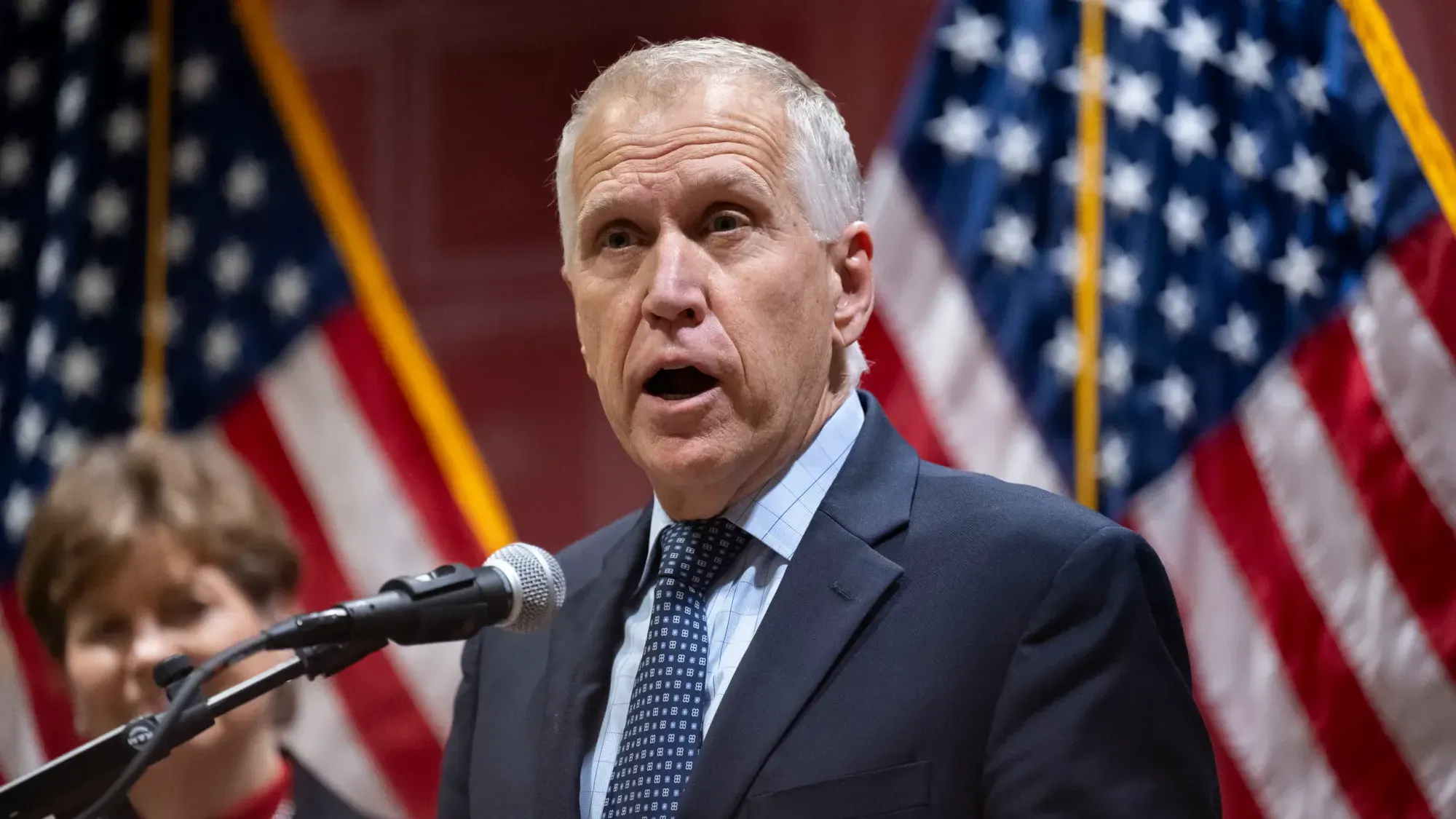
Republican Senator Thom Tillis said on 14 October he will ask the Pentagon's inspector general to investigate why Starshield, the military version of Starlink, cut out on fast-moving Ukrainian drones overnight on 13 to 14 October and to report the findings to Congress and the public. Three days earlier Tillis told NBC's Meet the Press that he had made a mistake in casting the deciding vote to confirm Defence Secretary Pete Hegseth and that Hegseth should leave the Pentagon.
Tillis wrote on X that the latest reporting pointed to a failure inside Defense Department Starshield systems rather than at SpaceX. "I'm not holding my breath for Defense Secretary Hegseth to offer transparency," he wrote, adding that the restriction was at best an unacceptable lapse and at worst a deliberate choice to open the way for a Russian attack. He wrote that the outage had put Ukrainian civilians and US diplomatic and security personnel at unnecessary risk. Earlier the same day Tillis had asked SpaceX on X to confirm that degrading Ukraine's defences was not its intent, NBC News reported, and wrote that support for Ukrainian sovereignty "should not be a gray area" for the US government or US companies.
Serhii Beskrestnov, President Volodymyr Zelenskyy's adviser on defence technology, wrote on Telegram on the morning of 14 October that Ukraine's defence forces had received no warning and that several missions had failed. He wrote that partners were depriving Ukraine of one of its few means of stopping Russia's jet-powered Shahed drones. On the same night Russian forces fired 39 ballistic missiles and more than 120 drones at Ukraine's power grid, cut electricity to at least 600,000 people and killed three people in Kyiv, Ukrainian officials said.
Elon Musk, whose company SpaceX builds both Starlink and Starshield, replied on X to a post by Mykhailo Fedorov, Ukraine's former defence minister. "Starshield systems are owned and controlled by the US government," Musk wrote, adding: "Any limits on speed or usage are decided by the US military and ultimately POTUS." A senior Trump administration official denied any White House role, according to Axios, and White House officials told Ukrainian advisers they don't control SpaceX.
Pentagon spokespeople declined to discuss the speed cap and referred questions to broader administration statements, SatNews reported on 14 October. The Pentagon did not respond to a request for comment from Al Jazeera the same day. No public response from Hegseth had been published by 16:00 UTC on 15 October. YAC News did not separately seek comment.
Tillis's request concerns the Starshield outage, and no public record shows that Hegseth is personally under investigation. The Defense Department inspector general had not said by 16:00 UTC on 15 October whether it had received the request or would open a review, and the office decides independently which inquiries to take on. Several Ukrainian outlets, including Suspilne and RBC-Ukraine, reported the request as an investigation of Hegseth and his team, which goes further than Tillis's posts.
Drone speed threshold
Beskrestnov said Starshield terminals moving faster than 100 mph, about 160 km/h, lost service without warning overnight on 13 to 14 October. A Defence Ministry source said Ukraine had asked US officials, SpaceX and NATO to explain the change. Static Starlink terminals used for front-line communications kept working, and Ukraine's missile and drone detection runs on other systems.
Ukraine's 7th Air Assault Corps said units in the Huliaipole sector of Zaporizhzhia region lost drone links for 10 to 20 seconds at speeds of 110 to 120 km/h, below the stated threshold, which made the drones harder to control and easier to shoot down. Unit reports put the dropout point anywhere between about 72 and 161 km/h. Some drone missions were suspended, and the corps said unstable links could make it impossible to launch high-speed drones, mid-range strike models among them.
Ukrainian units use Starshield to guide mid-range strikes on Russian supply lines in occupied southern and eastern Ukraine and to fly interceptor drones against jet-powered Shaheds. Ukrainian interception rates against Shaheds fell from more than 90 per cent to about 60 per cent after Russia fitted them with jet engines in early summer 2026. Starlink Mini terminals fitted to drones already stop working above 160 km/h, so faster aircraft rely on Starshield.
Zelenskyy's spokesperson told NBC News late on 14 October that the limits were still in place. Fedorov wrote on X that connectivity at speeds of up to 160 km/h was being restored and that complete removal of the Starshield speed limit was now critical for Ukraine's defence. An unnamed Defence Ministry source told Ukrinform and Reuters on 15 October that Starshield service in motion had been restored and that the ministry would keep seeking an explanation for the outage.
SpaceX capped commercial Starlink terminals over Ukraine at roughly 75 km/h in early 2026, at the Ukrainian government's request, after Russian forces fitted Starlink terminals to strike drones and one hit a passenger train in Kharkiv region on 27 January. Fedorov, then defence minister, announced on 2 February a whitelist under which only registered terminals would work.
Control of Starshield
Space Force's Space Systems Command buys Starshield Global Access services over the Starlink network, a command spokesperson told FedScoop in 2025. SpaceX markets Starshield for national defence use. Ukraine may use commercial Starlink for battlefield communications but not for offensive operations, AFP reported.
Ukraine's Starshield access was extended in December 2024 to 2,500 terminals on top of 500 already connected, under two US Defense Department contracts reported by Bloomberg. The earlier 500-terminal deal cost almost US$40 million. Ukraine's service is contracted through the US government until 15 May 2027, Fox News reported, and Ukrainian officials told SpaceX the speed limit had never applied to their terminals before.
SpaceX won more than US$6 billion in multi-year Starshield contracts from the US government in the second quarter of 2026. Musk holds about 82 per cent of the voting power in SpaceX, which listed on the Nasdaq in June after merging with his artificial intelligence company xAI.
Axios reported a denial of White House involvement only, with nothing said about the Pentagon or the Space Force, which buy and manage Starshield service. No US official has said who set the speed threshold, when it was set or why service was restored.
Zelenskyy says he feels betrayed
Zelenskyy told Piers Morgan in an interview released late on 14 October that he felt betrayed by Trump. Asked directly whether he did, he answered: "Really, yes, between us." He cited Trump's diesel deal with Putin, the terms of the energy ceasefire and the Starshield outage, and said the United States was "losing a strong partner" because Trump "chooses one side, not our side."
Zelenskyy called the Starshield switch-off "crazy steps between us" and said US conduct had been "really strange". He said the decision "will bring a lot of human losses" and that Ukraine still counted on the United States and Trump as strategic partners.
Beskrestnov wrote that the timing of the outage could not be a coincidence and linked it to the political dispute between Zelenskyy and Trump. Serhii Sternenko, a drone-warfare activist and former adviser to Fedorov, wrote on 14 October that Trump had begun sanctioning Ukraine while easing sanctions on Russia. No formal US sanctions on Ukraine have been announced.
Russian forces launched more than 850 drones at Ukraine overnight on 14 to 15 October, according to Zelenskyy. Ukraine's Air Force said 536 were stopped, with impacts at 31 locations. Zelenskyy wrote that the attack came "precisely at a time when the speed of our defensive capabilities is being artificially restricted." Russian drones killed three people in Kirovohrad region, Ukraine's emergency service said.
Ukrainian drones hit a refinery in Russia's Ryazan region early on 15 October and started a fire, which Ryazan Governor Pavel Malkov confirmed. A senior Ukrainian official confirmed the strike. Zelenskyy told the Financial Times, in an interview published the same day, that Ukraine was resuming refinery attacks: "We're done." Kaja Kallas, the EU's foreign policy chief, said Europe had to pressure the aggressor to stop the war and not the victim to surrender.
Diesel sanctions and intelligence
Trump spoke to Vladimir Putin for 90 minutes on 9 October and announced that Russia would supply more than 300,000 tonnes of diesel immediately, rising to 1 million tonnes through 2027. The US Treasury issued a waiver allowing Russian diesel into the United States until April 2027. On 10 October Trump said he had told Zelenskyy to stop striking Russian oil refineries and that it was time for Ukraine to get a new president. Musk posted "Zelensky has gone too far" beside a video of the remarks the same day.
A Ukrainian official said Trump's envoys Steve Witkoff and Jared Kushner threatened in Miami on 9 and 10 October to cut Ukraine off from US intelligence if the refinery strikes continued. A US official denied that. Trump announced an energy ceasefire on 11 October, and Ukraine held off striking Russian refineries until 15 October.
Russian ballistic missiles hit Kyiv on the nights of 12 and 13 October before air raid sirens sounded. Zelenskyy said Ukraine had received no early warning of the launches from partners. Colonel Yurii Ihnat, the Air Force spokesperson, said Ukraine received no warning before the first barrage on 13 October but did receive warnings before three later barrages that night.
Trump told reporters on 13 October: "We are helping them, and we are sharing intel." Andrii Sybiha, Ukraine's foreign minister, said the same day that intelligence sharing was continuing.
Senator Jeanne Shaheen, the ranking Democrat on the Senate Foreign Relations Committee, wrote on X that restrictions on Ukraine's Starshield access must stop immediately. She said the Defense Department is required to notify Congress if it pauses or downgrades intelligence sharing with Ukraine and called on Hegseth to give that notice at once if it had. Democrats on the House Foreign Affairs Committee called the restrictions unconscionable.
Tillis and Hegseth
Tillis, a North Carolina Republican, announced in June 2025 that he would not seek re-election after opposing Medicaid cuts in Trump's tax and spending bill. His term ends in January 2027. He cast the vote that brought Hegseth's confirmation to a 50-50 tie on 24 January 2025, and Vice President JD Vance broke it.
Tillis told CNN in 2025 that Hegseth was out of his depth and that his halt of weapons shipments to Ukraine that July was amateurish. On 2 September 2026 he urged Trump to fire Hegseth, citing a leadership void during the war with Iran and the resignation that week of Army Secretary Dan Driscoll. He wrote that he had never witnessed more inept management.
Tillis told Kristen Welker on NBC's Meet the Press on 11 October: "I made a mistake. I've admitted that I made a mistake." He said Hegseth "needs to get the hell out of the Department of Defense because he is a failed leader" and that he now wanted to back someone who would serve the president's legacy. Tillis said he had a record of supporting presidents' cabinet picks. He also criticised Hegseth's plan to let the public watch the execution of Nidal Hasan, the 2009 Fort Hood gunman, saying terrorist groups would use it as a recruiting tool.
Tillis told the On NOTUS podcast in June 2026 that he had deferred on Hegseth when he could not find a second eyewitness to corroborate allegations against him. "If I had, I would never have supported him," he said.
Tillis's book, "How to Lose Friends and Antagonize Presidents", published on 6 October, calls the Hegseth vote the biggest regret of his career. He wrote that he could not corroborate the worst allegations about Hegseth's management, treatment of women and drinking, which Hegseth denied, and that he did not want to be the deciding vote. He wrote that Trump should get Hegseth out of the way in ending the war with Iran. The book predicts heavy Republican losses in the 3 November midterm elections.
Hegseth's office verbally ordered a three-day halt to military aid flights to Ukraine in early February 2025 without notifying the White House, Reuters reported in May 2025. The order stopped 11 shipments of artillery shells and other weapons from Dover Air Force Base and a US base in the United Arab Emirates. Flights resumed on 5 February after National Security Adviser Mike Waltz intervened, one source said, and the cancelled flights cost US Transportation Command US$2.2 million.
Polish subscriptions
Poland is the largest single supplier of Starlink terminals to Ukraine, with about 29,500 delivered by April 2025, and its Ministry of Digital Affairs pays the subscriptions at a cost Polish officials put at about US$50 million a year. Foreign Minister Radosław Sikorski addressed Musk on X on 14 October as "big man", asked whether he was playing politics with his products again and wrote that European customers were watching.
Musk told Sikorski to "be quiet, small man" in March 2025, after Sikorski said Poland might look for other suppliers if SpaceX proved unreliable. Musk claimed at the time that Starlink would never turn off its Ukrainian terminals or use them as a bargaining chip.