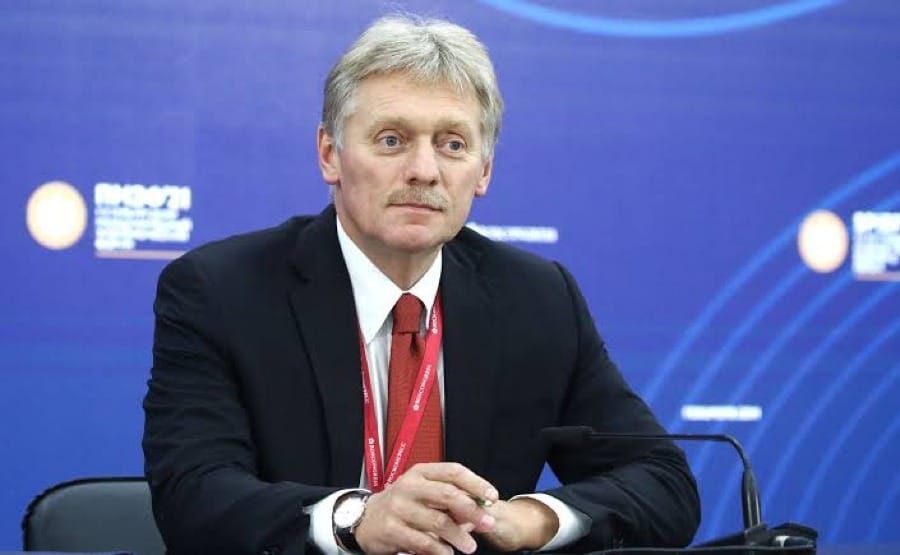
Kremlin spokesperson Dmitry Peskov said on Wednesday 14 October that the energy ceasefire US President Donald Trump announced three days earlier had never been specified. A journalist asked Peskov whether Russian defence ministry reports of overnight strikes on Ukrainian energy sites meant Russia had rejected a truce. Peskov asked in reply what the outline of the ceasefire was and what it meant, then asked: "Has it been specified?" Told that it had not, he said work in that direction was continuing. In remarks attributed to him on Russian Telegram channels, Peskov said Russia could not be accused of failing to comply with a truce that had not been specified.
Trump wrote on Truth Social on 11 October that an energy ceasefire between Russia and Ukraine was in force immediately and that both parties had agreed. Neither government confirmed it. Russian forces struck Kharkiv's CHP-5 combined heat and power plant within hours of the post, Ukraine's Presidential Office said, and strikes on the Ukrainian grid continued on each of the following three days. Peskov declined on 13 October to say whether Russia had agreed and told reporters to put the question to Trump. Trump has not answered directly when asked whether Russia has broken the ceasefire.
Ukrainian President Volodymyr Zelenskyy said the attack overnight into 14 October left more than 600,000 people without power and damaged 30 facilities.
Strikes on Darnytsia
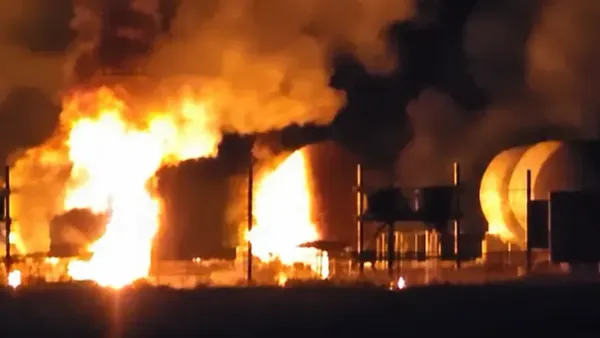
Russia's defence ministry said its forces used ground-based precision weapons and long-range attack drones overnight against energy and communications facilities it said served Ukraine's military-industrial complex and armed forces. The ministry named two Kyiv plants among the targets, Darnytsia CHP-4 and CHP-5.
A Russian ballistic missile struck Darnytsia CHP-4 at about 22:40 on 13 October, hours before the overnight attack, Zelenskyy said. The strike also damaged an apartment building. Zelenskyy wrote that Ukraine had again received no early warning from its partners. Ukraine's Air Force said five ballistic missiles launched from Russia's Bryansk region had hit Kyiv at about 22:30 on 12 October, and residents heard explosions before the air raid sirens sounded. Trump said on 13 October that US intelligence sharing with Ukraine had not been suspended.
Euro-Reconstruction LLC, a private company, owns Darnytsia CHP-4, which supplies the capital with heat and electricity. Kyiv's two largest plants, CHP-5 in Vydubychi and CHP-6 in Troieshchyna, belong to the municipal enterprise Kyivteploenergo and have supplied the city since 1971 and 1981. Together they meet 48 per cent of Kyiv's heat demand and nearly 60 per cent of its electricity demand.
Kyiv police said five people had been killed and 36 injured in the capital since the evening of 13 October. Three women aged 35, 58 and 84 died in an apartment building in the Desnianskyi district. DTEK reported emergency power cuts in the Darnytskyi, Dniprovskyi, Pecherskyi and Solomianskyi districts and in parts of Holosiivskyi.
Klitschko before the Rada
MPs in the Verkhovna Rada voted 151 to eight on 13 October to summon Kyiv Mayor Vitali Klitschko. The motion, brought by Servant of the People MP Mariana Bezuhla, asked him to explain why critical infrastructure in the capital had not been protected.
Klitschko told MPs on 14 October that Russian missiles and drones had hit CHP-5 and CHP-6 almost 50 times this year. He said the two plants took 12 hits in 2022, seven in 2023, none in 2024 and 19 in 2025. He said the overnight attack caused fairly serious damage to several key energy facilities in the city and the surrounding region and that strikes on power generation also cut water supply and electric public transport.
Kyiv has prepared almost 700 generators for heat and water facilities, 70 mobile boiler houses, three diesel power stations and a backup water intake ahead of the heating season, Klitschko said. Hospitals have 480 backup generators and 15 hospitals have their own wells, with six more wells under construction. Klitschko said 11 medical facilities have their own boiler houses and that the number would reach 21 by the end of the year.
Klitschko asked parliament where the billions allocated to air defence and infrastructure protection had gone. He said the central government had blocked local budget funds before the heating season and that many communities faced the same problem. He called accusations that Kyiv had disrupted the heating season cynical, since the season had not yet begun. In a video address on 13 October he said the mayor is not responsible for air defence and that attempts to remove elected community heads on contrived pretexts were aimed at weakening local self-government.
Refineries and Russian diesel
A White House official said on 11 October, speaking on condition of anonymity, that Trump's announcement referred to a potential deal under which each side would stop attacking the other's oil refineries, and that a deal covering power plants and grids could follow. No party has publicly confirmed those terms.
Ukraine has a single oil refinery, at Kremenchuk, which Russian forces have attacked several times and which is not fully functional, a Ukrainian official said. Russia operates an extensive network of refineries that Ukrainian drones have repeatedly hit.
Trump announced on 9 October a deal to lift US sanctions on Russian diesel. He said Russia would release 300,000 tonnes immediately and 500,000 tonnes in November, with further deliveries depending on the condition of Russia's refineries. The US Treasury Department's Office of Foreign Assets Control issued a temporary general licence to allow the sales. Vladyslav Vlasiuk, Ukraine's sanctions envoy, wrote that 300,000 tonnes would cover about 15 hours of US diesel demand.
A US official said Trump made the diesel deal after Zelenskyy ignored half a dozen US requests to stop attacking Russian refineries. According to the official, Trump did not consider the refinery strikes equivalent to Russian attacks on Ukraine's power grid and blamed them for higher fuel prices in the United States.
EU foreign policy chief Kaja Kallas welcomed an energy ceasefire but said in a statement on 10 October that suspending sanctions on Russian diesel gives Russia more revenue to wage war. Russian Foreign Minister Sergey Lavrov said after Trump's announcement that Ukraine did not deserve the respite a ceasefire would bring.
Zelenskyy said he learned of the ceasefire from Trump's post and that Ukraine would observe it if Russia did. He said Ukrainian forces had not struck Russian refineries or other energy targets in the two days after the announcement. Russia's defence ministry said it shot down 900 Ukrainian drones overnight into 14 October, 180 of them near Moscow.
War crimes cases
Kyiv City Prosecutor's Office opened a pre-trial investigation into the overnight attack as a suspected war crime under Article 438 of Ukraine's Criminal Code, which covers violations of the laws and customs of war.
International Criminal Court judges issued arrest warrants on 5 March 2024 for Lieutenant General Sergei Kobylash, commander of Russia's Long-Range Aviation, and Admiral Viktor Sokolov, then commander of the Black Sea Fleet, over missile strikes on Ukraine's electric infrastructure between 10 October 2022 and at least 9 March 2023. The judges found reasonable grounds to believe the two commanders were responsible for directing attacks at civilian objects, causing excessive incidental harm to civilians and committing inhumane acts.
ICC judges issued further warrants on 24 June 2024 for former defence minister Sergei Shoigu and the chief of the General Staff, Valery Gerasimov, over the same campaign against the grid.
Russian officials deny deliberately targeting civilian infrastructure and say the strikes aim to reduce Ukraine's ability to fight. The Russian government does not recognise the court's jurisdiction and has surrendered none of the four men.