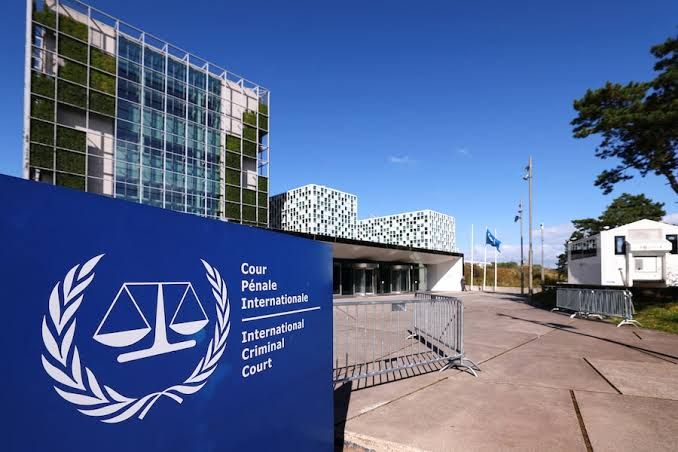
The foreign ministers of Canada, the United Kingdom, France, Germany, Italy and Japan, joined by Denmark and the Netherlands, said on 9 October 2026 that they regretted and strongly disagreed with the US sanctions announced hours earlier against the International Criminal Court.
"As committed supporters of the ICC we regret and strongly disagree with the announcement of sanctions," the eight ministers said in a joint statement published by Britain's Foreign, Commonwealth and Development Office and Italy's foreign ministry.
The US Treasury added the court to its Specially Designated Nationals list on the same day. The eight states parties to the Rome Statute reaffirmed their support for the court's independence, impartiality and integrity.
Ministers said the sanctions would significantly affect the court's work, its staff and their families if they take effect. They welcomed the court's preparations to keep carrying out its mandate under the Rome Statute and pledged to keep supporting it.
Court staff work daily to bring to justice people accused of the most serious international crimes and to support their victims, the ministers said. They committed to dialogue with states outside the court before the Assembly of States Parties meets in December 2026.
Sanctions in force
The Treasury's Office of Foreign Assets Control listed the court under Executive Order 14203 on 9 October. One of four general licences issued alongside the listing runs for 180 days.
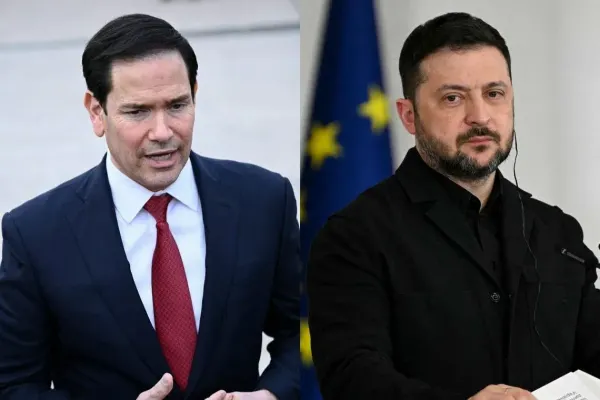
Secretary of State Marco Rubio said the administration had held off on listing the court for more than a year in the hope that its member states would restrain it.
"Either the ICC will end its threats, or we will end the ICC," Rubio said in a statement. He said allies that belong to the court and rely on US troops for their defence were expected to rein it in.
Netherlands
Dutch Foreign Minister Tom Berendsen, whose country hosts the court in The Hague, said: "This is a deeply regrettable step. We will stand firm in defence of the Court."
Berendsen said the sanctions would not take effect immediately, leaving a six-month window for dialogue. He said service providers could keep working with the court in the meantime.
Berendsen said in late September that the Netherlands was talking with the European Commission so the EU Blocking Statute could be enacted quickly if needed. He said the statute was the "nuclear option".
Germany
German Foreign Minister Johann Wadephul visited the court on 28 September 2026. "The German government completely supports the court," he said in The Hague. He said supporting the court was part of Germany's historic responsibility.
German Justice Minister Stefanie Hubig said on 9 October that the United States had championed the Nuremberg trials. "It is utterly staggering that the US, of all countries, is now setting out to destroy this idea once and for all," she said.
Japan
Japan's government said the 18 August sanctions on ICC President Tomoko Akane, a Japanese national, were "very unfortunate". The foreign ministry said Japan had consistently supported the court.
Prime Minister Sanae Takaichi told reporters on 25 August that her government took the sanctions on Akane "very seriously" and that its response was "not weak". Japan had urged the US government before the listing not to sanction Akane.
"I share Akane's sense of crisis and concern. We will continue to provide necessary support," Takaichi said. She said Japan needed to protect the court "as the largest financial contributor".
Foreign Minister Toshimitsu Motegi said Kazuhiko Nakamura, director general of the ministry's International Legal Affairs Bureau, had met Akane in the Netherlands.
France
France's foreign ministry said on 20 August 2026 that coercive measures against the court "constitute an attack on the Court and all the 125 States Parties to the Rome Statute". The ministry said Minister for Europe and Foreign Affairs Jean-Noël Barrot had met the court's president in September 2025 and its deputy prosecutor in July 2026.
"France expresses its solidarity with the judges targeted," the ministry said. French judge Nicolas Guillou has been under US sanctions since 20 August 2025.
Canada
Prime Minister Mark Carney said on 5 August 2026 that Canada's support for the court was "unequivocal". The Canadian Press reported at the time that Canada, unlike France, had never directly criticised the US sanctions.
Foreign Affairs Minister Anita Anand said in September 2025 that she had full confidence in the objectivity and impartiality of Canadian judge Kimberly Prost. Her office said she raised concerns about the sanctions with Rubio in Washington the day after he announced them.
Prost said in February 2026 that Canadian banks had told her they had to cancel her cards, according to The Canadian Press. She has asked a New York court to reverse the sanctions.
The New Democratic Party has urged the federal government to use the Foreign Extraterritorial Measures Act to stop Canadian businesses from enforcing the US sanctions.
Sanctioned nationals
Four of the eight signatories have citizens among the 13 court officials the Trump administration sanctioned before listing the institution. Former prosecutor Karim Khan, a British national, was named in Executive Order 14203 on 6 February 2025. Prost and Guillou were added on 20 August 2025. Akane was added on 18 August 2026.
Other governments and the EU
Belgian Foreign Minister Maxime Prévot said: "Europe must act. Belgium is calling for the activation of the EU Blocking Statute to protect the Court." He said Belgium would raise support for the court with EU foreign ministers and at the European Council.
"Spain deplores the new US sanctions against the International Criminal Court," the Spanish foreign ministry said.
"It is deeply regrettable that the United States has announced intentions to impose sanctions," the European Commission said. The Commission said it was ready to take any necessary measures to let the court work and to protect EU operators in the single market.
UN Secretary-General António Guterres said through his spokesperson Stéphane Dujarric: "Today's decision marks a serious blow to our collective pursuit of international criminal justice."
US and Israeli responses
Senator Jeanne Shaheen, the senior Democrat on the Senate Foreign Relations Committee, said the listing was "unfortunate and short-sighted". She said it isolated the United States and made it harder to pursue perpetrators of atrocities in Ukraine and Darfur.
Israeli Prime Minister Benjamin Netanyahu wrote on X: "I commend President @realDonaldTrump and @SecRubio for taking this critical decision to sanction the ICC."
Rights groups
"The Trump administration has made clear its aim to destroy the ICC to shield US and Israeli officials," said Philippe Bolopion, executive director of Human Rights Watch. He urged the EU to use its laws to limit the impact of the sanctions.
James A. Goldston, executive director of the Open Society Justice Initiative, said the listing "is a calculated attack on the rule of law and the principles of judicial independence".
Erika Guevara Rosas of Amnesty International said the listing was an "existential attack" on the court.