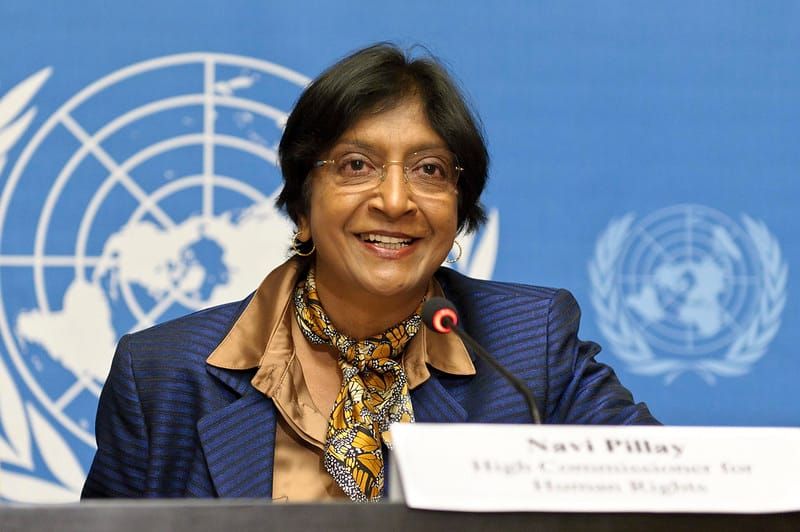
Navanethem "Navi" Pillay, the South African judge who defended political prisoners under apartheid and went on to sit on two international criminal courts and lead the UN human rights office, was awarded the 2026 Nobel Peace Prize on 9 October. Jørgen Watne Frydnes, chair of the Norwegian Nobel Committee, announced the award at the Norwegian Nobel Institute in Oslo "for her efforts to promote peace and international law".
Frydnes said Pillay had acted with "exceptional courage and integrity" and had shown in historic court cases that "legal efforts can help prevent acts of war and violence". The committee said her independence, expertise and steadfastness had made her one of the most respected international jurists of her time. It chose her from 287 nominated candidates, 208 of them individuals and 79 organisations.
The Norwegian Nobel Committee said Pillay had significantly enlarged the scope and impact of international law. Its statement traced a line from her early defence of Nelson Mandela and other opponents of apartheid to her work as a judge in some of the key international court cases of her time, and credited her with strengthening the institutions that prosecute war crimes, crimes against humanity and genocide.
Growing up in Clairwood
Pillay was born on 23 September 1941 in Clairwood, Durban. She was six when she was told that some places were for white people only. "I thought what kind of law is that? It's not fair!" she said.
Pillay won a bronze medal for writing from the Durban Chamber of Commerce at 14. Neighbours in Clairwood pooled their money to send her to the University of Natal after her school urged them to fund her studies. "We all come from deprivation, discrimination and poverty," she said at a graduation ceremony at the University of the Witwatersrand in April 2022.
Apartheid university legislation passed in 1959 forced Pillay to transfer after her first year to an institution that did not teach law. She obtained an exemption, returned to the University of Natal and completed a BA in 1963 and an LLB in 1965.
Defending apartheid's prisoners
Narainsamy Thumbi Naicker, a banned member of the South African Indian Congress and the Natal Indian Congress who was under house arrest, supervised Pillay's articles. She opened her own law practice in 1967, the first woman to do so in Natal province.
Pillay spent 28 years in practice defending activists from the African National Congress, the Unity Movement, the Black Consciousness Movement and the Azanian People's Organisation. She represented Harry Gwala and other ANC members convicted of terrorism and visited them on Robben Island after their appeal failed. She worked to expose the torture of detainees in police custody and the effects of solitary confinement.
Pillay went to court in 1971 when the Security Police detained her husband, Gaby Pillay, under the Terrorism Act, and won an order barring the police from using unlawful interrogation methods on him. In 1973 she won political prisoners on Robben Island, Nelson Mandela among them, the right of access to lawyers, in cases brought on behalf of Kader Hassim and Harry Gwala.
Pillay co-founded the Advice Desk for the Abused and ran a shelter for survivors of domestic violence. As a member of the Women's National Coalition during the transition from apartheid, she helped secure the equality clause in South Africa's constitution, which prohibits discrimination on grounds including race, gender, religion and sexual orientation.
Harvard and Equality Now
Pillay took her clients' court records to Harvard Law School to test whether US judges would convict on evidence obtained through torture. She studied there on the Harvard-South Africa Scholarship Program, which students campaigning for Harvard to divest from apartheid South Africa had set up, and earned a master's degree in law in 1982.
Harvard awarded Pillay a Doctor of Juridical Science, its most advanced law degree, in 1988. She was the first South African to receive a doctorate in law from the university. In 1992 she co-founded Equality Now, an international women's rights organisation.
Rwanda and the Akayesu judgment
Nelson Mandela nominated Pillay to South Africa's High Court in 1995. "The first time I entered a judge's chambers was when I entered my own," she said.
The UN General Assembly elected Pillay the same year to the International Criminal Tribunal for Rwanda, set up in Arusha, Tanzania, to try those responsible for the 1994 genocide. She was its first woman judge and the only woman on its bench for its first four years.
Pillay was one of the three judges who delivered the judgment against Jean-Paul Akayesu, a local mayor, in September 1998. The court found that Akayesu had encouraged militia members to rape Tutsi women who had sought refuge at his commune office. The judgment was the first conviction for genocide by an international court and the first ruling that rape and sexual violence can constitute acts of genocide and crimes against humanity. "From time immemorial, rape has been regarded as spoils of war," she said in an interview.
Pillay also sat on the tribunal's media case against those behind the radio station RTLM and the magazine Kangura, which examined how broadcasts and print had incited the genocide. She served as the tribunal's president from 1999 to 2003, the last four years of her eight-year term.
The ICC and the UN human rights office
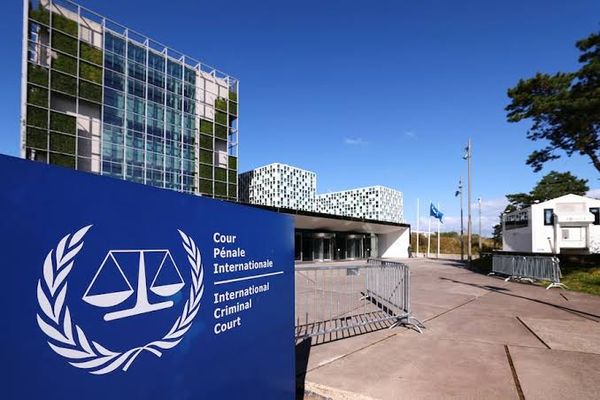
The Assembly of States Parties to the Rome Statute elected Pillay in March 2003 to the first panel of 18 judges of the International Criminal Court in The Hague, the first permanent international court with jurisdiction over genocide, crimes against humanity and war crimes. She served in its Appeals Chamber from 11 March 2003 until 31 August 2008, including during proceedings in the court's first case, against the Congolese militia leader Thomas Lubanga Dyilo.
UN Secretary-General Ban Ki-moon nominated Pillay as UN High Commissioner for Human Rights on 24 July 2008, and the General Assembly confirmed her by consensus four days later. She took office on 1 September 2008. Ban extended her term by two years in 2012, making her the only holder of the office to serve two mandates.
Pillay supported the UN Human Rights Council's 2011 resolution on sexual orientation and gender identity, the first time the UN recognised the rights of LGBTI people, and her office published the guide Born Free and Equal in 2012. In 2010 she opposed pressure on companies to cut services to WikiLeaks as a threat to freedom of expression, and in 2012 she criticised a Quebec law restricting large protests.
Pillay said in 2013 that Sri Lanka was heading in an authoritarian direction and pressed for accountability for abuses against civilians at the end of its civil war. In August 2014, her final month in office, she condemned international paralysis over the war in Syria. The same year she described the surveillance whistleblower Edward Snowden as a human rights defender, and said Israel and Hamas had both likely violated international law during the war in Gaza, which drew a letter of criticism from members of the US Congress.
The Gaza commission
The UN Human Rights Council created the Independent International Commission of Inquiry on the Occupied Palestinian Territory, including East Jerusalem, and Israel in May 2021 and appointed Pillay as its chair, with the Australian human rights expert Chris Sidoti and the Indian scholar Miloon Kothari. The commission had an open-ended mandate to investigate violations of international law by all parties.
Pillay said the commission was the first UN body to condemn the Hamas-led attacks on Israel of 7 October 2023. In June 2024 it found that both Hamas and Israel had committed war crimes.
The commission published a 72-page report on 16 September 2025 concluding that Israel had committed four of the five genocidal acts defined in the 1948 Genocide Convention and that Prime Minister Benjamin Netanyahu, President Isaac Herzog and former Defence Minister Yoav Gallant had incited genocide. "The Commission finds that Israel is responsible for the commission of genocide in Gaza," Pillay said. The commission urged states to halt weapons transfers to Israel.
Israel's Foreign Ministry said the report was "distorted and false" and called for the commission to be abolished. Israel had refused to cooperate with the commission and has long accused the Human Rights Council of bias against it. All three commissioners announced their resignations in July 2025, and Pillay's term ended in November 2025.
Honours and the Myanmar case
Pillay has been president of the International Commission against the Death Penalty since April 2015 and is president of the advisory council of the International Nuremberg Principles Academy. She also chaired an inquiry into detention in North Korea.
Pillay received the inaugural Gruber Prize for Women's Rights in 2003. She accepted the Sydney Peace Prize at Sydney Town Hall on 6 November 2025. "This award is not mine alone," she said. The Olof Palme Memorial Fund awarded her its 2026 prize jointly with fellow South African international lawyer John Dugard, saying the evidence they had gathered laid the groundwork for identifying and prosecuting those responsible for international crimes.
Pillay wrote, 20 years after the creation of the International Criminal Court, that "our work is still only beginning". The Gambia designated her in 2019 as its judge ad hoc at the International Court of Justice in The Gambia v Myanmar, in which Myanmar is accused of genocide against the Rohingya, and she sits on the case today. The Nobel Peace Prize will be presented to her in Oslo on 10 December 2026.