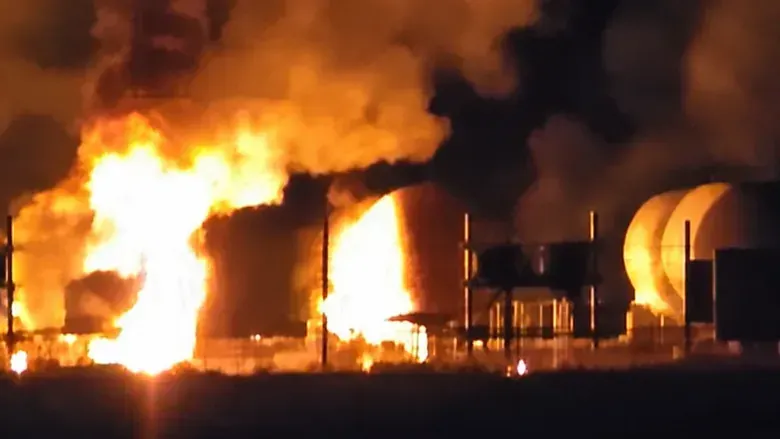
Bulgaria is investigating a fire at a Starlink satellite ground station near Sofia that its counter-intelligence chief called sabotage, Prime Minister Rumen Radev told Parliament on Wednesday. Drones have sunk two merchant ships off the country's Black Sea coast in a week.
Radev gave no details of the fire because of the investigation. Bulgarian services are working on the case with foreign partners, he said. He spoke at a hearing on the fire and the ship strikes attended by three ministers, the chief of defence and the heads of the intelligence agencies.
Starlink fire near Sofia
Ivaylo Mirchev, an opposition MP for Democratic Bulgaria, disclosed the fire in a Facebook post on 12 October. Two masked men set 11 of the station's 17 antennas alight, he wrote, without saying how he knew. His party told the German agency dpa the fire was on 9 October.
Mirchev accused the security services of failing to stop it. The head of the State Agency for National Security (DANS) had assured him days earlier that counter-intelligence was working hard against Russian-linked sabotage, he wrote. "Clearly, they are not doing a good job."
Plamen Tonchev, the DANS chairman, told MPs he believed the fire was sabotage and could not rule out more. The station is privately owned and part of its fence had been taken down for an expansion, he said. "Our forces are not infinite."
Radev told Tonchev in the chamber to hold back details until the investigation ends. Interior Minister Ivan Demerdzhiev said owners are responsible for guarding such sites but police had stepped up protection at similar facilities nationwide. Foreign Minister Velislava Petrova-Chamova told dpa in Berlin the site's security was being reinforced.
Officials have not confirmed how many antennas burned, how many attackers there were or when the fire started. Nobody has been named as a suspect. SpaceX had made no public comment by Wednesday.
Poland case
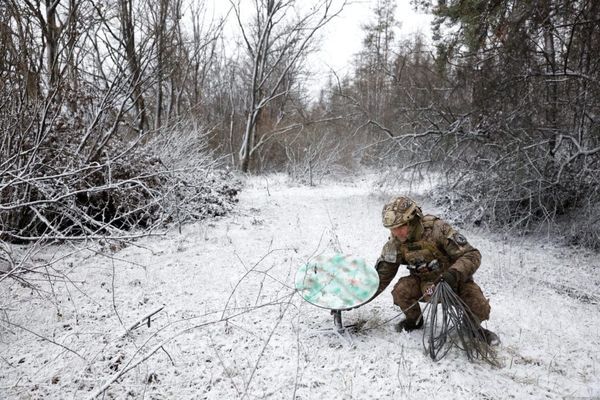
Ukraine's forces depend on Starlink for battlefield communications. Poland's digital affairs minister called a 23 September fire at a Starlink station in central Poland sabotage. Polish prosecutors are examining whether Russian intelligence directed it. German federal police later detained two Turkish nationals over that fire, Polish Interior Minister Marcin Kierwiński said.
Strikes of 6 October
Sea and aerial drones hit two cargo ships at about 3am on 6 October, some 70 nautical miles off the town of Byala in Bulgaria's exclusive economic zone, the first such attack inside it. The Togo-flagged Alfa Watan went down. Rescuers found an overturned boat, three life rafts and debris. Bulgaria called off the search for its 10 crew a day later.
A sea drone struck the stern of the second ship, the Palau-flagged Able, flooding its engine room and setting it alight. Officials expected it to sink. Both vessels are Turkish-owned, according to the Equasis shipping database. A day earlier a Turkish-owned grain carrier sank off Romania after a drone strike that killed two crew, an attack Ukrainian officials blamed on Russia.
Bulgaria said it was investigating where the 6 October drones came from. Ukrainian President Volodymyr Zelenskyy blamed Russia. The Russian Embassy in Sofia said the ships "were not among the targets hit by Russian armed forces" and cited the Russian Defence Ministry as urging patience until the investigation ends. President Iliana Iotova convened the national security council and said Russia's war in Ukraine had badly worsened security in the Black Sea.
Strikes of 13 October
Drones hit two more ships before dawn on 13 October, inside Bulgaria's contiguous zone and closer to its territorial waters. The Guinea-Bissau-flagged HS Dignity, bound from Mostaganem in Algeria for the Romanian Danube port of Braila, sank 15 to 17 nautical miles east of Krapets; official figures differ. Five of its 16 crew were pulled out and 11 are missing. The Syrian Sailors Union said 14 of the crew were Syrian and that an aerial drone and two sea drones hit the ship.
Three aerial drones struck the deck and hull of the Chelsea 3, a Ukrainian-owned ship under the Maltese flag, off Byala. Border police took off all 15 crew (seven Ukrainians and eight Azerbaijanis) in rough seas and brought them to Varna, where five were treated for minor injuries.
Russian ambassador summoned
Radev summoned Russian Ambassador Eleonora Mitrofanova the same day. Bulgaria had no solid evidence against any party, he wrote, but the outcome served the Russian Federation. "We assume the drones are Russian," Defence Minister Dimitar Stoyanov told reporters, saying Ukraine had no reason to attack its own ships.
Mitrofanova told Radev she had heard nothing from her defence ministry about strikes on merchant ships and suggested a third party might be behind them, according to the Bulgarian government.
Response and costs
Ukrainian Foreign Minister Andrii Sybiha blamed Russia for the 13 October strikes. European Commission President Ursula von der Leyen condemned them and said the Black Sea had become another front in Russia's war. Radev spoke to NATO Secretary General Mark Rutte.
Radev said Bulgaria was taking heavy economic losses and would seek joint shipping-safety proposals with Romania and Turkey. Insurance for a tanker in the Black Sea has climbed from about US$200,000 to US$2.5 million in recent months, Novinite reported. Stoyanov said Bulgaria would put two more unmanned systems to work watching the sea and apply by 30 October to join a NATO programme against low-flying aerial threats.