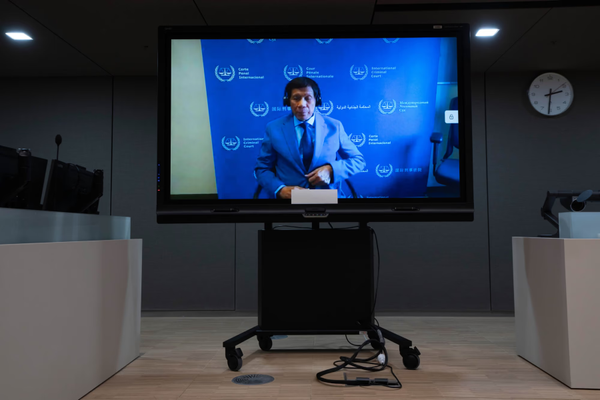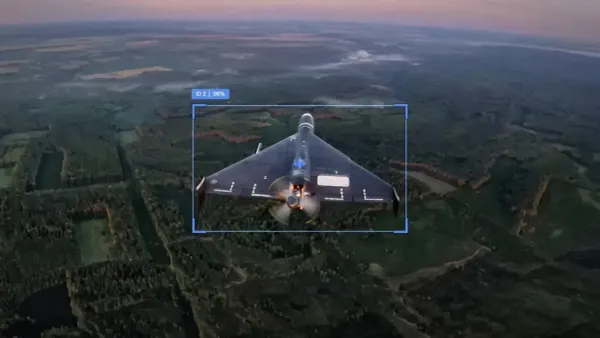
Volodymyr Zelensky told the United Nations General Assembly on 23 September 2026 that Russia had fired more than 2,100 missiles at Ukraine since 1 January, more than 950 of them ballistic. "In eight months of this year, Russia used 63,000 attack drones of different types against Ukraine," he said. "And more than 7,700 of them were jet-powered 'shaheds', truly destructive and very dangerous weapons." He then put a question to the 193 member states. "Would your country survive if, God forbid, you had to face something like this? Ukraine has."
Zelensky spoke in English at the general debate of the 81st session, a day after a 40-minute meeting with Donald Trump in New York. His office published the text the next day, and he posted the air-war passage on X as the fifth part of a seven-post thread.
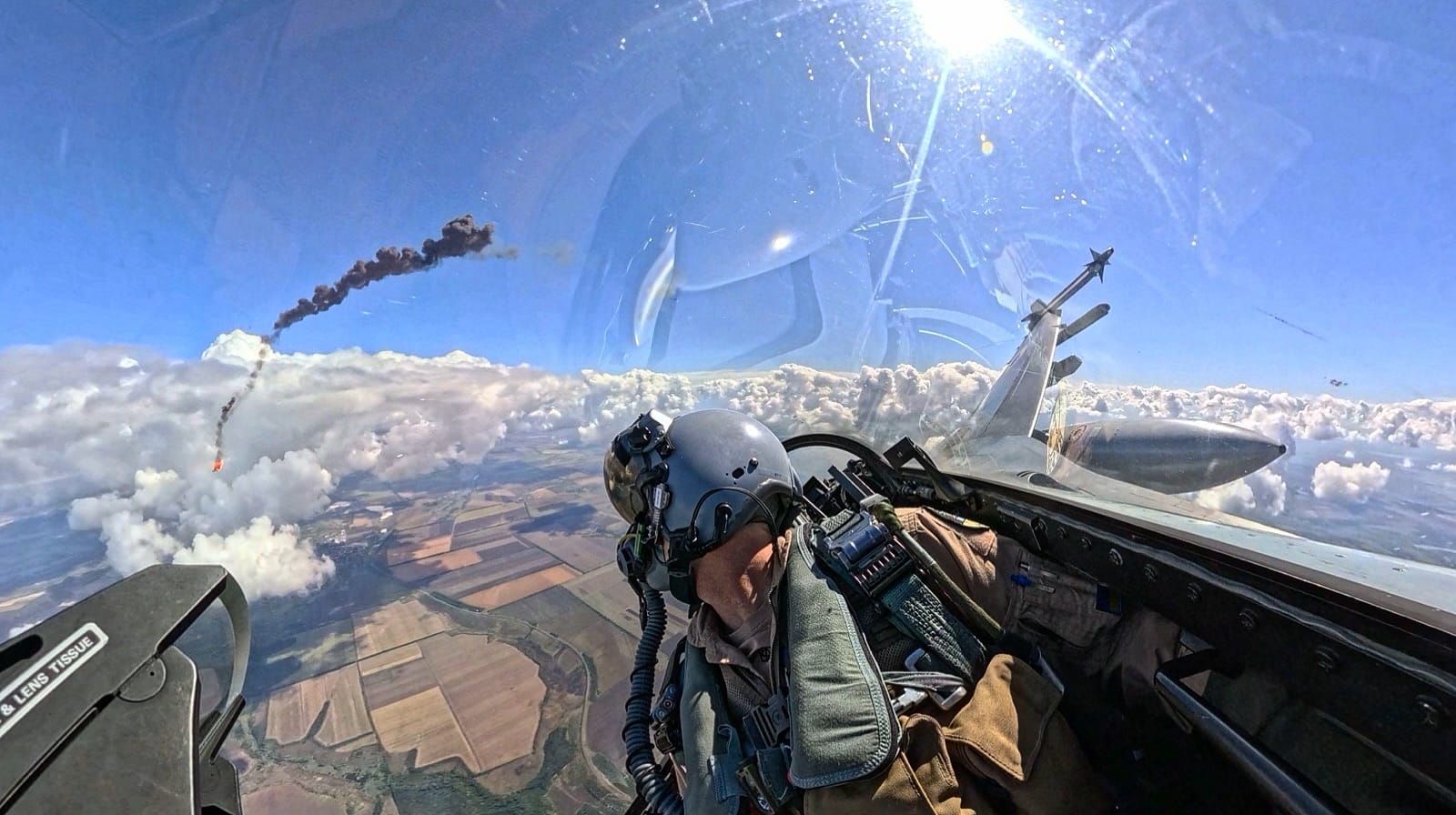
Russian forces send jet-powered Shaheds against Ukraine around the clock, Zelensky said. "The Russians launch jet-powered 'shaheds' every hour, every hour, against our cities, our economy, our infrastructure," he said. "Our combat aircraft are fighting them 24/7." He said the aim of the hourly alerts was "to make life harder for the economy and to disrupt people's lives, and to stop children from being able to study, just to study at school".
What the monthly figures show
Ukraine's Air Force and Ministry of Defence publish monthly totals, and those figures broadly support the missile numbers Zelensky gave. Russia fired 121 ballistic missiles in February, a record at the time, and 195 in July, of which Ukrainian air defence intercepted 29, or 15 per cent. Russia also launched 265 cruise missiles in July; 187 were destroyed. At an average of 110 to 120 ballistic missiles a month, the year's total passes 950 by late September. The ministry blamed the low interception rate on a shortage of interceptors, in particular for Patriot systems.
Air Force overnight reports add up to 36,456 Shahed-type strike and decoy drones from January to June: 4,442 in January, 5,059 in February, 6,462 in March, 6,583 in April, a record 8,161 in May and 5,749 in June. The defence ministry counted 8,653 strike drones launched in July. Its tally for July was far higher than the 4,955 that the Air Force's overnight briefings add up to, because the briefings cover only 18:00 to 08:00 and leave out daytime waves.
The ministry published only interceptions for August: 3,336 Shahed-131, Shahed-136 and jet-powered Shahed-238 drones, 820 Lancets and 1,031 reconnaissance drones, among more than 4,600 aerial targets destroyed. It has not published a launch total for the month. Published monthly figures for long-range strike and decoy drones come to about 45,000 for January to July, leaving about 18,000 for August if Zelensky's 63,000 counts only those types. No earlier month came close to that. His phrase "of different types" suggests a wider definition, which his office has not set out.
Yuriy Ihnat, the Air Force spokesman, said on 23 September that Russia had used about 7,700 jet-powered Shaheds since it first deployed them. He gave the monthly count as about 350 in June, 1,500 in July, 2,850 in August and about 1,900 in September up to that day. Analysts at the Institute for Science and International Security estimated that between 30 and 80 jet-powered Geran-3 and Geran-4 drones were launched in May. Those figures put jet-drone launches for January to August at roughly 5,000. The 7,700 in the speech takes in September and earlier deployments.
Serhiy Beskrestnov, a Ukrainian government adviser on drone and radio technology, said at the end of August that Russia was sending jet Shaheds into Ukraine "practically straight from the factory". The jet-powered Geran-4 and the S8000 Banderol fly at 400 to 600 km/h at altitudes of several kilometres.
Short-range drones are counted separately. Ukrainian forces neutralised more than 48,000 tactical drones in July and more than 50,000 in August.
The civilian toll
The UN Human Rights Monitoring Mission in Ukraine counted 2,222 civilians killed and 13,058 injured from January to August 2026, 55 per cent more casualties than in the same months of 2025. August was the second-worst month of the year, with 372 civilians killed and 2,349 injured. Missiles and long-range drones caused 47 per cent of August's casualties, mostly in cities far from the front, and short-range drones caused 30 per cent near the line of contact.
Kyiv recorded 31 killed and 106 injured in August, Kherson 25 killed and 334 injured, Kryvyi Rih 16 killed and 147 injured and Zaporizhzhia 11 killed and 131 injured. Russian strikes hit the facilities of the Ukrainian companies Fozzy Group, Nova Poshta and Rozetka 32 times in August, against 11 in July, the mission found.
Losses and land
Zelensky said the Russian army lost 248,964 people killed and badly wounded on the battlefield in Ukraine from January to August. "Twenty-one countries in the world have smaller populations than the number of Russian troops lost in just these eight months," he said. "We have video confirmation for every one of these losses." The figure is Kyiv's and has not been confirmed independently. It works out to about 31,000 a month. Trump put Russian and Ukrainian casualties at about 25,000 a month, mostly soldiers, in a Truth Social post on 21 September.
Zelensky said Russia had taken "just over one thousand square kilometres" of Ukrainian land this year, "and we have already liberated a significant part of it". He said Putin was "paying with 248 people for every kilometre". Russia already has 17 million square kilometres of its own territory, he said. The Institute for the Study of War counted about 2,200 square kilometres of Russian gains in the 12 months to 18 August 2026, and DeepState, the Ukrainian mapping group, counted about 2,400. Both recorded a small net Russian loss of ground in the four weeks to 18 August.
Zelensky said Putin had again promised Trump's envoys that he would take the rest of the Donetsk region within "just a few more months". "This is probably the 17th or 18th time in five years that he has made this promise," he said. He listed Odesa, Kharkiv and Dnipro as further Russian aims and said Russia had "claims against our neighbour Moldova" and "constantly threatens Poland and the Baltic states".
Trump's diesel post
Zelensky opened with a post Trump published on 21 September, which Zelensky read on the flight to New York. "Russia has unfortunately lost control of its Diesel Oil Industry due to its War with Ukraine," Trump wrote. "A large number of their diesel refineries have been blown up and are, at least temporarily, out of commission." Zelensky told the hall: "And this is true. Russia messed up." He agreed with the post's conclusion that "this ridiculous and never-ending war with Ukraine must be ended" and said he knew of no one openly in favour of the war, "except one man".
Ukrainian long-range drones have hit refineries and military plants in Siberia and on the Yamal Peninsula, "thousands of kilometres from our border", Zelensky said. "Our target is Russia's ability to finance this war, to drag it out, to make it more brutal and more destructive," he said. "Russia's finances and Russia's production are what must be stopped if Putin is to be stopped."
Zelensky asked governments to keep sanctions on Russian oligarchs and limit trade with Moscow. "When someone gives Russia more money through trade, they give this war more time," he said. He said Russia's budget deficit was bigger than in any previous year and "most Russian regions are already bankrupt".
North Korea and 47 countries
Kim Jong Un sent North Korean troops to cover the weak points of the Russian army, and they suffered heavy losses, Zelensky said. "Kim Jong Un uses them like currency. And he gets something in return," he said, and told Pyongyang's neighbours they had "probably already noticed its improved ballistic missiles" and "much greater drone capabilities". Ukraine recently handed two North Korean prisoners of war to South Korea, he said. One of them tried to kill himself when he realised he would be captured.
Russia uses citizens of 47 countries in the war, Zelensky said, naming Ghana, Nepal, Tajikistan, India, Yemen, Kenya, Zimbabwe, Cuba, Belarus, Sudan and South Africa. "Do not let Putin drag you into his war," he told their governments. "Limit his room to act. Limit his money. Limit his war."
FREYJA and the interceptors
Ukraine and nine European countries launched FREYJA, a joint programme to mass-produce a cheaper anti-ballistic system within 12 months, in Paris on 14 July 2026. The members are Ukraine, Norway, Sweden, Denmark, Germany, France, Italy, the United Kingdom, Spain and the Netherlands. The system is built around the FP-7.x interceptor missile made by Fire Point, a Ukrainian manufacturer, with radars and components from companies including Kongsberg, Saab, Thales, Leonardo and MBDA. Zelensky told the Assembly: "Last week, I invited Poland to join." Donald Tusk, the Polish prime minister, said on 18 September: "As of today, Poland is part of this major project."
Ukrainian soldiers have tested four new jet-powered interceptor drones against Russian jet Shaheds, Zelensky said. He announced the first of them on 19 September after a briefing from Oleksandr Poklad, the acting head of the SBU, the Ukrainian security service. "A new interceptor drone has been created and already successfully applied," he said then. About 10 Ukrainian manufacturers are flight-testing prototypes.
Zelensky offered other governments "Drone Deals", security packages built on Ukrainian drones that he said cover border control, the protection of critical infrastructure and keeping transport working under attack. Ukraine is already working on them with partners in the Gulf, the South Caucasus and Europe, he said. "Peace through protection," he said.
Winter
Zelensky said the "Army General Winter" that had fought on Russia's side for centuries could change sides. "Ukrainians understand that this winter could be very harsh for us. But in response, we will have no choice but to make it painful for Russia too," he said. "And that's exactly why we say that de-escalation steps are important, are needed before winter. Now."
Emmanuel Macron, the French president, asked the Assembly on 22 September to back a moratorium on strikes against energy and civilian infrastructure and a second one on the Black Sea. Kyiv wants any halt to be reciprocal and long-term.
Zelensky and Trump met for about 40 minutes on 22 September, seven of them in front of cameras, and discussed protection for the energy system, air defence and Patriot systems. Trump said of Ukrainian soldiers: "They are really very good fighters. And they can be proud of themselves." He said: "It is in Russia's interest to end this war." Neither side announced an agreement.
Xi Jinping began a state visit to the United States on 23 September, his first in nearly three years. Zelensky said he had not had a chance to speak with the Chinese leader, "who is in America today, but not here", and called him "someone who can influence Russia too, more than many, many others can".
Artificial intelligence and "patient zero"
Zelensky said the war had sped up the development of weapons into "a global threat" and asked for peace before the next stage. "As early as next year, there is already a real possibility that AI, not only people, will begin to decide what happens on the battlefield," he said.
Zelensky called Putin "patient zero, the man from whom this war began and spread into the world, becoming the largest war in Europe since World War 2". "But the longer Putin is able to wage war, the more evil he will leave behind in this world," he said. European leaders "have intelligence showing Russian intentions" to go further into Europe and NATO territory, he said.
Sergei Lavrov, the Russian foreign minister, addressed the Assembly on 26 September. He said Moscow was open to negotiations and rejected a pause in fighting during talks, which he said would let Kyiv "regroup and rearm".
How governments and donors can help
Zelensky said on 13 August that Ukraine was receiving about 1 per cent of the interceptors it needed and had "two-and-a-half times less interceptors than we had in 2025", while Russia was firing twice as many ballistic missiles a month. "If they sell us 5 per cent we will go through the winter and save people's lives," he said, meaning 5 per cent of US Patriot interceptor stocks. Supplies tightened after the US and Israeli war with Iran began in February 2026. A Russian drone hit a 16-storey apartment building in the Pecherskyi district of Kyiv on the morning of 25 September, killing a 14-year-old boy and injuring nine people, Vitali Klitschko, the mayor, said.
Trump told Zelensky he had made a "final decision" to license Ukraine to produce Patriot missiles, Zelensky said on 25 September. "At our last meeting, President Trump emphasised to me that yes, I have made a final decision. Ukraine will receive licences for the production of Patriot missiles," he said. Setting up production would take more than a year, and the licence does not add missiles for this winter.
NATO's Prioritised Ukraine Requirements List, or PURL, lets allies pay for US weapons sent to Ukraine, and it has supplied about three quarters of the Patriot missiles Ukraine has received since it began in 2025. Zelensky put the 2026 need at 15 billion dollars. By 18 February contributions for the year stood at 584 million dollars, from the United Kingdom, Norway, the Netherlands, Sweden, Iceland and Latvia. Kyiv asked in June that money from the European Peace Facility go to Patriot systems and missiles bought through PURL.
EU ambassadors agreed on 25 September to release 6.6 billion euros from the European Peace Facility that Hungary had blocked since May 2023: 4.7 billion to repay member states for weapons already sent, one billion for joint purchases and 900 million for training Ukrainian soldiers. Legal acts must still be adopted, and EU defence ministers meet in Brussels on 28 September. Kaja Kallas, the EU foreign policy chief, wrote that some governments "are already saying they will channel their share to Ukraine".
Ukraine's defence ministry faces a shortfall of 23.1 billion euros, Zelensky said in August, including about six billion euros in advance payments for weapons due in early 2027. The EU agreed in December 2025 a 90 billion euro loan backed by its budget. A second plan, a "reparations loan" drawn on the 210 billion euros of Russian central bank assets frozen in Europe, most of them at Euroclear in Brussels, has been stalled since December by Belgium, which cites legal and financial risks. Sweden, the Netherlands, Spain and Poland asked the European Commission in August to restart work on it. "It is a fair and reasonable way to ensure that Ukraine can defend itself and all of Europe," Maria Malmer Stenergard, the Swedish foreign minister, said.
Poland joined FREYJA on 18 September as its 11th member, and the 10 founding states aim to have a cheaper, mass-produced anti-ballistic system within 12 months of the July launch.
The Ukraine Energy Support Fund, managed by the Energy Community Secretariat in Vienna, buys equipment, spare parts, fuel and repair services for energy and heat supply in 23 regions ahead of the heating season and takes money from governments, international lenders and companies. It has received more than two billion euros from 39 donors. The secretariat said on 12 August that about 452 million euros was still needed to meet winter preparedness goals. Serhii Koretskyi, who became prime minister on 16 July, said on 4 August that the energy sector had an uncovered gap of about 650 million euros beyond the fund. "This winter will objectively be difficult," he said.
The EU's 21st sanctions package, adopted on 23 July 2026, listed 218 people and entities, 41 more shadow fleet tankers for a total of 673, 33 more Russian banks under a transaction ban and 37 companies tied to long-range drone production. Zelensky asked governments to keep sanctions on oligarchs, limit trade with Russia and stop their citizens being recruited into the Russian army.
UN agencies and aid groups asked for 2.3 billion dollars in January to reach 4.1 million of the 10.8 million people in Ukraine who need humanitarian help in 2026, with power and heating cuts in winter as the main risk. Individuals can give through the UN's Ukraine Humanitarian Fund or through UNITED24, the Ukrainian government's fundraising platform, which raised 89.5 million dollars from April to July 2026 and spent part of it on 140 P1-SUN interceptor drones, 100 Sting interceptor drones, ambulances, armoured evacuation vehicles and generators for schools.