
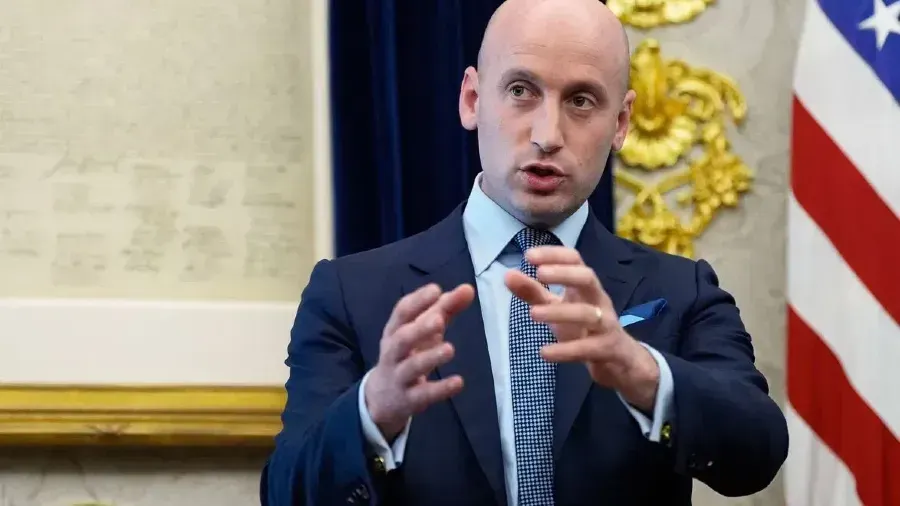
Joseph Cuffari, the inspector general of the Department of Homeland Security, wrote to Congress in early March 2026: "Over the last several months the Department of Homeland Security has systematically obstructed the work of the DHS Office of Inspector General." He listed 11 occasions on which his office had been refused access, including to immigration enforcement databases and to material in a criminal investigation.
Immigration and Customs Enforcement had by then received about $75 billion from Congress, and would receive more than $31 billion more in June 2026. Stephen Miller, the White House deputy chief of staff for policy, had set ICE a target of 3,000 arrests a day. DHS had cut nearly all the staff of its civil rights office and its detention ombudsman a year earlier. In June 2026 ICE stopped reviewing the deaths of people who die within 30 days of release, under a directive signed by an acting director whom GEO Group, the largest private detention company, had paid $6 million.
The mandate
Miller and Kristi Noem, then homeland security secretary, demanded at a 21 May 2025 meeting at Immigration and Customs Enforcement headquarters in Washington that agents seek to arrest 3,000 people a day, according to people present who spoke to Axios. ICE field office directors and special agents in charge attended, as did Corey Lewandowski, an adviser to Noem serving as a special government employee.
Miller "demanded that field office directors and special agents in charge get arrest and deportation numbers up", the people present told Axios. Noem took "a milder approach", soliciting feedback from ICE leaders. The target was triple the daily arrests agents were making early in the term. Officials left the meeting fearing for their jobs if the target was missed, two of the people present said. ICE was holding nearly 49,000 people at the time. Miller asked ICE officials at another meeting, as one official recounted it to the Washington Examiner: "Why aren't you at Home Depot? Why aren't you at 7-Eleven?" Abigail Jackson, a White House spokeswoman, said: "Keeping President Trump's promise to deport illegal aliens is something the administration takes seriously."
Miller said on Fox News the same month: "We are looking to set a goal of a minimum of 3,000 arrests for ICE every day." ICE made about 2,200 arrests on 3 June 2025, up from an average of about 1,600 a day the week before. The Justice Department later told the Ninth Circuit Court of Appeals in a filing that "neither ICE leadership nor its field offices have been directed to meet any numerical quota or target for arrests". By January 2026 Miller was chairing a daily 10am call with immigration agency leaders, Saturdays included. Maggie Haberman and Jonathan Swan, in a book published in June 2026, wrote: "Miller was a master of concealment. He avoided putting his requests in writing."
ICE arrested 40,177 people in December 2025, about 30,000 in January 2026 and 29,241 in February, according to agency data obtained by the Deportation Data Project. Arrests reached about 43,000 in June 2026, 49,571 in July and nearly 51,000 in August. DHS put its own totals at 43,900 for June, 50,208 for July and 50,925 for August. Texas and Florida accounted for nearly 20,000 of July's arrests. In the month before President Trump took office, ICE made about 8,000. Todd Lyons, then acting ICE director, told House appropriators on 16 April 2026 that ICE had removed "more than 565,000 aliens" and arrested "nearly 457,000" since 20 January 2025.
ICE held a record 73,000 people on 16 January 2026, up 84 per cent from fewer than 40,000 a year earlier. About 53 per cent had no criminal charge or conviction. The administration's goal was to hold "upwards of 100,000". Doris Meissner, who led the Immigration and Naturalization Service under President Clinton, told CBS News: "It is absolutely a record, certainly in modern times." On 11 July 2026 ICE held 65,765 people, of whom 70.6 per cent had no criminal conviction, according to the Transactional Records Access Clearinghouse at Syracuse University. Another 183,181 people were enrolled in ICE's alternatives to detention programme.
The money
Congress paid for the expansion through reconciliation, a budget process that bypasses the Senate filibuster. Public Law 119-21, signed on 4 July 2025, gave ICE about $75 billion through fiscal year 2029: $45 billion for detention capacity and $29.9 billion for enforcement, removal and the hiring of 10,000 more officers. The detention money amounts to a 308 per cent annual increase on ICE's detention budget for fiscal year 2024, according to the American Immigration Council, and is enough for 116,000 to 125,000 beds.
The Secure America Act, a second reconciliation law, passed the Senate 52 to 47 on 5 June 2026 and the House 214 to 212 on 9 June and was signed on 10 June. GAO found that it gave ICE more than $31 billion through fiscal year 2029. Representative Michael Guest of Mississippi said Republicans were "ensuring these dedicated personnel have the resources needed to disrupt cartels". Janet Murguía, president of UnidosUS, said: "Leaders have handed the Trump administration a blank check." ICE and Customs and Border Protection kept operating through the DHS funding lapse that began on 14 February 2026 on the reconciliation money they had already received.
The buildings
ICE began buying warehouses for detention in December 2025 at the direction of DHS senior leadership, the Government Accountability Office found. It bought 11 between January and April 2026 for about $1.07 billion, in eight states. The plan called for eight mega-centres of 7,000 to 10,000 beds and 16 processing centres, about 92,000 beds in all. Prices ranged from $35 million to $145 million a building, above market values recorded by the property data firm CoStar. Lyons described the system he wanted as "Amazon Prime, but with human beings".
The Army and ICE opened Camp East Montana at Fort Bliss in El Paso in August 2025 on time frames that Army and ICE officials told GAO were directed by senior leadership. GAO does not name those leaders. The Defense Department told GAO its report relied too heavily on ICE's perspective. GAO stood by its findings. Three men held at the camp died within six weeks of each other between December 2025 and January 2026. The El Paso County medical examiner ruled one of the deaths, that of Geraldo Lunas Campos, a homicide.
President Trump announced on 5 March 2026 that Noem would leave the department at the end of the month and that he would nominate Senator Markwayne Mullin of Oklahoma to replace her. "I thank Kristi for her service at 'Homeland'," he wrote. Noem became special envoy for the Shield of the Americas. Her departure followed the killings of Renee Good and Alex Pretti, both 37-year-old US citizens, by federal agents in Minneapolis in January, criticism of a $220 million DHS advertising campaign and a lapse in DHS funding then in its 19th day. The Senate confirmed Mullin 54 to 45. Senator Ben Ray Luján said during the debate: "Trump's out-of-control ICE and CBP agents have killed two American citizens." Mullin said at his confirmation hearing: "No one is going to outwork me." He said "failure is not an option" and that he wanted to "keep ICE out of the headlines".
DHS paused new warehouse purchases on 31 March and began reviewing contracts signed under Noem. DHS said: "As with any transition, we are reviewing agency policies and proposals." Mullin said: "One thing I do know is construction." The DHS inspector general opened an audit of the warehouse purchases in May, including Lewandowski's role.
Mullin told the House appropriations subcommittee on homeland security on 25 June: "There's some that just quite frankly, probably won't work." He said "there was some due diligence that maybe wasn't actually checked off". He said ICE had stopped using WEXMAC, the Navy contract vehicle under which Camp East Montana was first bought: "We're not using it anymore, just so you know." ICE now plans to sell seven of the 11 warehouses, which cost $707 million. ICE planned in June to turn three warehouses in Socorro, Texas, bought for about $122 million, into a smaller ICE campus, a change David Venturella, the acting ICE director, described to El Paso officials. DHS dropped that plan in August and began transferring the buildings to the General Services Administration for sale. ICE told a federal court the same month that it would also give up the $145.4 million Salt Lake City warehouse, ending a lawsuit by the city and county. John Fabbricatore, a former immigration official, told The New York Times: "The warehouses were a quick concept to scale up mass deportation. Unfortunately, because of the scale and footprint, the left was able to throw up immediate roadblocks."
GAO wrote on 24 September that without sound project management ICE "will likely continue to make uninformed decisions and risk further inefficiency and wasted resources". It recommended that ICE write a strategic plan for its detention expansion with goals, activities and resource needs. DHS agreed and said ICE expects to finish the plan on 31 August 2027, about two years before the reconciliation money expires. GAO replied that "more timely completion may be warranted".
The people
Corey Lewandowski worked at DHS as an unpaid special government employee, a status that limits him to 130 days of work a year and exempts him from public financial disclosure. White House officials tracked his time sheets in 2025, and DHS rehired him for another 130-day term in January 2026, people familiar with the arrangement told Axios. One senior administration official told Axios: "Kristi is the face of DHS. Corey is the brains." Lewandowski reviewed every DHS contract worth more than $100,000 before Noem approved it, seven Democratic senators wrote to Mullin on 30 March 2026.
Lewandowski told George Zoley, GEO Group's executive chairman, during the presidential transition that he wanted to be paid for protecting GEO's DHS contracts, and in late February or early March 2025 asked for a retainer or a "success fee", people familiar with the conversations told NBC News. Zoley refused, and two GEO contracts were then reduced, according to the same people. GEO later won a $121 million contract in December 2025. A White House official received about a dozen complaints from at least four companies about Lewandowski's dealings, NBC News reported. A spokesperson for Lewandowski said the account was "absolutely false and did not happen" and that "Mr. Lewandowski never demanded any payment or compensation".
Jessica Tillipman, who teaches procurement law at George Washington University, called the allegations "a blazing red flag of procurement integrity concern". Representative Robert Garcia, the ranking Democrat on the House Oversight Committee, said: "Corey Lewandowski appears to have engaged in deep-rooted corruption at the Department of Homeland Security, and this massive pay-to-play scheme should concern all Americans." Senators Ruben Gallego, Gary Peters, Maggie Hassan, Richard Blumenthal, John Fetterman, Andy Kim and Elissa Slotkin wrote to GEO on 30 March describing the alleged conduct as "blatant corruption and a violation of federal bribery and procurement integrity laws".
Lewandowski left DHS in late March 2026, days after Noem's departure was announced. A DHS spokesperson said he "no longer has a role at DHS". The DHS inspector general is examining whether he improperly influenced contract awards and is weighing a criminal referral to the Justice Department, people familiar with the inquiry told The Wall Street Journal in July. His representative said he "denied issuing contracts while at DHS". He also sought meetings with Palantir's chief executive while Palantir was negotiating a $2.7 billion DHS contract, the Journal reported in September.
David Venturella became acting ICE director on 1 June 2026, after the administration named him on 12 May to succeed Lyons. He had spent 22 years at the Immigration and Naturalization Service and ICE, ending in June 2012 as director of Enforcement and Removal Operations. He then joined GEO Group, the largest private detention company, which paid him $6 million between 2012 and 2023, and remained a paid GEO consultant until 31 January 2025. He returned to ICE in February 2025 and received a waiver allowing him to work on matters involving GEO, Senator Elizabeth Warren wrote in a 27 May letter to him. GEO's ICE bed capacity grew from 15,000 to 32,000 during his years at the company, and it now holds roughly a third of all ICE detainees, the letter says.
Warren wrote: "Your career can be characterized as a continuous, decades-long trip in and out of the revolving door between ICE and the private prison industry." She asked for his recusals and ethics waivers. On 3 August she released his commitments: he had divested his GEO stock and agreed to step back from "particular matters involving the GEO Group" and from detention contracts. Warren wrote: "While these are important steps, they are insufficient to address the scale of your conflicts." She asked him again to recuse himself fully and set a deadline of 16 August. No reply has been made public.
ICE removed the $1-a-day minimum for detainee work and the requirement that contractors follow state and local wage law from its detention standards in 2026, after private outreach from GEO, according to records obtained by The Washington Post. The revised standards state that detainees in the work programme are "not entitled to wages or benefits under applicable wage laws or labor regulations". A jury in Tacoma, Washington, had found in 2021 that GEO owed more than 10,000 detainee workers $17.3 million in back pay under state minimum wage law, and the Ninth Circuit affirmed the judgment in 2025.
GEO signed a five-year ICE contract worth up to $528.6 million for its Big Horn facility in Colorado on 9 July 2026, five weeks into Venturella's tenure, and announced a second five-year contract, for Rivers Correctional Institution in North Carolina, on 29 July. GEO Reentry Services, a GEO subsidiary, gave $1 million to MAGA Inc., the super PAC supporting President Trump, on 16 July and $413,000 on 31 July, according to campaign finance filings. The White House said there was "no evidence that the political spending caused ICE to award GEO government business".
Lyons announced on 16 April that he would leave ICE on 31 May. He said: "It was not an easy decision, but I believe it is the right one for me and my family at this time." Mullin said: "We wish him luck on his next opportunity in the private sector." Representative Delia Ramirez of Illinois said Venturella's appointment was meant to "ensure Trump's corporate bosses continue profiting from our communities". Setareh Ghandehari of Detention Watch Network said: "It's really hard to see where the interests of ICE end and those of private prison companies begin." Scott Shuchart, a former ICE assistant director, said: "When GEO comes in for a meeting, it feels like a fraternity reunion." GEO's profit rose from $32 million in 2024 to $254 million in 2025.
Venturella called ICE's Miami office in June 2025, while an ICE official, to ensure officers detained Amanda Ungaro, the former partner of Paolo Zampolli, a presidential envoy then in a custody dispute with her, according to documents obtained by The New York Times. Venturella told the office the case was important to someone close to the White House, according to the documents. Ungaro was held and deported. Zampolli told the Times: "I asked David what was going on because I did not know the process." He denied seeking a favour. Ungaro told the Times: "It's devastating that they could have affected what happened to me." DHS said Ungaro was detained because of an expired visa and a fraud charge, and that "any suggestion that she was arrested and removed for political reasons or favors is FALSE".
Tom Homan, the president's border adviser, received more than $5,000 in consulting fees from GEO in the two years before joining the administration, according to his financial disclosure. Democrats on the House Judiciary Committee wrote in August 2025 that Homan "played key role in hiring David Venturella". GEO later won a 15-year contract worth about $1 billion for Delaney Hall in Newark, New Jersey.
Undercover FBI agents recorded Homan allegedly accepting $50,000 in cash in a Cava restaurant bag in September 2024 while discussing help with government contracts if Trump won the election, people familiar with the investigation told ABC News and CNN. The investigation, opened in the Western District of Texas, was closed early in the second Trump administration. Kash Patel, the FBI director, and Todd Blanche, then deputy attorney general, said in a joint statement that investigators "found no credible evidence of any criminal wrongdoing". Karoline Leavitt, the White House press secretary, said: "The president stands by Tom Homan 100%." Homan said: "I didn't take $50,000 from anybody." Senator Jacky Rosen asked the Justice Department's deputy inspector general in February 2026 to investigate the payment and the decision to close the case. "Congress has a responsibility to know that the person currently in charge of directing immigration enforcement hasn't broken the law himself," she wrote. No finding has been published.
Pam Bondi was a registered lobbyist for GEO with Ballard Partners in 2019, lobbying the White House and DHS, before becoming attorney general.
The workforce
ICE pays local agencies that join its 287(g) task force programme a one-time $100,000 for vehicles and $7,500 in equipment for each certified officer, plus salary and overtime for immigration work. ICE had paid or promised $257 million from a $2 billion allocation by July 2026, and up to 15,800 local officers had been deputised by September 2025. Naureen Shah of the American Civil Liberties Union told NPR: "We've never seen this financial incentive scheme exist in any way with this program." Florida has set aside a $250 million state pool for participating agencies. The sheriff of Escambia County, Florida, received about $1 million and Smith County, Texas, more than $340,000.
About 1,200 agencies in 31 states had signed agreements by June 2026. ICE's own tracker listed 2,365 agreements in 39 states and two territories on 21 August 2026, up from about 135 in January 2025: 1,640 task force agreements, 544 warrant service agreements and 181 jail enforcement agreements. All 67 Florida sheriffs participate. Texas law requires every sheriff who runs a jail to seek an agreement by 1 December 2026, with state grants of $80,000 to $140,000 depending on county size. California, Connecticut, Delaware, Illinois, Maine, Maryland, New Mexico, Oregon and Washington have banned the agreements by law and New Jersey by directive, and a New York ban took effect on 25 August 2026.
Laramie County, Wyoming, received about $300,000 and its 30 certified deputies made 412 immigration arrests between October 2025 and June 2026. A New York Times reporter on one patrol saw deputies detain seven people in five hours, among them a passenger with no criminal convictions who is married to a US citizen. The county's invoices to ICE billed $71,160 for housing ICE detainees between September and January, $100,000 for a vehicle and $7,200 a deputy for equipment. The sheriff's office made 53 immigration arrests between 17 and 23 April 2026, more than any other agency in the country that week, in an operation it called "Truck Around Find Out". Brian Kozak, the sheriff, said: "If you're going to come here to break the law ... then turn around and go right back where you came from." Judge Robin Cooley of the US District Court for Wyoming dismissed an ACLU-backed challenge to the county's agreements for lack of standing in August, without ruling on whether the sheriff had authority to sign them.
ICE hired about 12,000 officers and agents in the year after the July 2025 law, from more than 220,000 applications, with signing bonuses of up to $50,000. Lyons said: "This expansion of a well-trained and well-vetted workforce will help further ICE's ability to execute the president's and secretary's bold agenda." ICE cut its academy course from 72 days to 42, about 40 per cent, mostly in August 2025, and lengthened training days from eight hours to 12, according to internal documents. More than 900 officers had completed the shorter course by 1 January 2026. ICE restored the 72-day course in the summer of 2026.
Ryan Schwank, a lawyer who taught at the ICE academy until he resigned on 13 February 2026, told a forum held by Senator Richard Blumenthal and Representative Robert Garcia on 23 February that the academy had stopped failing trainees on practical exams. "This is a lie," he said. "ICE made the program shorter, and they removed so many essential parts that what remains is a dangerous husk." He called the course "deficient, defective and broken". A DHS spokeswoman told The Wall Street Journal that training was streamlined without cutting subject matter.
A unit chief in ICE's Office of Professional Responsibility, a 17-year ICE veteran overseeing more than 100 vetting staff, filed a whistleblower complaint with the DHS inspector general in August 2025. The complaint alleged that ICE gave final job offers before credit checks, fingerprint confirmation and identity verification. It also alleged that ICE cleared political appointees despite derogatory findings. The complaint, released under the Freedom of Information Act, said the "unprecedented lowering of standards sacrifices proper risk mitigation for expediency, placing DHS at risk of infiltration and insider compromise". The whistleblower told The New York Times: "We chose as an agency to be more convenient rather than thorough." The whistleblower said "there was a potential to put lives at risk and to jeopardize national security". The whistleblower, represented by the lawyer Kevin Owen, told the Associated Press of having voted for President Trump. The inspector general interviewed the whistleblower in February and April 2026 and opened an audit. ICE said it "diligently applies proper personnel vetting regulations".
An Associated Press review of more than 40 new ICE officers published in April 2026 found hires with two bankruptcies and six law enforcement employers in three years, and one who had been the subject of a $75,000 false-arrest settlement. ICE began firing recent hires over vetting problems in September 2026, without saying how many. Officers who spoke anonymously to the Daily Wire said "only 20% to 30%" of recruits would have qualified under full vetting, and one said: "It was just very much like get warm bodies."
ICE plans 5,000 more hires by the end of 2026 and says it will apply stricter checks. Nearly 7,500 people hired earlier were still awaiting full background investigations, two people familiar with the process told The New York Times. ICE gives new hires a "temporary status that allows them to begin training while a complete background investigation is finalized", the agency has said.
The watchdogs
DHS issued reduction-in-force notices on 21 March 2025 covering nearly all staff of three oversight offices, GAO recorded: 147 positions at the Office for Civil Rights and Civil Liberties, 118 at the Office of the Citizenship and Immigration Services Ombudsman and 46 at the Office of the Immigration Detention Ombudsman. Tricia McLaughlin, a DHS spokeswoman, said the offices had "obstructed immigration enforcement by adding bureaucratic hurdles". She said: "Rather than supporting law enforcement efforts, they often function as internal adversaries that slow down operations." GAO found on 31 July 2025 that the cuts did not breach the Impoundment Control Act, because the money arrives in a lump sum the department may allocate as it chooses.
The civil rights office had 778 complaints open or pending when the notices went out, about 550 of them under active investigation and about 200 of them medical, the Washington Office on Latin America and the Kino Border Initiative found. The detention ombudsman's office had 375 open complaints and resolved none between 21 March and 13 August 2025. It had received 12,664 complaints in fiscal year 2023 and 280 between March and December 2025. One DHS employee texted on the day of the notices: "All the oversight in DHS was eliminated today." A former senior official of the civil rights office told the researchers: "Nobody knows where to go without CRCL, and that's the point."
Robert F. Kennedy Human Rights, the Southern Border Communities Coalition and the Urban Justice Center sued DHS over the cuts on 24 April 2025, represented by Public Citizen and Democracy Forward. A federal judge in Washington refused to block the layoffs on 23 May 2025 but ordered DHS to post notices that the offices remained open. The case was still pending in 2026. A DHS declaration filed in the case said the civil rights office would be reduced to a head and about 20 staff, and each ombudsman's office to five to seven.
The civil rights office had fewer than 40 people by late 2025, including 25 to 30 contractors, and had investigated 554 of nearly 6,000 complaints received since March, about 3 per cent directly against a historical rate of 20 per cent, according to court records reviewed by The Guardian. Of 32 deaths in custody in 2025, it reviewed about 10 and investigated one. Ronald Sartini, a DHS official, said in the case: "I am confident that the current staffing level is appropriate for CRCL."
DHS closed the Office of Immigration Detention Ombudsman in May 2026. The department said Congress, not DHS, had closed the office, citing an appropriations bill signed the previous week. The bill does not mention the office.
James Percival, DHS's general counsel, had told Cuffari that telling Congress about the obstruction would be "bad faith and bordering on a material misrepresentation to Congress". Noem told the House Judiciary Committee: "The IG has been told repeatedly in writing, verbally, on the phone, that he can have access to anything at the Department of Homeland Security." The administration's budget for fiscal year 2027 proposes cutting the inspector general's office by nearly $22 million and 85 full-time staff while raising DHS's total budget 5.7 per cent to $118.4 billion. The office has missed two semiannual reports to Congress.
Federal agents were told in July 2026 that the FBI would stop investigating confrontations with immigration agents and that Homeland Security Investigations, part of ICE, would take them over, according to people briefed on the guidance who spoke to The New York Times. A written notice went to FBI managers on 16 July. The Justice Department and DHS said in a joint statement: "The relationship between DHS and DOJ in investigating assault on federal officer cases has not changed, and FBI will continue to investigate in accordance with agency policy. This administration has been clear, anyone who assaults law enforcement will be prosecuted to the fullest extent of the law." An ICE officer had shot and killed Lorenzo Salgado Araujo in Houston on 7 July, and another had shot a man in Biddeford, Maine, on 13 July. In Minneapolis in January, after the US Attorney reversed an agreement to investigate the killing of Renee Good jointly with the state, Drew Evans, superintendent of the Minnesota Bureau of Criminal Apprehension, said his agency "would no longer have access to the case materials, scene evidence or investigative interviews necessary to complete a thorough and independent investigation".
The deaths
Venturella signed Directive 11003.7 on 2 June 2026, his second day as acting director, ending ICE's review and reporting of deaths within 30 days of release from custody, a rule in place since at least 2021, according to a letter from the attorneys general of 22 states and the District of Columbia. He circulated it to staff on 4 June. The letter counted 51 deaths in ICE detention since 20 January 2025, against 19 in the previous two years, and said the change "creates a perverse incentive for facility operators to simply release critically ill individuals right before they die". DHS said that "when an individual is no longer in ICE custody then ICE will no longer be responsible for monitoring deaths", and called the change "common sense".
At least 57 people had died in immigration detention since the start of the second term by 22 September 2026, the American Civil Liberties Union counted, more than in the previous four years combined. Prisciliano Trejo Ricano was released from the Stewart Detention Center in Georgia in a coma and died within two weeks, the ACLU said. He does not appear in ICE's official death records, according to the ACLU. Volker Türk, the United Nations human rights chief, said in Geneva on 7 September: "There needs to be accountability for these deaths." A DHS official said in July: "There has been NO spike in deaths."
Edwin Lopez-Cornejo, 41, died on 1 August 2026 after being held at Delaney Hall, the GEO-run centre in Newark, the second death of a person held there since May 2025. His family said he was denied medication. Senator Cory Booker said: "This is not the first death of a detainee at Delaney Hall, and absent decisive action, it will not be the last."
Congress and the states
Representatives Ilhan Omar, Kelly Morrison and Angie Craig were removed from the Whipple Federal Building in Minneapolis on 10 January 2026 about 10 minutes after arriving, under a seven-day notice rule DHS had reinstated the day before. Katherine Clark, the House Democratic whip, was refused entry to ICE's office in Burlington, Massachusetts, on 9 February. Senator Alex Padilla and two San Diego County supervisors were denied full access to the Otay Mesa Detention Center on 20 February. "What do they have to hide?" Padilla said. Senator Chris Murphy was turned away from a site in San Antonio in January despite giving 24 hours' notice. "This is astonishing," he said.
Judge Jia Cobb of the federal court in Washington ruled on 2 March 2026, in Neguse v. ICE, against the DHS rule requiring members of Congress to give seven days' notice before visiting detention sites, a case brought by eight House members. Cobb wrote that a notice requirement does not prevent "circus-like publicity stunts", since one could still take place after a seven-day delay.
Representative LaMonica McIver of New Jersey still faces three felony counts, carrying up to 17 years, over a confrontation outside Delaney Hall during an oversight visit in May 2025. The Third Circuit ruled 2 to 1 on 26 August 2026 that she has no immunity. Judge Cindy Chung wrote: "The charged conduct ... is unambiguously non-legislative." Judge Thomas Ambro wrote in dissent: "Potentially retaliatory prosecutions of sitting Members of Congress are exceedingly rare." McIver said: "I fundamentally believe that the court got it wrong here."
Judge James Simmons Jr. of the federal court in San Diego ordered ICE and CoreCivic on 3 June 2026 to allow a county health inspection of Otay Mesa by 17 June. Damon Brown, the San Diego county counsel, said: "The county is responsible for the safety and the health of anyone who is within this jurisdiction, which includes those detained in the facility." Judge Christina Snyder blocked California's ban on masked federal agents on 9 February 2026, finding it discriminated against federal officers, and upheld its requirement that officers display a name or badge number. Governor Gavin Newsom said: "No badge and no name mean no accountability." Bondi said the law was "designed to create risk for our agents".
ICE bought the California City and Otay Mesa detention centres from CoreCivic on 2 July 2026 for about $1.47 billion, and CoreCivic continues to run both. ICE officials told GAO that owning facilities "provides the agency with greater control of its detention infrastructure, and limits state and local governments' ability to restrict detention operations". The number of facilities ICE is authorised to use rose from 134 in January 2025 to 272 in July 2026, GAO found. ICE's detention appropriation for fiscal year 2025 was about $3.8 billion.
The courts
Patrick Schiltz, chief judge of the federal court in Minnesota, listed 96 court orders that ICE had violated in 74 cases in January 2026 alone. "This list should give pause to anyone, no matter his or her political beliefs, who cares about the rule of law," he wrote. Judge Eric Tostrud held ICE and DHS officials in contempt in February over the transfer of Fernando Gutierrez Torres to El Paso and his release there in a winter storm. A federal court in Iowa held an ICE officer, Quintin Erdman, in civil contempt in a ruling reported on 1 July 2026. Judge Rebecca Goodgame Ebinger called his conduct "astonishing" and "exceedingly unacceptable". Chief Judge Stephanie Rose wrote: "Noncitizens are not bargaining chips to be shifted from district to district."
Judge Lewis Kaplan of the federal court in Manhattan issued a permanent injunction over ICE's holding rooms at 26 Federal Plaza on 24 September 2026, in a 125-page ruling. Rooms designed for fewer than 10 people had held 40 to 70, some for more than nine days, and ICE had tried to "sanitize the record", he found. Kaplan wrote that ICE had "confined many of those arrested" in rooms that were "squalid" and "degrading" for "excessive periods of time". Judge Julie Rubin in Baltimore found on 29 September that ICE had violated her March injunction on overcrowding in its holding rooms there. She ordered sworn compliance statements every two weeks and said she was considering appointing a court monitor.