Commerce Department investigators examining whether Nvidia chips bought by Megaspeed reached China were told in 2025 to clear all contact with Nvidia through a political appointee, weeks after Nvidia's top lawyer telephoned him.
The Commerce Department has not identified the official who issued that instruction or the authority under which it was issued. Nor has it said whether the instruction, or a separate order not to name Megaspeed in external communications, affected an investigation that the Justice Department later asked the bureau to pause and then took over.
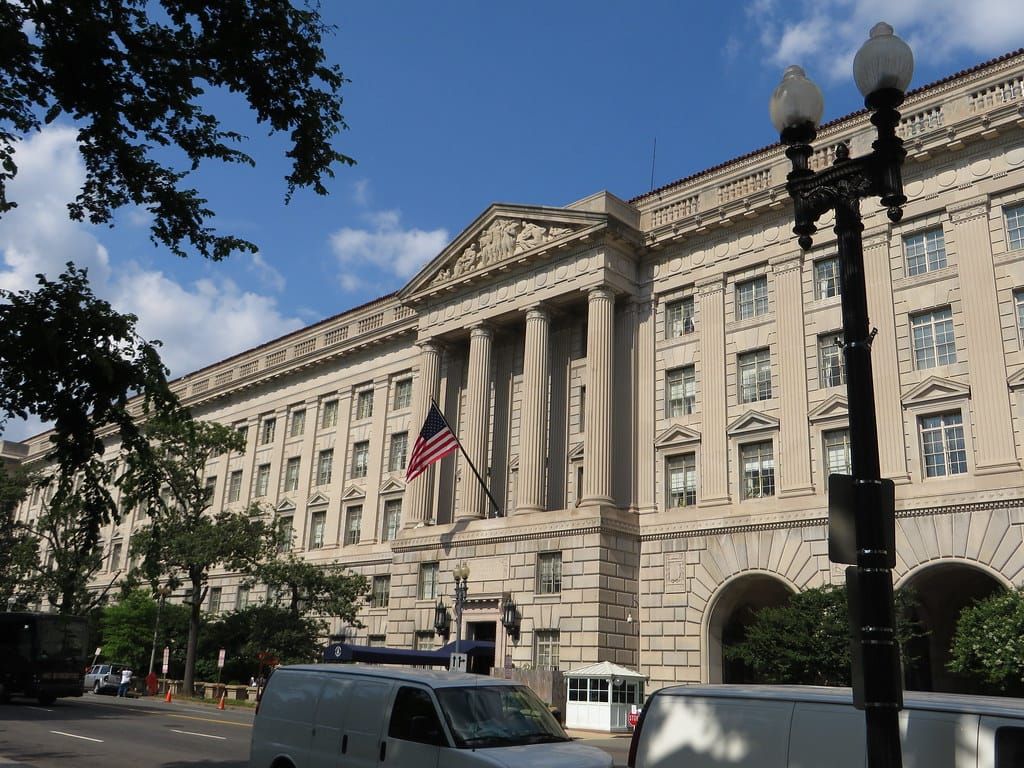
Jeffrey Kessler, the under secretary for industry and security, runs the Bureau of Industry and Security, the Commerce Department agency that enforces export controls, and reports directly to Howard Lutnick, the commerce secretary. Kessler did not respond to questions from reporters about the instruction. "BIS conducts all enforcement strictly by the book," a bureau spokesman said, adding that enforcement was at an all-time high.
Tim Teter, Nvidia's general counsel, called Kessler before the instruction was issued, and in August 2025 he emailed the agents on the case to say Kessler had allowed Nvidia to contact them. The order of events does not show that the call prompted the instruction or that the instruction changed any investigative decision. A Commerce official said Kessler told the agents to handle the case by the book and did not direct them to share information with Nvidia.
Nvidia said Teter contacted the department to provide information, understand regulatory requirements and help stop illegal transshipment. John Rizzo, who runs public policy communications at Nvidia, said the company consulted officials to answer their questions. Megaspeed denies wrongdoing and has not been charged. The Justice Department, which now runs a criminal inquiry into the company, declined to comment on a continuing investigation.
The case the agents were building
Megaspeed International, a Singapore data centre company, bought at least US$4.8 billion of equipment containing Nvidia technology between June 2024 and February 2026, according to trade records. Nvidia reported data centre revenue of US$51.2 billion in the quarter to 26 October 2025, so that total equals about 9 per cent of one quarter's data centre sales.
Shipping Nvidia chips to a company in Malaysia or Indonesia that is not owned from China is generally lawful without a licence, and renting their computing power to Chinese customers over the internet is in most cases not controlled. Moving the chips into China without a licence, or buying them on behalf of a Chinese company, is prohibited. The bureau's agents were examining whether some of Megaspeed's equipment had crossed that line.
An official from the bureau visited Megaspeed's Malaysian data centre in September 2024 and found Nvidia equipment still packed in boxes. Megaspeed had imported tens of thousands more chips than Nvidia counted when it checked the company's data centres, and two of the eight operators Nvidia told U.S. officials it had visited said they held no Megaspeed hardware. Megaspeed said on 23 December 2025 that the bureau, Malaysia's trade ministry and Nvidia had all inspected it and found no illegal diversion.
Alice Huang, a Chinese businesswoman also known as Huang Le, became Megaspeed's controlling shareholder in March 2023, according to C4ADS, a Washington research group. The shares passed in late 2023 to Swiftdata, a Singapore company whose ultimate owner C4ADS could not identify. Singapore police questioned Alice Huang in 2025 over false import declarations and barred her from leaving the country. People briefed on classified surveillance have said U.S. officials concluded in 2025 that she was passing information to the Chinese government.
Teter's call and the instruction
Teter telephoned Kessler in late summer 2025 and asked about the Megaspeed investigation. He asked in particular whether the bureau had played any part when Singapore police questioned Alice Huang, and people familiar with the matter said it had not. Whether Teter made any specific request about the bureau's own investigation is not known. Nvidia said Teter did not know of Jensen Huang's affair with Alice Huang when he made the call.
In the weeks that followed, bureau staff were told to route all requests involving Nvidia through Kessler or obtain his approval before contacting the company. They were also told not to mention Megaspeed or its Malaysian subsidiary, Speedmatrix, in external communications. People familiar with the instructions called the first unusual and said it applied only to Nvidia.
No published account names the official who issued either instruction, gives its date or says whether it was put in writing. None says whether Lutnick approved it. Kessler and the Commerce Department have not addressed those points in public.
Kessler and other department leaders had already required, since Trump's return to office, that any investigation of Nvidia and any outreach to the company first receive their approval. Jensen Huang has been an influential voice on export policy with Trump and Lutnick, and Nvidia has argued against export controls.
The August email
The bureau's agents had been examining Megaspeed for months when Teter wrote to them in August 2025. He asked for information about the inquiry and requested a meeting with one of the agents, who declined. Teter replied that he did not understand the refusal, because Kessler had said Nvidia could communicate with the bureau's staff, according to people familiar with the exchange.
Agents were alarmed that the email invoked Kessler, their superior and a Trump nominee. They forwarded the chain to him, and Kessler replied within hours that they should keep handling the case strictly by the book, a Commerce official said. The official said Kessler had not directed staff to share information with Nvidia or advised them which meetings to take.
Kessler's reply is the only instruction from him on the case described in published accounts. Whether he had in fact told Teter that Nvidia could contact the agents, and on what terms, has not been disclosed.
Authority over the investigators
The bureau's enforcement agents work in its export enforcement office, led by an assistant secretary who reports to the under secretary. David Peters held that post in March 2026, when he told Congress that chip smuggling was among the office's top enforcement priorities. Peters has not commented publicly on the Nvidia instruction.
A temporary denial order, the bureau's quickest administrative tool against a company suspected of an imminent violation, cuts off its export privileges for up to 180 days without a hearing. The assistant secretary for export enforcement issues such orders at the request of the enforcement office. A company can appeal to an administrative law judge, whose recommendation goes to the under secretary for a decision.
Kessler, who would rule on any such appeal, would normally be walled off from the details of an investigation so that he could act as a neutral arbiter in any eventual enforcement decision, Commerce officials said. His dealings with Nvidia could be subject to legal discovery or a subpoena if an enforcement case goes ahead.
The Commerce Department does not publish the internal rules that govern contact between its enforcement agents, political appointees and companies under investigation, and the bureau's enforcement manuals are not public. The Justice Department has a written policy. Its manual and an attorney general's memorandum of 21 July 2021 restrict communications with the White House about pending investigations to a small number of named officials, to insulate prosecutors from inappropriate influence. Neither governs Commerce Department officials or contact from companies.
Why officials objected
Some Commerce officials regarded Kessler's dealings with Nvidia as a breach of government procedure that could taint the case. They questioned why the department was discussing the matter with a company that had not been ruled out as a subject of the investigation. Megaspeed was Nvidia's largest Southeast Asian buyer and an official Nvidia Cloud Partner, a status Nvidia granted four days after the late-2023 change in ownership.
Commerce officials convened meetings about Teter's email and disclosed it to partner law enforcement agencies. Officials who described the episode have not said that Kessler ordered agents to stop work, and the Justice Department's criminal inquiry means the case has not been dropped.
The pause and the transfer
The Justice Department, which had been working on the case with the bureau, asked it to pause its work in late 2025, and the Commerce Department complied, one person familiar with the case said. The case was later transferred to the Justice Department. In one account the request came after Commerce officials told partner agencies about Teter's contact.
Export cases are often pursued jointly by the two departments, and the Justice Department can take the lead where a case involves criminality or intelligence. A pause of the bureau's work is standard when its investigation becomes a criminal one. The transfer was unusual because the agents had spent months on the case and could have pursued administrative action to restrict Megaspeed's access to U.S. technology.
No Justice Department official has said why the department asked for the pause or whether Teter's contact played any part. It has not said whether it has examined the August 2025 contacts.
The effect on enforcement
Agents who had spent months building the case were frustrated, and the halt may have delayed action to stop shipments to Megaspeed. People familiar with the case said the bureau had made no progress after the pause, although they regarded the evidence as sufficient to proceed.
Nvidia halted all sales and shipments to Megaspeed in June 2025, a company spokesman said, though the Commerce Department has since permitted parts and replacement components. Malaysian trade records show Megaspeed imported at least 17,544 Nvidia GB300 chips, worth about US$787 million, in November 2025. The records do not show whether they came from Nvidia's hardware partners before the halt, from distributors or by some other route.
U.S. agencies outside the Commerce Department have proposed adding Megaspeed to the Entity List, the department's trade blacklist, and the department has not done so. Additions are decided by majority vote of an interagency committee that the Commerce Department chairs, according to the department's rules. Senator Tom Cotton of Arkansas, a Republican, urged Lutnick on 13 October 2025 to investigate the company. The department has added no company to the list since 9 October 2025, when it published its last additions, and the freeze applies across the whole list.
Scott Bessent, the Treasury secretary, pressed Lutnick at a White House meeting on 5 November on why Megaspeed had not been listed, people familiar with the exchange said. Kessler, warned about the company in deputies' meetings, had deferred to Lutnick on the decision. Kristen Eichamer, a Commerce Department spokesperson, said the two secretaries had no such conversation.
Gregory Meeks, the senior Democrat on the House Foreign Affairs Committee, and Sydney Kamlager-Dove, a Democratic representative from California, had raised a wider halt in February 2026. They asked Lutnick whether the department had shelved other China-related security actions, including proposed bans on Chinese telecoms and router businesses, to steady relations with China.
Questions to Commerce and Nvidia
About three months before Teter's Commerce contacts became public, he told a White House official that Alice Huang was "not as important" in Megaspeed as she had made out, according to a person familiar with the call. He said Nvidia had stopped doing business with Megaspeed because of bad publicity.
Nvidia has given no account of Teter's contacts beyond its statement of 9 November. Its independent directors retained Joon H. Kim, a former acting U.S. attorney for the Southern District of New York, on 10 November to run the investigation the board announced two days earlier. The board has not said whether that inquiry will cover Nvidia's dealings with the Commerce Department.
Three Republican House committee chairs have asked Jensen Huang to brief them in closed session on 18 November. Brian Mast, who chairs the Foreign Affairs Committee, said on 10 November that he was prepared to subpoena Jensen Huang if he did not respond. John Moolenaar, the House China committee chairman, said on 11 November that a subpoena was likely if he did not agree that day.
Meeks, Kamlager-Dove and Gabe Amo, a Democratic representative from Rhode Island, asked Lutnick on 9 November to explain what his officials knew about Megaspeed and why export approvals continued. They asked for written answers by 1 December.