
Police and prosecutors in France, Spain, South Korea, Japan and the U.S. have opened cases against men who used camera glasses to film women and girls without consent, most recently in Paris this week.
The Paris prosecutor's cybercrime division confirmed on 22 September that it had opened several investigations into men who approached women in the street, filmed them through smart glasses and posted the clips to TikTok. It is examining violations of private life, which carry up to two years in prison and a €45,000 fine, along with sexual harassment, and sexual assault where men touched the women. The division tested the glasses itself to map which offences apply.
The French child protection helpline e-Enfance took about 20 reports from women filmed with smart glasses by 8 September and about 30 by late September. France's data protection authority, the CNIL, has received about 10 complaints about smart glasses in workplaces.
Spanish police made arrests in Barcelona in May 2025 and Girona in November 2025. Seoul police opened an investigation in July, police in Hyogo, Japan, arrested a self-described teacher on 20 July, and Boston police charged a man on 18 August over the filming of children changing at a public pond.
Meta launched its third-generation Ray-Ban Meta glasses on 23 September and put them on sale the same day at $449, $70 more than the previous model's launch price. They carry a 12-megapixel camera that records 3K video, a new button for Meta's AI assistant, and the same small white recording light as earlier models.
At the same launch Meta unveiled Ray-Ban Meta Audio, a $349 model with six microphones and no camera, for preorder from 13 October. It comes after months of complaints about covert filming, and Meta kept its camera models on sale alongside it.
EssilorLuxottica, which makes the frames, sold more than seven million pairs of Ray-Ban and Oakley Meta glasses in 2025, more than three times its combined total for 2023 and 2024. Its AI glasses revenue nearly doubled in the second quarter of 2026, and it is building capacity for 20 million pairs a year.
Global shipments of AI glasses rose 263 per cent in the first half of 2026, Counterpoint Research data show. Meta held 94 per cent of the market for models without a display, against 1 per cent each for Xiaomi and Alibaba. North America took half of those shipments, Western Europe 28 per cent and Australia 4.4 per cent.
Meta has said the recording light flashes whenever the glasses take a photo or video and cannot be switched off. The glasses have been nicknamed "pervert glasses," and women have reported being filmed without consent worldwide, from Seoul, Barcelona, Paris, Berlin, London, Sydney, Vancouver and Zandvoort.
Arrests and investigations
Spain's first known arrest over the glasses came in Barcelona in May 2025, when the Policía Nacional detained a man for crimes against privacy. He had approached young women, most of them foreign tourists, in the street, kept them talking while recording through Ray-Ban Meta glasses, and posted 329 of the videos to TikTok and Instagram.
Investigators found 239 conversations in which women disclosed intimate personal details and said no woman in any video showed she knew she was being filmed. The clips advertised his seduction course, sold for €3,000 up front and €45 a month. The woman whose complaint led to his arrest found her video with 700,000 views after he had tried to kiss her twice and touched her.
Catalonia's Mossos d'Esquadra arrested a 49-year-old man at the Girona autumn fair on 1 November 2025. Officers watched him hide behind a tree near the toilets at Pont de la Barca and film women with smart glasses while behaving obscenely. Spanish law punishes capturing images to violate a person's privacy with one to four years in prison, and two to five years if the images are shared.
Seoul Gangseo police opened an investigation in July into a man who recorded four women he met on dates through Meta glasses, from the first meeting at a subway station through meals and walks. He told the women the device was a pair of work glasses and covered the recording light. One woman found her own video, and videos of the other women, on his social media account and reported him. He told her he had filmed them to preserve the memories. Police said they would apply sex crime charges.
Hyogo prefectural police arrested a 53-year-old man who described himself as a Kobe municipal junior high school teacher on 20 July. Another customer saw him repeatedly filming a 26-year-old woman's chest through camera glasses at a game centre in an Itami shopping complex and reported him. Police arrested him on suspicion of breaching the prefecture's nuisance ordinance. He admitted the filming and told police he had been doing it for about 20 years. The brand of his glasses has not been made public.
Boston police arrested a Brockton man at the Frog Pond on Boston Common on 18 August. Witnesses said he filmed children with camera sunglasses and his phone, then followed a family that moved away to change their children behind towels, scanning the children with the glasses. He had been convicted in 2001 on seven counts of possessing child sexual abuse images and three counts of posing a child in a state of nudity. He was charged with photographing a child's intimate parts, the glasses were seized, and bail was set at $250,000. Police did not name the brand.
In China, a passenger filmed flight attendants with smart glasses on a flight in June. Stickers sold to hide the recording light have passed 6,000 sales on Chinese shopping platforms. Ten manufacturers including Huawei and ZTE signed an industry code on data security and personal information in June, and education authorities have warned that bringing smart glasses into exam halls counts as cheating.
What victims say
Millie was reading on Bondi Beach in Sydney in February when a man kept asking for her phone number while filming her through Meta glasses. "I felt really uncomfortable and didn't know how to get him to leave," she said. A friend in the UK sent her the video after it had passed one million views on TikTok, and she said she spent the following days crying and did not want to leave her bed.
Amy, a Sydney woman whose name has been changed, was alerted by several friends after a man posted his "pick up" attempt on her. Hundreds of strangers commented under the video, leaving a storm of sexually degrading and misogynist messages about her, she described the aftermath as soul-destroying and said she felt exposed and degraded.
Kassy, a 25-year-old social worker, was sitting in a Vancouver fast-food restaurant when a man walked up, told her she was gorgeous and filmed her turning him down. A friend forwarded her the clip on Instagram a week later. "It felt very violating and made me feel very powerless," she said. Meta removed the Instagram video, and TikTok did not respond to her report.
A woman in a Texas grocery store who performs as Manic Muse was called beautiful and asked for her number by a man in smart glasses. Her sister suspected he was recording. She messaged him asking him not to post it, got no answer, and the video reached nearly 23 million views.
Toluwa gave her number to a man in an airport lounge in Washington, DC, then found him posting videos of women he approached and was later confronted by strangers who had seen hers. Anne-Marie, an events organiser from the UK, found she had been filmed while on holiday in Malta and reported the videos to Instagram and TikTok until they came down. "You need consent," she said.
Alice was filmed in a London shopping centre by a man with no phone in his hand. "He did not have a camera directly in my face," she said. Her video drew about 40,000 views. When she asked him to delete it, he wrote that he offered removal as a paid service, and he later said the payment referred to editing requests. TikTok banned his account for bullying and harassment, and the Metropolitan Police said it could not progress the case. She said it still unsettles her that he keeps the file.
A Spanish woman who had reported her former partner for domestic violence learned from family and friends that they had been sent videos of her, filmed through smart glasses in public places and with other people.
Lisa Damm, an author in Berlin, was filmed in the street by a man wearing Ray-Ban Meta glasses and learned from a friend that the video had thousands of views on Instagram. Instagram told her it could not see a privacy violation under its rules, and police told her they had no plan for preventing smart-glasses recordings.
Women filmed in France are mocked in comment sections and some receive death threats, said Inès Legendre of e-Enfance. "Elles sont humiliées, et parfois pour certaines menacées de mort," she said. Some creators ignored requests to remove videos and kept uploading new ones.
Encarni Iglesias Pereira, president of the Spanish association STOP Violencia de Género, said the harm includes anxiety, shame and a lasting sense of vulnerability. "The psychological damage this can cause you is immense," she said.
Only 2.4 per cent of digital violence cases are reported, and victims describe losing control and feeling ashamed, said Leonie Natalia Natzel of the German victims' organisation HateAid.
Legal gaps
Oonagh was sunbathing on a Brighton beach in June 2025 when a man in sunglasses asked for her name and number. She told him she had a boyfriend. Weeks later a friend sent her the conversation on TikTok, where it had about one million views and a comment section full of sexual and abusive remarks. "I didn't consent to being secretly filmed," she said. She reported it to police, who told her filming people in public is legal in Britain. She said she became afraid to go out in public. TikTok later removed her video and one of a woman named Kate, filmed without her knowledge at a gym.
English voyeurism law under section 67 of the Sexual Offences Act 2003 covers only private acts, such as recording in toilets, changing rooms or bedrooms, and the 2019 upskirting offence covers only images taken beneath clothing. Repeated filming of one person can amount to harassment or stalking under the Protection from Harassment Act 1997, and publishing footage can breach UK data protection law or the civil tort of misuse of private information. London barrister Frederick Powell said the gap lies between the rights the law recognises and "the speed, cost and practical reach of the available remedies." Creators post under pseudonyms across several platforms, footage spreads within hours, and victims rarely find a defendant with assets to sue.
Dutch newspaper De Telegraaf found a Telegram group sharing covertly shot footage of about 100 women, filmed with Ray-Ban Meta glasses at festivals, erotic events, supermarkets and on Zandvoort beach, where women in bikinis were filmed over several weeks. The Dutch data protection authority received three complaints and said people "must be able to move freely without fear of being secretly filmed." Police said the glasses are hard to recognise, using them is not illegal, and officers cannot tell what a wearer is recording. Zandvoort's municipality called it a societal problem, and CDA MP Sarah El Boujdaini has called for a ban.
Canada's Criminal Code voyeurism offence under section 162 applies only where a person has a reasonable expectation of privacy, which rules out most filming in streets, shops and restaurants such as the Vancouver restaurant where Kassy was filmed. Canada's federal privacy law governs how organisations handle personal data and does not cover a private person filming another. "There are very limited circumstances where it's illegal to film somebody without their consent," said Toronto privacy lawyer Brent Arnold.
Germany's law on the right to one's own image bars publishing photos or videos of identifiable people without consent, however they were captured. Instagram still told Lisa Damm her video showed no privacy violation under its rules.
Australia's Privacy Act does not reach individuals filming other people, and an amendment backed by the Greens would extend privacy protection to private recordings for the first time. In the U.S., the Take It Down Act forces platforms to remove intimate images posted without consent, but it does not cover street footage of a clothed woman, and drilling out the recording light on Meta glasses carries no federal criminal penalty.
UK charity Refuge recorded a 62 per cent rise in technology-facilitated abuse referrals in 2025 and named smart glasses among the tools abusers use to secretly record survivors. Referrals involving survivors under 30 rose 24 per cent, and the last three months of 2025 were the highest quarter on record.
Children and schools
Teenage boys at U.S. middle and high schools are filming girls through Meta glasses in hallways, cafeterias and classrooms and posting the clips to TikTok and Instagram. In one video a boy follows a girl down a corridor demanding her Roblox, LinkedIn or Reddit account as she walks away. Others mock girls' looks to film their reactions, or tell a girl that a friend likes her to film her embarrassment. One account posting dozens of these videos had more than 64,000 followers across platforms. Every creator identified was a boy, and almost every target a girl.
Boys wear the glasses in classrooms where phones are locked away in pouches, cover or damage the recording light, or buy cheaper lookalike glasses on Amazon and TikTok. Meta has said its capture light is "something smartphones and other cameras don't have." Recording classmates can breach two-party consent laws in some U.S. states and lead to felony charges, said Andy Liddell of the EdTech Law Center. "School is the last place that these glasses belong," he said.
Polk County Public Schools in Florida banned smart glasses and other wearable recording devices on 13 August. Devices are confiscated and returned only to parents, unauthorised recording draws heavier discipline, use in toilets or changing areas counts as a serious violation, and cases that may be criminal go to police. Carson City, Nevada, and other districts have imposed similar bans. Shrewsbury School in England barred the glasses in November 2025 for pupils, parents, visitors and staff.
Oslo banned smart glasses from its schools on 10 September for the whole school day. School commissioner Julie Remen Midtgarden said the city will not let children become extras in Meta's data collection. Fredrikstad has done the same. Norway's government recommended in August that municipalities ban the glasses, and digital minister Torgeir Micaelsen has set up an expert group to advise on a formal ban before parliament returns in October.
Norway's largest teachers' union, Utdanningsforbundet, wants an immediate national ban in schools and kindergartens. "We do not want the insecurity this technology creates in classrooms," said its leader, Geir Røsvoll. Six parties, including the Conservatives and the Socialist Left, have said they are open to legislation.
Northern Ireland education minister Paul Givan asked officials in June to strengthen school guidance after concerns that the glasses could record pupils in toilets and changing rooms, and his department is surveying schools.
A 17-year-old was stopped at London Waterloo station by a man in Meta glasses who complimented her and asked for her Instagram handle. On Christmas Day she found the encounter on a TikTok account with about 100,000 followers, posted as "Picking up girls London" to sell a dating course. He had cut the moment she said she was at college, which would have shown her age. When she asked him to take it down, he blocked her. She described her reaction as pure rage.
Fight for the Future urged grocery stores, toy shops, schools and hospitals in February to ban the glasses, warning that predators could use them to film children or, with facial recognition, identify them by name and family.
Who profits and who films
Meta has worked with EssilorLuxottica on the glasses since 2019 and bought at least 3 per cent of the company in 2025 for about €3 billion, a stake an EssilorLuxottica board member said in December 2025 could rise to 5 per cent. The glasses supplied more than four percentage points of EssilorLuxottica's 11.7 per cent revenue growth in the third quarter of 2025, over a third of the total. Chief financial officer Stefano Grassi said the smart glasses business was profitable in absolute terms. The third-generation camera model Meta launched on 23 September costs $70 more than its predecessor.
Shuffle, a Curaçao-based online casino, and the gambling sites Stake, Rainbet and PackDraw sponsor pick-up creators on Instagram. Men filming women through Meta glasses stop mid-conversation to name the sponsor and show the gambling app on screen. None of the videos reviewed disclosed the paid sponsorship, which Meta's own rules require. Young men, the audience these accounts draw, are the group most at risk of gambling harm.
One creator filmed a 17-year-old in a shopping mall, asked her age on camera and then promoted Shuffle. The video came down only after a journalist asked Meta about it. Another, a 27-year-old, filmed a 16-year-old in Miami and captioned the clip that women look older there, and Instagram's official Ray-Ban Meta product label ran beneath the video. One account with 571,000 followers posts videos mocking women's looks, and another creator with 1.6 million Instagram followers films nothing but his approaches to women in public.
The Barcelona man used his videos to sell a €3,000 seduction course, and the London account that filmed a 17-year-old at Waterloo used its footage to sell a dating course.
Instagram head Adam Mosseri said in July that pick-up videos that harass people would be removed. "We're going to take the content down," he said. Many such accounts and hundreds of videos were still up weeks later. Meta has said it removes accounts and content that break its rules, including content meant to degrade or shame, once it becomes aware of them.
University of Sydney researchers analysed 350 Instagram videos posted between September 2023 and March 2026 and linked them to pick-up artist and manosphere communities. About 60 per cent of the covert interactions met their definition of potential harassment. In about 43 per cent, women faced abusive comments that exposed personal details, and 93.3 per cent of the posts left comments open. The more covert the filming, the more serious the harassment that followed. One woman's phone number was posted with her video, she was flooded with calls, and men turned up at her workplace repeating lines from the clip.
The Sydney researchers call the practice ambient capture, because the men appear harmless while recording. "Smart glasses have given pickup artists a new tool to further exploit women," said Milica Stilinovic, a postdoctoral researcher on the project. Chief investigator Joanne Gray said the harms are already known to researchers "and so do the companies developing them."
Xiaomi sells AI glasses with a 12-megapixel camera and 2K video for 1,999 yuan, about $280, and China's shipments are forecast at 4.5 million units in 2026, up 77.7 per cent. Camera glasses sell in Australia for as little as $40, down from more than $500 for early models.
The recording light and the trade in removing it
The only warning a person being filmed gets is a small white light beside the camera on the frame. None of three women interviewed after being filmed in Washington, DC, Texas and Malta saw it. Meta has said the glasses carry tamper detection to stop the light being covered and that only a small number of users misuse them. The third-generation glasses launched on 23 September use the same light.
Owners first covered the light with tape and stickers sold online as privacy accessories. In early June, technology journalist Joanna Stern paid $100 to a man in a New Jersey garage who used a drill and a dental probe to remove the light from her $250 Ray-Ban Meta glasses. He told her he does the job several times a week. She found the same service advertised in at least 30 U.S. states, most of it on Meta's own Facebook Marketplace, at $50 to $120. Sellers relist under new keywords as fast as Meta takes the ads down.
Drilling the light out got past the glasses' cover detection and left the camera working. In direct sunlight an intact light is already close to impossible to see. In Spain the same service sells for about $100 on Wallapop, Vinted and Facebook Marketplace, and online tutorials show owners how to open the frame, drill out the bulb and replace the glass themselves. Removing the light breaks Meta's terms and voids the warranty but carries no federal criminal penalty in the U.S.
Meta began a mandatory update on 7 July that disables the camera if the light has been physically tampered with or destroyed, applied retroactively to glasses already modified. One owner was told he could lose features within seven days if he did not install it. Meta said no other camera maker had done this, and said it would remove Marketplace listings, permanently ban accounts advertising the work and pursue legal action against people and businesses offering it.
By early September Meta had disabled the cameras on thousands of glasses and put the affected devices at under 0.1 per cent of units sold. Cheap stickers have been shown to defeat the cover detection.
Meta is also prototyping glasses under the codenames Aperol and Bellini with a "super sensing" mode that captures a photo every few seconds and records audio continuously so users can ask the AI about their day. Executives want the capture light switched off while the mode runs. Meta plans to extract data from the images and sound and upload that to its servers, is considering using it to train its AI models, and could bring the feature to glasses already sold through a software update. Current glasses already give bystanders no signal when Meta's AI is analysing what the camera sees.
Facial recognition and doxxing
Two Harvard students, AnhPhu Nguyen and Caine Ardayfio, showed in 2024 how a stranger could be identified in about 90 seconds through Ray-Ban Meta glasses. Photos taken by the glasses went to Instagram, then to the PimEyes face search engine, which found matching images online. Their software read the text around those images to work out a name, then queried people-search sites such as FastPeopleSearch and Spokeo. On one test subject it returned current and past home addresses, phone numbers, email addresses, a partial Social Security number, his mother's name and the names of his siblings and nieces.
"You could just theoretically identify anybody on the street," Nguyen said. The students did not release the code and urged people to ask PimEyes and data brokers to remove their records.
Meta planned its own facial recognition feature for the glasses, called Name Tag, which would let wearers identify people through Meta's AI, most likely those in their networks or with public Instagram accounts. The company had debated since early 2025 how to release a feature it acknowledged carried safety and privacy risks, and considered launching it first to blind attendees at a conference. A May 2025 internal memo said Meta would launch "during a dynamic political environment" when civil society groups it expected to attack it would be focused elsewhere.
In June, code for the feature was found inside the Meta AI app, including a screen inviting users to "remember the people you met" and alerts when the glasses recognised someone already scanned. Meta said it was exploring such features, that nothing had shipped and no final decision had been made, and that it was not building a central face database.
Meta shut down Facebook's face recognition system in 2021 and deleted more than a billion face templates. It paid $650 million in 2021 to settle an Illinois biometric privacy class action and agreed in 2024 to pay Texas $1.4 billion over the same technology, the largest privacy settlement by a single U.S. state.
The Electronic Privacy Information Center wrote to the Federal Trade Commission and nine state regulators on 13 February, the day the plan became public, saying the feature must not reach the market. Seventy-five civil liberties organisations urged Meta to drop it in April.
U.S. senators Ed Markey, Jeff Merkley and Ron Wyden wrote to Meta on 17 March that Name Tag would let bad actors connect "a face in a crowd to a workplace, name, or online presence" within seconds. They named women and LGBTQ+ people among those most at risk, asked whether Meta would share face data with law enforcement, and asked Meta to answer by 6 April.
Emma Pickering, who leads Refuge's technology-facilitated abuse team, said Name Tag poses a "direct and serious risk" to domestic abuse survivors. Women's Aid called for safety to be built into the design. Kade Crockford of the ACLU of Massachusetts called the plan "dangerous and dystopian" and backs a state bill that would bar the collection of biometric data this way.
Meta's handling of the footage
When a wearer says "Hey Meta" or uses the glasses' live AI features, images, video and sound go to Meta's servers, and Meta stores voice recordings by default to train its AI unless the user opts out. Some of that material was sent to Sama, an outsourcing company with offices in Nairobi, where workers drew boxes around objects, transcribed speech and labelled footage for Meta's AI.
Workers there saw people using the toilet, undressing and having sex, people watching pornography, bank cards left in view, conversations about crimes and protests, and wearers commenting on women's bodies. The people filmed, and often the wearers themselves, did not know anyone was watching. "We see everything, from living rooms to naked bodies," one worker said. Of the 32 Sama employees interviewed, nine worked directly on Meta's glasses data. They were barred from bringing phones to work, signed non-disclosure agreements and said they feared losing their jobs for speaking out.
Staff at 10 Swedish optician shops selling the glasses gave buyers contradictory answers about data sharing, and several said nothing was shared with Meta at all. The AI features cannot work without sending data to Meta's servers.
Meta ended the Sama contract in May, three months after the reports, and 1,108 Sama workers received six days' notice of redundancy. Meta said media stays on the glasses unless a user chooses to share it with Meta or others, and that it sometimes uses contractors to review what users share, as many other companies do. Sama said it had met every security and quality standard required and was never told otherwise.
Kenya's Office of the Data Protection Commissioner confirmed on 11 March that it had opened an investigation, after a request from the Kenyan group The Oversight Lab. The UK Information Commissioner's Office wrote to Meta in March asking how the glasses comply with UK data protection law and said devices like them should put users in control and be transparent.
Italian MEPs Sandro Ruotolo and Nicola Zingaretti asked Ireland's Data Protection Commission, Meta's lead regulator in the EU, whether it had opened an inquiry, whether the processing complies with the GDPR and what protects data reviewed outside the EU. The commission has not answered publicly.
More than 70 owners of Meta glasses are suing Meta in federal court in Northern California over intimate footage captured and reviewed without their knowledge, including undressing, bathroom use, sex and passwords being typed. The case, filed in March, accuses Meta of fraud and false advertising for selling the glasses as "designed for privacy, controlled by you." It was amended on 31 August to cover bystanders filmed without consent. The complaint says every activation of the AI features sends video and audio to Meta's servers, routes it overseas and puts it before low-paid human reviewers. A second class action names both Meta and EssilorLuxottica. Meta said it disagrees with the allegations and will fight them.
Germany's fight over a sales ban
German telecoms law bans the sale and possession of devices disguised as everyday objects that can secretly capture images or sound, and the Federal Network Agency used it in 2017 to ban the My Friend Cayla doll and order owners to destroy it. HateAid filed a criminal complaint on 12 August asking prosecutors to apply the same law to Ray-Ban Meta glasses, arguing that the Wayfarer model is indistinguishable from the world's best-selling sunglasses.
The complaint, lodged with the Frankfurt prosecutors' central office for internet crime, names Meta, Ray-Ban, Oakley and the German retailers Fielmann, Apollo-Optik, Mister Spex and MediaMarkt. The offence carries up to two years in prison for those responsible and confiscation of profits. HateAid wants an immediate sales ban, recording lights that cannot be tampered with, and rules on where the glasses may record, as exist for dashcams. "Profit is being placed above safety," chief executive Josephine Ballon said.
The Federal Network Agency ruled on 16 August that the glasses do not meet the legal test for a ban because the recording light makes filming clearly recognisable. The ruling does not bind the Frankfurt prosecutors, whose investigation continues.
Hamburg's data protection authority, which supervises Meta in Germany, reached the opposite conclusion on 10 September after testing a pair itself. It found the light visible only to a limited extent depending on distance, viewing angle and lighting, and said recording anyone beyond close friends and family is generally unlawful because they cannot give informed consent. It found no regular legal basis for Meta's AI training on the footage, and found empty database folders on the device that suggest a facial recognition function, which it could not confirm was active.
A petition from the Centre for Digital Rights and Democracy to justice minister Stefanie Hubig and the head of the Federal Network Agency, calling for covert camera glasses to be banned, passed 180,000 signatures in August. Left Party digital spokesperson Donata Vogtschmidt wants a federal ban and says the agency ignored how easily the glasses can be tampered with. SPD digital spokesperson Carolin Wagner wants the agency's decision reviewed in light of Hamburg's findings, and Green MP Jeanne Dillschneider backs bans in pools, saunas and courts and an audible signal when the glasses record.
Advocates and researchers
Rebecca Hitchen, head of policy at the End Violence Against Women coalition, called the filming very predictable and said it reflects a troubling attitude to women and girls. "The safety risks of this are huge," she said.
SaferNet Brasil's helpline received more than 87,000 complaints in 2025, and reports of intimate image exposure and sexual extortion rose 115 per cent on 2024. Bianca Orrico Serrão, a SaferNet psychologist, said gender-based violence is intensifying online.
The Good Law Project in the UK is campaigning against the glasses and said tech giants should not profit from "turning a shiny gadget into a surveillance weapon."
Tech founder Liz Hunter and teacher Guy Holder launched Stop Smart Glasses in August to push for a sales ban in Ireland and the UK. Its website lists retailers, hosts a petition and gives letter templates for contacting politicians. "Everyone else is forced to live with that choice," Hunter said of people who wear the glasses. Meta Ireland has given 15,000 pairs to Vision Ireland for blind and partially sighted people.
Australian Greens senator David Shoebridge said that with millions of the devices in circulation there would be "no place that's free for your privacy." Electronic Frontiers Australia chair John Pane has documented women filmed at gyms and beaches, and a Brisbane council has banned secret filming at its pools.
Paul Arnold, chief executive of the UK Information Commissioner's Office, said on 18 September he was "shocked and appalled" by covert filming with the glasses. He said privacy signs and notices assume people can see the camera, which smart glasses make untrue for everyone. The office becomes the Information Commission on 30 September and plans a consultation on a new code for AI in 2027.
Law and regulators
South Korea punishes filming a person's body in a way that causes sexual shame, against their will, with up to seven years in prison or a fine of up to 50 million won under article 14 of its sexual violence law. Distributing such footage for profit carries at least three years, and knowingly possessing or watching it up to three years. Japan's photography offence, in force since July 2023, carries up to three years or ¥3 million for covertly filming intimate areas or underwear, and five years or ¥5 million for distributing the images. The Hyogo suspect was arrested under a prefectural nuisance ordinance rather than the national offence.
The New York State Unified Court System banned smart glasses with cameras or microphones, prescription or not, from every court building in the state from 20 July, to protect jurors, informants, sexual assault survivors and child witnesses. England and Wales barred Meta glasses from all criminal, civil and family courts on 11 August, and staff confiscate them at the door. Earlier in the year a London court dealt with a witness who allegedly received coaching through the glasses' speakers during cross-examination.
Norway's digital minister, Torgeir Micaelsen, said on 15 September he wants a ban on AI glasses that film and record people without their knowledge, with possible exemptions for blind users.
Shoebridge and independents David Pocock and Kate Chaney are pressing for a 12-month import moratorium on smart glasses in Australia, with exemptions for vision assistance, and a Privacy Act amendment that would bar filming, storing or sharing footage from wearable devices without express consent. The government said it is actively considering the issue. Italy's data protection authority said on 10 September it is coordinating with other European regulators through the European Data Protection Board.
Protecting yourself and reporting
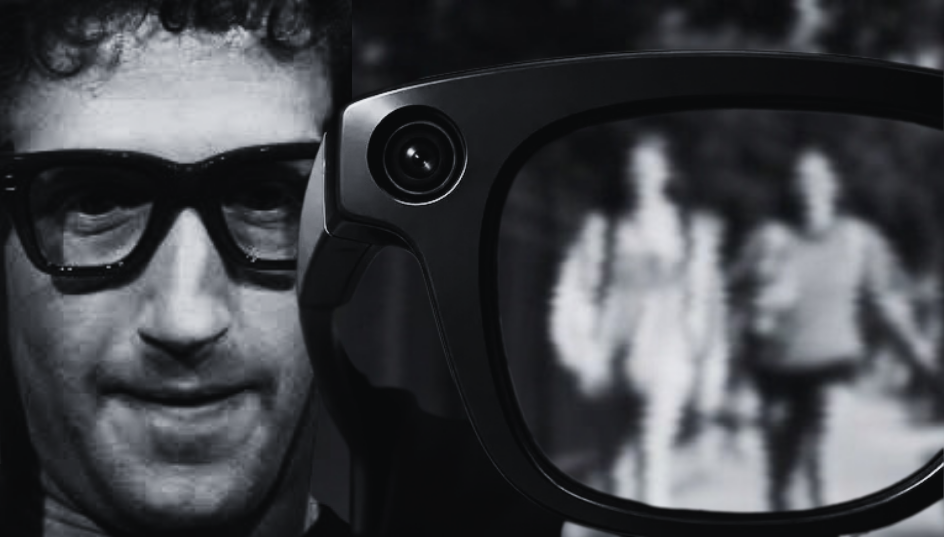
Ray-Ban Meta glasses carry a camera lens in the corner of the frame and a small white light beside it that flashes while recording. The Wayfarer model looks almost identical to ordinary Ray-Ban sunglasses, and in direct sunlight the light is close to impossible to see. Glasses whose light has been drilled out or covered show no light at all.
The free Nearby Glasses app for Android, built by developer Yves Jeanrenaud, scans for the Bluetooth signals that Meta, Snap and other smart glasses give off and sends an alert when a pair is close. It has passed 100,000 downloads. It can mistake VR headsets for glasses, cannot tell whether a wearer is recording, and has no iPhone version yet.
Wetherspoons has barred the glasses from more than 800 UK pubs because customers and staff cannot be filmed without permission. Soho House, ATG Theatres, Comic-Con UK, Polk County schools, Oslo schools and the courts of New York and of England and Wales also bar them, so staff in those places can be asked to enforce the rule.
The Harvard students who built a face identification system from the glasses advise people to ask PimEyes and people-search sites such as FastPeopleSearch to delete their records, or to use paid removal services, so a face cannot be matched to a name and address.
Anyone who finds a video of themselves online should record the evidence first, with screenshots, the account name and the link, and then report it to the platform and to police. Meta removed Kassy's video after she reported it, and TikTok banned the account that posted Alice's.
In France, the e-Enfance helpline 3018 works with platforms to remove content. In Germany, HateAid advises victims of digital violence. Spain's data protection agency runs a Canal Prioritario for urgent removal of sexual or violent images published without consent, with a separate route for anyone under 18.
South Korea's women's emergency line 1366 and the Central Digital Sex Crime Victim Support Centre, open 24 hours, handle deletion requests and police referrals for illegally filmed material.
In the U.S., the Take It Down Act has required platforms since 19 May 2026 to remove intimate images posted without consent within 48 hours of a valid request, and victims can report platforms that fail to act to the Federal Trade Commission at TakeItDown.ftc.gov.
Where the cases stand
The investigations in Paris and Seoul and the prosecution in Boston are still open.
In Germany, two authorities disagree about whether the glasses are legal. The federal telecoms regulator ruled in August that the recording light makes them lawful to sell. Hamburg's data protection authority, which tested a pair, ruled in September that the light is too hard to see and that filming strangers with the glasses is generally illegal. Frankfurt prosecutors are still examining HateAid's criminal complaint.
Kenya is investigating how Meta's contractors handled footage from the glasses, and Ireland, Meta's lead regulator in the EU, has not said whether it is looking at the same inquires. Norway expects advice on a national ban by October, and Australia is still weighing an import freeze.
Meta's changes so far are a software update that disables tampered glasses, a promise to remove harassing videos, and a camera-free model that goes on preorder on 13 October. Its camera glasses remain on sale. The third generation went on sale on 23 September, the day after Paris prosecutors confirmed their investigations, with the same small light that goes unnoticed.