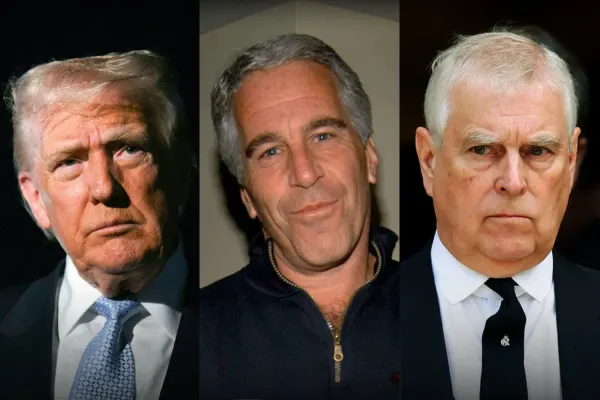
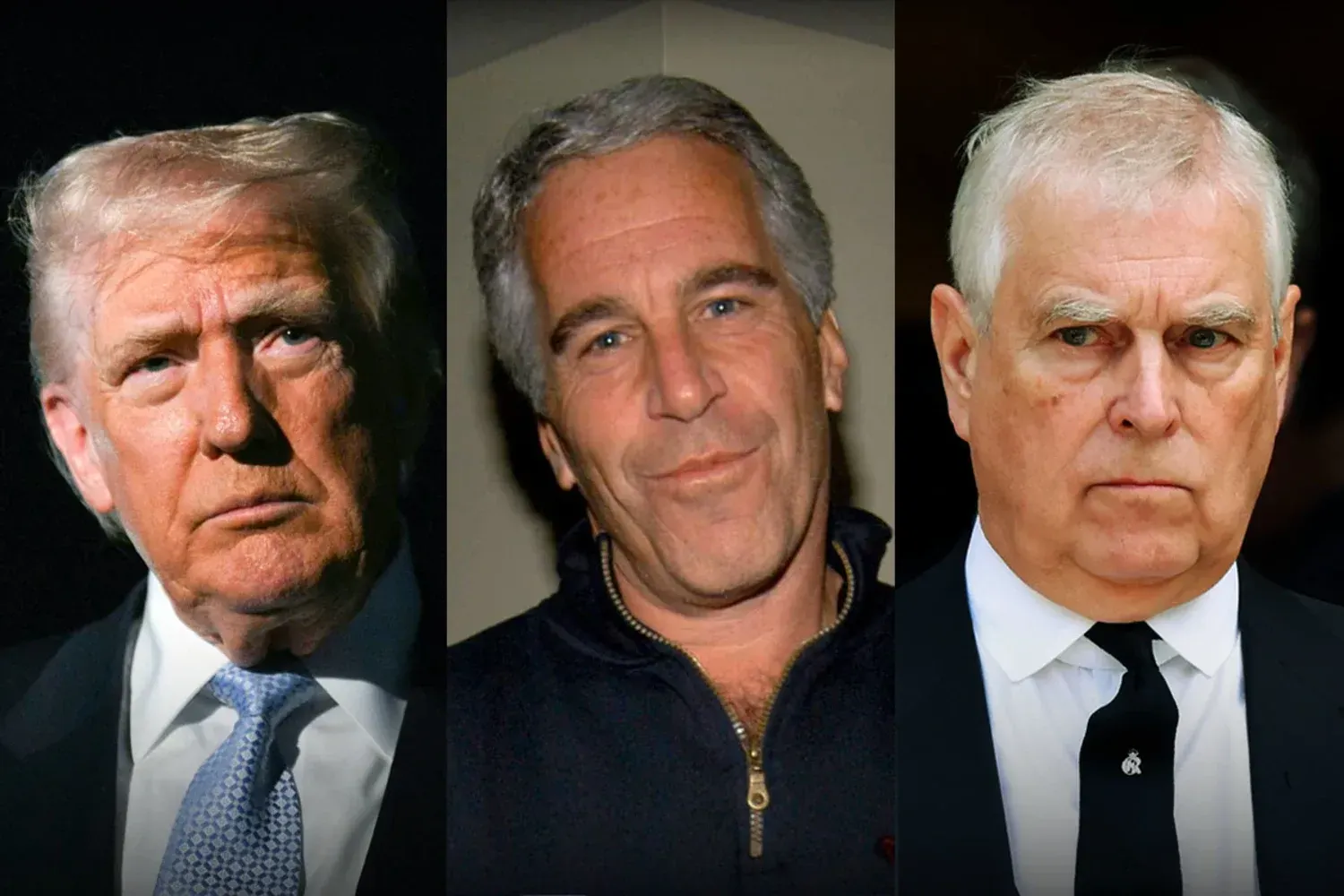
The House Oversight Committee found on 10 November that failures by federal prosecutors let Jeffrey Epstein keep abusing girls after 2005, and asked the Justice Department to investigate his associates again.
The Republican-led committee's 136-page report, the product of a 15-month investigation and interviews with 19 people, placed those failures in South Florida and Washington and blamed them on poor judgment and on what it called Epstein's pervasive and wide-reaching influence. It said the "willful ignorance" of his associates enabled his crimes for years, and criticised former president Bill Clinton, the retailer Leslie Wexner and the investor Leon Black for saying they had known nothing. It recommended that the department re-interview witnesses and investigate crimes by Epstein's associates.
The committee also told the Treasury and its Financial Crimes Enforcement Network to review whether banks were meeting their reporting duties, after finding that some financial institutions failed to act on indicators of human trafficking and immigration fraud. Banks are required to file a suspicious activity report with the Treasury when they suspect a transaction may involve crime. JPMorgan Chase, Epstein's bank from 1998 to 2013, filed reports covering just over US$4.3 million of his transactions before his 2019 arrest, Senate Finance Committee Democratic staff found. After he died in federal custody it filed retroactive reports covering almost US$1.3 billion in thousands of transactions dating back to 2003, nearly 300 times as much.
The late reports flagged money as possibly suspicious, including transfers involving Black, the hedge fund manager Glenn Dubin, the lawyer Alan Dershowitz and trusts linked to Wexner, none of whom has been charged with any crime relating to Epstein. A flagged transfer is one the bank judged possibly suspicious, not one shown to have paid for abuse, and the reports covered 16 years of activity the bank had processed without reporting it at the time.
The Justice Department said the chairman's recommendations had "already been addressed". Attorney General Todd Blanche has said the Epstein case is not closed and that human trafficking carries no statute of limitations, the department said. It accused the committee of ignoring "the historical overlap between potential co-conspirators and victims".
Epstein's estate has paid more than US$121 million through a compensation programme to about 150 eligible victims of 225 who applied, and a further US$49 million in settlements. In February 2026 his executors agreed to pay up to US$35 million more to settle a class action accusing them of helping his trafficking. Virginia Giuffre, whose lawsuits forced much of the material now public into the open, died by suicide in Western Australia in April 2025 at the age of 41.
How the abuse was organised
Federal prosecutors in Manhattan set out the method in an indictment unsealed on 8 July 2019. From at least 2002 to 2005, Epstein enticed dozens of girls, some as young as 14, to his mansion on East 71st Street and his estate in Palm Beach. They were brought in to give "massages" that he escalated into sexual abuse, and were paid hundreds of dollars in cash afterwards.
Epstein paid some of those girls to bring in others, which kept new children arriving, and employees telephoned girls in Florida to schedule abuse for when his jet landed. Epstein died in a Manhattan jail cell on 10 August 2019 before trial, and the city's medical examiner ruled his death a suicide.
Ghislaine Maxwell, his partner and recruiter, is the only associate convicted. A jury found her guilty in December 2021 of sex trafficking of a minor and four other counts, and she is serving 20 years. Epstein paid her at least US$25 million, including a single US$19 million transfer from his JPMorgan accounts, Senate Finance staff found.
Sarah Kellen, Epstein's scheduler for more than a decade, told the Oversight Committee in a closed-door interview on 21 May that she was also his victim. "I was there only to serve and to submit," she told members. She alleged for the first time that Maxwell abused her, and that Philip Levine, later mayor of Miami Beach, and the hairstylist Frédéric Fekkai did as well. Both men deny the allegations. James Comer, the committee's Republican chairman, asked Blanche on 4 June to investigate, using immunity for witnesses if needed, and to explain why no law enforcement agency interviewed Kellen until Epstein's 2019 arrest. The department has announced no investigation of either man.
New Mexico's attorney general, Raúl Torrez, sued Epstein's longtime lawyer Darren Indyke and accountant Richard Kahn on 21 October, accusing them of helping conceal the trafficking at Zorro Ranch, Epstein's property near Santa Fe. Between 2013 and 2019, the suit says, the two men authorised payments of hundreds of thousands of dollars to survivors of the enterprise, including some who also acted as recruiters. The state wants to stop them collecting up to US$75 million from an estate it values at more than US$107 million. Indyke and Kahn, the estate's executors, deny any involvement in Epstein's crimes, and their lawyer said they "emphatically reject" the allegations.
The 2007 agreement
Palm Beach police began investigating Epstein in 2005 after the parents of a 14-year-old girl complained that he had paid her for a massage. The State Attorney, Barry Krischer, took the case to a county grand jury, which on 19 July 2006 indicted Epstein on a single count of felony solicitation of prostitution. Police Chief Michael Reiter and the lead detective, dissatisfied, referred the case to the FBI, according to the Justice Department's Office of Professional Responsibility.
An assistant U.S. attorney in Miami, A. Marie Villafaña, worked the case with two FBI agents and found more victims. In May 2007 she gave her supervisors a draft 60-count indictment and a long prosecution memorandum. The office, led by U.S. Attorney Alexander Acosta, instead offered on 31 July 2007 to drop its investigation if Epstein pleaded guilty to state charges, served at least two years, registered as a sex offender and agreed to a mechanism for paying victims damages.
The non-prosecution agreement signed on 24 September 2007 cut the jail term to 18 months. Acosta approved it but did not sign it. In return for Epstein's state plea, the office agreed to forgo federal prosecution in the Southern District of Florida of Epstein, four named co-conspirators and "any potential co-conspirators". The four were Kellen, Adriana Ross, Lesley Groff and Nadia Marcinkova. Acosta told the office's reviewers that he doubted the proper federal role in prosecuting solicitation and preferred a state resolution, and his managers cited legal issues, the credibility of witnesses and the effect of a trial on the girls.
Epstein's lawyers, among them Kenneth Starr and Jay Lefkowitz, spent months after the signing trying to undo it, appealing to the department's Criminal Division and then to the office of the Deputy Attorney General. On 23 June 2008 that office told them it would not intervene. Epstein pleaded guilty a week later, served less than 13 months and was let out of the Palm Beach County jail for up to 12 hours a day on work release. The Oversight Committee called that leniency absurd and recorded the account of a woman who told it that Epstein abused her while he was on work release.
The victims were not told about the agreement or consulted before it was signed. Letters sent afterwards said the case was "under investigation". Judge Kenneth Marra ruled in February 2019 that the prosecutors had violated the Crime Victims' Rights Act and had misled the victims into believing federal prosecution was still possible. Acosta, then labour secretary in Trump's first administration, resigned that July.
The Office of Professional Responsibility found in November 2020 that Acosta's decision to resolve the case through the agreement "constitutes poor judgment" and that the agreement was "a flawed mechanism" for the federal interest. It found no professional misconduct and no clear standard that required him to indict, and said the victims had not been treated with the forthrightness expected of the department.
Prosecutors in New York charged Epstein in 2019 and Maxwell in 2020 despite the Florida agreement. None of the four named co-conspirators has been charged. The department says some of them were also victims, and Kellen says she was abused from the start of her employment.
JPMorgan Chase
JPMorgan kept Epstein as a client through his 2008 conviction and registration as a sex offender, and its senior executives knew of the accusations against him. Mary Erdoes, who became head of the bank's asset and wealth management division in 2009, testified that the bank knew of sex accusations against Epstein in 2006, the U.S. Virgin Islands said in a 2023 filing. Erdoes, Jes Staley, later head of investment banking, the general counsel Stephen Cutler and Catherine Keating, head of investment management in the Americas, met in 2008, 2011 and 2013 over the risk he posed.
Compliance staff pressed to drop him. One official wrote in 2010 that Epstein "should go", and in 2011 a senior compliance official wrote that the anti-money laundering team had asked a private bank risk meeting to exit the relationship, according to the Virgin Islands' amended complaint. The bank instead kept him. JPMorgan has accused Staley of misleadingly vouching for Epstein, and Staley has said he regrets the friendship but denies knowing of the abuse.
Epstein belonged to a group of the bank's largest clients known internally as the "Wall of Cash", Wyden's staff found, and Erdoes, who reported to chief executive Jamie Dimon, was in constant contact with him. John Duffy, then chief executive of the private bank, counselled Epstein on structuring cash withdrawals to avoid reporting requirements, and private bankers kept information about his suspicious activity from compliance. Erdoes testified that the bank ended the relationship in 2013 after she learned that his withdrawals were "actual cash". The bank went on dealing with him after that because of his influence over Black, the staff found. Dimon testified in 2023 that he had barely heard of Epstein before 2019.
JPMorgan paid US$290 million in June 2023 to settle a class action by Epstein's victims and US$75 million to the Virgin Islands in September, without admitting liability. Ron Wyden, the senior Democrat on the Senate Finance Committee, reported in August 2026 that the bank had delayed reporting more than US$1 billion in suspicious transfers, including payments to women in Russia and Belarus. JPMorgan called that false and said it "acted appropriately on what we knew, when we knew it".
Deutsche Bank and Bank of America
Deutsche Bank took Epstein on in 2013, after JPMorgan dropped him and five years after his conviction, projecting US$2 million to US$4 million a year in revenue from the relationship. Two of its employees visited him at home in early 2015 to ask about new allegations of sex with underage girls and were satisfied with his answers. In 2017 the bank declined to scrutinise payments to a Russian model and a Russian publicity agent because, an employee wrote, such activity was normal for this client.
New York's Department of Financial Services fined Deutsche Bank US$150 million in July 2020, the first penalty against any bank over Epstein. Its consent order listed payments to people publicly accused of being his co-conspirators, and more than US$7 million in settlements and more than US$6 million to law firms for what appeared to be the legal costs of Epstein and those co-conspirators. It also listed payments to Russian models and women with Eastern European surnames, and more than US$800,000 in cash withdrawals over about four years. Deutsche Bank paid victims US$75 million in 2023. Wyden's August report said it failed to report on time more than US$250 million in transfers.
Bank of America failed to screen and report US$170 million in payments to Epstein, the same report said, and the bank concluded years later in its own suspicious activity reports that the transfers had no verifiable business purpose. Bank of America said it "did not facilitate wrongdoing". Deutsche Bank said it regretted its historical connection with Epstein.
Wexner and Black
Wexner, founder of the company that owned Victoria's Secret, gave Epstein power of attorney over his finances in 1991, allowing him to sign cheques, borrow money and buy property in Wexner's name. In a statement to the committee before his deposition on 18 February, Wexner said he revoked it in September 2007, nine months before Epstein pleaded guilty. He said Epstein bought his Manhattan townhouse for what he was told was the appraised value and called him a con man who had duped him.
Stephen Lynch, a Massachusetts Democrat who questioned Wexner, said afterwards that the evidence left no question in his mind that Wexner knew and failed to stop it. Members said Wexner could not remember how Epstein came to control hundreds of millions of dollars of his money. Wexner has not been charged, and his spokesman said a federal prosecutor told his lawyers in 2019 that he was not a co-conspirator.
Black paid Epstein US$158 million for tax and estate planning, according to a review that Apollo Global Management, the firm Black co-founded, commissioned, which found him uninvolved in Epstein's crimes. Senate Finance staff traced US$170 million, all paid after Epstein's 2008 conviction, and Comer has said Kahn testified that Black was one of five clients who paid Epstein. Black says the money bought legitimate advice and that he never paid Epstein for access to women. The House held him in contempt in September for defying two subpoenas, and he has sued the committee, Comer and Robert Garcia, its senior Democrat.
Trump
Donald Trump and Epstein were friends in the 1990s. A federal prosecutor in Manhattan wrote to colleagues on 8 January 2020 that flight records showed Trump was a passenger on Epstein's jet on at least eight flights between 1993 and 1996, four of them with Maxwell aboard. On one, the prosecutor wrote, the only passengers were Trump, Epstein and a 20-year-old woman whose name was redacted. The flights place Trump in Epstein's company in the years before the abuse charged in 2019 and are not evidence of a crime.
Trump called Reiter, the Palm Beach police chief, in July 2006 as the first charges against Epstein became public. Reiter told the FBI in a 2019 interview that Trump said: "Thank goodness you're stopping him, everyone has known he's been doing this." Trump also told him he had thrown Epstein out of Mar-a-Lago, that Maxwell was evil and that he had once been around Epstein when teenagers were present and left. The White House has pointed to the call in Trump's defence. The account also has Trump saying the abuse was widely known in 2006, when he has said he knew nothing of Epstein's crimes.
Epstein wrote to Maxwell on 2 April 2011 that "the dog that hasn't barked is trump" and that a victim, whom committee Republicans later identified as Giuffre, had spent hours at his house with Trump. In a January 2019 email to the author Michael Wolff he wrote that Trump knew about the girls and had asked Maxwell to stop. Committee Democrats released both in November 2025. The emails are Epstein's assertions and do not say what he meant. Giuffre said under oath that she did not believe Trump knew of Epstein's abuse of underage girls. Karoline Leavitt, the White House press secretary, said the emails proved nothing other than that Trump did nothing wrong.
A woman told the FBI in four interviews in 2019 that Epstein introduced her to Trump around 1983, when she was about 13, and that Trump sexually assaulted her. The Justice Department published one interview in January 2026 and the other three in March, after NPR found them missing from the public files. The department said they had been mistakenly withheld. The released records do not show whether the FBI tested her account.
Thirty-seven related pages were still unpublished in March, including the agents' notes. The House Judiciary Committee's Democratic staff set out accounts from 11 women in a report on 26 October, five of whom accuse Trump of rape or sexual assault in Epstein's company or presence, and asked for a special counsel.
The Republican majority's report says testimony from numerous witnesses confirms Trump's lack of involvement and that its facts do not suggest he is implicated in Epstein's or Maxwell's crimes. No prosecutor or court has accused Trump of a crime connected to Epstein. He denies any sexual misconduct and says he ended the friendship before Epstein's first prosecution, and the White House says he has been "totally exonerated".
Maxwell told Blanche, then deputy attorney general, in a two-day interview in July 2025 that she never saw Trump in any inappropriate setting. Within days she was moved from a low-security prison in Tallahassee to Federal Prison Camp Bryan in Texas, a minimum-security women's camp. A whistleblower there gave House Judiciary Democrats an October 2025 email from Maxwell to her lawyer headed "Commutation Application". The White House said pardoning her was not something Trump had thought about.
The records
The Justice Department and FBI said in a two-page memo on 7 July 2025 that they had found no "client list" and no evidence that could predicate an investigation against uncharged third parties, and that no further disclosure was warranted. Attorney General Pam Bondi had said in February that a client list was on her desk. Congress passed the Epstein Files Transparency Act in November 2025 and Trump signed it.
The department released more than 3 million pages, 2,000 videos and 180,000 images, most of them in December and January. The Oversight report faults it for missing deadlines and for redactions that hid accused co-conspirators while exposing victims. Lawyers for victims said thousands of redactions were missing and that the names of nearly 100 women were exposed. Members who read unredacted copies said the department blacked out the name of Sultan Ahmed bin Sulayem, the Emirati businessman, as the recipient of an Epstein email that referred to a "torture video".
British police arrested Andrew Mountbatten-Windsor, the King's brother, on 19 February on suspicion of misconduct in public office over allegations that he passed confidential trade reports to Epstein in 2010. The Metropolitan Police is investigating Peter Mandelson, the former ambassador to the U.S., over his own correspondence. Mountbatten-Windsor denies wrongdoing and has not been charged.
The unanswered evidence
Federal law sets no time limit for prosecuting sex trafficking of children under section 1591 of the criminal code, so anyone who recruited, scheduled, transported or paid for the abuse of Epstein's victims can still be charged. The Florida immunity applied only in the Southern District of Florida.
Republicans lost their House majority on 3 November, and Garcia is expected to chair the Oversight Committee from January. He called the majority's report partisan and incomplete, said the committee held no public hearings on Epstein, and has promised hearings that question powerful men associated with Epstein, Trump among them.
The Treasury holds the suspicious activity reports from JPMorgan, Deutsche Bank and Bank of America that would identify who received the transfers to women in Russia, Belarus and Eastern Europe. JPMorgan's compliance files would show who overruled the 2010 and 2011 recommendations to drop Epstein. The Justice Department holds Villafaña's 60-count draft indictment and prosecution memorandum, and the files on the four co-conspirators the Miami office agreed not to charge. It also holds the 37 unpublished pages on the woman who accused Trump, and the two names Kellen gave the committee.