Hackers broke into an unclassified CIA intelligence system, the FBI's national crime database and Department of Agriculture payment systems in intrusions that came to light between 16 and 24 November.
The New York Times reported on 24 November that the CIA and the Office of the Director of National Intelligence had found a breach of an open-source intelligence analysis system, citing U.S. officials and other people familiar with the matter. A second person familiar with the incident confirmed it separately that afternoon. Classified material was safe, the people said. Two of them said information held by other government agencies was also believed to have been exposed, and one said the problem had been resolved. None of them identified the hacker. An ODNI official said there had been no disruption to "critical capabilities", and the CIA declined to comment.
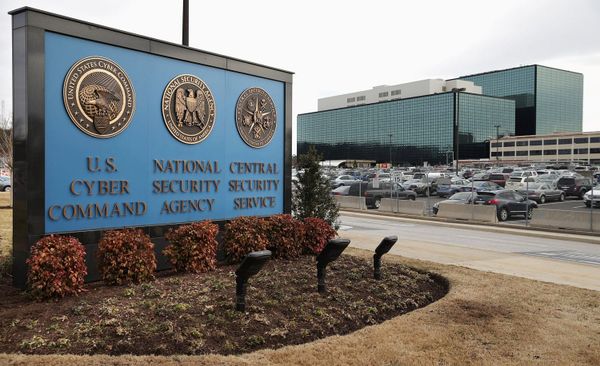
The Cybersecurity and Infrastructure Security Agency, which defends civilian federal networks, has lost about a third of its staff since January 2025 and has had no Senate-confirmed director in that time. The National Security Agency and U.S. Cyber Command went 11 months without a permanent chief after President Donald Trump fired the last one. The White House cyber office lost its director on 19 November and passed on 23 November to the director of national intelligence, whose own office was hit in the CIA breach. Democratic and Republican lawmakers have questioned whether those changes left federal networks more exposed, and no official inquiry has yet linked any of the intrusions to them.
What the stolen systems hold
Open-source intelligence draws on social media, satellite imagery and large commercial datasets, some of them bought from data brokers. Much of that material is public on its own, but purchased data can reveal a great deal about people once it is combined with other sets, and analysts use it alongside classified reporting to reach their assessments. The CIA has given no account of what the system held or which other agencies' data passed through it.
The FBI's National Crime Information Center, set up in 1967, links police and justice agencies in all 50 states, the District of Columbia and U.S. territories, according to the bureau's notice in the Federal Register. Officers query it for outstanding warrants, wanted and missing people, protection orders and criminal histories, and it includes FBI fingerprint records. Two people briefed on the matter said on 20 November that hackers had entered it, and the bureau is investigating.
Breaches disclosed since March
The FBI declared a breach of a surveillance system a "major incident" under federal law in March and notified Congress. The system held data from pen registers and trap-and-trace devices, which log the numbers a monitored phone calls and receives, and personal information on subjects of FBI investigations.
The Pentagon's Defense Manpower Data Center, which keeps records on troops, civilian staff, contractors, veterans and military families, found a flaw in a file-sharing system on 16 July. Unauthorised users had been inside since October 2025, and the department later said the breach exposed 2.76 million living people and 294,000 who had died, including Social Security numbers and job details. The 2015 breach of the Office of Personnel Management exposed about 21.5 million records, including security clearance background checks, and was widely blamed on China. Pentagon criminal investigators are also examining freezer failures at U.S. military commissaries in August, which four officials told Reuters were being treated as a possible cyberattack.
In September a criminal group calling itself ShinyHunters said it had taken data on FBI employees and job applicants through the FBIJobs.gov portal, and the bureau said it was aware of the claim. On 28 October a hacker using the name Department of Peace gave the transparency group DDoSecrets names, job titles and work contact details for more than 40,000 Department of Homeland Security staff, including border and immigration agents. The department said it was aware of a "potential breach". The hacker said the data came from an Okta sign-in system, and Okta said its own systems had not been compromised.
The Agriculture Department's Cybersecurity and Privacy Operations Center "uncovered a security incident" in the week of 16 November, according to an internal email whose contents were reported on 19 November. Staff reset every database password in every environment, which took applications offline for several days, including the tools that move payments between the department and farmers and the portals clients use to track loans. Who carried out the intrusion and whether data left the network were unclear.
Outages traced to maintenance and software faults
Microsoft traced a 12 November outage of Outlook, Teams and other 365 services to a software defect linked to an earlier capacity upgrade. The Federal Aviation Administration halted departures nationwide on 13 November and traced the ground stop to old equipment that became unstable during maintenance. JPMorgan Chase customers lost online banking on 16 November because of a software bug in the bank's own hardware.
NSANet, the National Security Agency's internal network for classified communications, failed on 17 November. A U.S. official described a "temporary degradation" during scheduled maintenance, and six people familiar with the matter said they had seen no evidence of a cyberattack. Jay Clayton, the director of national intelligence, later linked the failure to work patching PHP, a common programming language for web software.
Clayton's assurances and Patel's absence
Clayton told the House Homeland Security Committee on 18 November that the outages were "not an orchestrated attack by a foreign malign actor". Markwayne Mullin, the homeland security secretary, said he was "98% confident" that no hostile activity lay behind them. Andrew Garbarino, the committee's Republican chairman, criticised Kash Patel, the FBI director, for staying away, and Christopher Raia, his deputy, testified in his place.
Trump told Fox News on 21 November, the day after the crime database breach became public: "I will say that it's not good. I don't like that." He then said the hack might surface information about the FBI's investigation of Russian interference in the 2016 election, which he called a hoax. Patel had not addressed the breach publicly by that day.
Clayton spent 22 November on three Sunday television programmes. Asked about the FBI breach, he said intrusions happened often, that there was no cause for alarm and that the bureau was handling the matter in the ordinary way. The CIA and ODNI breach, which hit a system his own office uses, was reported two days later.
Cairncross's removal
Sean Cairncross, the national cyber director since August 2025, left the post on 19 November. Two sources described his departure as amicable, but two White House officials told Axios that Stephen Miller, the president's chief of staff, pushed him out because he lacked strong cyber credentials. Trump later said he replaced Cairncross because he did not think he was good enough. Cairncross had no formal cybersecurity experience when he was nominated.
The White House named Kirsten Davies, the Pentagon's chief information officer, as his successor the same day. Because a nominee cannot hold the post in an acting capacity, the White House made Clayton acting national cyber director on 23 November, and Davies will serve as a senior adviser in the office until the Senate confirms her. Clayton already oversees the 17 agencies of the intelligence community and leads the president's artificial intelligence task force. Trump nominated him as intelligence director on 11 June, after Tulsi Gabbard resigned.
CISA has been run by acting heads since Jen Easterly left in January 2025. Sean Plankey, the president's first nominee, withdrew in April after months awaiting a Senate vote. Nick Andersen has been acting director since February. Michael LoSapio, Palantir's former chief information security officer, appeared before the Senate Homeland Security and Governmental Affairs Committee on 19 November. Asked by Elissa Slotkin, a Democratic senator from Michigan, whether he supported the cuts, he said: "I don't necessarily believe more money means more security." Two senators said they would place holds on his nomination after he declined to say the Capitol was attacked on 6 January 2021.
The president fired Gen. Timothy Haugh as head of the NSA and Cyber Command in April 2025, along with Wendy Noble, the NSA's civilian deputy. Laura Loomer, a far-right activist who had pressed for the dismissals, wrote afterwards that both had been disloyal to the president. The Senate confirmed Gen. Joshua Rudd to both posts by 71 votes to 29 on 10 March 2026 over objections from Ron Wyden, a Democratic senator from Oregon, who said Rudd lacked signals intelligence experience.
Staff cuts and stalled sharing
CISA had about 3,300 employees in January 2025 and 2,389 in December 2025, and Andersen told Congress in March that staffing had fallen further during the 2026 shutdown of the homeland security department. Congress reduced the administration's proposed cut to CISA's budget for 2026 to about US$135 million after negotiations. The president's budget for 2027 would cut a further US$707 million, leaving CISA with an operating budget of about US$2 billion, and eliminate about 870 positions. The White House justified the cut by saying CISA had been "focused on censorship", a reference to its work against election misinformation. Andersen said in March that CISA planned to hire more than 300 people to rebuild. Whether any had been hired was unclear in late August.
Inside the intelligence agencies, sharing on Iran and other threats slowed and at times stopped during the president's second term, eight current and former officials told Reuters for an investigation published on 3 November. The officials said the problems began in 2025, when the ODNI and the CIA made significant staff cuts. The CIA stopped co-writing assessments with the National Intelligence Council, and the FBI stopped sharing some intelligence with the National Counterterrorism Center for several weeks. Liz Lyons, a CIA spokesperson, said the agency "participates fully" in producing community-wide assessments. An ODNI official said the council's output had stayed close to historic levels, and Clayton has resumed election-threat briefings to Congress that his predecessor's office had stopped.
Warnings from Congress
Slotkin told Cairncross at his confirmation hearing in June 2025 that he would oversee the largest cut in cybersecurity spending, and compared the country's cyber readiness to its preparation for a terrorist attack before September 2001. Bennie Thompson, the senior Democrat on the House Homeland Security Committee, and Delia Ramirez, a Democratic representative from Illinois, demanded a briefing in May 2026 after CISA exposed sensitive government credentials.
Mark Warner, the senior Democrat on the Senate Intelligence Committee, wrote to Andersen on 16 June that the agency's efforts to restore staff appeared insufficient for the threats it faced. He asked for headcount and regional staffing data by 26 June. On 20 August, James Walkinshaw, a Democratic representative from Virginia, led Thompson, Ramirez and two other Democrats in asking the Government Accountability Office to examine how the cuts had affected CISA's ability to protect critical infrastructure. A GAO spokesperson said the office was working through its process for deciding whether and when to take on the review.