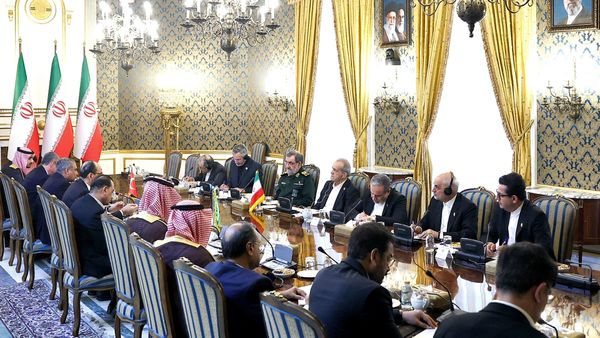
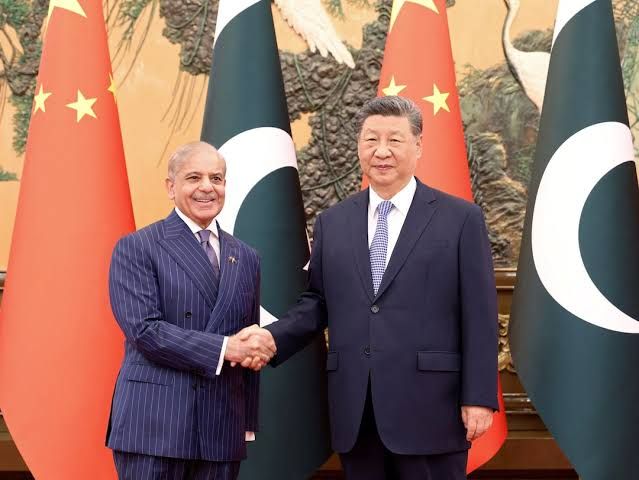
Chinese foreign ministry spokesperson Mao Ning and Pakistani Information Minister Attaullah Tarar launched the China-Pakistan Information Corridor in Islamabad under the second phase of CPEC. Inter-Services Public Relations, the Pakistani military's media wing, sat on the committee that planned it.
China and Pakistan launched an information corridor in Islamabad on 26 October that joins 18 of their media organisations in a news exchange and sets up a joint mechanism to rebut reporting the two governments call misleading.
Mao Ning, spokesperson for China's foreign ministry, travelled to Islamabad for the launch at the Pakistan-China Friendship Centre. "We're still facing misinformation, fake news, and lies," she said, and called the corridor necessary and timely.
Chinese state outlets including Xinhua, China Media Group and People's Daily sit in the exchange alongside Pakistani state broadcasters and private television channels. A secretariat inside Pakistan's Ministry of Information and Broadcasting coordinates the work, and Inter-Services Public Relations (ISPR), the military's media wing, sat on the committee that designed it.
The corridor forms part of the second phase of the China-Pakistan Economic Corridor (CPEC), the Chinese-financed programme of roads, energy projects and the Gwadar port at the centre of the two countries' partnership. The two countries mark 75 years of diplomatic relations this year.
The Islamabad ceremony
Officials unveiled the corridor's logo at the ceremony, which the information ministry organised. Chinese Ambassador Jiang Zaidong attended, as did Khalid Mahmood, chairman of the board of the Institute of Strategic Studies Islamabad.
Information Minister Attaullah Tarar told the audience CPEC had turned goodwill into physical infrastructure. "The first phase connected our lands; the next phase will connect our minds," he said.
Tarar said a country unable to tell its own story online would have that story told by others. He described the Khunjerab Pass fibre-optic cable as the first direct fibre link between the two countries.
He also said a memorandum with the Chinese technology group Alibaba had been drafted with artificial intelligence at the prime minister's insistence, signed within 20 minutes and was now being carried out alongside IT scholarships.
Ashfaq Ahmad Khalil, secretary of the information ministry, said the corridor would supply accurate and timely information to audiences in both countries.
Mao told the audience CPEC had created more than 236,000 jobs in Pakistan, citing a 26-year-old woman who drives a metro train, and described the two countries as all-weather strategic partners and iron brothers. She later held the third round of the Pakistan-China Spokespersons' Dialogue at the Foreign Office and met Deputy Prime Minister and Foreign Minister Ishaq Dar to discuss joint strategic communication.
How the exchange works
A news exchange working group will circulate what Tarar called verified news on Pakistani and Chinese cooperation. A dedicated fact-check mechanism will track narratives the two governments consider misleading and answer them, he said.
Only three members of the exchange have been named, all of them Chinese. No new agreement was announced at the launch, and the state news agency reported that the corridor rests on existing arrangements between news agencies, broadcasters and film bodies.
A business pillar opened its first regional office in Karachi and is building a trade and foreign investment portal and a podcast series. The Pakistan-China Institute, a think tank founded by Senator Mushahid Hussain Sayed, leads a research pillar.
A culture, tourism and youth pillar has named its first cohort of CPEC youth ambassadors from 13 universities. More than 68 per cent of Pakistan's population is under 30, Tarar said. The same pillar is planning a tourism route between Xinjiang and Gilgit-Baltistan and a friendship rally.
The military's seat at the table
A committee chaired by Minister of State for Information Shazra Mansab agreed on 27 March 2026 to house the corridor's secretariat in the information ministry's External Publicity Wing, the unit responsible for Pakistan's messaging to foreign audiences.
ISPR sat on that committee with the foreign ministry, Pakistan Television, the Press Information Department, the CPEC Authority and the Chinese embassy. ISPR speaks for the army, navy and air force and runs the military's media operations.
Subcommittees on media, think tanks, business and youth were formed at the March meeting. Members discussed a Pakistan-China media forum, exchanges of social media influencers and joint documentaries, and Mansab said the corridor would give Pakistan a structured platform for telling the story of its cooperation with China.
Agreements with the Chinese propaganda department
Tarar met Cao Shumin, deputy head of the Chinese Communist Party's Central Propaganda Department and minister of the National Radio and Television Administration, in Beijing on 10 July 2025.
The two agreed on joint projects between state broadcasters against what they called fake news and disinformation. They also agreed to open talks on an agreement between China Central Television (CCTV) and Pakistan Television (PTV) and to arrange exchange visits by social media influencers.
Tarar had first presented the corridor in March 2024, in a meeting with Jiang, as a step against fake news about CPEC.
The 2021 nerve centre proposal
The U.S. State Department's Global Engagement Center said in a special report on 28 September 2023 that China had sought significant control over Pakistani media through a proposed China-Pakistan Media Corridor.
A 2021 draft concept paper described in the report envisaged a jointly run nerve centre to monitor Pakistan's information environment, drawing on think tanks, media, CPEC study centres, Chinese companies and Confucius Institutes. It proposed a joint system for dispelling rumours, according to accounts of the report published in Indian media.
The same accounts said the draft would have turned material into Urdu-language products, fed Chinese embassy statements directly into Pakistan's official press release system and monitored criticism of China. China had earlier set up a CPEC Rapid Response Information Network through the CPEC Media Forum, according to the report.
Pakistan did not appear to have seriously entertained the 2021 proposal, the State Department report said.
Press freedom in Pakistan
Pakistan's National Assembly passed amendments to the Prevention of Electronic Crimes Act (PECA) in January 2025 that set prison terms and fines for spreading what the law calls fake news. The Pakistan Federal Union of Journalists called nationwide protests against the changes the following month.
Reporters Without Borders (RSF) wrote that several journalists and a dozen YouTube channels were targeted under PECA in less than a year. Its 2025 World Press Freedom Index ranked Pakistan 158th of 180 countries, down from 152nd a year earlier, and China 178th.
The Rafale campaign
The U.S.-China Economic and Security Review Commission told Congress in November 2025 that China ran a disinformation campaign against sales of the French Rafale fighter after India used the jets against Chinese weapons fielded by Pakistan in May 2025.
Fake social media accounts spread AI-generated pictures and video game images presented as debris of aircraft downed by Chinese weapons, the commission found. Chinese embassy officials persuaded Indonesia to halt a Rafale purchase already under way, according to the commission.
Mao, responding to a request for comment from Reuters, called the report false and the commission biased against China.
Unpublished records
Neither government has published the terms of the corridor, the full list of the 18 outlets, the staffing of the fact-check mechanism or any rebuttal it has issued.