At least 37 people died in U.S. immigration custody during the 2026 fiscal year, the highest annual death toll ever recorded.
Karen Newton, a 65-year-old retired primary school administrative assistant from Hertfordshire, held a valid U.S. tourist visa and passport when she and her husband tried to drive from Montana into Canada at the end of a holiday in 2025. Her husband's visa had expired. Immigration and Customs Enforcement held them for 42 days, mostly at the Northwest ICE Processing Center in Tacoma, Washington, where she said she was handcuffed, shackled and slept on the floor of a locked cell. "They don't seem to need a reason for detaining you," she said in February.
Global Affairs Canada last updated its U.S. advice on 23 November and left it at take normal security precautions, the lowest of its four levels. The department says that level means taking similar precautions to those you would take in Canada. Canadian consular staff recorded 557 cases of Canadians arrested or detained in the U.S. between April 2025 and March 2026, up from 361 in the previous 12 months. First Nations governments from Vancouver Island to Alberta have told their members to avoid non-essential travel across the border.
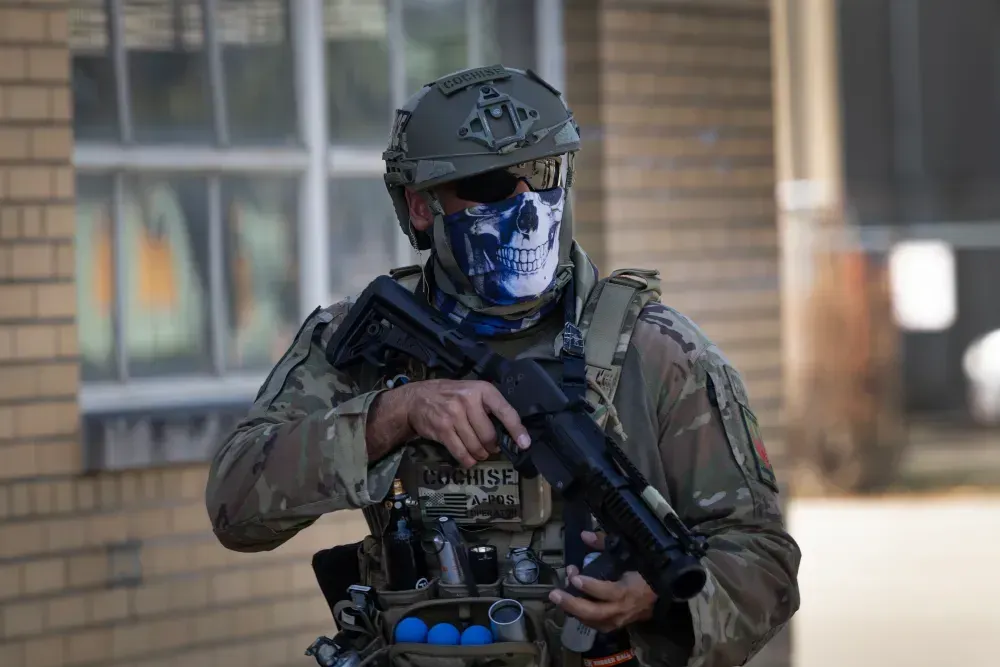
Government death reports, a Senate investigation that logged 1,037 abuse reports, a medical examiner's ruling, court decisions and detainees' own accounts show what happens to people arrested by U.S. immigration agents. Visitors and residents have been shackled, moved between states, held for months and denied lawyers, and some have been shot or have died in custody. Courts have also allowed agents to consider apparent ethnicity when deciding whom to stop. Federal prosecutors have charged two journalists who covered a protest, and two federal bodies set up by President Donald Trump have issued reports centred on protecting Christians.
The Department of Homeland Security denied any spike in deaths and blamed the rise on the size of the detained population. ICE says no detainee is denied emergency care, and DHS says its operations are targeted and protect citizens from wrongful arrest.
Weeks in custody for overstays and paperwork
An Irish engineer and father of three who asked to be identified only as Thomas tore a calf muscle while visiting his girlfriend in Georgia in the autumn of 2024. A doctor told him not to fly for eight to 12 weeks. His 90-day visa waiver expired on 8 December. After police in Savannah arrested him over a dispute at a hotel and released him on bond, ICE took him into custody. He signed a form agreeing to removal on 17 December and was still held for roughly 100 days in three facilities, ending at the federal prison in Atlanta, before being flown home under escort with a 10-year ban.
Thomas said medication was slid under his cell door at the Atlanta prison and that his requests to see a physician were ignored. His lawyer, David Cheng, said ICE refused to release him on an agreement to leave. "We were treated less than human," Thomas said.
Julien Pereira, a 26-year-old French tennis coach who had lived in the U.S. since he was 17, was refused entry to Canada while waiting for a delayed work visa and arrested by Border Patrol on his way back. He said he was held at Batavia, New York, in a unit of about 80 men, moved shackled on a 24-hour transfer and detained for about a month, losing about seven kilograms.
Tania Warner, a Canadian, and her seven-year-old daughter Ayla, who has autism, were taken into custody at a CBP checkpoint in Sarita, Texas, on their way home from a baby shower. They had passed through the checkpoint many times before. They spent three weeks in detention, and Warner was released wearing an ankle monitor. Sarah Shaw, a New Zealander, and her six-year-old son spent three weeks in a Texas detention centre after a paperwork problem on their return from Canada.
Dmitrii Georgiev, a Bulgarian on holiday in Quebec, approached the border by mistake, was not allowed to turn round and was moved through 10 ICE facilities in seven states over two and a half months. Curtis Wright, born in Edmonton and a permanent U.S. resident for nearly 30 years, was arrested by CBP at Houston's airport and handed to ICE over two drug possession convictions from 2004, then held for months at Pearsall, Texas. Australia's Department of Foreign Affairs and Trade made urgent enquiries in July after ICE arrested an Australian on arrival in Los Angeles, saying he had overstayed.
New Zealand's foreign ministry recorded 39 New Zealanders held in U.S. detention or caught in immigration difficulties in 2025, a record, counting only those who asked for help. ICE records show more than 200 Canadians held at some point in 2025, against 137 in 2024, and at least six Canadian children detained between September 2023 and October 2025.
First Nations and rights groups
Huu-ay-aht First Nations, on Vancouver Island, issued an urgent advisory on 30 January telling citizens to avoid non-essential travel, citing confirmed reports of Indigenous people being questioned and detained by ICE. "We strongly urge citizens to avoid travel to the U.S. until further notice," the government wrote. About 50 of its members live and work in Washington state and California.
Blood Tribe Chief and Council in Alberta told members to avoid crossing unless absolutely necessary. The Syilx Okanagan chiefs said unpredictable U.S. arrest and detention practices could slow consular help, and the Upper Nicola Band, Mississauga First Nation and Treaty 3 leadership and the Saint Regis Mohawk Tribe issued their own warnings. The Assembly of First Nations said members were being harassed and blocked at the border, in breach of the 1794 Jay Treaty, which guarantees people born in Canada with Indigenous status the right to live and work in the U.S. Global Affairs Canada responded in February by telling First Nations travellers to carry a passport as well as a status card, having previously said they could enter the U.S. freely.
Amnesty International USA and more than 100 other organisations issued a U.S. travel advisory on 23 April for World Cup fans, players and journalists. It cited the "deteriorating human rights situation" and the absence of guarantees from FIFA, host cities or the U.S. government. It told visitors to carry an emergency plan. European supporter groups for LGBTQ+ fans told members not to attend the World Cup.
Thirty-seven deaths and 1,037 abuse reports
Senator Jon Ossoff's staff counted 1,037 credible reports of human rights abuses in immigration detention between 20 January 2025 and 12 January 2026. They included 206 reports of medical neglect and others of physical and sexual abuse, denial of food and water and the mistreatment of children. The report recorded 26 credible reports of mistreatment of pregnant women.
The 37 deaths in the 2026 fiscal year compare with a previous record of 28 in 2004. A dozen of the dead had been held for 140 days or more, the longest for 389 days, according to ICE death reports. Lianyong Wei, a Chinese citizen, was found with a bedsheet tied around his neck two days after being detained in the Northern Mariana Islands.
The El Paso County medical examiner ruled the death of Geraldo Lunas Campos at Camp East Montana, a tent camp on the Fort Bliss army base, a homicide. The camp, run by a contractor that had never operated an immigration detention centre before winning a US$1.2 billion contract, confirmed at least 14 measles cases and closed to visitors and lawyers during the outbreak. Lawyers said they were denied access to clients in the Bishop Henry Whipple Federal Building in Minneapolis in January.
The administration cut staff and funding at DHS's Office for Civil Rights and Civil Liberties in 2025. It closed the Office of the Immigration Detention Ombudsman after Congress ended its funding. Both offices handled detainees' complaints. Austin Kocher, a Syracuse University researcher who studies immigration enforcement, said: "My concern is that these deaths are preventable, not just a function of simple demographics."
Sexual abuse in custody
Ossoff's staff found more than 40 instances of physical and sexual abuse among the first 510 credible reports in their investigation. They included two 911 calls from a California facility referring to sexual assault or threats of it, and at least four emergency calls from a Texas facility that referred to sexual abuse.
American Oversight obtained offsite medical claims for people in ICE and CBP custody under freedom of information law. Claims filed between 1 January and 7 October 2025 included 123 for adult sexual abuse, 20 for adult rape and 27 for child sexual abuse. The Department of Veterans Affairs processed the claims for the agencies. They record treatment for abuse suffered before or during custody.
Official records show 308 sexual assault and abuse complaints filed by people held in ICE facilities between 2015 and 2021. More than half accused detention officers, contract guards or ICE employees, and most went uninvestigated. A University of Washington Center for Human Rights report in May found that sexual abuse investigations at the Tacoma centre where Newton was held had been mishandled and that documents showed gaps in accountability as ICE lowered its detention standards.
The Ohio Immigrant Alliance has compiled scores of cases in which ICE, CBP or contractor staff were charged, convicted or sentenced for violent or sexual offences. Some had used their authority and access to assault, abuse or stalk women and children.
What the official statements leave out
DHS attributes the deaths to the number of people it holds. The death rate in proportion to the detained population has increased, especially in Trump's second term, so the rise exceeds what a larger population alone would produce.
ICE says that "at no time during detention" is a detainee denied emergency care. Senate investigators recorded 206 reports of medical neglect, and DHS first described Lunas Campos as having died after "medical distress" before the medical examiner ruled his death a homicide. A spokesperson said ICE and the GEO Group, which runs the Tacoma centre, have zero tolerance for sexual abuse, while the University of Washington report found complaints there were mishandled.
DHS says it has significant protections to stop U.S. citizens being arrested or detained. ProPublica documented 506 U.S. citizens held by immigration agents between January 2025 and September 2026, including at least 70 children and teenagers and about a dozen who were deported. More than 120 citizens were held during Operation Midway Blitz in Illinois after DHS said there had been no administrative arrests of citizens there. ProPublica compiled the count itself because the government keeps none.
Justice Brett Kavanaugh wrote in September 2025 that agents who stop a citizen promptly let the individual go. More than 20 citizens said they were held for at least a day without being able to contact a lawyer or relatives.
CBP says fewer than 0.01 per cent of arriving travellers have their devices searched. CBP's own figures show 55,318 searches of more than 419 million travellers in the 2025 fiscal year, or about 0.013 per cent. Searches then rose by 32 per cent in the first nine months of the 2026 fiscal year. Pete Hoekstra, the U.S. ambassador to Canada, said in June 2025 that Canadians' bad experiences at the border were isolated and "not a pattern". Arrests and detentions of Canadians handled by Canadian consular staff rose 54 per cent in the 12 months to March 2026.
Shootings by federal agents
Federal immigration agents have shot at least 21 people since January 2025, eight of them fatally, including three U.S. citizens, according to an ABC News count in September. Agents opened fire and missed in at least 15 more incidents. The government publishes no count of its own.
An ICE officer, Jonathan Ross, killed Renee Good, a 37-year-old mother, in Minneapolis on 7 January, and Border Patrol agents killed Alex Pretti, a 37-year-old intensive care nurse, on 24 January during Operation Metro Surge. Minnesota's Bureau of Criminal Apprehension was blocked from reviewing the scene after Pretti's death, and his family's lawyer said in August that federal officials were still obstructing the state inquiry. Federal prosecutors began sharing evidence with state investigators only after months of legal fights.
An ICE agent shot dead Lorenzo Salgado Araujo, a Mexican national, in Houston on 7 July, and federal immigration agents killed Johan Sebastián Durán Guerrero in Maine on 13 July. An ICE officer shot and wounded Wilber Garces Perez, a Venezuelan delivery driver, in Austin, Texas, in September. In at least six cases people shot by agents were then charged with crimes, and two of those cases were dismissed. Marimar Martinez, a U.S. citizen shot five times by a Border Patrol agent in Chicago in October 2025, was labelled a domestic terrorist.
Federal agents arrested the journalists Don Lemon and Georgia Fort on 29 and 30 January on charges arising from their coverage of a protest at a church in St. Paul. The Committee to Protect Journalists condemned the arrests. Germany's foreign ministry told travellers in February to keep away from demonstrations because of repeated violent clashes with security forces. A Carnegie Endowment briefing in March found that political violence from the government grew in 2025, especially from ICE.
Race as grounds for a stop
The Supreme Court voted 6 to 3 on 8 September 2025 to lift an order that had barred immigration agents in Los Angeles from stopping people on the basis of apparent race or ethnicity, language, location or type of work. Kavanaugh wrote that apparent ethnicity can be a relevant factor alongside others. Of the more than 100 citizens held after agents questioned their citizenship, nearly all were people of colour.
A proclamation in force since 1 January bars or restricts entry for nationals of 39 countries and holders of Palestinian Authority travel documents, most of them in Africa and the Middle East. Canadians who are dual nationals of those countries, or who travel with relatives from them, face the restrictions on any visa application.
The FBI recorded 10,881 hate crime incidents in 2025. Anti-Hispanic and anti-Latino incidents rose 26 per cent to the highest level in the 35 years the bureau has published the figures, while police reported 339 anti-Asian incidents and 189 anti-Sikh offences. Thousands of police agencies fail to report hate crimes or report them inaccurately, the National Council of Jewish Women said. The Southern Poverty Law Center calculated that in 2019 the FBI's figures captured 2.8 per cent of the hate crimes that victims reported in a federal crime survey.
White nationalist groups and the prosecution of their monitors
Patriot Front, the white nationalist group formed after the 2017 Unite the Right rally in Charlottesville, marched through Washington on 4 July and outside the March for Life in January. The Southern Poverty Law Center counted 1,263 hate and anti-government groups in 2025, recorded a surge in hate flyering and described 2025 as the year the hard right moved "from extreme to establishment". Proud Boys chapters in Florida, which has more of them than any other state, appeared at counterprotests against the No Kings rallies and at the state's immigration detention camp.
The Justice Department indicted the Southern Poverty Law Center on 21 April on 11 counts of wire fraud, bank fraud and money laundering conspiracy. The charges concern US$3 million paid between 2014 and 2023 to informants inside groups including the Ku Klux Klan. Todd Blanche, the acting attorney general, accused the centre of paying sources to stoke racial hatred. The centre denies wrongdoing and says the informant programme saved lives and fed information to law enforcement.
Princeton University's Bridging Divides Initiative reported that the risk of political violence intensified in 2025 and continued to worsen in 2026. The Institute for Strategic Dialogue counted 74 attacks and disrupted plots in 2025, which killed 50 people, more than four times the deaths in 2024. The Center for Strategic and International Studies found that left-wing attacks have risen from very low levels and remain far below the historical toll of right-wing violence.
A single faith in federal policy
The Justice Department's Task Force to Eradicate Anti-Christian Bias, which Blanche chairs, published a 200-page report on 30 April drawing on 17 federal agencies. It treats prosecutions of anti-abortion activists who blockaded clinics, and Biden-era protections for LGBTQ+ people, as evidence of bias against Christians, and is due to issue policy recommendations before it dissolves in February 2027.
Trump received the draft report of his Religious Liberty Commission on 26 June. It calls the separation of church and state a legal error and recommends repealing the ban on political campaigning by tax-exempt churches. The commission is made up of conservative Christians and one Orthodox Jew, and other religious and non-religious groups sued in February over its make-up. The Interfaith Alliance said the report reflected a "narrow, Christian nationalist worldview" and ignored rising Islamophobia. Jews were targeted in 1,528 hate crime incidents in 2025, 63 per cent of religion-based incidents.
The Amnesty coalition told transgender and nonbinary visitors that federal rules require visa applications under sex assigned at birth. Global Affairs Canada tells 2SLGBTQI+ travellers that U.S. federal systems are moving away from recognising gender identity markers and that it cannot guarantee entry on a passport with an X gender marker. Canadian officials approved wording on X-marker passports for the U.S. page in early 2025 and never published it, according to emails released under access to information law. Safeture and Riskline's LGBTQ+ Risk Map 2026 placed the U.S. among countries where risk to queer travellers had increased, alongside Belarus, Burkina Faso and Senegal.
Pregnancy, rape and the hospital bill
The Centers for Medicare and Medicaid Services withdrew its 2022 guidance telling hospitals that federal emergency care law can require an abortion to stabilise a patient on 3 June 2025. Texas doctors who perform a prohibited abortion face up to 99 years in prison. Tierra Walker, 37 and about 20 weeks pregnant, died in San Antonio on 30 December 2024 of hypertensive cardiovascular disease with superimposed preeclampsia, three days after a hospital diagnosed severe preeclampsia and discharged her within hours. Her family sued in September alleging the state's bans are unconstitutionally vague. University Health said clinicians followed medical standards and the law.
Researchers writing in JAMA Internal Medicine estimated that rape caused 64,565 pregnancies in the 14 states with total abortion bans between July 2022 and January 2024. Nine of those states, including Texas, have no exception for rape or incest, KFF found in 2024, and in five states with an exception the survivor must report the assault to police before receiving care. Texas accounted for an estimated 26,313 of the pregnancies. The bans apply to visitors as well as residents.
A federal complaint filed in June alleges Austin-area hospitals denied miscarriage care. At least three U.S. citizens were pregnant when immigration agents detained them. Global Affairs Canada's U.S. page omits pregnancy and abortion.
A day in a U.S. hospital costs Canadians between C$2,000 and C$5,000. A British Columbia woman was left with a US$65,000 hospital bill after a medical emergency on a trip to Florida in September 2025, when her insurer refused the claim under a 90-day stability clause for pre-existing conditions. Nearly half of Canadians travel without coverage, a TD Insurance survey found in June.
Schools, shopping centres and stadiums
Firearms killed 44,447 people in the U.S. in 2024, and gun homicides ran at 4.5 per 100,000. Canada's shooting homicide rate was 0.69 per 100,000, less than one-sixth of the U.S. figure, and Australia's firearm homicide rate was 0.09.
A 16-year-old shot his way into Silver Rail Elementary School in Bend, Oregon, on 15 October and killed three children and a teacher. Halloween weekend left at least 13 people dead and 92 injured, including people shot outside a football game at Legion Field in Birmingham, Alabama, attended by nearly 70,000 people.
Searches, fast-track removal and detention without bond
Customs and Border Protection officers at airports, land crossings and inland checkpoints can refuse admission, hold travellers for secondary inspection and search phones without a warrant or any suspicion. ICE arrests people inside the country, runs detention and carries out removals. Newton, Warner, Wright and Pereira were all first stopped by CBP. A directive effective on 1 January extended device searches to SIM cards, smartwatches, flash drives and drones. A French researcher with the National Centre for Scientific Research was refused entry for a conference in Houston in March 2025 over messages critical of the administration's research policies, French government officials said.
The State Department revoked more than 100,000 visas in 2025, including 8,000 held by international students, and set up a Continuous Vetting Center to review visa holders after arrival. Student applicants must make their social media public so consular officers can look for "hostile attitudes towards our citizens, culture, government, institutions, or founding principles", the department said. CBP has also proposed requiring visa-waiver visitors, including Britons, Australians and New Zealanders, to hand over their social media history, and a revised version of the rule is pending.
The federal appeals court in the District of Columbia allowed the administration on 23 June to resume fast-track deportations across the country, without a hearing before an immigration judge, for people who cannot prove two years' residence. The Fifth Circuit, covering Texas and Louisiana, upheld in February the administration's policy of mandatory detention without bond hearings for people arrested inside the country, despite hundreds of lower-court rulings against it. The Second Circuit rejected the policy in April, with Judge Joseph Bianco calling it "the broadest mass-detention-without-bond mandate in our nation's history", and the Ninth Circuit in July became the fifth appeals court to reject it. The Supreme Court has been asked to decide.
Consulates kept at a distance
Under the Vienna Convention on Consular Relations, U.S. officers must tell detained foreigners they can have their consulate notified and must let consular staff visit. Mexico's government counts 17 Mexican nationals dead, 14 in detention and three in enforcement operations. It sent 11 diplomatic notes and ordered consular staff to visit detention centres every day instead of once a week. On 14 July it began filing complaints with U.S. prosecutors and sending cease-and-desist letters to detention centres, starting with Adelanto in California, where four Mexicans have died.
Ecuador lodged a formal complaint after ICE agents tried to enter its consulate in Minneapolis in January. Anita Anand, Canada's foreign affairs minister, said consular officials were urgently seeking information after Johnny Noviello, a 49-year-old Canadian permanent resident of the U.S., died in ICE custody in Miami in June 2025. Global Affairs Canada told Anand in May 2025 that a growing consular workload meant Canadians might need to pay more and expect less.
Measles and food safety
The Pan American Health Organization ruled on 17 November that measles is endemic in the U.S. again after the CDC confirmed 5,838 cases in 2026 by 19 November. Its 12 November update counted 18 cases in international visitors. Lettuce distributed by Taylor Farms made 12,883 people ill with cyclospora. Canada lost its own measles elimination status in November 2025. A separate investigation, "Preventable diseases spread across the U.S. as the Trump administration dismantles public health protections", sets out the surveillance cuts and vaccine policy changes behind those figures.
Why the advisories have not moved
Global Affairs Canada officials asked within a week of Trump's inauguration in January 2025 for "the plan to reassure Canadians" about travel to the U.S., according to released emails. The department withheld its reasoning for dropping the approved X-marker wording under the exemption for advice. Released documents showed officials weighing accurate advice against sensitivities during an election in the spring of 2025, before the department told Canadians on 4 April to expect scrutiny at the border. Two months later Hoekstra publicly disputed that warning. Charlie Angus, then an NDP member of Parliament, had told Canadians in March 2025 to avoid travel to the U.S. if at all possible.
The U.S. declined to renew the Canada-United States-Mexico Agreement at its first joint review on 1 July, starting annual reviews, and had held no formal negotiating round with Canada by late July. Canadian residents made 39 million return crossings from the U.S. in 2024, three-quarters of all their crossings from abroad. The emails that have been released show officials planning how to reassure travellers and weighing the timing of an election.
A survey for Global Affairs Canada found that only 28 per cent of Canadians knew a change in an advisory level can void or limit travel insurance. Many policies exclude or limit cover once the level rises above normal precautions. Smartraveller says most Australian insurers cover cancellation for safety reasons only if the advice level rises after the policy is bought. While Canada and Australia keep the U.S. at their lowest level, a traveller who cancels a U.S. trip out of fear for their safety pays for it.
Australia rates the U.S. at exercise normal safety precautions and the United Kingdom one level higher. New Zealand rates the U.S. at level two because of the threat of terrorism and has added detention warnings without changing that reason. Germany's foreign ministry tightened its wording in March 2025 after three Germans were detained, said the change was not a travel warning and added that border officers' final say over entry was also the case in Germany. The State Department gives China level two for detention without fair treatment and the reading of travellers' messages. Mexico, with 17 dead citizens, has moved from diplomatic notes to criminal complaints.
The case for other destinations
In 2025 and 2026 people were detained, refused entry or arrested over old convictions, expired or disputed visas and a travelling companion's paperwork. Others were stopped after a wrong turn at a land border, at an inland checkpoint, over phone messages criticising the government and for reporting on a protest. Agents may consider apparent ethnicity when deciding whom to stop, and they have held more than 500 U.S. citizens. Anyone detained enters a system that recorded 37 deaths in a year, more than 1,000 credible abuse reports, a homicide ruling and mishandled sexual abuse investigations. Lawyers have been kept out of its facilities. In Texas and Louisiana a detained visitor can be held without a bond hearing. Newton held a valid visa, and 506 of the people agents held were U.S. citizens.
Detention has meant weeks or months in custody, shackled transfers between states, medical neglect and, for 37 people in the last fiscal year, death. Visitors also face a gun homicide rate more than six times Canada's, abortion bans enforced with prison terms of up to 99 years and hospital stays that cost thousands of dollars a day. Canada's shooting homicide rate is less than one-sixth of the U.S. rate and Australia's firearm homicide rate is lower still.
For a holiday, conference or exchange that can take place elsewhere, the evidence supports choosing another destination. Canadian residents made 2.1 million return trips from the U.S. in January, 22 per cent fewer than a year earlier, while their trips to other countries rose 10.6 per cent. The administration and detainees' lawyers have both asked the Supreme Court to decide whether the U.S. can hold millions of noncitizens without bond hearings.