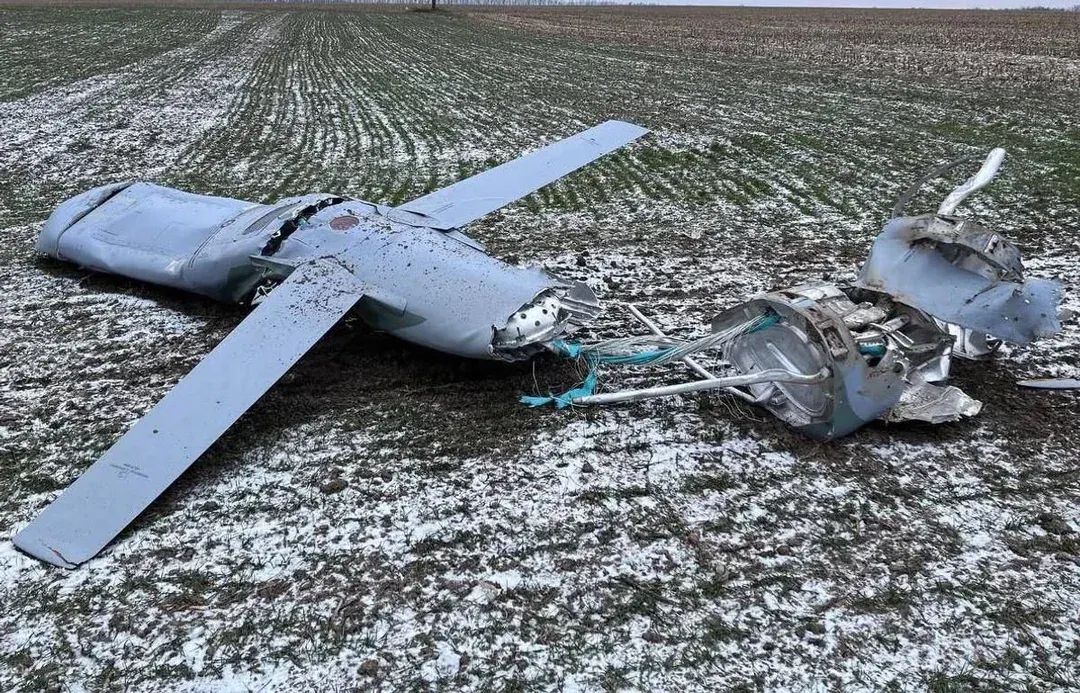
Russian Kh-101 cruise missile wreckage was found at all three sites in south-eastern Poland where objects fell on 20 November, military prosecutors investigating the incursion said.
Defence Minister Władysław Kosiniak-Kamysz said on 20 November that a Kh-101 had fallen near Nowy Lipowiec, a second missile near Rudnik nad Sanem and probably a jet-powered drone near Mołodycz. The communiqué issued on 22 November by the Lublin District Prosecutor's Office, signed by its spokesman, Marcin Kozak, lists Kh-101 fragments at Mołodycz as well, according to a summary of the communiqué. Preliminary findings show all three missiles were made in the fourth quarter of 2026 at plants in Dubna, in Moscow region, the office said. Nobody was hurt. NATO ambassadors meet over the incursion on 23 November.
Kozak's office traced the Kh-101 that exploded near Tarnawa-Kolonia on 30 July to the second quarter of 2026, also at a plant in Moscow region. Searches at Mołodycz stopped on the evening of 22 November because of darkness and the terrain, and were due to resume the next morning under guard.
Military prosecutors from the Lublin and Rzeszów offices are investigating with the Military Gendarmerie. The case was opened on 20 November.
The Gripen over Podkarpackie
A Swedish Air Force pilot flying a JAS 39 Gripen under NATO command was cleared to shoot down one of the missiles but did not fire. Lt Gen Ireneusz Nowak, operational commander of the Polish Armed Forces, gave the account to the newspaper Rzeczpospolita. "Exceptionally difficult weather conditions prevented the pilot from identifying the object," he said. NATO's Combined Air Operations Centre at Uedem, in Germany, had issued conditional authorisation to engage.
Two Swedish Gripens and two Polish F-16s flew that morning, supported by a Saab 340 airborne early-warning aircraft and a Dutch tanker. Polish forces tracked 11 potentially threatening objects during the Russian attack on Ukraine, and three crossed into Polish airspace. The Polish military counted 26 Kalibr and 72 Kh-101 cruise missiles and 503 drones launched at Ukraine overnight.
During the July incursion a Polish F-16 tracked the Tarnawa-Kolonia missile for six minutes and reached the impact point as it hit the ground. The operational commander said the order to fire would have been given had it flown on towards built-up areas.
The North Atlantic Council
NATO's North Atlantic Council was due to meet in extraordinary session at the alliance's headquarters in Brussels at 15:00 CET on 23 November, at Poland's request.
Deputy Defence Minister Paweł Zalewski leads the Polish delegation, with Brig Gen Jarosław Stróżyk, head of the Military Counterintelligence Service, who is to brief allies on the missiles and on threats from Russia, RMF FM reported. Zalewski told the station that Poland would ask for more airborne early-warning aircraft and "very serious air capabilities" on the eastern flank. He said Poland does not plan to invoke Article 4 of the North Atlantic Treaty, which provides for consultations when an ally believes its security is threatened. Poland last invoked it in September 2025, after 19 Russian drones crossed its airspace in one night.
Kosiniak-Kamysz wrote on X on 21 November that Poland expected strong allied support for protecting its eastern border and that he had discussed the details with Gen Alexus Grynkewich, NATO's Supreme Allied Commander Europe. NATO Secretary General Mark Rutte, visiting Warsaw the same day, said the incursion was dangerous. "I can guarantee that NATO will defend every inch of Polish territory," he said, adding that Grynkewich would identify any gaps in deterrence and defence and make adjustments if needed.
Prime Minister Donald Tusk said the 20 November incursion was an intentional provocation and that Poland's NATO allies shared the assessment that the missiles were not strays.