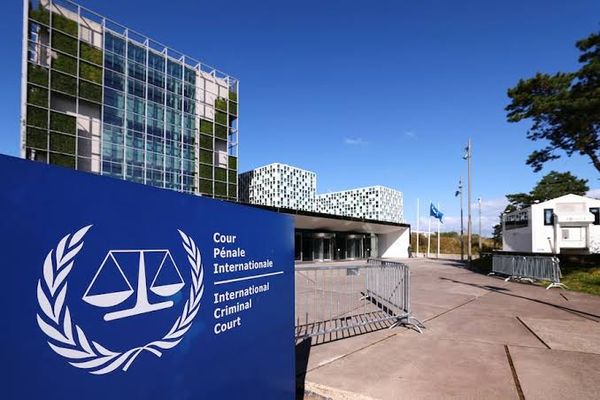
The US Treasury placed the International Criminal Court on its sanctions blacklist on 9 October 2026, hours after the Norwegian Nobel Committee named former ICC judge Navi Pillay the 2026 Nobel Peace Prize laureate in Oslo.
The Treasury's Office of Foreign Assets Control added the court to its Specially Designated Nationals list under Executive Order 14203, which OFAC has administered through the International Criminal Court-Related Sanctions Regulations since 1 July 2025. The listing freezes any court property under US jurisdiction and bars US banks, companies and citizens from dealing with the court without a licence.
Washington had sanctioned 13 of the court's judges and prosecutors since February 2025 before listing the institution itself. The court holds outstanding arrest warrants for Israeli Prime Minister Benjamin Netanyahu and Russian President Vladimir Putin.
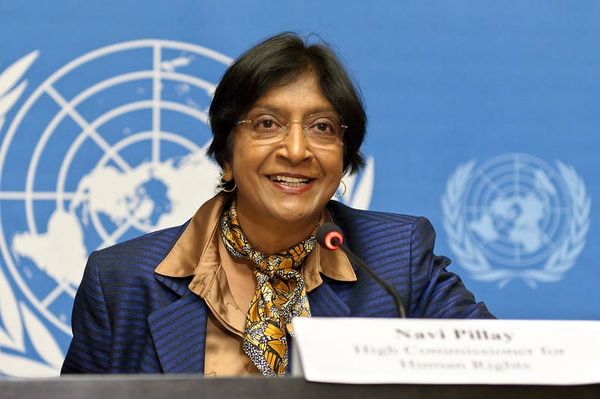
Pillay, 85, presided over the International Criminal Tribunal for Rwanda before serving as an ICC judge from 2003 to 2008. She was UN High Commissioner for Human Rights from 2008 to 2014 and later chaired the UN commission of inquiry that found in September 2025 that Israel had committed genocide in Gaza.
Rubio's demands
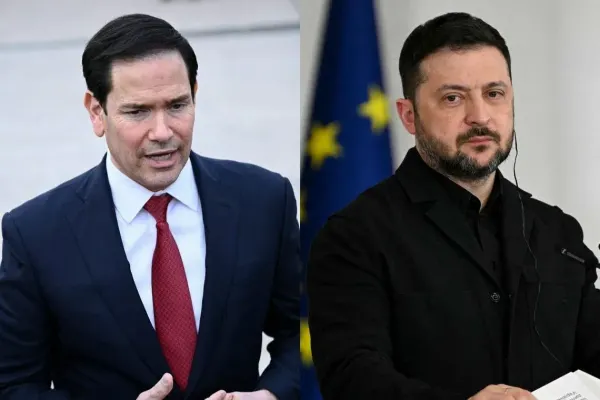
Secretary of State Marco Rubio called the ICC a "rogue court" and said banning transactions with it would cut off its resources and cripple its ability to function.
Rubio said the administration had held off on listing the court for more than a year out of respect for partners, in the hope that the court would change course or its member states would restrain it.
"Either the ICC will end its threats, or we will end the ICC," Rubio said in a statement.
Rubio said allies that belong to the court and rely on US troops for their defence were expected to rein it in and that the US would otherwise keep taking the court apart piece by piece. He named service members, Border Patrol agents and elected officials as people he said the court could target.
Rubio launched a State Department campaign to dismantle the court on 13 July 2026. Venezuela's US-backed interim government said in late July that it would withdraw from the court.
Licences and exemptions
OFAC issued four general licences alongside the listing, covering telecommunications and enterprise software, pension payments, transactions linked to ICC detainees and an unspecified category of "certain transactions" with the court.
One licence runs for 180 days and covers activity to keep the court running, along with cloud and software services, pension payments and detainee transactions. OFAC's wind-down licence for Akane and Seye in August ran for 30 days, from 18 August to 17 September 2026.
The European Commission said it hoped the six-month window before the sanctions take full effect left room for dialogue. Democracy for the Arab World Now (DAWN), a US rights group suing over the order, said the narrow licences meant banking, insurance, procurement and salary processing were otherwise barred. YAC News could not retrieve the licence texts at publication, so the reach of the 180-day licence remains unconfirmed.
Wilful violations carry up to 20 years in prison and a $1 million fine under 50 U.S.C. § 1705.
Court response
The International Criminal Court said the designation was meant to disrupt its work and intimidate those who work for or cooperate with it. "Its fate now rests also in the hands of the states that created it," the court said.
ICC President Tomoko Akane, sanctioned herself on 18 August, said the court would keep carrying out its mandate independently and impartially on the basis of law and evidence. The court asked its states parties to make sure it keeps the means to continue working.
Deputy Prosecutor Nazhat Shameem Khan, under US sanctions since 20 August 2025, told Reuters the sanctions must be condemned and that the court would continue all its investigations and prosecutions. She said the court had prepared by switching to open-source software and prepaying staff.
European response
Dutch Prime Minister Rob Jetten told his weekly press conference, an hour before the announcement, that the Netherlands and Europe would defend the court "stone by stone". He said far-reaching new measures would affect relations between the US and Europe.
Dutch Foreign Minister Tom Berendsen said in late September that the Netherlands had asked the European Commission to prepare the EU Blocking Statute. ICC Registrar Osvaldo Zavala Giler asked the EU earlier this week to be ready to use it, according to Reuters.
The Netherlands' headquarters agreement with the court obliges it to protect court premises and staff and to keep the court's financial assets free of restrictions, according to an AFP summary of the treaty.
The European Commission said the sanctions were regrettable and that it was ready to take any necessary measures to let the court work.
Other reactions
Netanyahu's office welcomed the sanctions and said the court was a political body that threatens democracies and national sovereignty.
President Donald Trump wrote on Truth Social that the Nobel committee had "demeaned" the prize by awarding it to Pillay, according to Al Jazeera.
UN Secretary-General António Guterres said the prize honoured everyone working to defend international law, the rule of law and human rights.
Designations since 2025
Trump signed Executive Order 14203 on 6 February 2025 and named then-prosecutor Karim Khan in its annex.
Rubio added judges Solomy Balungi Bossa, Luz del Carmen Ibáñez Carranza, Reine Alapini-Gansou and Beti Hohler on 5 June 2025. On 20 August 2025 he added judges Nicolas Guillou and Kimberly Prost of Canada along with deputy prosecutors Nazhat Shameem Khan and Mame Mandiaye Niang. Judges Gocha Lordkipanidze and Erdenebalsuren Damdin followed on 18 December 2025. Akane and senior trial lawyer Abdoulaye Seye were added on 18 August 2026.
Executive Order 14203 has also been used against UN special rapporteur Francesca Albanese and, on 4 September 2025, against the Palestinian rights groups Al-Haq, Al Mezan and the Palestinian Centre for Human Rights.
Trump sanctioned then-prosecutor Fatou Bensouda and a senior aide during his first term. President Joe Biden lifted those sanctions in April 2021.
DAWN and the Taxpayer Alliance Against Genocide sued in the US District Court for the Southern District of New York on 15 July 2026, arguing the order violates First Amendment rights. Three sanctioned ICC judges brought separate challenges in New York federal court in June 2026.
Blocking laws and Article 70
Council Regulation (EC) No 2271/96, the EU Blocking Statute, bars EU persons from complying with listed foreign sanctions, denies effect to related foreign rulings in the EU and lets companies recover damages. Its annex covers US measures on Cuba and Iran, which the Commission extended to the reimposed Iran sanctions by delegated act in 2018. The Commission had not added Executive Order 14203 to the annex as of 9 October, according to DAWN.
Article 70 of the Rome Statute makes it an offence to impede or intimidate a court official to stop them performing their duties or to retaliate against an official for duties performed, with a maximum sentence of five years. DAWN said ICC prosecutors should open an Article 70 investigation into Trump, Rubio and other senior officials.
Canada, a state party and home country of sanctioned judge Kimberly Prost, has its own blocking law. The Foreign Extraterritorial Measures Act lets the Attorney General order Canadians not to comply with foreign measures that adversely affect significant Canadian interests in international trade or commerce or that infringe Canadian sovereignty.
Routes for public pressure
EU residents can petition the European Parliament under Article 227 of the Treaty on the Functioning of the European Union and ask their MEPs to press the Commission to add Executive Order 14203 to the Blocking Statute annex.
Canadian residents can write to the Minister of Justice and Attorney General of Canada, who holds the order-making power under section 5 of the Foreign Extraterritorial Measures Act.