Three forensic specialists concluded on 16 November that Jeffrey Epstein was strangled from behind in his Manhattan jail cell and that New York City's suicide ruling was wrong.
Michael Freeman, editor-in-chief of the Journal of Forensic and Legal Medicine, led the year-long review of the full autopsy file and photographs after Mark Epstein, the financier's brother, gave them to him. Anders Eriksson, a Swedish forensic pathologist and professor of forensic medicine at Umeå University, and Itiel Dror, a UK-based cognitive neuroscientist who studies bias and error in forensic decisions, co-authored the findings and presented them with him. "The injuries that were documented by the medical examiner were not consistent with the suicidal hanging," Freeman told CBS News.
Freeman, an American based in Portland, Oregon, who teaches forensic medicine at Maastricht University in the Netherlands, holds doctorates in epidemiology and forensic medicine. He is a fellow of the Faculty of Forensic and Legal Medicine of the Royal College of Physicians in London and helped audit Maryland's medical examiner's office.
Suicide had a "zero per cent" chance, given the circumstances the medical examiner's office itself accepts, Freeman has said. The injuries could fit a self-inflicted death only if Epstein had staged his suicide to look like a homicide, he said in a television interview on 16 November. He put the odds of that at one in 10,000 and said he had never seen it described in the medical literature on hanging.
Epstein was found dead on 10 August 2019, 35 days after his arrest on federal sex trafficking charges that carried up to 45 years in prison. His death ended the only criminal case ever brought against him in federal court. Ghislaine Maxwell, his partner and recruiter, remains the only associate convicted over his abuse of girls.
New York City's Office of Chief Medical Examiner said in a statement that it "stands by its determination" that Epstein hanged himself, and Barbara Sampson, the chief medical examiner who issued the 2019 ruling, said she stood firmly behind it. The FBI and the Justice Department's inspector general both accepted the ruling. The team's paper has not yet been peer reviewed. One journal rejected it after reviewers judged it inappropriate to challenge a medical examiner's conclusions in a peer-reviewed journal, Freeman said, and the authors plan to submit it elsewhere. Mark Epstein posted the autopsy photographs online shortly before the London presentation.
What Kristin Roman was not allowed to see
Kristin Roman, the city medical examiner who performed the autopsy on 11 August 2019, asked to see Epstein's cell and to speak to the guard who found him. She was refused both and given photographs instead, she told federal investigators in a May 2022 interview made public in March. None of the photographs showed Epstein hanging or with the cloth around his neck, and the strip of cloth sent to her was not the one used as a noose, according to the New York Times.
Roman left the manner of death as "pending further study" on the death certificate. Five days later Sampson replaced it with a ruling of suicide, announced on 16 August, six days after the death. None of the guards on duty that night had spoken to the medical examiner's investigators, Justice Department records show. Epstein's fingernails were clipped at the autopsy and never tested for DNA, according to Michael Baden, the pathologist who observed it for the family, and Freeman.
Roman told investigators she would probably have called the death a hanging on the day of the autopsy had Epstein not been so high-profile. She said she had no doubt it was suicide, describing the body as "pristine" and free of signs of a struggle. She has since retired.
The examiner attributed an abrasion on Epstein's arm to convulsions during hanging and recorded no defensive wounds on his hands. Freeman disputes the convulsion explanation and said injuries that pointed to a struggle were overlooked.
The Middle Temple presentation
The three presented the findings to Middle Temple, one of London's legal societies. The ligature marks best fit strangulation from behind, most likely with a narrow knotted strip of fabric, the presentation said. Freeman pointed to a second mark on the neck, lower than the first and running at a different angle. Two loops of a hanging noose would anchor at the same point and leave no such mark, he said.
Epstein's hyoid bone and thyroid cartilage were broken and his neck carried a deep abrasion. Freeman rejected the possibility that a failed first attempt caused those injuries and left Epstein conscious. Hanging could not explain a deep haemorrhage in the muscle of the left shoulder, an injury on the back or blunt force injuries to the face, he said. He also found marks above the ligature consistent with fingernails.
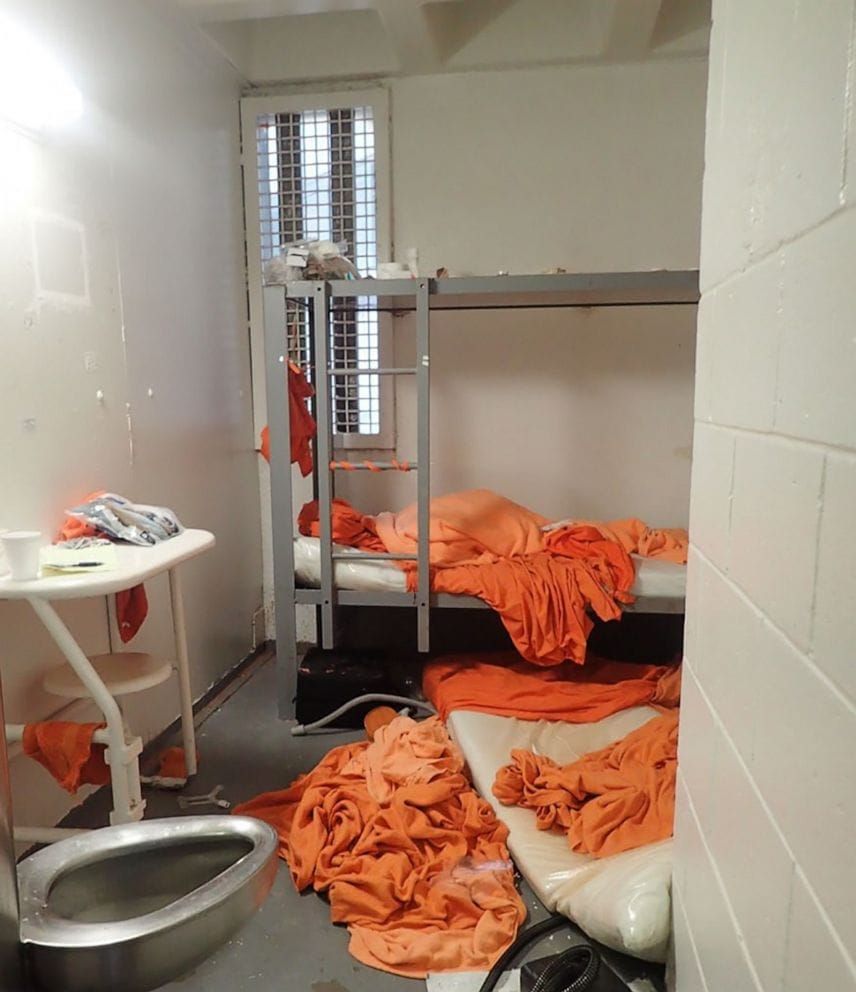
Freeman built a three-dimensional biomechanical model from the autopsy images and from the account of Michael Thomas, the guard who found the body. He proposed that Epstein was strangled with a knotted orange fabric ligature found in the cell, then suspended from the bunk bed. The ragged, segmented pattern on the neck would not match the noose investigators removed from the room, he said, and the body was already cold when guards opened the cell at about 6:30 am.
Freeman said he was not paid by the family and that his analysis was independent of Mark Epstein. He has said he has no idea who killed Epstein, and that his interest lies in how the investigation went wrong. Forensic pathologists who saw some of the photographs agreed that the neck mark was atypical for a hanging, the Times reported, though some said the images could still fit a suicide.
Baden and the defence lawyers
Baden, a former New York City chief medical examiner, observed the four-hour autopsy. Fractures to both sides of the thyroid cartilage and to the left hyoid bone were much more common in strangulation, he said, and he had never seen three such fractures in a suicidal hanging in 50 years of practice. "I think that the evidence points to homicide rather than suicide," Baden said in October 2019. He still holds that view after reading Roman's interview. The examiner's office said such fractures occur in both suicides and homicides.
Reid Weingarten, one of Epstein's defence lawyers, told Judge Richard Berman in court on 27 August 2019 that the injuries were "far more consistent with assault" than suicide, citing the defence's own medical sources. He said the lawyers who saw Epstein shortly before his death found no sign that he was despairing or suicidal. Cyril Wecht, the forensic pathologist and former Allegheny County coroner, said in August 2019 that the failures in the jail made suspicion unavoidable. Josh Hawley, the Republican senator from Missouri, wrote on X on 18 November that Congress needs to hear testimony from Freeman on Epstein's death.
Mark Epstein told Metro this week that "Dr. Freeman has conclusively shown that the injuries on Jeffrey's body could not have come from a suicide". He called for a homicide investigation and accused the Justice Department of a cover-up. He said investigators should question President Donald Trump, who was Epstein's friend in the 1990s and early 2000s, as a person of interest, and that he was not accusing Trump of anything. Trump denies any wrongdoing involving Epstein, and the House Oversight Committee's Republican majority concluded on 10 November that its facts do not suggest he was implicated in Epstein's crimes.
The night of 9 August on tier L
Epstein was held in the Special Housing Unit of the Metropolitan Correctional Center, a federal jail run by the Bureau of Prisons, an agency of the Justice Department. On 9 August his cellmate, Efrain Reyes, was transferred out. Jail officials assigned no replacement, although psychologists had ordered that Epstein be housed with another inmate after an apparent hanging attempt on 23 July, the inspector general found in 2023. The same evening he was allowed an unmonitored telephone call, in breach of Bureau of Prisons rules.
Two guards, Tova Noel and Michael Thomas, were assigned to the unit overnight. They missed more than 75 required checks on Epstein and filled in records as though they had made them, the inspector general found. One was working a fifth straight day of overtime. Both were charged in November 2019 with falsifying records, reached deals with prosecutors and had the charges dismissed in December 2021.
Most cameras in the unit had stopped recording after a mechanical failure on 29 July. The nearest working camera covered a common area and only a narrow slice of the staircase to Epstein's tier. At about 10:40 pm, an orange shape moves up those stairs. An FBI log of the footage described it as possibly an inmate. The inspector general's analysis said someone might have been carrying linen or bedding. Conor McCourt, a retired New York police sergeant and forensic video examiner who studied the footage, said the shape was more likely a person in an orange uniform.
Pam Bondi, then attorney general, told reporters in July 2025 that a minute missing from the government's released footage was lost in a nightly system reset. A fuller version of the video later released by Congress contained that minute. It shows a figure passing in front of the stairs and apparently leaving the unit.
Thomas found Epstein at about 6:30 am and was the only person to see the body before it was moved. He took it down to attempt resuscitation, and the cell was never sealed for forensic examination. Jail staff and paramedics disturbed it so heavily that investigators collected no DNA from it, the New York Times found. Thomas gave his account about two years later, in exchange for leniency.
The inmate who spoke to the FBI
A five-page handwritten FBI report, released under the Epstein Files Transparency Act, records an interview with an inmate in the same unit. The Miami Herald reported its contents in March. The inmate said he woke to guards shouting at Epstein to breathe and heard an officer say, "Dudes, you killed that dude." He said a female guard replied that if Epstein was dead they would cover it up and give him an alibi. After the death was announced, other inmates said Noel had killed him, he told the FBI.
The Justice Department has said no inmate it interviewed gave credible information contradicting suicide, and that three inmates with a view of Epstein's cell door said nobody went in or out overnight. Another inmate told a jail employee that prison officials were shredding documents about Epstein in the days after his death, according to files released by the Justice Department.
Noel's computer searched for "latest on Epstein in jail" at 5:42 am and 5:52 am, about 40 minutes before Thomas found the body. A bank flagged a US$5,000 cash deposit to her account a week after the 23 July incident.
Noel told the Oversight Committee in May that the money was her personal savings and had nothing to do with Epstein, and that she clicked on news headlines but did not recall searching for him. "I didn't conspire to cause Mr. Epstein's death," she told the committee. She has not been charged with any offence relating to the deposits. She blamed the falsified records on understaffing and poor training at the jail.
Two cellmates
Nicholas Tartaglione, a former Briarcliff Manor police officer now serving four consecutive life terms for the 2016 murders of four men, shared Epstein's cell for about two weeks. At 1:27 am on 23 July 2019, guards found Epstein with an orange cloth around his neck. Tartaglione told officers Epstein had tried to hang himself. Epstein first told staff his cellmate had tried to kill him, then said he did not know what happened and asked to be housed with Tartaglione again, according to the inspector general. "I never touched the man," Tartaglione wrote in a letter from jail in 2019.
Tartaglione later said he found a note tucked into a book in the cell after the July incident. The note sat for years in a courthouse vault until Judge Kenneth Karas unsealed it in May, with prosecutors' agreement. One line reads: "It is a treat to be able to choose one's time to say goodbye." Three forensic document examiners who compared the handwriting found that it shared authorship with a note found in the cell after Epstein died. None could say definitively that Epstein wrote either. Reyes, the second cellmate, told prison officials he had advised Epstein that paying inmates and guards for protection would keep him safer.
The New York Times Magazine, which reviewed Justice Department records and interviewed more than 40 inmates, found evidence in June that Epstein discussed suicide for weeks and tried it at least once, and found no sign of a plot. Tartaglione has said Epstein asked him how to make a noose and that he twice caught Epstein preparing to hang himself, once finding a noose under the mattress. He said guards laughed off his warnings, and the Times found no record of any report. In a pardon application filed in 2025, Tartaglione said prosecutors told Epstein he would walk free if he implicated Trump in his crimes.
Barr's Justice Department
William Barr had been Trump's attorney general for five months when Epstein was arrested. Barr's former law firm, Kirkland & Ellis, represented Epstein in Florida through its senior partner Jay Lefkowitz, who negotiated the 2008 non-prosecution agreement with Alexander Acosta, then U.S. attorney in Miami and himself a former Kirkland associate. Barr joined the firm in 2009. He told reporters on 8 July 2019 that he was recused from the Epstein matter, and the department said the next day he would not step aside from the new Manhattan case. Jeffrey Rosen, his deputy, had also worked at Kirkland.
Acosta was Trump's labour secretary when Epstein was arrested and resigned on 12 July 2019 over the Florida deal. He told the Oversight Committee in September 2025 that he never said he was told Epstein belonged to intelligence, a remark attributed to him in 2019 press reports.
Barr's father, Donald Barr, was headmaster of the Dalton School in Manhattan from 1964 to 1974. Epstein, a 21-year-old college dropout, began teaching mathematics and physics there in September 1974, after Donald Barr had announced his resignation. Susan Semel, a Dalton teacher who wrote a history of the school, said in 2019 it was unclear whether Barr hired him.
Barr sent senior staff to the jail after the death and personally reviewed about 11 hours of surveillance footage. He said in November 2019 it showed nobody entering Epstein's area and agreed with the medical examiner. He removed Hugh Hurwitz, the acting director of the Bureau of Prisons, on 19 August and had the jail's warden, Lamine N'Diaye, reassigned. Barr told the Oversight Committee in August 2025 that he could see why people were suspicious. Epstein's suicide watch had been lifted after pressure from his lawyers without his knowledge, Barr said, and the cameras near the cell streamed live but recorded nothing.
What a trial would have put in court
Judge Richard Berman set aside 8 June 2020 for the start of a trial expected to last four to six weeks. Prosecutors said discovery would run to about a million pages, including material from devices seized at Epstein's Manhattan house. On 9 August 2019, the day before he died, a federal appeals court unsealed about 2,000 pages from Virginia Giuffre's defamation suit against Maxwell, which contained graphic allegations against Epstein and several associates.
Epstein's lawyers discussed with prosecutors a proffer, in which he would offer information on others in exchange for possible leniency. Handwritten notes from his weeks in jail show him returning again and again to Trump and failing to come up with anything new to prosecutors.
Barr told a police conference in New Orleans two days after the death that the case would continue against anyone complicit. "Any co-conspirators should not rest easy," he said. Epstein's accusers told a court that week that his death removed any objection to scrapping the Florida agreement, which had granted immunity to four named co-conspirators and any others. Maxwell was arrested in July 2020 and sentenced to 20 years. No investigator has identified anyone who entered Epstein's cell that night, and no authority has accused any person of causing his death.
Blanche and the files
Todd Blanche, Trump's former criminal defence lawyer, interviewed Maxwell over two days in July 2025 while he was deputy attorney general. "I do not believe he died by suicide, no," Maxwell told him, adding that she had no first-hand knowledge and no view of who might have killed him. Within days she was moved to a minimum-security prison camp in Bryan, Texas.
The Justice Department and FBI said in a July 2025 memo that their review confirmed Epstein killed himself. Dan Bongino, then deputy FBI director, had repeatedly promoted claims on his podcast that Epstein was killed before taking the post, and said in May 2025 that he had seen the whole file and Epstein killed himself. Trump fired Bondi in April 2026, and the Senate confirmed Blanche as attorney general by 50 votes to 49. The Oversight Committee's 10 November report attributed the death to understaffing and dysfunction at the Bureau of Prisons and left the suicide ruling in place. Democrats take control of the committee in January, with Robert Garcia expected to chair it.