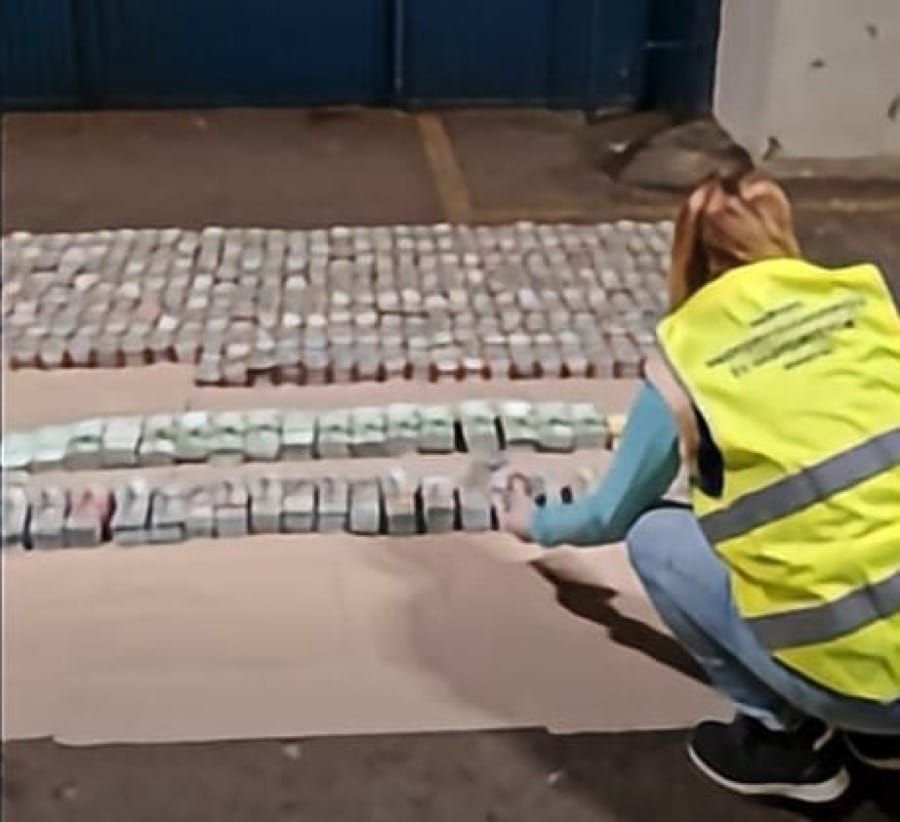
Investigators from Hungary's new National Asset Recovery and Protection Office (NVVH) found cash worth more than 6 billion forints buried in forests and hidden in farm buildings, warehouses, a house and a safe on 12 and 13 November, in the criminal case against Miklós Seszták, a minister in Viktor Orbán's government.
The office said the two-day search in Budapest and in Pest, Békés and Nógrád counties turned up 5,071,632,000 forints, €2,658,350 and US$1,257,100, a total close to 6.5 billion forints, or about US$20 million. Prime Minister Péter Magyar published the office's statement on the evening of 13 November. "This officially marks the end of the Fidesz-KDNP mafia," he wrote. NVVH staff paid the money into the State Treasury the same evening, where 12 Treasury employees spent eight hours counting it with five machines, Finance Minister András Kármán said.
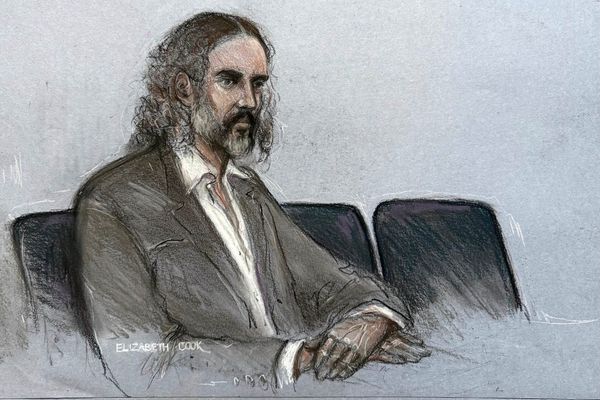
Seszták, 58, a member of parliament for the Christian Democratic People's Party (KDNP), Fidesz's junior partner, was national development minister from 2014 to 2018. Prosecutors suspect that he and Norbert Szivek, then chief executive of the Hungarian National Asset Management company (MNV), received more than 11 billion forints in unlawful payments between 2015 and 2018 through an intermediary acting for companies with contracts at Volánbusz, the state bus operator. He has been in custody since 30 September and denies wrongdoing. Gábor Papp, his lawyer, said the cash found was not his client's money and declined to say more, citing lawyer-client privilege. Magyar wrote that the money belonged to Seszták. The NVVH has not said publicly how it links the cash to him or who owned the properties where it was found.
The Volánbusz purchases
The case concerns purchases by Volánbusz companies of more than 600 used buses between 2015 and 2018 at what investigators say were inflated prices, which they estimate cost the state companies about 10 billion forints. A Volán company's purchase of its headquarters in Kecskemét may also have been overpriced, causing a loss of at least 550 million forints, according to the prosecution. Earlier stages of the inquiry examined a leasing deal for 138 buses and a maintenance contract covering 250.
Investigators allege the proceeds were routed through intermediary companies and fictitious loan agreements into businesses in which the participants had an interest. The money was then used to finance property projects in Budapest, Balatonvilágos and Törökbálint, to withdraw more than 1 billion forints in cash and to buy expensive cars, police investigators said. Seszták is also suspected of taking bribes from construction contractors while he was minister, prosecutors said. If convicted of bribery he faces up to 10 years in prison.
The inquiry began as a police investigation five years ago and gathered pace in September. Dániel Jellinek, chief executive of the property group Indotek and Hungary's seventh-richest businessman, and Szivek were taken into custody on 15 September on suspicion of accepting bribes on several counts. Indotek said Jellinek had cooperated with the authorities throughout and had committed no crime. Jellinek has been under house arrest since 16 October, and a court extended Szivek's detention.
Parliament lifted Seszták's immunity on 28 September, the day the NVVH took over the case from the prosecution service. He was detained the same day at the Central Investigative Prosecutor's Office, the first operation ordered by the NVVH since it began work on 27 September. The Buda Central District Court ordered his arrest on 30 September.
The empty safes
Investigators had earlier found two empty safes, each weighing 1.66 tonnes, in an office building linked to Seszták. The NVVH suspects that about 9 billion forints were kept in them and removed before he was questioned, based on another suspect's testimony and the reaction of a police dog. Seszták said the safes held only documents. His lawyer cited an expert opinion questioning whether a dog's reaction could count as evidence, and the NVVH rejected that view.
None of the published statements by the NVVH or the prosecution describes the Volánbusz purchases as financed with European Union money. Hungary lost access to most EU funding under Orbán over corruption and rule-of-law concerns. The European Commission agreed in May to release €16.4 billion of frozen funds in exchange for anti-corruption reforms by Magyar's government, and in October lifted the conditionality measures that had blocked €4.2 billion in cohesion money.
Fidesz and the "political prisoner"
Fidesz said in a Facebook post on 14 November that elected representatives had sworn to uphold the law and that the party could not associate itself with those who broke it. It said it hoped the images published by the NVVH had nothing to do with Seszták. Fidesz's website still listed Seszták among five "political prisoners", alongside Balázs Hankó, a former culture minister detained in a separate case over alleged misuse of public funds.
Later that day Fidesz and the KDNP unanimously called on Seszták to give up his seat. Csaba Latorcai, the KDNP's executive vice-president, began disciplinary and ethics proceedings against him and suspended his party membership while they run.
Orbán, who leads Fidesz in opposition after losing the election of 12 April, called the NVVH an ÁVH-type institution in a television interview in September, a reference to the communist-era secret police. He said those who worked for it would face financial and legal consequences once the rule of law was restored, and that he would publicly name everyone who took a job there. Magyar said Orbán was threatening the office's prosecutors, police officers and customs officers in place of making an honest confession.
Tamás Deutsch, a Fidesz member of the European Parliament, said Magyar should go if the NVVH could not immediately prove the cash was Seszták's. Tibor Navracsics, a former Fidesz justice minister who in August launched a new party, the Civic Democrats, wrote that the NVVH had to prove the link and that Magyar should go if it could not. If it could, his own movement would have to reconsider its relationship with Fidesz, he wrote. He called for "sincere accountability".
Magyar has called Fidesz an organised criminal group and urged its MPs to leave their parties and resign.
Seszták's detention has been extended to 30 January. The cash is held in an official deposit account at the State Treasury, and the NVVH took over three other cases from prosecutors alongside Volánbusz when it began work in September.