
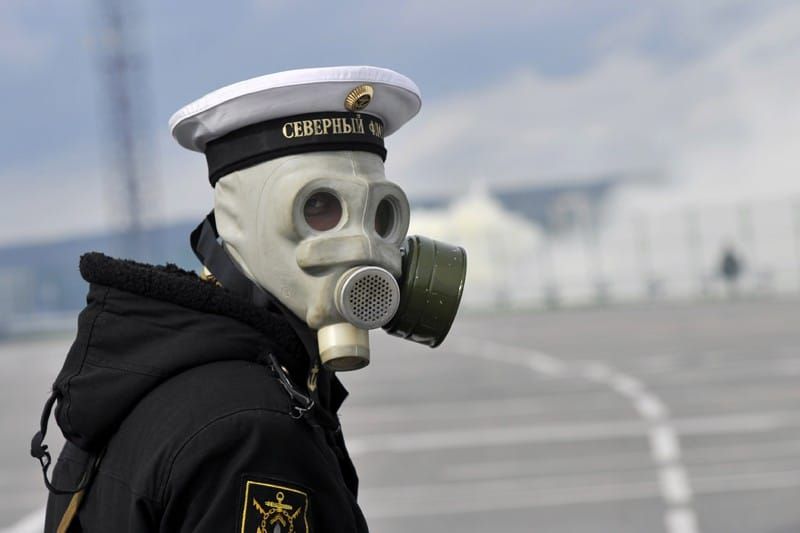
Darya Shipilova died in Shelekhov Central District Hospital in Irkutsk region early on 2 October 2026. She was 28 and worked as a laboratory technician at the Irkutsk Anti-Plague Research Institute of Siberia and the Far East, a state institute that stores and studies plague bacteria. A regional news site reported that she broke a test tube holding pneumonic plague bacteria on 25 September. She fell ill on 27 September and was admitted to hospital on 29 September.
Rospotrebnadzor, the federal health watchdog, said on 4 October that she had "pneumonia of undetermined etiology". The agency said tests found no "microorganisms related to her professional activity" and that no accident with dangerous pathogens had happened at the institute. Irkutsk Governor Igor Kobzev wrote on 5 October that the situation in the region "is currently stable" and that no other institute staff had sought medical care in recent days. Rospotrebnadzor said no infectious illness had been reported among institute staff in the previous 10 days. Kobzev said relatives of Shipilova held in quarantine could be released next week.
More than 60 institute employees have been held inside the building since 2 October, according to two sources among staff and their relatives. "They locked everyone inside for isolation starting Friday, more than 60 people," a relative said. "They're sleeping there on the floor and on chairs. There are, of course, no beds. Relatives were allowed to bring food through the checkpoint."
About 190 other contacts were placed under medical observation by 2 October, many of them in hospital, and FSB officers rode with the ambulances that took them in. City Clinical Hospitals No. 1, No. 3 and No. 10 in Irkutsk confirmed quarantines to reporters. Ivano-Matreninsky Children's Hospital and at least one maternity hospital also closed to visitors. Reported quarantine periods range from six days to three weeks. Russian sanitary rules set six days of observation for people exposed to plague.
Alexey Tsydenov, head of the neighbouring Republic of Buryatia, wrote that the woman had died of plague and then changed the post to "possibly". Local authorities told residents not to travel to Shelekhov because of "unofficial information" about plague, then deleted the notice. The Irkutsk Aluminium Plant in Shelekhov ordered workers to wear masks from 3 October.
Marco Rubio, the US secretary of state, said on 5 October that the United States was "watching and monitoring it closely". "I don't think it's cause for alarm, but it is cause for focus and a cause to just keep an eye on," Rubio said. A State Department spokesperson said the department was working with the Centers for Disease Control and Prevention and urged Russian authorities to "share accurate information quickly and openly".
Donald Trump told reporters at the White House on 5 October that the United States would help. "Well, I hate to see them having it, it's a rough, it's a rough disease, you know that's a disease that we used to be able to control, but somehow those microbes have gotten stronger and smarter, they're like an army," Trump said. "Things that used to work on pneumonia don't work as well anymore, so, uh, but we'll help. Anybody that has that kind of a problem, we're always willing to help, we'll help." Trump said he had not spoken to Vladimir Putin about the case.
Dmitry Peskov, Putin's spokesman, told reporters on 5 October to trust the health watchdog. "We should rely on Rospotrebnadzor's official statements, without listening to rumors, speculation, and so on," Peskov said. "Rospotrebnadzor is home to highly qualified professionals in this field. Let's listen to their official statements."
Russia's bioweapons
The State Department said in its April 2025 arms control compliance report that the United States "assesses that Russia maintains an offensive biological warfare program and is in violation of its obligations" under the Biological Weapons Convention. The Russian government denies running such a programme and says its military laboratories develop defences against pathogens.
The Soviet Union ran a secret offensive biological weapons programme while a party to the 1972 convention. It employed at least 60,000 people across dozens of sites and produced enough weaponised smallpox at the Vector laboratory near Novosibirsk to infect the world's population many times over, according to the historians Raymond Zilinskas and Milton Leitenberg. Defectors and later investigations documented military work on plague, including antibiotic-resistant strains.
The Soviet anti-plague system, the network of institutes to which the Irkutsk institute belongs, contributed to the offensive programme, code-named Ferment, from the 1970s until the Soviet Union dissolved in December 1991, according to a 2006 study by Sonia Ben Ouagrham-Gormley, Alexander Melikishvili and Raymond Zilinskas for the James Martin Center for Nonproliferation Studies.
In 1971 a crew member on the research ship Lev Berg caught smallpox while passing a weapons test site on Vozrozhdeniya Island in the Aral Sea, and three of the people infected in the outbreak that followed died, including two children. Officials told the weapons scientists "Don't say another word about this." In 1979 anthrax released from a military plant in Sverdlovsk killed at least 68 people. Soviet officials blamed contaminated meat until President Boris Yeltsin acknowledged the military source in 1992.
Sergiev Posad-6, the Defence Ministry site outside Moscow where the Soviet Union built its first smallpox weapon, has added 10 new buildings totalling more than 250,000 square feet since 2022, satellite images published in October 2024 showed. Several have the features of laboratories built for the most dangerous pathogens. The site's commander, Sergey Borisevich, called it the "backbone of the country's biological defence system". International inspectors were never allowed into Sergiev Posad-6 or two other Defence Ministry sites after the Cold War.
Russia completed a Centre of Experimental Physiology on Lisy Island in the Vyshnevolotskoye reservoir in Tver region by autumn 2025. Its director, Vladimir Maksimov, ran military unit 44026 from 1999 to 2006; the unit was renamed the 48th Central Research Institute, which the United States sanctioned in 2020 over alleged biological weapons development. Ukraine's military intelligence agency said on 21 August that the centre experiments "with dangerous viruses and other pathogens" for the Russian armed forces. The reservoir supplies drinking water to Vyshny Volochok and feeds into the Volga.
The Biological Weapons Convention has no system to verify compliance or inspect suspect sites, unlike the Chemical Weapons Convention and the Nuclear Non-Proliferation Treaty, the Nuclear Threat Initiative wrote in October 2024.
Russian diplomats spent 2022 claiming that the United States ran secret biological weapons laboratories in Ukraine. Vasily Nebenzya, Russia's ambassador to the UN, told the Security Council that Ukrainian forces planned to spread disease "using birds, bats, insects". Independent investigations rejected the claims, which Russia used as propaganda to justify the invasion. "I remember hearing from anti-Ukraine voices about their so-called bio labs. It was Russian disinformation ops at their best. But in reality it is Russia with the bio labs," Don Bacon, a Republican member of the House Armed Services Committee, wrote on social media on 5 October. The Irkutsk institute is a civilian body run by Rospotrebnadzor.
Calls to cut travel to Russia
Adam Kinzinger, a former Republican congressman from Illinois, wrote on X on 4 October: "The whole world needs to ban ALL flights to and from Russia." He also called for Russians to be barred from entering other countries until the situation is clarified. On 5 October he wrote that "the Russian biological war research should have us all concerned".
Direct commercial flights between the United States and Russia stopped in 2022. The European Union closed its airspace to Russian aircraft in February 2022.
Ashish Jha, who ran the White House Covid-19 response under President Joe Biden, wrote on X on 5 October that he was "concerned" after reviewing the facts. "Russian authorities owe the world more transparency on exactly what happened in Irkutsk," Jha wrote. "We need to understand exactly what has happened. And we have to assume we may not know the full truth. And have to act to build up our biodefense accordingly."
Kazakhstan, Kyrgyzstan, Uzbekistan, Tajikistan and Mongolia tightened health checks at their borders with Russia on 5 October. Kazakhstan's Health Ministry stepped up sanitary and quarantine controls along its border with Russia, about 7,600 kilometres long. Kyrgyzstan put its border checkpoints on high alert to check people, vehicles and cargo. Uzbekistan announced measures to prevent the "importation and spread of highly dangerous infections", and Mongolia raised the alert level in regions bordering Russia. Sayed Davlatzoda, who heads the sanitary safety department of Tajikistan's Health Ministry, ordered that "every person crossing the state border must be checked for temperature using contactless thermometers", with health questionnaires for travellers and protective clothing for border staff.
China sealed off Wuhan on 23 January 2020 as a new coronavirus spread through the city. Trump signed a proclamation on 31 January 2020 barring entry to most foreign nationals who had been in China in the previous 14 days, effective 2 February. The WHO's emergency committee had said on 30 January that it did "not recommend any travel or trade restriction based on the current information available".
Covid-19 spread through the air from people with few or no symptoms, and scientists were still learning about the virus when travel bans began. Pneumonic plague passes from person to person after close exposure to a coughing patient, and "asymptomatic transmission has not been documented", according to the US Centers for Disease Control and Prevention. The disease has been studied for more than a century, and most patients recover if antibiotics start within the first 24 hours, according to the WHO.
Simon Clarke, associate professor in cellular microbiology at the University of Reading, said "pneumonic plague is a very different disease" from Covid-19 and is "generally treatable with antibiotics if identified quickly". "Transparency, rapid diagnosis and effective contact tracing would be the most important factors in managing an outbreak," Clarke said.
Europe and the WHO
A European Commission spokesperson said on 5 October: "We are aware of the reports concerning the laboratory incident in Russia, seemingly involving a pathogen causing plague. We monitor very closely what is going on." The Commission is working with the European Centre for Disease Prevention and Control and said it was "ready to coordinate a response among member states if necessary". It called for "timely and transparent reporting" from Russian authorities and said it was relying on the World Health Organization for updates because direct contacts with Russia are limited by the war in Ukraine.
The World Health Organization said it was in contact with Russian health authorities "to verify the event, its circumstances, the laboratory tests underway, and their results" and had "offered support if needed". "Based on unofficial information available, the public health risk to the general population appears to be low," the WHO said.
Brendan Wren, professor of microbial pathogenesis at the London School of Hygiene and Tropical Medicine, said laboratory infections with plague bacteria are rare and that "monitoring and isolation of laboratory staff and other key contacts is a sensible and precautionary measure".
How to protect yourself and what to do if you think you are infected
- Pneumonic plague spreads between people through respiratory droplets in close contact with a sick person. Bubonic plague spreads through bites from infected fleas and contact with infected rodents and other animals.
- Symptoms usually appear one to seven days after exposure, and pneumonic plague can appear within 24 hours, according to the WHO.
- Watch for sudden fever, chills, headache, weakness and a fast-developing pneumonia with shortness of breath, chest pain and cough, sometimes with bloody or watery mucus, the US Centers for Disease Control and Prevention says.
- Seek medical care at once if you develop these symptoms after being in Irkutsk region or near a known case. Phone the hospital or emergency service before you arrive, tell them where you have been and wear a mask.
- Do not treat yourself or stock up on antibiotics. Irkutsk officials asked residents not to buy up antibiotics or masks. Doctors choose the drug and dose, and plague responds to common antibiotics when treatment starts early.
- Pneumonic plague is fatal within 18 to 24 hours of the first symptoms if left untreated, the WHO says.
- Health workers and close contacts of a confirmed case receive preventive antibiotics for seven days and must use protective equipment, under WHO guidance.
- In areas where plague circulates in wildlife, avoid flea bites, keep away from rodent burrows and do not touch dead animals.