At least nine senior Trump administration officials have moved onto military bases around Washington during Trump's second term, and five of them, including the defence, Treasury and state secretaries, live there now.
Scott Bessent, the Treasury secretary, moved in November on the orders of the Secret Service after U.S. intelligence picked up Iranian threats against his life. Marco Rubio, the secretary of state and national security adviser, and Pete Hegseth, the defence secretary, took houses on an Army post in early 2025, a year before the war with Iran began. Todd Blanche, the attorney general, and Stephen Miller, the White House chief of staff, followed.
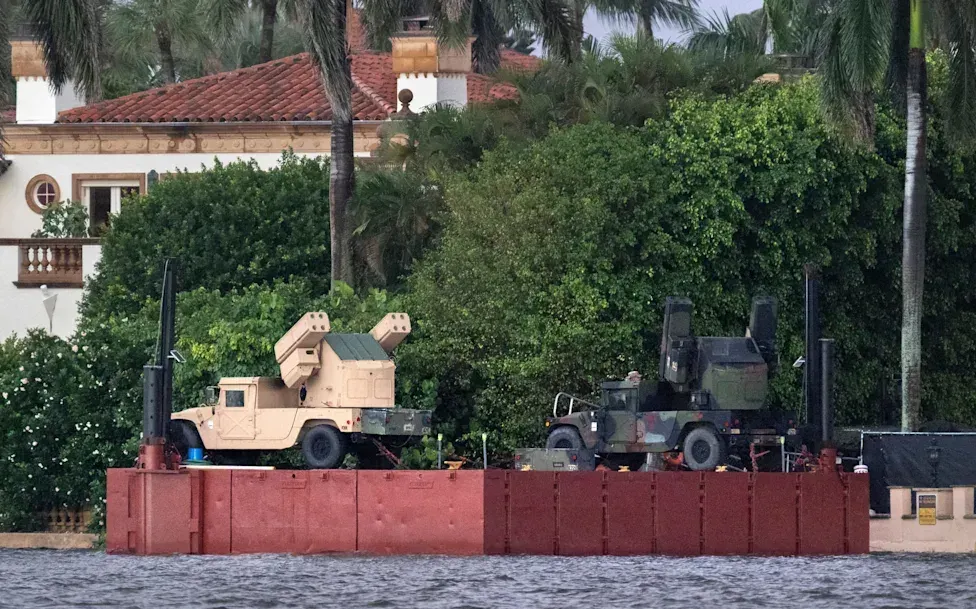
Kristi Noem and Pam Bondi moved while serving and have since left office. The reasons given range from a specific foreign plot to harassment at a family home, threats after the seizure of Venezuela's president and the publication of a cabinet member's address. Army air defence systems guard Trump's estate in Florida.
Hegseth, Rubio and Bessent have directed a war in which U.S. and Israeli strikes have killed at least 1,665 Iranian civilians, according to a U.S.-based monitoring group. Hegseth authorised strikes on boats in the Caribbean and Pacific that have killed at least 243 people, and deaths in immigration detention under Noem reached their highest level since 2004. Trump withdrew government protection in January 2025 from three former aides whom Iran had threatened over the 2020 killing of Qassem Soleimani, the Iranian general. The Justice Department has identified revenge for that killing as the motive in at least three Iranian plots against Trump officials.
Jay Clayton, the director of national intelligence, wrote to Rubio on 23 October that lethal Iranian plots against U.S. citizens had reached "advanced stages" in the Middle East and other countries. Seven U.S. officials told CNN on 16 November that Iran was developing plans to attack senior officials in Washington with a radioactive dirty bomb or a chemical weapon, while seeing no sign of an imminent attack. "They will pay a price the likes of which no country has ever paid before," Trump said on 17 November. A White House spokesperson told the network the government saw "no credible threats to the homeland" at present. Iran's mission to the United Nations called the allegations false and fabricated.
The houses and what they cost
Bessent moved with his family from his $12.5 million Georgetown house onto a military base on the instructions of the Secret Service, he said in a television interview on 13 November. In the same interview he said he would not be intimidated by Iranian death threats and that the Islamic Revolutionary Guard Corps (IRGC) was behaving "like a dangerous cornered animal". A senior administration official told Fox News the threats had gone beyond an advanced stage, "which is why he and his family made the move".
Intelligence about threats to Bessent was part of the basis for the U.S. assessment that Iranian plotting had advanced. The base has not been named, and the Treasury has given no figure for any rent he pays.
Hegseth moved into Quarters 8 on Generals' Row at Fort Lesley J. McNair in early 2025. The house is normally assigned to the Army's vice chief of staff. In late January 2025 the Army notified Congress that it planned to spend $137,297 on maintenance at what was then an unoccupied unit. The work included $49,900 for an "emergency" paint job, and lawmakers learned a week later that Hegseth would live there. A U.S. official said Hegseth had not requested the work, that the Army chose the house because it was available and that some repairs were needed for his security. Hegseth said the repairs would have been done whoever moved in.
Hegseth pays $4,655.70 a month. A 2008 law requires a defence secretary living in military housing to pay 105 per cent of the housing allowance for a four-star general. Robert Gates paid the full market rate of more than $6,500 a month for a Navy house in 2008, and Jim Mattis paid $3,383.10 a month for the same house in 2018. The Defense Department sought the 2008 provision on the argument that housing the secretary on a secure base costs less than installing and guarding secure communications at a private home.
Representatives Debbie Wasserman Schultz and Rosa DeLauro, who disclosed the spending, wrote that many service members and their families were living in housing with mould, lead paint and other hazards. Israel Hayom reported on 14 November that Hegseth was now staying at a secure military facility under tighter arrangements for senior members of Trump's national security team.
Rubio took a house a few doors from Hegseth's shortly after he was sworn in in January 2025. Rubio said in an August 2026 interview that his family rents a military house and that most of his neighbours are military personnel, according to a State Department transcript. The State Department has not published what he pays. Rubio and Hegseth both still live on military bases.
Blanche has lived on a military installation in the Washington area since early 2026, according to two news reports citing unnamed sources, for reasons given only as security concerns. Miller moved into military housing with his family in October 2025 after his wife, Katie Miller, said she was confronted by a woman at their home in Arlington, Virginia. The Millers later put the house up for sale. The administration has not disclosed whether Miller or Bondi pay rent.
Noem moved in mid-2025 into Quarters 1, the Coast Guard commandant's waterfront residence at Joint Base Anacostia-Bolling, after the Daily Mail published photographs of her apartment building. The house had been empty since 21 January 2025, when Trump removed Adm. Linda Fagan as commandant and she was evicted with three hours' notice, according to a letter from Representative Robert Garcia, the senior Democrat on the House Oversight Committee. Noem paid no rent, officials familiar with the arrangement said in August 2025, and a spokesperson said she was still paying rent on her own apartment at the Navy Yard.
Noem told the House Judiciary Committee on 4 March 2026 that she paid the government rent and was living in a Coast Guard house other than the commandant's. Trump fired her the next day. She was still living in Quarters 1 on 23 April, Garcia wrote, and on 1 May he demanded that she leave.
Bondi moved onto a base in February 2026, when she was attorney general, and left the Justice Department at the end of March to become special envoy to the Shield of the Americas. Daniel Driscoll, the Army secretary, shares a house at Joint Base Myer-Henderson Hall with another Army political appointee, and John Phelan, the Navy secretary, moved onto a base after a fire damaged his Washington home in May 2025.
The Atlantic reported in October 2025 that the moves were straining the housing available to the military's senior officers, and Tulsi Gabbard, then director of national intelligence, was turned away from Fort McNair for lack of space. No cost has been published for the security that goes with any of these arrangements. Steven Levitsky, a professor of government at Harvard University, told the Times that so many political appointees living on bases was typical of authoritarian states. "It is something you never see in a democracy," he said.
The threats behind each move
Bessent's is the only move publicly tied to a specific foreign threat. His Treasury launched Operation Economic Outcast in late August to cut the Iranian government's remaining access to international financial networks. Bessent said in an interview published on 20 November that he was still living on the base and that Iranian threats against him meant the campaign was squeezing Iran.
A senior official said the threats against Bondi rose after U.S. forces seized Nicolás Maduro, then Venezuela's president, in Caracas on 3 January, and that some came from people angry at her handling of the Epstein files. Federal agencies flagged the rise before she moved in February.
Noem moved after a newspaper published photographs of her apartment building, and Miller after the confrontation his wife described at their home. Neither move has been tied to a charged plot or to Iran. Blanche's reasons have been given only as security concerns.
Rubio and Hegseth took their houses in early 2025, a year before the war, without citing a specific threat. Several drones of unknown origin flew over Fort McNair on a single night in the first half of March 2026, three people briefed on the incident said that month, and officials discussed moving both men. A senior administration official said they stayed. The Israeli report on Hegseth's arrangements said the Mossad had given the Central Intelligence Agency specific intelligence about an Iranian plan to use drones against Trump and senior officials. Markwayne Mullin, the homeland security secretary, said on 15 November that the president's daily briefings included "aspirational threats from Iran".
The civilians who bear the consequences
The first U.S. strikes on Iran on 28 February hit the Shajareh Tayyebeh primary school in Minab, in Hormozgan province, during the school day. Minab's prosecutor put the dead at 156, including 120 pupils and 26 teachers. The UN Independent International Fact-Finding Mission on Iran found on 17 September that there were reasonable grounds to believe the U.S. committed the war crime of launching an indiscriminate attack. It reached the same finding over a U.S. strike on a sports centre and homes in Lamerd that killed 22 civilians.
Hegseth commands the forces that fired on the school. Thomas Massie, a Republican congressman from Kentucky, read eight articles of impeachment against Hegseth on the House floor on 9 November. The fourth alleges that he removed more than 90 per cent of the civilian-harm staff at the military's combatant commands and describes Minab as the product of those decisions. The House voted 211 to 204 the next day to refer the articles to the Judiciary Committee. "It's a farce, and it's a stunt and everybody knows it," Hegseth told reporters, and he said every action cited was lawful.
Human Rights Activists News Agency (HRANA), the U.S.-based monitoring group, has documented nearly 3,600 deaths in Iran from U.S. and Israeli strikes since 28 February, including at least 1,665 civilians and 248 children. It describes its figures as documented minimums.
Bessent's sanctions campaign and the U.S. naval blockade of Iranian ports bear on a different kind of harm. Iran faces shortages of hundreds of medicines, about 90 of them essential or life-saving, and insulin costs six times last year's price in some cases, Iranian health officials and pharmacists said in September. Medicines are exempt from U.S. sanctions, but banking restrictions and the blockade make it hard for Iranian firms to pay for imported drugs and raw materials. Iranian officials also cite war damage to 44 pharmaceutical and medical equipment companies and inflation. The share of the shortages owed to each cause has not been measured.
Hegseth authorised Adm. Frank Bradley to conduct the first of the boat strikes on 2 September 2025, Karoline Leavitt, the White House press secretary, said in December. Bradley ordered a second strike that killed two survivors clinging to the wreckage, and the White House said he acted within his authority and the law. Running counts by InSight Crime and Just Security put the dead from all the boat strikes at 243 or more. The military has not published evidence that the boats carried drugs, and the Pentagon's inspector general is examining only whether targeting procedures were followed.
About 75 people were killed in the 3 January raid in Caracas that seized Maduro, according to a U.S. government assessment, among them Venezuelan and Cuban security personnel and civilians caught in the fighting. Cuba said 32 of its military and intelligence personnel died. Maduro was flown to New York to face narco-terrorism charges brought by the Justice Department, which Bondi then led.
Noem directed the immigration crackdown as homeland security secretary, with Miller driving the policy from the White House. About 69,000 people were held in early January, 43 per cent of them with no criminal charge or conviction, according to ICE figures compiled by Reuters. Twenty-nine people had died in ICE custody in the fiscal year by April, surpassing the 2004 record of 28. The Homeland Security Department attributed the rise to the size of the detained population.
Federal agents shot dead two U.S. citizens in Minneapolis in January. Jonathan Ross, an ICE officer, killed Renee Good, 37, on 7 January, and Noem described the incident as a domestic act of terrorism by a driver who tried to run officers over. Border Patrol agents killed Alex Pretti, a 37-year-old intensive care nurse at the Minneapolis veterans' hospital, on 24 January. The department said Pretti approached agents with a handgun and resisted when they tried to disarm him, and bystander videos did not support central details of that account. Noem said his actions also amounted to domestic terrorism.
The Justice Department under Bondi, with Blanche as deputy attorney general, published the Epstein files with the names of at least 43 victims left unredacted, according to a review by The Wall Street Journal. More than two dozen of them were minors when they were abused. The department blamed technical or human error and took thousands of documents down. "Once again, survivors are having their names and identifying information exposed," a group of 20 survivors said in a statement through their lawyers.
Rubio led the dismantling of the U.S. Agency for International Development in 2025. "No children are dying on my watch," he told Congress in May 2025, according to NPR. Brooke Nichols, a professor of global health at Boston University, estimates from modelling that more than 700,000 people died in the first year after the cuts, more than half a million of them children. A study in The Lancet projected more than 14 million avoidable deaths by 2030. Both figures are model estimates, and Rubio and Elon Musk, who led the cost-cutting effort, have said no deaths have been linked to the cuts.
Protection withdrawn
Trump withdrew government security from Mike Pompeo, his former secretary of state, John Bolton, his former national security adviser, and Brian Hook, his former Iran envoy, within days of his second inauguration in January 2025. All three had worked on Iran policy during his first term, and the Biden administration had kept their details in place on the basis of intelligence that Iranian threats against them were continuing. Trump said there were risks to everything when reporters asked him about withdrawing the details.
Tom Cotton, the Republican chairman of the Senate Intelligence Committee, said he had seen recent intelligence suggesting all three remained targets of Iran. Hegseth cancelled the personal security detail of Mark Milley, the retired chairman of the Joint Chiefs of Staff, on 28 January 2025. Milley had faced Iranian threats, according to analysts at the Foundation for Defense of Democracies. In the same months Rubio and Hegseth moved into their houses on Fort McNair.
The Justice Department had charged Shahram Poursafi, whom it describes as an IRGC member, in August 2022 with offering $300,000 to people in the U.S. to kill Bolton, and prosecutors said the plot was likely revenge for Soleimani. Poursafi had told an informant on 3 January 2022 that he regretted it would not be done by the anniversary. He also offered $1 million for a second job, which the department linked to a former high-ranking Trump official later identified as Pompeo. He remains at large, and the FBI added him to its Most Wanted Terrorists list on 10 November.
Air defences and overseas bases
A spokesperson for the North American Aerospace Defense Command (NORAD) and U.S. Northern Command said on 23 October that the military had deployed ground-based air defence assets in and around Mar-a-Lago at the request of the Secret Service. Photographs taken that day show two Humvee-mounted Avenger systems on a barge beside the estate's western seawall. Avengers were also seen at Trump's golf club in Bedminster, New Jersey, in August. Matthew Quinn, deputy director of the Secret Service, wrote in a court filing that the airborne threat to Mar-a-Lago was "persistent and substantial", and the agency is asking for permanent flight restrictions over the estate.
The U.S. Air Force moved refuelling tankers out of RAF Mildenhall in Suffolk on 9 November after a threat linked to Iran, and security there and at RAF Lakenheath rose to Force Protection Condition Charlie, the second-highest level. The Air Force had withdrawn its 12 B-1B bombers from RAF Fairford in Gloucestershire in early October, after five men were arrested on 27 September near the base. Prosecutors in Manhattan allege that Mohammad Baqer Saad Dawood al-Saadi, whom they describe as a commander in the Iran-backed militia Kataib Hezbollah, directed the Fairford plot from a Brooklyn jail. He has pleaded not guilty to earlier charges, and the Iranian government denies any role.
Two days after Geneva
Iranian and U.S. negotiators held a third round of indirect nuclear talks in Geneva on 26 February. Abbas Araghchi, Iran's foreign minister, said the two sides were close to an understanding on some issues, and Oman's foreign minister said technical talks would resume the following week. Trump had said on 19 February that Iran must make a deal within 10 to 15 days or face serious consequences. The U.S. and Israel attacked two days after the Geneva round. The opening strikes killed Ayatollah Ali Khamenei, Iran's supreme leader, in his compound in Tehran along with Mohammad Pakpour, the IRGC commander, and Aziz Nasirzadeh, the defence minister.
Trump said the U.S. had given Israel intelligence support for the strike that killed Khamenei. Marko Milanovic and Michael Schmitt, two international law scholars, argued that Khamenei was probably a lawful target once hostilities began, but that the U.S. and Israeli use of force against Iran was itself illegal. A separate legal analysis described the strike as a textbook foreign political assassination. Another argued that treating a head of state as a combatant because of a constitutional role as commander in chief would make every head of state a lawful target in any armed conflict involving their country.
Baghdad airport, 3 January 2020
A U.S. drone struck a convoy leaving Baghdad International Airport early on 3 January 2020 and killed Soleimani, commander of the IRGC's Quds Force, and the Iraqi militia leader Abu Mahdi al-Muhandis, along with eight others. The Pentagon said Soleimani had been "actively developing plans to attack American diplomats and service members" in the region. Khamenei said the same morning that a harsh revenge awaited those responsible. On 8 January the IRGC fired ballistic missiles at Ain al-Asad air base in Iraq, and the Pentagon later put the number of service members diagnosed with traumatic brain injuries at 110.
Kelly Craft, then U.S. ambassador to the UN, told the Security Council that the strike was self-defence under Article 51 of the UN Charter, in response to "an escalating series of armed attacks in recent months". A notice the White House sent to Congress, released on 14 February 2020, made the same argument and did not cite an imminent attack. Iran issued an arrest warrant for Trump and 35 others in June 2020 and asked Interpol for a red notice, which Interpol declined as political, and Hook called the warrant a "propaganda stunt".
Agnes Callamard, then the UN special rapporteur on extrajudicial, summary or arbitrary executions, concluded in July 2020 that the strike was an "arbitrary killing" that violated the UN Charter, and found Iran's retaliatory missile strikes unlawful as well. Pompeo rejected the report. Writers for Duke University's Center on Law, Ethics and National Security argued that the strike was lawful self-defence and fell outside the U.S. ban on assassination in Executive Order 12333. Taran Molloy found a strong argument that it met the order's peacetime meaning of assassination in a 2021 study in the Victoria University of Wellington Law Review.
Farhad Shakeri, an Afghan national the Justice Department describes as an IRGC asset living in Tehran, was charged in November 2024 with being tasked to draw up a plan to kill Trump to avenge Soleimani. Araghchi called the allegation a "third-rate comedy". A federal jury in Brooklyn convicted Asif Merchant, a Pakistani national, on 6 March 2026 of a murder-for-hire plot that prosecutors tied to Soleimani's death, the only one of the three plots to end in a conviction. The Iranian government has denied trying to kill U.S. officials.
Sophie Duroy and Luca Trenta, two legal scholars, wrote that killing a state official outside an armed conflict will almost always violate the prohibition on the use of force, state sovereignty or human rights law. The U.S. and Iran were not at war in January 2020, and the Bolton, Shakeri and Merchant plots targeted people on U.S. soil before the 2026 war began.
Unpublished findings and costs
Hegseth ordered a Pentagon investigation into the Minab strike on 13 March. His advisers planned to hold the finished report back until after the 3 November midterm elections, Bloomberg reported on 15 October. Central Command withheld it in full on 4 November in response to a Freedom of Information Act request, citing classification, privacy and unnamed enforcement proceedings, Rachael Arbuckle of Signal Stack Research wrote. The Judiciary Committee is under no obligation to take up the impeachment articles before the current Congress ends in January.
The Treasury, the State Department, the Justice Department and the White House have not disclosed what Bessent, Rubio, Blanche or Miller pay to live on military bases, or what their protection costs. The 2008 rent rule covers only the defence secretary. The administration has published no criteria for deciding which serving or former officials receive military housing or a government security detail. Poursafi, charged with offering $300,000 for Bolton's killing, remains at large.