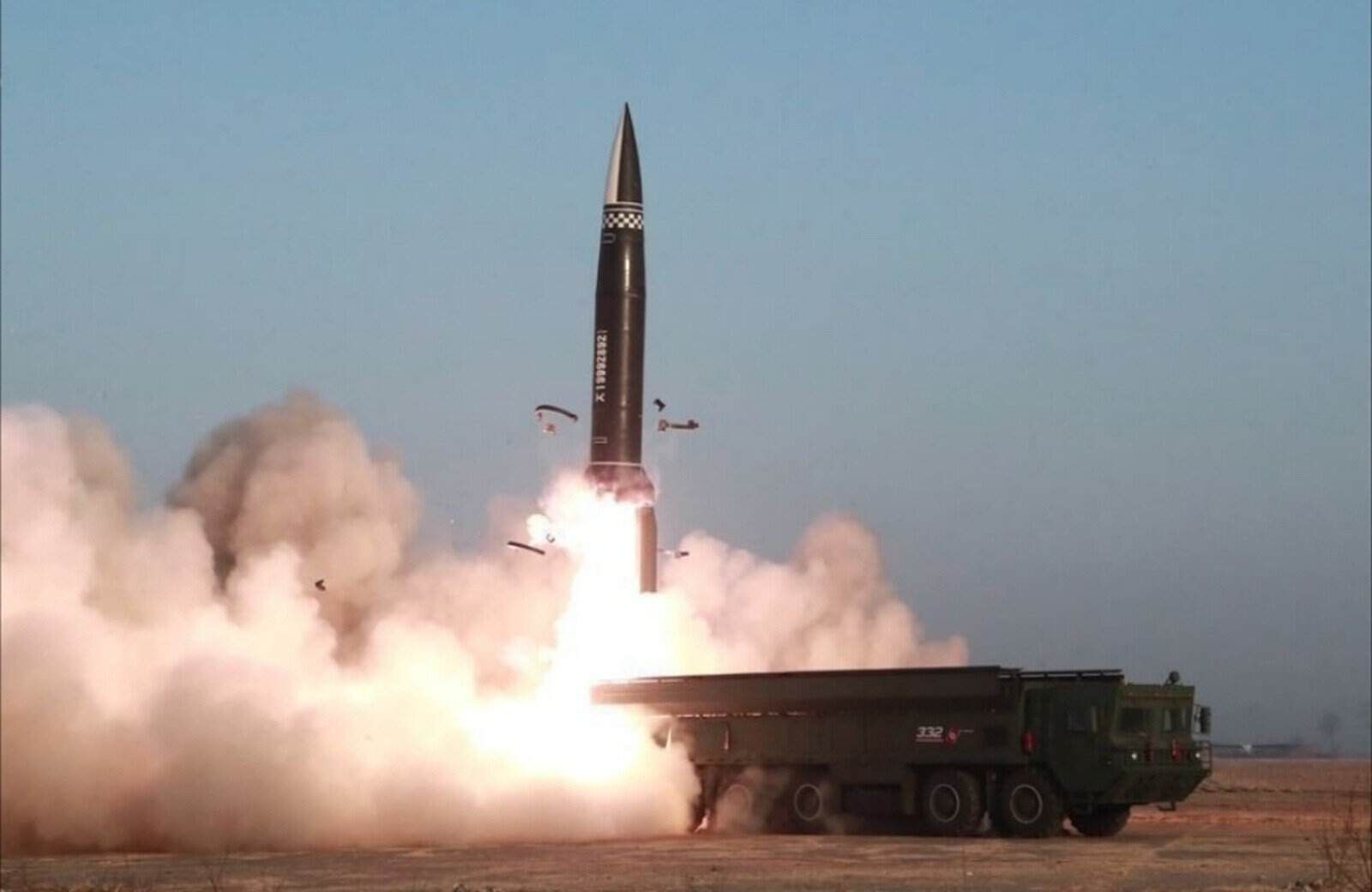
Kim Jong Un has not decided whether to give Russia the KN-30, a ballistic missile Ukraine's military intelligence directorate describes as three times more powerful than the KN-23 and KN-24 rounds already falling on Ukrainian cities, Andrii Cherniak of the directorate said on 27 August 2026. No KN-30 has reached Russian forces, he said. Russia is asking in the same negotiation for 120 missiles, six launchers, a missile unit of up to 90 personnel and 30,000 to 50,000 troops, and Cherniak said the terms would be settled at a meeting between Vladimir Putin and Kim expected in September 2026.
The Eastern Economic Forum in Vladivostok ended on 4 September 2026 without a meeting between the two leaders. Putin addressed the plenary session on 3 September, said Russian forces would press on in Ukraine and announced no agreement with North Korea on missiles or troops. Yury Trutnev's office put the forum's output at 328 agreements worth nearly 6.815 trillion roubles, about $78.5 billion, and listed no North Korean signatory.
North Korea has delivered 40 of a planned 120 ballistic missiles to a six-launcher unit forming in Russia's Voronezh Oblast, about 150km from the Ukrainian border, the same directorate said on 5 August 2026, and two of the 40 have already been fired at Ukraine.
Cherniak said the unit sits in the Russian region bordering Ukraine's Luhansk Oblast and is to hold six launchers and 120 KN-23 and KN-24 missiles. The Institute for the Study of War assessed on 20 August 2026 that the launchers place Kyiv, Sumy, Kharkiv, Chernihiv, Poltava, Dnipropetrovsk and Zaporizhzhia oblasts within reach.
Ten large cargo flights that may have carried missiles landed at the Baltimor aerodrome in the Voronezh area, Major General Vadym Skibitskiy, deputy head of Ukraine's military intelligence directorate, told CNN on 21 August 2026. About 90 North Korean personnel are expected at the site to assist with launches inside a Russian-commanded brigade, and the unit's command arrangements were still to be settled at senior-level talks scheduled for September 2026.
Voronezh and Kursk are Russian federal territory. No government, intelligence service or open-source investigator has placed North Korean personnel, launchers or crews inside Ukraine's recognised or occupied territory, or in any European state other than Russia.
Andrii Sybiha, Ukraine's foreign minister, said any North Korean military unit deployed on the territory of the aggressor state "constitutes a legitimate target".
Where the missiles have hit
Russian forces fired two KN-23 missiles on 30 July 2026, the first recorded use of North Korean ballistic missiles in 11 months. One struck a house in Radushne, on the outskirts of Kryvyi Rih, and killed six members of the Voronov family: Artem Voronov, 47, Olena Voronov, 41, their sons Mark, 17, and Azariy Ilay, 11, their daughter Emiliya, six, and an 18-month-old grandson. Eight people were injured, two of them children aged six and 15. The second missile landed in a field about 3.5km away.
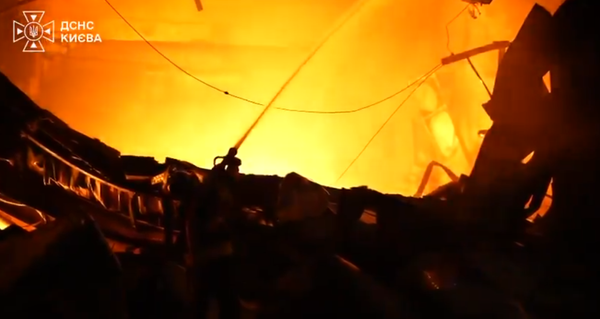
Six KN-23 missiles hit targets in Kyiv on 11 August 2026, the first time the capital had been struck with North Korean ballistic missiles alone apart from hypersonic weapons, the Centre for Eastern Studies in Warsaw said. Ukrainian air defence attempted four interceptions with PAC-3 MSE rounds and hit none of the incoming missiles. Industrial sites and two logistics centres were damaged, including a Nova Poshta depot.
Four more ballistic missiles, which the Centre for Eastern Studies said OSINT accounts identified as KN-23s, struck Zaporizhzhia the same day, alongside six guided aerial bombs. Six people were killed and 19 injured, and all of the dead were employees of the Zaporizhstal steel plant, the primary target. Volodymyr Zelensky said the day's strikes showed that "every step Russia takes, increasing ballistic missile production, bringing in North Korean equipment, preparing for mobilisation, all of this shows that Moscow is preparing not for peace, but for escalation".
The strike record since 19 July
Forty-one ballistic missiles were fired at Kyiv on 19 July 2026, the largest ballistic barrage on the capital of the war, and Ukrainian air defence shot down close to half, along with 108 of 125 drones. At least 13 people were killed across eight regions that day, four of them at a postal depot in Kharkiv. Sybiha called it "a brutal terrorist attack on the Ukrainian capital" and Zelensky said "protection against ballistic missiles is our constant and top priority right now".
At least nine people were killed in Kyiv on 1 August 2026 and more than 30 injured. Ballistic missiles hit seven sites around the capital in the early hours of 4 August, killing 14 and injuring 27, and Zelensky said a shortage of interceptors "only encourages Russia to launch such attacks that take human lives".
Russia fired 24 ballistic missiles, four hypersonic missiles and 115 Shahed-type drones at the Kyiv region on the night of 5 August. Ukrainian air defence intercepted none of the missiles. Seventeen people were killed, eight of them at the railway station in Brovary, and about 45 were injured. Zelensky said "ballistics interceptors are something that could have saved the lives of those who died today".
Thirty-seven people were killed at Myla in the Bucha district west of Kyiv on 29 August 2026, 34 of them residents of a care home for elderly and disabled people, on the third consecutive day of near-continuous Russian air attack. Fifty residential buildings were damaged. Russian officials said the target was a warehouse holding drone components and launch boosters; Zelensky said an ammunition store had detonated at the site and that "those who allowed this to happen must be held accountable for their decisions", and Ukrainian prosecutors opened a case over the storage of explosives near civilians.
Twelve people were killed in Kyiv and the surrounding oblast in the night of 1 to 2 September 2026, the sixth consecutive day of attack on the capital region, under ballistic and cruise missiles, glide bombs and about 218 drones over more than 12 hours. Eight of the dead were in the city, four in the region, and three children were among the wounded. Russia fired 174 attack drones, two ballistic missiles and two plane-launched missiles the following night, the seventh in the run, hitting Kyiv, Odesa and Dnipro.
Patriot interceptor deliveries to Ukraine have fallen to a third of their 2025 level, Zahar Hryniv wrote for the Atlantic Council on 25 August 2026, with Spain, Greece, Poland and Germany each releasing batches of about five PAC-3 or PAC-2 rounds. Russia is working towards launching 200 ballistic missiles in a single salvo, up from a current maximum of 77.
Kaja Kallas, the EU's high representative for foreign affairs, said after the 1 September barrage that "Russia's army is bogged down on the ground, and that is why they are killing civilians from the skies". Putin said on 2 September that Zelensky was engaged in "state terrorism" and that "we don't negotiate with terrorists", and did not rule out striking British military sites if the UK government keeps supplying weapons to Ukraine.
The KN-30
Russian stocks held about 50 North Korean KN-23, KN-24 and KN-30 missiles as of July 2026, Ukraine's military intelligence directorate told Ukrainska Pravda on 20 August 2026, alongside roughly 50 Kinzhal aeroballistic missiles, more than 600 Onyx, more than 450 Kalibr, more than 120 Zircon and about 130 Iskander-M. Ukrainian outlets reported the inventory as the first transfer of the KN-30 to Russia, and Militarnyi noted that no delivery or use of the type had been reported before.
Cherniak said on 27 August 2026 that no KN-30 has reached Russian hands at all. Russia has asked for the missiles, he said, North Korea has not decided whether to hand them over, and of the 120 rounds Russia requested only the 40 KN-23s and KN-24s have arrived, two of which have been fired at Ukraine. The directorate has not reconciled its two accounts of the KN-30.
The KN-30, or Hwasong-11C, is a scaled-up member of the Hwasong-11 family, about 10.1m long and 1.26m in diameter, roughly 15 per cent larger in both dimensions than the KN-23, with a demonstrated range of at least 600km. North Korea claims a 2.5-tonne warhead, a figure no outside body has confirmed, and the missile was first tested on 25 March 2021. Skibitskiy said the more modern North Korean rounds reach 800km but often miss by 15 to 19km. Ukraine's own directorate puts the KN-23's error at 50 to 100 metres.
Troops, rotations and losses
Roughly 14,000 to 15,000 North Korean soldiers arrived in Kursk Oblast from October 2024 to repel Ukraine's cross-border incursion. South Korea's National Intelligence Service told lawmakers in February 2026 that about 11,000 remained in the oblast at the start of the year, 10,000 of them combat troops and 1,000 engineers, and that about 1,100 had returned home in December 2025.
Skibitskiy said on 21 August 2026 that 8,500 North Korean personnel are currently in Russia and that about 25,000 have been deployed or rotated through Russian forces since 2024. The latest tranche includes 400 drone operators with prior combat experience and 1,000 engineers and deminers. Defense News put the Kursk figure at around 9,500 in early August 2026.
Sergei Shoigu, secretary of Russia's Security Council, said in June 2025 that North Korea would send 1,000 sappers and 5,000 military construction workers to Kursk for mine clearance and reconstruction. Andrei Belousov, the Russian defence minister, said on 15 August 2026 at a reception in Moscow marking Korea's liberation from Japanese colonial rule that a monument to North Korean soldiers would be unveiled in the autumn, and that the troops had fought "shoulder to shoulder" with Russian personnel.
Dead and wounded reached about 6,000 by February 2026 on the National Intelligence Service's count, a figure UK Defence Intelligence corroborated in June 2026. Ukraine's military intelligence directorate said in late June 2026 that losses exceeded 7,000 and that the North Korean government was concealing them. Kim Jong Un has publicly acknowledged that North Korean soldiers died in the war without giving a figure.
North Korean units operated FPV and reconnaissance drones alongside Russian troops in Kursk Oblast between August and October 2025, the Institute for the Study of War assessed, and the Rubikon Centre for Advanced Unmanned Technologies, which operates in the same border area, could pass its methods to North Korean units.
Shells, ships and howitzers
Open Source Centre and iStories counted more than 29,488 containers moved from North Korea to Russia since mid-2023 in a joint investigation published on 16 March 2026, which they modelled as eight to 11 million rounds of 122mm and 152mm shells and rockets, roughly double their own April 2025 estimate. Four Russian-flagged vessels, the Angara, Maria, Lady R and Maia-1, made more than 112 voyages between Rajin and the Russian ports of Dunay and Vostochny at a rate of about 350,000 rounds a month, and the investigators identified 145 crew members. The Angara's last confirmed voyage was in January 2026 and the Lady R departed for a fresh consignment in March 2026.
Joe Byrne, one of the authors, wrote that the supply chain "remains a fundamental pillar of a transactional alliance, allowing Pyongyang to secure hard currency and military technology".
South Korea's Defence Intelligence Agency put the total at more than 12 million rounds of 152mm-equivalent ammunition in roughly 28,000 containers in July 2025. That count is higher than the Open Source Centre modelling on shells and lower on containers. M1989 Koksan 170mm self-propelled howitzers were photographed moving through Russia from November 2024, and Ukrainian intelligence put that delivery at about 50 guns.
Zelensky said on 10 August 2026, after Ukrainian long-range strikes reached a petrochemical plant more than 2,000km inside Russia, that "this is the first time in Russian history that they no longer have a secure strategic rear. And this is the first time they cannot wage war without supplies from North Korea".
Accuracy
Ukraine's military intelligence directorate said the circular error of the KN-23 fell from between 1,000 and 3,000 metres to between 50 and 100 metres, and described the improvement as "the result of the common work of Russian and North Korean specialists".
Vann H. Van Diepen, writing for 38 North on 14 August 2026, assessed that the accuracy was restored rather than improved, and that the original errors were more likely caused by Ukrainian jamming of satellite navigation than by design faults. Russian specialists plausibly diagnosed the problem and supplied anti-jamming fixes, he wrote, given Russian experience with ballistic missiles, GLONASS and electronic warfare. He rejected unsourced claims that North Korean technology had been folded into Russian Iskander guidance, radar or penetration aids. North Korea's own launch unit in Russia is watching Russian road-mobile practice at first hand, he wrote, and that is the transfer likely to matter most.
Ukraine's defence ministry published a technical analysis of recovered KN-23 and KN-24 debris on 16 April 2026 concluding that the missiles are not direct Iskander copies. The KN-23 tapers from a rear diameter of 110cm to 90cm, and the ministry said "a diameter of 110cm is not found in any other country in the world except North Korea". It put cumulative KN-23 transfers at about 250 since 2023, and said Ukrainian air defence had destroyed 274 Iskander and KN-23 missiles since 2022, including 35 in February 2026 alone.
Western-origin electronic components were recovered in quantity from North Korean missile wreckage in Ukraine, CNN reported in November 2024, among them parts made by US and European manufacturers that reached North Korean production lines through intermediaries.
What Russia sends back
The Multilateral Sanctions Monitoring Team, set up on 16 October 2024 after Russia vetoed renewal of the UN Panel of Experts, reported on 29 May 2025 that Russia had supplied North Korea with advanced air-defence equipment, anti-aircraft missiles and electronic warfare systems in exchange for troops, labour and financial transactions. It called those transfers violations of UN Security Council resolutions.
At least one Pantsir-S1 short-range air-defence system has been transferred, according to Ukrainian intelligence and to reporting drawn from UN sanctions monitoring. Neither states how many. Skibitskiy said on 21 August 2026 that North Korea has asked for S-400 long-range systems as part of the Voronezh arrangement. No delivery has been confirmed.
Belousov met Kim Jong Un in Pyongyang on 26 and 27 April 2026 and agreed a military cooperation plan for 2027 to 2031 covering technology transfer, joint training, personnel exchange and arms cooperation. Belousov said the two defence ministries had agreed "to place our military cooperation on a sustainable, long-term footing". The plan has not been signed, and the Russian government has said it is ready to sign during 2026.
Sergei Lavrov, Russia's foreign minister, told an ASEAN ministerial meeting in Manila on 23 July 2026 that the Russian government "clearly reaffirmed its full support" for Kim's work on North Korean defence capabilities, and rejected any demand that North Korea give up its nuclear weapons. Resolutions 1718 and 1874 require North Korea to abandon its nuclear and ballistic missile programmes.
Vladimir Putin and Kim signed the Treaty on Comprehensive Strategic Partnership in Pyongyang on 19 June 2024 and it entered into force on 4 December 2024. Its fourth article obliges each party to provide military assistance by all means at its disposal if the other is put in a state of war by armed invasion, and both governments cite the treaty as the legal basis for the deployments.
Workers and money
Global Rights Compliance published testimony from 21 North Koreans working in three Russian cities on 25 March 2026, finding all 11 International Labour Organization indicators of forced labour present. More than 100,000 North Koreans work across 40 countries under the scheme, the report said, generating up to $500 million a year for the North Korean state from non-IT workers alone. Wages of about $800 a month are cut by a state quota of $600 to $850, leaving take-home pay as low as $10 a month, against shifts of 12 to 16 hours for as many as 364 days a year.
Russia's foreign ministry consular department issued 36,413 visas to North Korean citizens in 2025, of which 35,849, or 98 per cent, were educational, against 9,239 visas in 2024. The Citizens' Alliance for North Korean Human Rights reported on 26 March 2026, from defector testimony, that North Korean military personnel had been sent to Russia disguised as students to do construction work.
Zahar Hryniv, writing for the Atlantic Council on 25 August 2026, put the value of hard currency and supplies received by North Korea over three years at least $14 billion.
30,000 troops
Zelensky said on 26 July 2026 that Russia was seeking 30,000 more North Korean troops and had been preparing Voronezh Oblast to receive them since June. By 9 August the figure in his public statements had risen to 50,000. Skibitskiy framed the larger number differently, saying Putin may request up to 50,000 at a meeting with Kim expected in September 2026.
Kim Yo Jong, the North Korean leader's sister, called the 50,000 claim "groundless" and "a self-staged incident" in a statement carried by state media on 19 August 2026, and said responsibility for the war rested with the United States and western countries. She did not address the roughly 14,000 soldiers sent to Kursk in 2024.
South Korea's Defence Intelligence Agency told lawmakers on 23 August 2026 that "no sign of an imminent deployment of additional troops has been identified", and said preparations continue. Reporting through 2024 and 2025 that North Korea would send up to 30,000 soldiers into occupied Ukrainian territory did not materialise.
The meeting that did not happen
Choe Son-hui, North Korea's foreign minister, met Putin at the Kremlin on 19 July 2026 at the invitation of Sergei Lavrov, and pledged continued support for the war. The Korea Herald reported the visit as preparation for a Kim visit to Russia later in the year.
Putin arrived in Vladivostok on 2 September 2026 and addressed the forum's plenary session the next day alongside Indonesian President Prabowo Subianto, Mongolian Prime Minister Nyam-Osoryn Uchral, Myanmar First Vice President Nyo Saw and Chinese Vice Premier Ding Xuexiang. He said Russia would find a way to respond if threats against civilian aviation from the Ukrainian government materialised. The Russian presidential office had scheduled his trip for 2 and 3 September, and the forum ran to 4 September with more than 5,000 participants and no North Korean leader among them.
South Korea's unification ministry said it had no plans to take part in the forum and that it had no information about North Korean attendance. Ambassador Lee Sok-bae is representing South Korea, the first ambassadorial attendance since the post stood vacant during the 2025 forum.
Spans of the first road bridge between the two countries, linking Rason to Khasan across the Tumen River, were joined on 21 April 2026, and the crossing was to open on 19 June 2026, the second anniversary of the treaty. Russian state media had reported that dignitaries from both countries would attend the ceremony. North Korean officials quoted by Daily NK on 24 June 2026 blamed unfinished Russian access roads for the delay and estimated another year before regular traffic can start. Ivan Stepanov, head of Khasan on the Russian side, said on 24 July 2026 that the crossing would open in the first days of September. No opening ceremony has been reported.
Law and accountability
UN Security Council resolutions 1718, 1874, 2087, 2094, 2270, 2321, 2371, 2375 and 2397 prohibit arms transfers to and from North Korea in either direction and bar states from hosting North Korean workers. The container shipments, the missile deliveries, the air-defence transfers, the troop rotations and the labour deployments all breach them. Russia holds a veto on the Council and used it in March 2024 to end the Panel of Experts that monitored those measures. The panel's mandate expired on 30 April 2024 and its final report was published on 7 March 2024. No replacement body with Council-mandated authority has been established.
The Multilateral Sanctions Monitoring Team has published two reports in its 22 months of existence, the arms-transfer report of 29 May 2025 and a report on cyber and IT worker activity on 22 October 2025. James Larsen, Australia's permanent representative to the UN, said at the second report's launch on 12 January 2026 that North Korean cyber actors "stole at least 1.9 billion dollars in cryptocurrency from companies around the world in 2024".
The US government filed a listing proposal at the 1718 Committee for seven vessels on 5 December 2025 that the Chinese and Russian governments held until mid-June 2026, and filed a second motion for seven more on 28 July 2026, leaving 14 ships awaiting designation. Eleven governments and the European External Action Service issued a joint statement on 29 May 2026 naming the Dream Wave, Peaceful 8, Orion, Fu Run Da 1 and Ostrov Antsiferova, and said the evidence, including "vessel imagery, voyage reconstruction, Automatic Identification System manipulation, and port call analysis, indicates clear violations of obligations under Security Council resolutions". South Korean authorities detained the Tanzania-flagged Prada at Pyeongtaek on 22 July 2026 over coal loaded at Nampho in 2024.
The EU's 20th and 21st Russia packages, adopted on 23 April and 23 July 2026, carry no North Korean listings, and the EU's North Korea regime has added nobody since 31 May 2024. South Korea has issued no unilateral North Korea sanctions since June 2025. Yoo Yong-won of the People Power Party said on 7 June 2026 that "the government has taken no effective sanctions measures", and reported that North Korea had imported refined petroleum at more than seven times the UN cap in 2025 while declaring 483,139 barrels, or 96.6 per cent of the 500,000-barrel annual limit.
Ballistic missile strikes on residential buildings, such as the one at Radushne, are governed by Articles 51 and 57 of Additional Protocol I to the Geneva Conventions, which prohibit indiscriminate attacks and require constant care to spare civilians. The International Criminal Court has jurisdiction over the territory of Ukraine by declaration and has issued arrest warrants against Russian officials for attacks on civilian objects. Neither Russia nor North Korea is a party to the Rome Statute, so jurisdiction over North Korean personnel would rest on the territorial trigger rather than on nationality.
Lawyers meeting at Yonsei University in Seoul on 19 March 2026 said the Special Tribunal for the Crime of Aggression against Ukraine, expected to begin work in 2027, could reach North Korean officials as accomplices for enabling troop deployments and weapons transfers, and named Kim Yo Jong as potentially exposed. No court has filed a charge against a named North Korean individual over the war.
Governments in the EU and Canada can list the vessels traced on the Rajin route under existing shipping designations, and can prosecute component suppliers whose parts appear in recovered missile debris under export-control law. Canada's Special Economic Measures Act and the EU's dual-use regulation both reach re-exporters. Ukraine publishes its component teardown data openly, so prosecutors in supplier states can read the part numbers without asking any government for them.
Two North Korean prisoners of war captured in Kursk Oblast remained in Ukrainian custody a year after their capture, Human Rights Watch reported on 26 February 2026, and both said they feared forced repatriation.