In an interview with Corriere della Sera, Ukraine's president asked the US for interceptor missiles as the price of restraint on Russian energy targets, described Russian influence operations in Europe and the United States and set out Ukraine's growing defence-industrial ties with Italy.
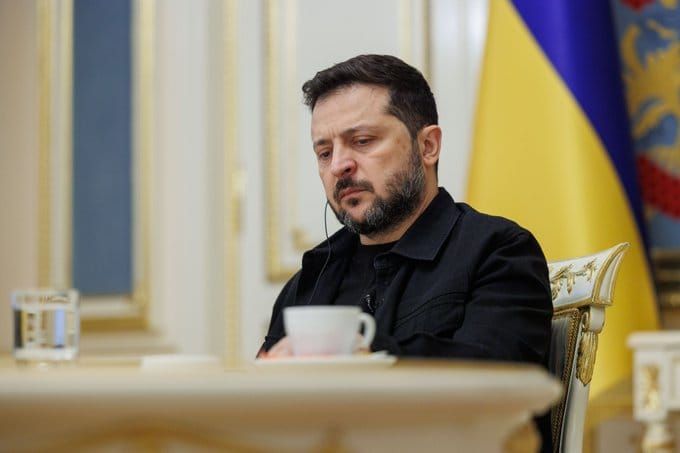
Volodymyr Zelenskyy told Marta Serafini of Corriere della Sera, in an interview in Kyiv published on 20 October 2026, that if the US wants Ukraine to stop striking Russian energy facilities while Russia keeps hitting Ukraine's grid, it should at least supply the interceptor missiles needed to protect that grid. "If you cannot rein Putin in, then give us interceptor missiles so I can protect our energy infrastructure," he said, in the English excerpts his office published. "You couldn't stop Putin, but you helped Ukraine." The interview appeared a day after Russia struck 28 Ukrainian energy facilities and cut power to at least 550,000 households, while a Patriot shipment European governments had paid for awaited Pentagon sign-off.
Zelenskyy told Serafini he had already made the offer to the US "as a partner", that Ukraine would still take losses under it and that the missiles had not been supplied: "they only ask us to stop," according to the interview text. He said limits on intelligence sharing and a reduction in Starlink speed "are no longer mere threats: the restrictions have happened." His office's English version adds that Ukraine supports "a mutual energy ceasefire" and that being struck without striking back "is neither honest nor fair".
Serafini asked about Ukraine's requests for €70 billion for 2027 and 300 Patriot interceptors for the winter. Zelenskyy said countries that have Patriot systems must help Ukraine prepare for winter, and that a protected sky would keep Ukrainians in the country and bring refugees back as the war ends.
Zelenskyy spoke as relations with the Trump administration reached their worst point since the February 2025 Oval Office meeting. Trump wrote on 18 October that Zelenskyy "doesn't want to end this war, and probably never did". Hours after the interview appeared, Secretary of State Marco Rubio said nothing had been deliberately withheld from Ukraine and that every government wanted interceptors.
Trump's 11 October truce and Russian strikes on Ukraine's grid
Trump announced on 9 October that Russia would supply more than 300,000 tonnes of diesel to world markets immediately, 500,000 tonnes in November and 1,000,000 tonnes after that. The Treasury Department issued a temporary licence for Russian diesel the same day. A bipartisan group of 12 senators on the Foreign Relations Committee urged him on 13 October to reverse the deal.
Trump posted on 11 October that an energy ceasefire between Russia and Ukraine was in force with immediate effect and that both parties had agreed. Zelenskyy said the announcement was news to him and that Ukraine would agree if Russia did. A White House official later said the arrangement covered only oil refineries.
Ukraine has one oil refinery, badly damaged by Russian strikes long ago, Zelenskyy said on 12 October. A refinery-only truce would therefore shield the Russian assets that earn export revenue and keep Russian fuel flowing while leaving Ukraine's power stations, substations and gas fields open to attack. Zelenskyy said Ukraine would observe a ceasefire covering all energy infrastructure if Russia did the same.
Two Ukrainian officials told the Kyiv Independent that US officials warned senior Ukrainian commanders after the announcement that the US would hold Ukraine responsible if Russian energy infrastructure were hit, and threatened to cut intelligence sharing and PURL, the European-funded channel for buying US weapons. "They called all the top military officials with threats," one official said. A senior Pentagon official said on 19 October there had been no change to policy on intelligence sharing or on the capabilities Europeans provide to Ukraine.
Russia struck the Kharkiv thermal power plant within hours of Trump's post. Russian ballistic missiles hit all three of Kyiv's combined heat and power plants on 14 October, Prime Minister Serhii Koretskyi said. Putin's spokesperson Dmitry Peskov said the same day that Russia could not be accused of breaking a ceasefire whose terms had never been specified.
Peskov had said on 8 October that Russia saw no point in a sectoral ceasefire, and three people familiar with the talks told the Kyiv Independent that the Russian side was tying any energy truce to sanctions relief. Ukraine's position is that a halt must be reciprocal and must not earn Russia new concessions.
Ukraine paused refinery strikes after 11 October and resumed them on 15 October; Trump called the resumption a disgrace. Zelenskyy said on 18 October that Russia had attacked Ukrainian energy, oil and gas facilities 76 times since the truce was declared. Ukrainian drones hit an oil terminal in St Petersburg overnight into 18 October, and Russia struck 28 critical energy facilities across Ukraine the following night, Zelenskyy said. Russian forces then extended the campaign to Lviv, Rivne, Ternopil, Khmelnytskyi and Zhytomyr regions in western Ukraine, along with Kirovohrad and Odesa, deputy energy minister Artem Nekrasov said on 20 October, and DTEK said 32,700 families in Odesa region lost power after three of its facilities were hit.
Patriot transfers awaiting Hegseth's approval
Ukraine has run out of US-made Patriot interceptors, one of the few weapons able to destroy Russian ballistic missiles, a source told CNN on 15 October; the same source said almost none of the ballistic missiles in a recent strike were intercepted. Russia has increased its use of ballistic missiles, which Ukraine can reliably bring down only with Patriot-class systems. Russian ballistic missiles were aimed at energy infrastructure in Kyiv, Kharkiv and the Kharkiv region on 14 October, Koretskyi said.
Patriot interceptors reach Ukraine through two channels that both require US authorisation. Germany, Norway, the Netherlands and other allies have pooled funds under PURL to buy interceptors that are already paid for, and European governments have also asked to re-export interceptors from their own inventories; because the missiles are made in the US by RTX and Lockheed Martin, neither transfer can go ahead without US approval, the Washington Post reported. Defense Secretary Pete Hegseth has neither formally rejected the transfers nor completed the steps to authorise them, and has continued approving other aid, the Post reported, citing a US official and three other people familiar with the matter. The Pentagon has told Congress it intends to divert about $750 million in partner-provided PURL funding to replenish US THAAD and Patriot stocks, according to the same report. NATO officials said deliveries under PURL, including air defence equipment, were continuing.
Zelenskyy told a bipartisan group of US senators by video on 19 October that the Pentagon was delaying missiles European countries had already paid for, that Hegseth had not signed off on the shipment and that several European governments were waiting for US approval to transfer interceptors from their own stocks. He said he believed "some political decision has been made to slow down ... support for us," and that Ukraine now receives 12 Patriot interceptors a month from the US. Ukrainian officials suspect the hold is meant to pressure Ukraine over its refinery strikes. "Hegseth has the contracts for Patriot missiles on his desk. He is not signing off on them," one told the Kyiv Independent; a US government official told the paper the Ukrainian allegations were "not true".
Rubio said on 20 October it could be accurate that a batch bought for Ukraine had not arrived, but that "there has not been some deliberate political directive to go out and harm Ukraine", and cited demand from Saudi Arabia, Israel and US forces. "When a country doesn't get interceptors from the United States, it's not because we're denying," he said. Hegseth has given no public reason for the hold.
US early warning of Russian missile attacks "works now", Zelenskyy said after talks with US envoy Steve Witkoff in Oslo on 20 October, hours after the Corriere interview in which he described the intelligence restrictions as already imposed. The administration denies ever ordering restrictions. Zelenskyy said on 17 October that Ukraine still could not use Starshield, the military version of SpaceX's Starlink network, to intercept Russian drones; its status after Oslo was not reported.
International humanitarian law sets the same test for every energy target. An installation may be attacked only if its nature, location, purpose or use makes an effective contribution to military action and its destruction offers a definite military advantage, and even then expected civilian harm must not be excessive, ICRC legal advisers wrote. Refineries and depots that fuel an army can meet that test, and Ukraine describes its campaign as aimed at Russia's fuel supply and war revenue; legal analysts have argued those strikes fall within the law, while each strike remains subject to the proportionality rule.
International Criminal Court judges found reasonable grounds in March 2024 to believe that two Russian commanders, Sergei Kobylash and Viktor Sokolov, were responsible for missile strikes on Ukraine's electricity infrastructure from 10 October 2022 to 9 March 2023. The warrants cover attacks directed at civilian objects and causing excessive incidental harm to civilians. Russia denies deliberately targeting civilian infrastructure and says its strikes aim to reduce Ukraine's ability to fight.
Zelenskyy on relations with the Trump administration
Zelenskyy told Serafini that Ukraine had always wanted a relationship with the US built on honesty, justice and transparency. "I don't want to hide anything from the American president," he said, adding that the two governments may hold different opinions and interests but that "our peoples have much more in common than America and Russia do," according to the interview text. Ukraine now pays for the US weapons it receives through European-funded programmes, he said. His office's English excerpts include the line: "When you lie while your people are at war, it is very painful."
Trump has called Ukraine's refinery strikes a disgrace and said Zelenskyy was harder to deal with than Putin. On 18 October he accused Zelenskyy of targeting diesel refineries knowing the attacks hurt US fuel markets and wrote that Ukraine was in ruins with much of its territory lost. Zelenskyy told NBC's Meet the Press the same day that the US siding with Russia would be a historic mistake. Trump told reporters it might be time for Zelenskyy to get someone else to negotiate.
Trump said on 20 October, hours after a Russian drone killed six people including two children in a park in the Kharkiv region, that Russia had "been fine on Ukraine". Trump eased some sanctions on Russian energy sales on 16 October to bring down US fuel prices driven up by the war with Iran, and wrote two days later that he had held off new sanctions so as not to drive Russia away from talks.
Trump announced the diesel deal while Witkoff and Jared Kushner were meeting Ukrainian officials in Miami on a peace proposal. Senior Ukrainian officials said they had not been told in advance of the 11 October truce. Trump has said he is ready to meet Putin and Chinese President Xi Jinping in China next month for talks that could cover Ukraine; Foreign Minister Andrii Sybiha said such a meeting without Ukraine would only encourage Putin to keep fighting.
Zelenskyy told Serafini that Putin's exit from isolation "has already begun" and that Ukraine expected to be consulted on anything concerning Ukraine. He said personal disputes "remain personal" and that he was ready to meet Trump's negotiating team, possibly that week, according to the interview text.
He met Witkoff in Oslo the same day, with Kushner joining by video, alongside Norwegian Prime Minister Jonas Gahr Støre, Finnish President Alexander Stubb and representatives of France, the UK, Germany, Poland, the EU and NATO, the Norwegian government and a US official said. Kushner pressed Trump's demand that Ukraine halt refinery strikes, and Zelenskyy said afterwards he would stop them if Russia took reciprocal steps. Zelenskyy said the talks covered ceasefire proposals in several formats and security guarantees, including NATO's Article 5 and an "Article 5 light" option. A US official said the parties made "meaningful progress". Trump said the same day that he doubted Zelenskyy wanted to end the war: "If he does not, it's gonna be a very bad thing."
Witkoff flew from Oslo to St Petersburg, where Putin's envoy Kirill Dmitriev met him at Pulkovo airport on 21 October, and was due to present Putin with an updated plan at the Konstantinovsky Palace, according to Russian state agencies. "I don't know whether there will be any agreement today," Putin's aide Yuri Ushakov told Interfax of a meeting at which Ukraine has no seat.
Russian hybrid operations in Italy, France, Germany, Britain and Spain
Russia wages a hybrid war against Europe, including Italy, France, Britain and Germany, through television, the media, the internet and social networks, Zelenskyy told Serafini. "How to live and whom to elect must be decided by Italians, French, Ukrainians, Spaniards. Not by the Russians," he said, adding that citizens have every right to be satisfied or dissatisfied with their governments provided Russian campaigns do not manipulate them, according to the interview text.
Italy's intelligence community named Russia the primary threat to Europe in its 2026 annual report, published in March, describing AI-assisted disinformation aimed at discrediting Western leaders and sometimes amplified in Italy by pro-Russian circles and bloggers reportedly funded by the Russian state. Fabricated videos have shown Giorgia Meloni with Zelenskyy and Meloni apparently praising a Russian commander as Italy prepares for its next general election. Italian security services intervened against attempts to spy on senior figures at state-controlled companies. Russia's foreign ministry published in April a list of companies and factory addresses it said produce drones for Ukraine in Europe and accused four Italian firms of supplying parts.
France's foreign-interference agency Viginum documented 77 operations by the Russian network Storm-1516 between August 2023 and 5 March 2025, with discrediting the Ukrainian government and ending Western aid as its main aim. Viginum linked the network to individuals close to the Russian government, including a possible officer of GRU Unit 29155 publicly accused of financing and coordinating it. The French foreign ministry said the group interfered in the June 2024 legislative elections and condemned Russia's conduct.
Germany's government said on 1 September 2026 that police investigations, offence patterns and intelligence findings established Russian responsibility for an explosive-laden drone found on 4 August at Leipzig/Halle airport near a Ukrainian cargo aircraft, and ordered Russia's consulate general in Bonn closed. Foreign Minister Johann Wadephul said Germany had become a Russian war target. Russian foreign ministry spokesperson Maria Zakharova called the allegations a "far-fetched and fabricated pretext" and Putin accused Germany of fabricating evidence. Germany has not made all of its evidence public.
MI5 Director General Ken McCallum said in October that Russian military and intelligence services were again escalating hybrid warfare while taking care to stay below NATO's Article 5 threshold. A British man, Joshua Cammidge, has been charged with sharing the locations of drone factories with people linked to Russian military intelligence.
Spanish Prime Minister Pedro Sánchez said on 31 August, citing research by the European External Action Service, that networks linked to Russia and Israel and what he called an ultra-right international spread disinformation after more than 72,000 migrants crossed into Ceuta on 30 and 31 July. Zakharova demanded that Spain produce evidence, and Israel also denied involvement. The Spanish government's claim concerns the online amplification that followed the crossings.
Moscow exploits migration "and will continue to do so", along with religion, language and gender, Zelenskyy told Serafini; his office's English version also names "far-right movements" and "faith". Viginum identified social destabilisation through immigration, inflation and energy prices as one of Storm-1516's four themes, and NewsGuard attributed to the network a fabricated video of a Chadian migrant confessing to raping a girl in France. Fact-checkers monitoring Spanish-language and other audiences found Russian operations in early 2026 attaching anti-Ukrainian narratives to the Epstein files, the Iran war and the Greenland crisis.
Russia has invested as much in propaganda "as in weapons during this war", in "a massive financial program spanning decades", Zelenskyy said in the excerpts his office published; the passage does not appear in the Corriere text. Russia's published 2026 budget allots 146.3 billion roubles to state media against 12.9 trillion roubles for national defence, and Janis Kluge of the German Institute for International and Security Affairs estimated military-related spending at 10.7 trillion roubles in the first half of 2026 alone. The state-media line covers broadcasters and news agencies and excludes covert influence operations, whose cost Russia does not publish; one estimate puts Russian spending on foreign influence at $1.5 billion a year.
Russian influence operations in the United States
Russia has "a very significant wave going on" in the US and "their network is operating", Zelenskyy said in his office's English excerpts. In the Corriere text he said Moscow's divisive campaigns are visible "in Europe, in the United States and in Ukraine".
The Justice Department seized 32 internet domains in September 2024 used by the Russian operation known as Doppelganger to clone US news sites, and indicted two RT employees, Kostiantyn Kalashnikov and Elena Afanasyeva, for routing nearly $10 million to a Tennessee company identified as Tenet Media. The Treasury Department had sanctioned the Moscow-based company behind Doppelganger in March 2024 for a campaign run at the direction of the Russian Presidential Administration. The Office of the Director of National Intelligence's 2026 Annual Threat Assessment lists cyberattacks, disinformation and influence operations among Russia's tools below the threshold of war.
Tenet's owners knew of and hid the Russian funding, the indictment alleged; the commentators whose videos it carried were not charged and, according to the Justice Department, did not know RT was behind the company. Viginum found that some Storm-1516 narratives were amplified by prominent Western figures and politicians, and French Foreign Minister Jean-Noël Barrot said the campaigns were relayed especially by the US far right. A politician repeating a line that Russian state media also pushes has not, on that basis alone, been shown to have any relationship with Russian intelligence; the Tenet charges rested on payments and direction the indictment traced to RT.
Storm-1516 devoted 35 of the 77 operations Viginum analysed to Ukraine, including a fabricated 2024 story that Olena Zelenska had bought a $4.5 million Bugatti in France. Viginum assessed the network's main goal as the suspension of Western aid to Ukraine. Peskov said on 16 October that Zelenskyy did not want to take responsibility and move towards peace, agreeing with Trump.
Attorney General Pam Bondi disbanded the FBI's Foreign Influence Task Force in February 2025, citing risks of weaponisation. Rubio closed the State Department's Counter Foreign Information Manipulation and Interference office in April 2025, leaving the department without a unit to counter foreign disinformation.
Ukrainian-Italian production and Leonardo
"We share our experience on weapons: which work, which do not, what improvements our engineers and soldiers have made," Zelenskyy told Serafini. "We have productive collaborations in the two countries and an excellent relationship with Leonardo." Italians work in the plants in Italy, he said, which means jobs "and not only aid to Ukraine", according to the interview text. His office's excerpts go further: "We have established joint production facilities in Italy and Ukraine, these are Ukrainian-Italian companies," and Leonardo "receive a lot from us", in the version published on Telegram.
Meloni told Zelenskyy at Palazzo Chigi on 15 April 2026 that Italy was very interested in joint drone production, a field in which she said Ukraine had become a leading nation. Zelenskyy presented a "Drone Deal" offering Ukrainian expertise in drones, missiles, electronic warfare and data sharing to allies in exchange for systems Ukraine does not make, such as Patriot missiles, and left the details to technical teams.
Leonardo, Italy's largest defence group, registered a subsidiary, Leonardo Ukraine, in Kyiv on 20 May 2026 and disclosed it in its half-year report at the end of July. The company is wholly owned by Leonardo International and focuses on research and development in communications, navigation, software and electronic and optical technologies. Chief executive Lorenzo Mariani has said Leonardo Ukraine is seeking partnerships, investments and acquisitions among Ukrainian firms and will support tests of the artillery layer of Leonardo's Michelangelo air defence system in Ukraine before the end of 2026.
Leonardo has not announced a production plant in Ukraine, and its drone joint venture based in Italy, LBA Systems, is a partnership with the Turkish manufacturer Baykar rather than a Ukrainian company. Mariani has said Ukraine's wartime experience is exceptional and that the Baykar model should extend to Ukraine's drone industry. The Ukrainian-Italian companies and Italian plants Zelenskyy described could not be identified in company disclosures or reporting published up to 21 October.
Italy's 13th military aid decree, approved by the government but kept confidential, includes Aster 30 interceptors, four SAMP/T NG batteries and seven long-range radars, six by Thales and one by Leonardo, with a total value estimated at about €3 billion, according to La Repubblica. The package also authorises production of Aster 30 interceptors in Ukraine, according to Clash Report, a detail not confirmed by Italian officials.
The European Commission has offered up to €10 billion of unspent funds from its SAFE defence loan programme for production in Ukraine.
Zelenskyy on Meloni and Italy's aid record
"I have a very good relationship with Giorgia Meloni, and I respect her greatly," Zelenskyy said. He told Serafini he hoped she would remain a stable leader for Italy while stressing that the choice belongs to Italian voters, and acknowledged that relations with new leaders elsewhere in Europe could prove harder, according to the interview text.
Italy had approved 10 military aid packages by the end of 2024, including two SAMP/T air defence systems supplied with France. Meloni's government signed off on continued arms deliveries for 2026 after the League, led by Deputy Prime Minister Matteo Salvini, delayed the decree and pressed for more emphasis on civilian aid. Each decree's contents go to the parliamentary intelligence committee, Copasir, and stay classified, which has allowed Meloni to keep a low public profile on deliveries.
Italy has refused to send troops to any post-ceasefire force, a position Meloni set out in March 2025 at a meeting of the coalition led by Keir Starmer and Emmanuel Macron, and she has said Italy should not join formats whose goals it does not share. Her government has also said weapons supplied by Italy must be used inside Ukraine, with Foreign Minister Antonio Tajani setting out that position in 2024.
Meloni is seen as the EU leader with the closest ties to Trump's circle, and told the Italian Senate in March 2025 that she stood by President Sergio Mattarella whenever he was attacked for naming the aggressor in the war.
Decisions pending in the US and Europe
Zelenskyy's offer needs three decisions from the Trump administration. Hegseth would have to authorise the PURL-funded Patriot interceptors and the re-export of interceptors from European inventories, as Zelenskyy asked US senators to press for. The White House would have to define its 11 October truce to cover power stations, substations and gas production as well as refineries, and secure Russian agreement to that scope. Ukraine's access to Starshield for drone interception would have to be restored, which the administration says it never restricted.
Peskov has said the truce was never specified, and people familiar with the talks told the Kyiv Independent that Russia wants sanctions relief in return for any energy pause; Ukraine rejects paying for a halt to attacks on its civilian grid. Trump eased some sanctions on Russian energy sales on 16 October without any Russian commitment on energy strikes.
EU leaders backed Zelenskyy over the diesel deal at their 15 and 16 October summit but committed no new money. Italy planned to deliver some Aster 30 missiles by October for Ukraine's existing and new SAMP/T batteries.
Zelenskyy told Serafini that the best security guarantee combines the Ukrainian army, EU membership and NATO, that NATO membership depends on European governments and the US, and that Ukraine would accept an alternative under another name only if it carried the same legal force, according to the interview text.