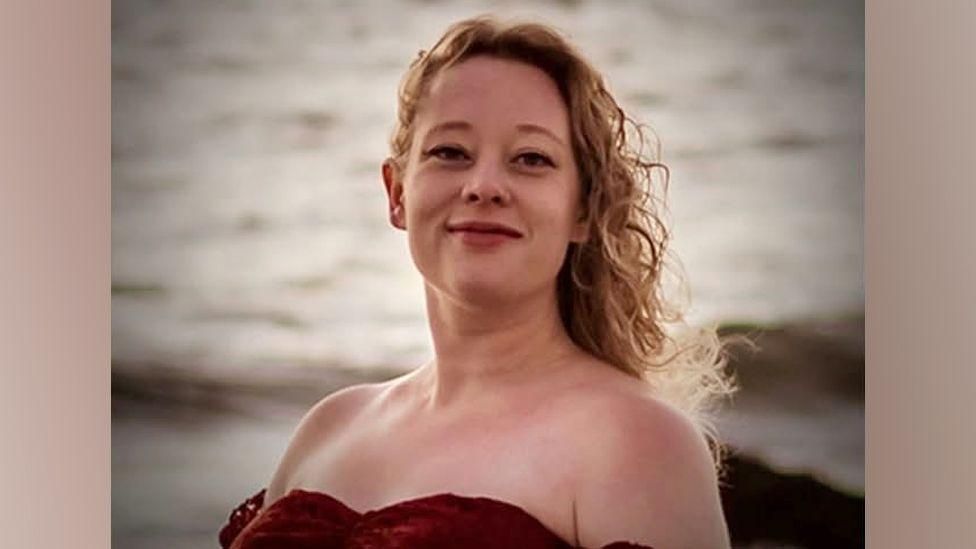
Renee Good's family sued ICE agent Jonathan Ross and six senior Trump administration figures in Minnesota federal court on 1 October, saying that her killing advanced a conspiracy to target Somali and Hispanic Minnesotans.
Ross shot Good, a 37-year-old US citizen, poet and mother of three, in the head as she sat at the wheel of her car on Portland Avenue in south Minneapolis on 7 January 2026. She had dropped her six-year-old son at school that morning. The shooting happened during the federal immigration deployment the Department of Homeland Security named Operation Metro Surge.
The Hennepin County Medical Examiner ruled her death a homicide on 23 January, giving the cause as multiple gunshot wounds and stating that she was "shot by a law enforcement officer." An independent autopsy commissioned by the family found three gunshot wounds and a graze. The fatal round entered the left side of Good's head near the temple and exited on the right. The others struck her left forearm and her right breast.
The conspiracy complaint, Ganger v. Ross, is 149 pages long. It names seven individual defendants and 10 unnamed federal agents. The officials named are Stephen Miller, the White House Deputy Chief of Staff for Policy; former Homeland Security Secretary Kristi Noem; border czar Tom Homan; Todd Lyons, acting director of ICE during the operation; Gregory Bovino, the Border Patrol commander who led it in the field; and Corey Lewandowski, an adviser to Noem. The complaint says Ross's shots were "the predictable and intended product of the operation that put him on Portland Avenue."
Antonio Romanucci, founding partner of Romanucci & Blandin, told reporters at the University of St Thomas School of Law in Minneapolis on 1 October: "The day of accountability has arrived for our own U.S. government and its governmental agencies ICE and CBP." He said the family had sued because the federal government had told it nothing about the shooting: "We have heard nothing, we know nothing, period."
Becca Good, Renee Good's partner, who was standing beside the car when Ross fired, spoke publicly for the first time since 7 January. "She was the love of my life," she said. "The whole world had to watch as our entire universe was destroyed."
Federal officials have claimed that Ross fired to protect his own life and the lives of other officers. The Justice Department had no comment on the lawsuits, Fox 9 reported on 1 October. DHS did not immediately respond to a request for comment from MPR News.
In January, Todd Blanche, then Deputy Attorney General, claimed there was "currently no basis for a criminal civil rights investigation." A spokesperson for the Hennepin County Attorney's Office told Snopes in April that Ross had not been charged and that the county's investigation was continuing. Fox 9 reported on 1 October that state investigators were still examining the case and had made no final charging decision.
"She literally sparkled"
Good was born Renee Nicole Ganger in Colorado Springs. She earned an English degree from Old Dominion University in Virginia in her early thirties, and in 2020 won a prize from the Academy of American Poets for a poem titled "On Learning to Dissect Fetal Pigs."
Kent Wascom, an associate professor who taught her in a fiction workshop at Old Dominion, told MPR News she was pregnant with her son during his class, in the first months of the pandemic. "She was incredibly warm with her peers, generous with their work, and was just a bright and engaging presence that made folks feel good," he said.
Good and Becca Good moved to Minneapolis with her son in 2025. Becca Good said in a statement two days after the killing that the couple held hands for the whole drive while their son drew on the car windows. In Minneapolis, she said, she "had finally found peace and safe harbor. That has been taken from me forever."
Good was a member of the school board at her son's school and had recently applied to work there as a substitute teacher, the complaint says. She was preparing to begin a master's degree in English. She had no criminal history.
Becca Good described her as a Christian who believed "we are here to love each other, care for each other, and keep each other safe and whole." She said: "Renee sparkled. She literally sparkled. I mean, she didn't wear glitter but I swear she had sparkles coming out of her pores." Good's youngest child, she said, "is just six years old and already lost his father."
Donna Ganger, Good's mother, told the Minnesota Star Tribune that her daughter was "extremely compassionate." "She's taken care of people all her life. She was loving, forgiving and affectionate," she said. Good's brothers later told a congressional forum that she was a "beautiful American" and "unapologetically hopeful."
Three shots as the SUV turned
Good and Becca Good were driving home from the school when they came upon ICE agents on Portland Avenue between 33rd and 34th Streets, according to the complaint. Good stopped the couple's Honda Pilot in the street and honked to warn neighbours. Becca Good got out to film. "We stopped to support our neighbors," Becca Good said in January. "We had whistles. They had guns."
Caitlin Callenson, who was walking down Portland Avenue with her partner, told MPR News that an ICE vehicle had become stuck in a snowbank and that neighbours gathered and blew whistles as more agents arrived. "People in our neighborhood have been terrorized by ICE for six weeks," she said.
About 11 vehicles drove around the stopped SUV, the complaint says, including the unmarked Chevrolet Tahoe Ross was driving. It says the Tahoe's licence plate was not registered in Minnesota and that the agents who approached the SUV were masked and wore no names or badge numbers.
Ross got out of the Tahoe with his phone already filming, circled the SUV and passed the open driver's window. The complaint's transcription of his video has Good telling him: "That's fine dude. I'm not mad at you. I'm not mad at any of you." Bystander video shows Becca Good, standing outside the SUV, calling Ross "big boy" and telling him to show his face, NBC News reported.
Two more agents then stopped a pickup truck beside the SUV. Good waved them around, the complaint says, and one of them shouted: "Out of the car. Get out of the fucking car." The complaint says one agent tried to open the driver's door and reached through the window.
Callenson said the agents gave Good opposite orders. "ICE gave her orders to leave, while at the same time, another ICE person said, 'Get out of the car,' and he reached for her door handle. And then there was an ICE agent in front of her vehicle. So it was difficult for her to leave, as she'd been ordered to do," she told MPR News on the day of the shooting. Emily Heller, who lives near the corner, told MPR News she heard agents tell Good to "get out of here."
The complaint says Good then turned her wheels away from Ross and pulled slowly forward while he stood a few feet in front of the car with his phone in his left hand. It says he drew his gun and fired one round through the lower left of the windshield, then two more through the open driver's window as the car kept turning. Video analyses by The New York Times and USA Today show the SUV turning as he fired. A round struck Good in the left temple.
Callenson said Ross "shot once from the front and twice from the side, hitting her maybe three feet away at the max." A neighbour who gave only her first name, Betsy, told MPR News that Good "appeared to me to be trying to move her vehicle south on Portland Avenue to kind of get out of the way." She told NBC News that the agents who fired "were standing next to the vehicle, not at all in front of it." Heller told MPR News that Ross was in front of the car, with "his midriff" on its bumper, when he reached across the hood and fired. The witnesses' accounts of exactly where Ross stood differ; all of them describe Good trying to drive away.
"I just can't be more clear that she posed absolutely no threat at all," Betsy said. "From what I could tell it looked like she was attempting to leave." Lynette Reini-Grandell, another neighbour, told People: "I heard three pops of the gun."
The SUV crashed into a parked car. The complaint says Ross said "fucking bitch" as it went. A male voice on Ross's own video can be heard using the same words moments before the crash, NBC News reported.
Becca Good was a few feet from the rear passenger-side taillight when the shots were fired past her, the complaint says. She has been diagnosed with post-traumatic stress disorder and sues in her own right.
Agents turned away a doctor
Neighbours tried to reach the SUV and were ordered back by federal agents, Betsy and Callenson told MPR News. Betsy said she did not see the agents try to help Good. A neighbour who said he was a doctor asked to give aid and was told to stand back, Callenson said. According to the complaint, the agent answered the physician: "I don't care."
Emergency vehicles could not get past the ICE vehicles, so firefighters and other responders had to walk to Good, Callenson said. She said she watched the agent who fired walk away to the north and get into an ICE vehicle.
Minneapolis Fire Department medics found Good unresponsive in the driver's seat, according to the department's report as released by the medical examiner. They moved her to the sidewalk at the corner of 34th Street and Portland Avenue to get "separation from an escalating scene involving law enforcement and bystanders," began chest compressions and put a tourniquet on her arm. Hennepin County Medical Center paramedics took her to hospital, where staff stopped resuscitation at about 10.30am. A neighbour told People that Becca Good screamed "My wife!" as agents pushed bystanders back.
Federal agents remained at Portland Avenue and 34th Street until 11.20am, The New York Times reported. The complaint says Good's car was removed from the scene before local investigators could process it.
"Domestic terrorism": the federal account
ICE issued a statement before noon. It claimed that officers "conducting targeted operations" had been blocked by "rioters" and that "one of these violent rioters weaponized her vehicle, attempting to run over our law enforcement officers in an attempt to kill them." It described this as "an act of domestic terrorism." It claimed that an officer "fearing for his life" had "fired defensive shots" and that "ICE officers who were hurt are expected to make full recoveries."
Noem claimed to reporters that evening that Good was among a "mob of agitators" harassing agents. "Our officer followed his training, did exactly what he's been taught to do in that situation and took action to defend himself," she claimed. Noem also claimed Good had been "stalking and impeding" ICE agents that day; Good had dropped her son at school that morning and was shot at about 9.30am, Fox 9 reported.
The complaint quotes McLaughlin, DHS assistant secretary for public affairs, claiming Good was a "violent rioter" who "weaponized her vehicle." It quotes President Donald Trump claiming she was a "professional agitator" who "violently, willfully, and viciously ran over the ICE Officer." Bovino claimed Ross "reacted when a 4,000-pound missile came right at him," the complaint says. It quotes Vice President JD Vance claiming Good's death was "a tragedy of her own making."
Brian O'Hara, the Minneapolis police chief, said that day there was "nothing to indicate that this woman was the target of any law enforcement investigation." Mayor Jacob Frey said he had watched the video and called the self-defence account "a garbage narrative." Governor Tim Walz said: "Today, that recklessness cost someone their life."
McLaughlin claimed to NBC News later in January that Good had refused to comply with officers' commands and that the shooting "was entirely preventable." Noem claimed on 7 January that Ross had been treated in hospital and released. DHS claimed to USA Today and Fox News on 14 January that Ross suffered internal bleeding to the torso when the vehicle struck him. The department did not say how serious the injury was.
The New York Times analysed Ross's phone video together with bystander footage. Ross's camera jolts as the SUV moves, and he sounds as if he has been knocked. Another angle shows him leaning towards the vehicle with his gun aimed at Good. A USA Today analysis found that the SUV appeared to be turning away from Ross when he fired.
The complaint says Ross stepped sideways as the car moved and was never at risk of being run over. Romanucci went through three frames from the videos with Fox 9 on 1 October and said Ross was not in the vehicle's path when he fired. Whether the SUV touched Ross, and with what force, remains disputed between the federal account and the family's.
Ross was dragged by a car in June 2025
Ross, 43, is a deportation officer assigned to the special response team of ICE's Enforcement and Removal Operations directorate, according to the complaint. He joined ICE in Minnesota in 2015 after working for the Border Patrol, according to court testimony reported by NBC News.
On 17 June 2025 in Bloomington, Ross tried to arrest a man on an immigration order. Federal prosecutors said the man accelerated with Ross's arm caught in the car and dragged him more than 100 yards. Ross needed 20 stitches in his arm and 13 in his hand, the Minnesota Star Tribune first reported. A jury convicted the man of assaulting Ross. He testified that he did not know Ross was a law enforcement officer.
On 9 April 2026 Judge Jeffrey Bryan, who presided over that case, ordered the Justice Department and DHS to deliver several items to the court by 1 May. The order covered Ross's statements in the hour before he shot Good, his later statements about the investigation, his medical examinations connected to the shooting and his personnel and training files. A magistrate judge would decide what to disclose to the convicted man's defence; the court was not expected to make the material public. Eric Newmark, the defence lawyer, said in May that the government had delivered material under the order on a digital drive.
Six weeks that ended the surge
Thousands of people filled Portland Avenue near 34th Street on the evening of the shooting, the Minnesota Reformer reported. Vigils were held that night in Duluth, Mankato and Rochester. Minneapolis Public Schools cancelled classes for the following two days, citing safety concerns.
The same afternoon, armed Border Patrol agents came onto the grounds of Roosevelt High School in Minneapolis during dismissal, about three miles from Portland Avenue, a school official told MPR News. The official said agents tackled people, handcuffed two staff members and used chemical irritants on bystanders. Bovino was photographed there arguing with protesters.
A GoFundMe for Good's family set out to raise $50,000 and passed $1.5 million before it closed, MPR News reported.
Minnesota and the cities of Minneapolis and St Paul sued DHS on 12 January to stop the operation. On 16 January Judge Katherine Menendez barred federal officers from stopping or detaining drivers without reasonable suspicion that they had assaulted or impeded federal officers, finding "an ongoing, sustained pattern of conduct" of traffic stops of people officers suspected of following them, according to the complaint. The Eighth Circuit Court of Appeals stayed her order on 26 January.
On 23 January tens of thousands of Minnesotans marched through downtown Minneapolis in a windchill of minus 30 degrees Fahrenheit to demand the withdrawal of the federal agents, the Minnesota Reformer reported.
The next day, 24 January, federal agents shot and killed Alex Pretti, a 37-year-old intensive care nurse at the Minneapolis VA hospital, on Nicollet Avenue. DHS claimed Pretti was armed with a handgun and that an agent "fired defensive shots." Video and eyewitness testimony disputed that account, MPR News reported. Federal agents physically blocked Bureau of Criminal Apprehension investigators from the scene, according to the Hennepin County Attorney's Office.
Bovino was removed from his command in Minneapolis after the Pretti killing, and Homan was sent to take over. On 12 February Homan announced that the surge would end. "I have proposed, and President Trump has concurred, that this surge operation conclude," he said, and claimed the operation had "yielded the successful results we came here for." Homan did not mention Good or Pretti by name during the news conference, NPR reported.
Six months after the killing, a garden was growing along the curb where Good was shot, MPR News reported on 7 July. Fabiola Rodriguez, who looks after the memorial, said she had planted perennials so the garden would come back each year. Warren Opfer, who travelled from Washington state to see it, said Good "was not given a chance to fulfill her life."
Six prosecutors resigned on 13 January
BCA and FBI Minneapolis field office leaders agreed on the morning of 7 January to investigate the shooting jointly, according to a timeline the Hennepin County Attorney's Office published on 24 March. The First Assistant US Attorney in Minnesota confirmed the arrangement to the county. Later that day, the timeline says, US Attorney Daniel Rosen ended all collaboration and information sharing.
BCA agents waiting at the Whipple Federal Building to join interviews with the officers involved were told they would not be allowed in, the timeline says. That evening Rosen confirmed to the BCA superintendent that there would be no joint investigation and no evidence sharing. The complaint says state investigators were denied the officers' names, the car, the shell casings and the gun.
Blanche's statement that there was no basis for a criminal civil rights investigation followed. The Justice Department claimed ICE was conducting its own internal investigation. A source not authorised to speak publicly told MPR News that there was no internal ICE investigation of the shooting.
On 13 January six prosecutors in the US Attorney's Office for Minnesota resigned. They included Joe Thompson, who had led the office's pandemic-era fraud prosecutions. The New York Times, citing people with knowledge of the decision, reported that they quit after Justice Department leaders pushed to investigate Becca Good. Thompson declined to comment through a spokesperson.
The Times later reported that Tracee Mergen, an FBI agent in Minneapolis who had opened an inquiry into Ross, resigned after officials pressured her to step away from it. MS Now reported that agents were told by Blanche's office to redraft a warrant so that Good became its subject, for suspected assault on an officer, and that a magistrate judge rejected it. The complaint gives the same account.
Hennepin County sent two formal demands for federal evidence, known as Touhy requests, on 2 February, the county's timeline says. DHS asked for an extension to 3 March. On that date ICE refused in writing to provide any of the evidence, a response the county called legally meritless.
On 24 March the county, the state and the BCA sued the Justice Department, DHS, then Attorney General Pam Bondi and Noem in the US District Court for the District of Columbia, case number 26-cv-01007. Minnesota Attorney General Keith Ellison said: "It is extraordinary that we need to file this lawsuit at all." Moriarty said she was prepared to make charging decisions without the federal evidence.
Becca Good asked a federal judge in April to order the government to return the Honda Pilot, which she and Renee Good had bought together in February 2024. Her lawyer, Kevin Riach, wrote that the family's requests to the FBI, the Justice Department, the US Attorney's Office, DHS and ICE between January and March had gone unanswered. "The federal government cannot at once declare that it will not investigate the shooting death of Renee Good by a federal agent and at the same time withhold key evidence from those seeking the truth," Romanucci said. DHS referred questions to the FBI, which declined to comment.
Rosen wrote to BCA Superintendent Drew Evans on 2 June asking the state to share evidence it had gathered in the Sosa-Celis shooting. The next day he rejected Moriarty's request for federal evidence, writing that it did not comply with Justice Department procedures. Both sides told the court on 30 June that they were discussing mutual information sharing.
On 13 July Moriarty announced that federal agencies had handed over hard drives containing statements and body camera footage, together with Good's 2014 Honda Pilot. State officials had by then gathered more than 1,000 pieces of evidence across the three shootings. She gave no timeline for charging decisions. Romanucci said the transfer was a "meaningful step towards justice and accountability."
Christian Castro, the ICE agent who shot Julio Sosa-Celis in the leg on 14 January, is the only agent charged in the three January shootings, Fox 9 reported on 1 October. Federal prosecutors moved on 12 February to dismiss assault charges against Sosa-Celis after video contradicted Castro's sworn account, and Lyons said the next day that two agents had lied under oath about the incident, according to the county's timeline. Hennepin County charged Castro in May with four counts of second-degree assault and one count of falsely reporting a crime. He has not been convicted.
Seven defendants, one 1871 statute
The conspiracy complaint is brought under 42 U.S.C. sections 1985(3) and 1986, part of the Ku Klux Klan Act of 1871. It also sues Ross for excessive force under the Fourth Amendment, through Bivens v. Six Unknown Named Agents, and sues Ross and the unnamed agents under Minnesota tort law.
Brent Ganger, Good's brother, sues as trustee for her next of kin, a role a Hennepin County judge gave him on 30 January. He represents her three children, her parents and her siblings. Becca Good is the second plaintiff. Both seek compensatory and punitive damages.
A second complaint sues the United States under the Federal Tort Claims Act for wrongful death, battery and other state-law claims. Benjamin Berkman, a lawyer at Romanucci & Blandin, said the first lawsuit seeks accountability for the decisions Ross and other agents made that day and their choice to "violate DHS policy after DHS policy." The family's lawyers say each of Ross's three shots broke DHS policy, which permits force only when "no reasonably effective, safe, and feasible alternative appears to exist," and which restricts firing at moving vehicles.
Sarah Raisch, a partner at the firm, said the process for holding federal agents to account differs from a suit against a local police officer.
The conspiracy complaint describes the operation as "the domestic deployment of a paramilitary force of three to four thousand masked, armed, camouflaged agents." It says DHS sent about 2,100 additional personnel to the Twin Cities from 4 January, and quotes Lyons describing the operation on Newsmax as the agency's "largest immigration operation ever."
The complaint traces the operation's origins to Trump's 21 November 2025 post ending Temporary Protected Status for Somalis and to his 2 December remarks at a televised Cabinet meeting, in which he repeatedly called Somali immigrants "garbage." Homan announced increased immigration enforcement in Minnesota the same day as the Cabinet remarks. The next morning, the complaint says, Trump called Minnesota "a hellhole right now."
A release on whitehouse.gov dated 2 January 2026, five days before the shooting, claimed the administration's Minnesota campaign was "[f]ueled by shocking video from Nick Shirley," a content creator, the complaint says. Shirley is not a defendant. Tikki Brown, Minnesota's commissioner of children, youth and families, said within days that state investigations of the day cares in his video had uncovered no findings of fraud.
Federal arrest data for 1 December 2025 to 10 March 2026, as cited in the complaint, show more than 3,500 arrests. Ecuadorian nationals accounted for 1,026 and Mexican nationals for 885. About 106 of those arrested, fewer than 3 per cent, were Somali, and two were deported to Somalia.
Lewandowski is sued partly as a private person. The complaint says he joined DHS in February 2025 as a special government employee, a status limited by statute to 130 days a year, and had used up that time before the operation began.
Trump's statements are, in the complaint's words, "evidence of the purpose for which Operation Metro Surge was created." The complaint asks the court to attribute that purpose to Ross, saying that he "conducted himself in the manner the operation required."
A judge found race-based stops and denied an injunction
Judge Eric Tostrud of the US District Court for Minnesota wrote in a 111-page order on 9 March, in Hussen v. Noem, that the plaintiffs had made "a clear showing that Defendants have adopted a policy authorizing federal immigration officers to conduct investigatory stops based on ethnicity or race without reasonable suspicion that the individuals were violating immigration laws." He found that agents lacked reasonable suspicion for the stops of 23 people.
Government lawyers claimed that the incidents were a small sample of the thousands of arrests made during the operation and did not show a policy of racial profiling.
Tostrud denied the preliminary injunction the plaintiffs sought. "The drawdown of Operation Metro Surge makes it less likely that irreparable harm will occur absent an injunction," he wrote. The ACLU of Minnesota, which brought the case, has since said it is seeking to dismiss it.
Tostrud's findings concern investigatory stops, and he made them at the injunction stage. They are the strongest independent court finding the conspiracy complaint relies on.
High bars in federal court
Supreme Court precedent limits both the excessive-force claim and the conspiracy claims, according to YAC News analysis of the complaint and the existing case law.
In Egbert v. Boule (2022), the Supreme Court refused to let an excessive-force claim proceed against a Border Patrol agent and said courts should almost never extend Bivens to new contexts. The Good complaint argues that a federal officer's unreasonable seizure is the same context Bivens itself recognised. Romanucci told a congressional forum convened by Senator Richard Blumenthal earlier this year that the route was "an uphill climb."
In Ziglar v. Abbasi (2017), the court granted senior officials qualified immunity on section 1985(3) conspiracy claims. Part of its reasoning was that it was unclear whether officials of a single department could conspire with one another. The Good complaint says the conspirators it names spanned the White House staff, the border czar's office, DHS, ICE, Customs and Border Protection and private actors.
The Federal Tort Claims Act allows battery claims against federal law enforcement officers under 28 U.S.C. section 2680(h). Under the Westfall Act, the United States can move to substitute itself for Ross on state-law claims; the conspiracy complaint pleads those claims under the act's exception for constitutional violations.
Trump announced on 5 March that Senator Markwayne Mullin would replace Noem as Secretary, effective 31 March, and named her a special envoy. ABC News reported in March that Bovino was expected to retire and LA Mag reported that he would reach the mandatory retirement age at the end of that month, though DHS said at the time that he had not filed retirement paperwork. Mullin said in April that Lyons's last day at ICE would be 31 May. Noem, Bovino and Lyons are sued in their individual capacities.
Under Federal Rule of Civil Procedure 12(a)(3), each federal official sued in an individual capacity has 60 days from service to answer the complaint or move to dismiss it.
Ross is back at work
Ross spent three days on administrative leave after the shooting and then returned to administrative and investigative duties in another state, PunchUp, an investigations outlet launched by The Daily Beast, reported in late April, citing DHS officials. NewsNation reported the reassignment on 30 April, citing unnamed sources.
Blanche, who claimed in January that there was no basis for a criminal civil rights investigation, has led the Justice Department as Attorney General since the Senate confirmed him on 8 August. The department had no comment on 1 October on any federal investigation into the Good or Pretti shootings, Fox 9 reported.
DHS officials told PunchUp that ICE's internal affairs office could not begin its own review of the shooting until the FBI investigation ended.