
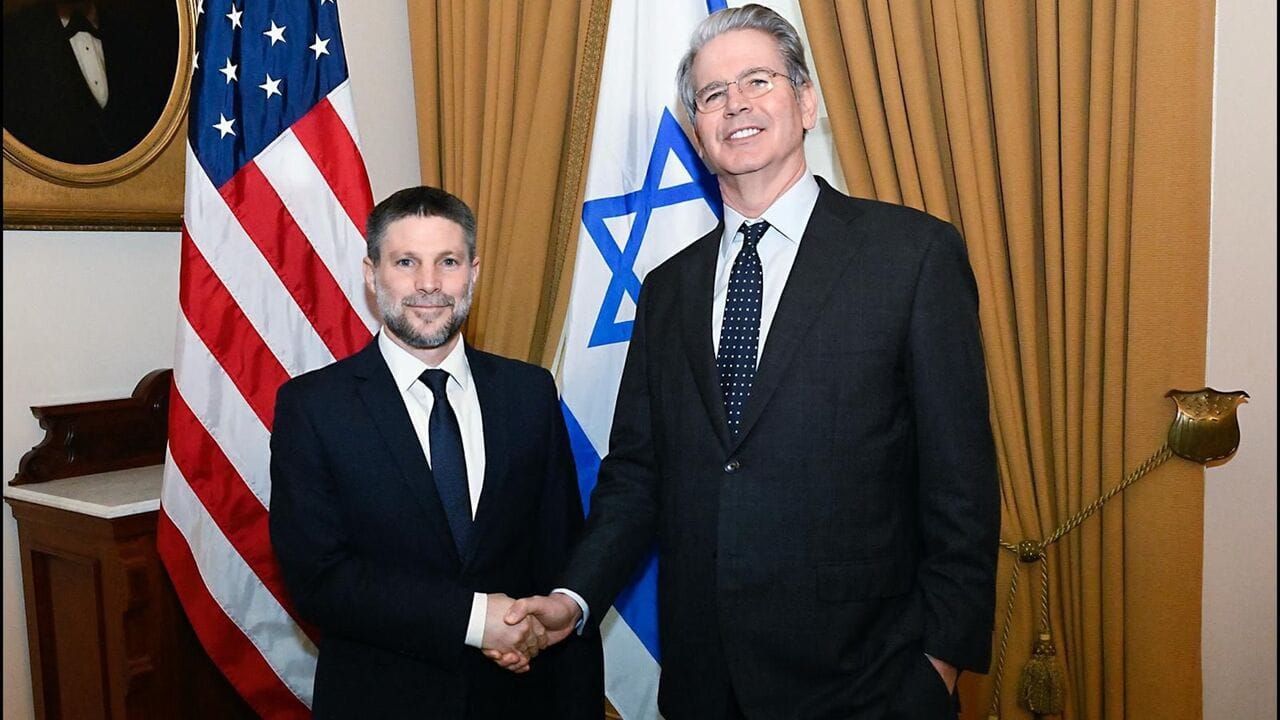
The prosecutor's office of the International Criminal Court filed a secret arrest warrant application against Israeli Finance Minister Bezalel Smotrich on 2 April 2026. The application covers alleged war crimes and crimes against humanity committed against Palestinians in the occupied West Bank. The charges, as reported by Middle East Eye from sources briefed on the matter, include forced displacement as both a crime against humanity and a war crime, the transfer of Israel's civilian population into occupied territory as a war crime, and persecution and apartheid as crimes against humanity.
If the ICC's pre-trial chamber approves the warrant, it will be the first ever issued by an international court specifically for the crime of apartheid. Smotrich would become the third Israeli official subject to an ICC arrest warrant, after warrants were issued for Prime Minister Benjamin Netanyahu and former Defence Minister Yoav Gallant in November 2024.
The application had been ready for approximately a year before it was filed. The ICC prosecutor's office did not deny its existence but noted that under the court's procedures, warrant applications are classified as confidential.
Smotrich announced the warrant himself on 19 May, one day after he was informed of it. He called the ICC "the antisemitic court in The Hague" and described the application as "a declaration of war." Then he signed an eviction order for Khan al-Ahmar.
What Khan al-Ahmar is
Khan al-Ahmar is a Bedouin community of approximately 200 people, half of them children, located on the eastern outskirts of Jerusalem in Area C of the West Bank. The community's families were displaced from their original homes in the Negev by Israel in the 1950s and have lived at the current site since then. It sits squarely within Israel's E1 settlement corridor, a strip of land that, if fully settled, would permanently sever the northern and southern sections of the Palestinian West Bank and eliminate any geographic basis for a contiguous Palestinian state.
The ICC has a specific prior history with this village. In 2018, then-ICC Prosecutor Fatou Bensouda issued a formal warning that the demolition of Khan al-Ahmar "would constitute a war crime" under the Rome Statute. She stated that "extensive destruction of property without military necessity and population transfers in an occupied territory constitute war crimes" and called on Israel to halt the planned eviction. The European Parliament passed a resolution the same year stating that demolition would constitute "a grave breach of international humanitarian law." Israel's Supreme Court approved demolition orders in 2018 but execution was repeatedly postponed under international pressure.
Smotrich was told of the ICC warrant against him on the evening of 18 May. The following morning he held a press conference. "I announce here and now the first target that will be attacked," he said. "Immediately after my remarks, we will sign an order for the evacuation of Khan al-Ahmar." He signed it while speaking. "This is only the beginning," he added.
On 20 May, more than 200 Bedouin residents of Khan al-Ahmar and surrounding communities filed a legal objection to the displacement order, arguing it sought to forcibly transfer them "from the rural open areas east of Jerusalem into a dense urban environment incompatible with their way of life," according to rights organisation Bimkom.
What the charges cover
The four charge categories in the Smotrich application map directly onto his documented public conduct as Finance Minister, a role that in the current Israeli government also carries a parallel portfolio in the Defence Ministry with direct authority over West Bank civilian affairs.
Forced displacement as a crime against humanity and war crime: the UN documented more than 36,000 forcible displacements in the West Bank in the year prior to the warrant application. Smotrich has signed displacement orders for multiple Palestinian communities and has publicly described such actions as justified.
Transfer of Israel's own population as a war crime: under Article 8(2)(b)(viii) of the Rome Statute, the transfer by an occupying power of its civilian population into occupied territory constitutes a war crime. Smotrich has publicly boasted of creating more than 100 new settlements and 160 farming outposts across the West Bank, giving Israel control over 247,000 acres of Palestinian land.
Persecution and apartheid as crimes against humanity: apartheid under the Rome Statute requires systematic oppression and domination by one racial group over another, combined with inhumane acts committed in the context of that regime. Palestinian civil society organisations and international legal scholars have argued for years that the West Bank's two-tier legal system, under which Israeli settlers and Palestinian residents live under entirely different legal regimes in the same territory, satisfies those elements. The ICC prosecutor's application, if the charges as reported are accurate, represents the first time an international criminal institution has formally agreed with that assessment in a warrant application against a named individual.
The broader warrant picture
Israeli media reported over the weekend before MEE's story that the prosecutor had filed five warrant applications for Israeli officials. The ICC's prosecutor's office described those reports as inaccurate. What is confirmed: an evidence review took place the week before MEE's publication to examine the possibility of additional warrant applications, including one for National Security Minister Itamar Ben Gvir. No formal applications had been filed for Ben Gvir or others as of MEE's reporting. Israel separately believes the court may also be seeking warrants for Defence Minister Israel Katz. Ben Gvir said he was "neither afraid nor deterred."
The Smotrich application was filed 2 April and had reportedly been ready for approximately a year before that. The warrant for Netanyahu was issued in November 2024. Since then, multiple countries have allowed Netanyahu to enter their territory without enforcing the warrant, establishing a pattern of non-enforcement that Smotrich and other Israeli officials have been explicit about citing.
The Canary noted as much directly:
"It has been 18 months since the ICC issued warrants for the arrests of Netanyahu and Yoav Gallant. Since then, multiple countries have allowed them to enter without enforcing the warrants, which does not leave much hope for Smotrich's arrest."
What the warrant means in practice
The ICC operates on the principle of complementarity: it acts only when national courts have failed or are unable to act. Israel does not recognise the court's jurisdiction. The US, which withdrew from the Rome Statute under Trump's first term and has not rejoined, has historically shielded Israeli officials from ICC action through diplomatic and legislative pressure. In 2025, the Trump administration imposed sanctions on ICC Prosecutor Karim Khan in response to the Netanyahu warrant.
An approved warrant would require all 124 ICC member states to arrest Smotrich if he enters their territory. It would not prevent him from continuing to serve as Finance Minister of Israel. It would severely restrict his international travel and, more significantly, formalise the legal characterisation of his conduct as apartheid, carrying consequences for international trade arrangements, arms sales, and bilateral agreements that depend on compliance with international law.
The Khan al-Ahmar eviction order Smotrich signed on 19 May is the clearest possible demonstration of what an unenforced warrant produces. The ICC warned in 2018 that demolishing the village would be a war crime. The village was not demolished, but only because international pressure held the line. Smotrich signed the order within hours of confirming the warrant application existed, described it as the first of many, and faces no immediate legal consequence for doing so.