On 16 February 2026, a panel of independent experts appointed by the UN Human Rights Council published a statement that most news organisations buried. After reviewing millions of pages released by the U.S. Department of Justice three weeks earlier, they reached a conclusion no American institution had been willing to state out loud.
What the Epstein files document, they said, is not a sex scandal. In the formal language of international criminal law, it may be a global criminal enterprise whose acts meet the legal threshold of crimes against humanity.
"Crimes against humanity" is a defined category with specific elements and specific state obligations. UN Special Rapporteur on trafficking in persons Siobhán Mullally, and five members of the Working Group on discrimination against women and girls applied it deliberately. Under international criminal law, crimes against humanity occur when acts including rape, sexual slavery, trafficking, torture, murder or persecution are committed as part of a widespread or systematic attack against a civilian population, with knowledge of the attack. They require no armed conflict. They can happen in peacetime. The panel found the patterns in the files may satisfy those conditions.
“So grave is the scale, nature, systematic character, and transnational reach of these atrocities against women and girls, that a number of them may reasonably meet the legal threshold of crimes against humanity,” the UN experts said.
The acts the files document could amount to "sex slavery, reproductive violence, enforced disappearance, torture, inhuman and degrading treatment, and femicide."
The experts
The Special Procedures of the Human Rights Council are the largest body of independent experts in the UN human rights system. There are currently more than 50 of them, each appointed by the council to investigate and report on either a specific country or a specific theme. They work on a voluntary basis. They receive no salary. They are independent from all governments, including the governments of their own countries of origin, and from the UN secretariat itself. Their statements are part of the formal UN record and carry the institutional authority of the council's mandate.
Siobhán Mullally holds the mandate for trafficking in persons, especially women and children. She was appointed by the Human Rights Council in July 2020 following an open competitive selection process. Before this role she was president of the Council of Europe's Group of Experts on Action against Trafficking in Human Beings from 2016 to 2018, the body responsible for monitoring state compliance with the Council of Europe's anti-trafficking convention across 47 countries. She has conducted official country visits on trafficking to Colombia, Central African Republic and others under her current mandate. Her academic chair at the University of Galway specialises in sex equality, migration, refugee protection and human trafficking.
She was joined by the five members of the Working Group on discrimination against women and girls, Claudia Flores, its chair, a human rights lawyer and former Skadden Arps Fellow at the International Women's Human Rights Clinic; Ivana Krstić, vice-chair, professor of international human rights law at the University of Belgrade; Dorothy Estrada Tanck, a Mexican-Spanish academic who previously chaired the Working Group and co-authored the UN finding that Taliban governance of women in Afghanistan constitutes a crime against humanity; Haina Lu; and Laura Nyirinkindi.
The statement went to every UN member state. States have obligations under international law to respond to such findings; most have not. Two months later, on 16 April, the same panel returned, and they found only silence.
"We are deeply concerned that the response of states and law enforcement authorities has been wholly inadequate," the April statement said, "disproportionate to the urgency and gravity of the crimes alleged."
They called again for an independent international investigation. No state moved to establish one as of yet.
What the files show
The files, the experts found, "implicate senior politicians, public figures, diplomats, global business leaders and leading academics." They document evidence of trafficking of girls and young women across multiple international borders, continuing over decades, with devastating failures of prevention, failures to identify, assist and protect victims and survivors, and to investigate and prosecute the perpetrators.
The experts described the Epstein criminal enterprise as a system, with a supply chain, an international network and a protective architecture built on wealth, legal resources and institutional complicity.
"These crimes were committed against a backdrop of supremacist beliefs, racism, corruption, extreme misogyny, and the commodification and dehumanisation of women and girls from different parts of the world," they said.
Redaction failures and victim exposure
The crimes against humanity assessment arrived alongside a parallel finding: the document release itself was a serious institutional failure that reproduced, in miniature, the same logic enabling the original crimes.
Within 48 hours of the 30 January release, lawyers Brittany Henderson and Brad Edwards wrote to the presiding federal judges, Richard Berman and Paul Engelmayer, reporting thousands of redaction failures affecting nearly 100 of the more than 200 survivors they represent. FBI documents had full names of minors left unredacted. One email listing 32 minor victims had only one name redacted. One survivor's name appeared without redaction 20 times in a single document. Other victims had bank account numbers, addresses and social security numbers published.
Attorney General Pam Bondi and Jay Clayton, US Attorney for the Southern District of New York, had committed, days before the release, to protecting victim privacy "to the maximum extent practicable."
Attorneys for survivors wrote in their court filing:"There is no conceivable degree of institutional incompetence sufficient to explain the scale, consistency and persistence of the failures that occurred — particularly where the sole task ordered … was simple: Redact known victim names before publication."
Deputy Attorney General Todd Blanche said, "mistakes were made."
The result was visible in two columns. Victim information, photographs, and financial details were circulated widely before removal, while the names of alleged perpetrators and co-conspirators remained redacted and shielded. The UN experts described what survivors experienced as institutional gaslighting.
A bipartisan letter filed with the GAO in March 2026 by Senators Jeff Merkley, Lisa Murkowski, Ben Ray Luján, and Dick Durbin placed the pattern on legislative record. The DOJ had removed thousands of records, including not only victim-identifying material but also records relating to allegations against President Trump and others, "with no apparent explanation." The Epstein Files Transparency Act expressly bars redactions made on grounds of embarrassment, reputational harm or political sensitivity.
The accountability gap
As of February 2026, nearly seven years after Epstein's death and more than four years after Maxwell's conviction, Ghislaine Maxwell remains the only person convicted of any crime related to the network. She is serving 20 years. She has named no one.
Virginia Giuffre, the survivor whose civil lawsuit produced much of the documented evidence of the network's operation, died on 25 April 2025 in Western Australia. Her family said she "lost her life to suicide, after being a lifelong victim of sexual abuse and sex trafficking."
The April UN statement returned to the accountability failure. States bear a positive obligation under international law, Mullally and her colleagues said, not discretionary and not optional, to prevent trafficking, to identify and protect victims and to prosecute perpetrators.
"The failure to ensure accountability perpetuates a culture of impunity that disproportionately harms women and girls," they said.
What governments have done
The United States has released millions of pages of documents and held congressional hearings. As of May 2026, it has produced no new domestic prosecutions.
The UK arrested Andrew Mountbatten-Windsor on 19 February on suspicion of misconduct in public office, followed by Peter Mandelson, the former UK ambassador to the United States, who had been fired by Prime Minister Starmer in September 2025 over his ties to Epstein, on 23 February. Both were released. No charges have been filed in either case.
No state has referred the matter to an international mechanism. The International Criminal Court has jurisdiction over crimes against humanity but requires either a state referral or the prosecutor's own initiative. Neither has occurred. The UN Human Rights Council has not voted to establish an independent investigation, though the experts have twice called for one.
Where This Stands
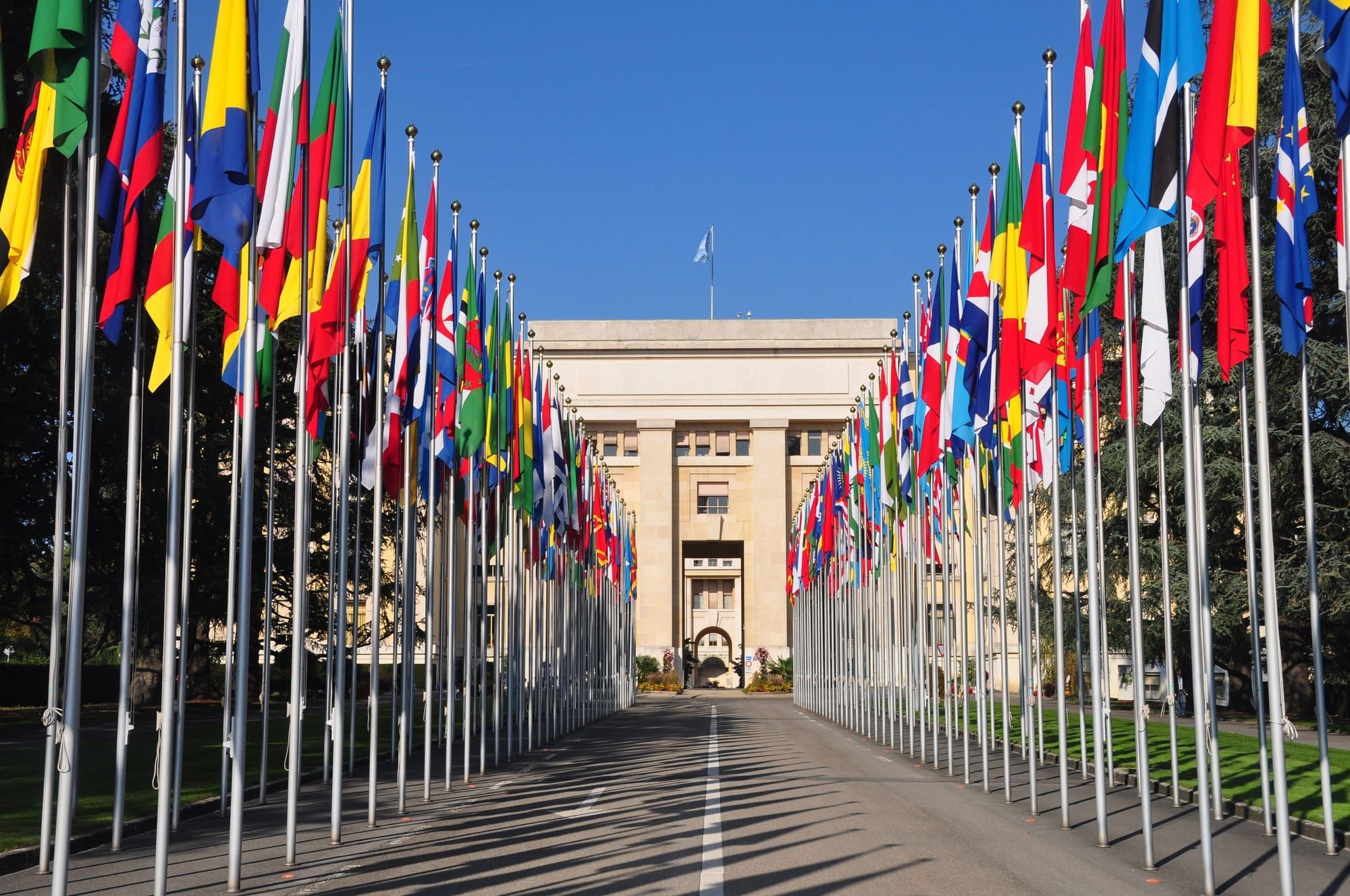
A group of survivors went to Geneva. They testified before a UN body because domestic mechanisms in the United States had been exhausted. Their names had been published without consent. The people they accused had their identities protected.
The panel has looked at what the files contain, applied the relevant legal standard and named it twice. No state with jurisdiction has treated that as an obligation to act.
"No one is too wealthy or too powerful to be above the law," the UN experts said.
Whether any government complies with the findings, as of the date of publication, remains unanswered.