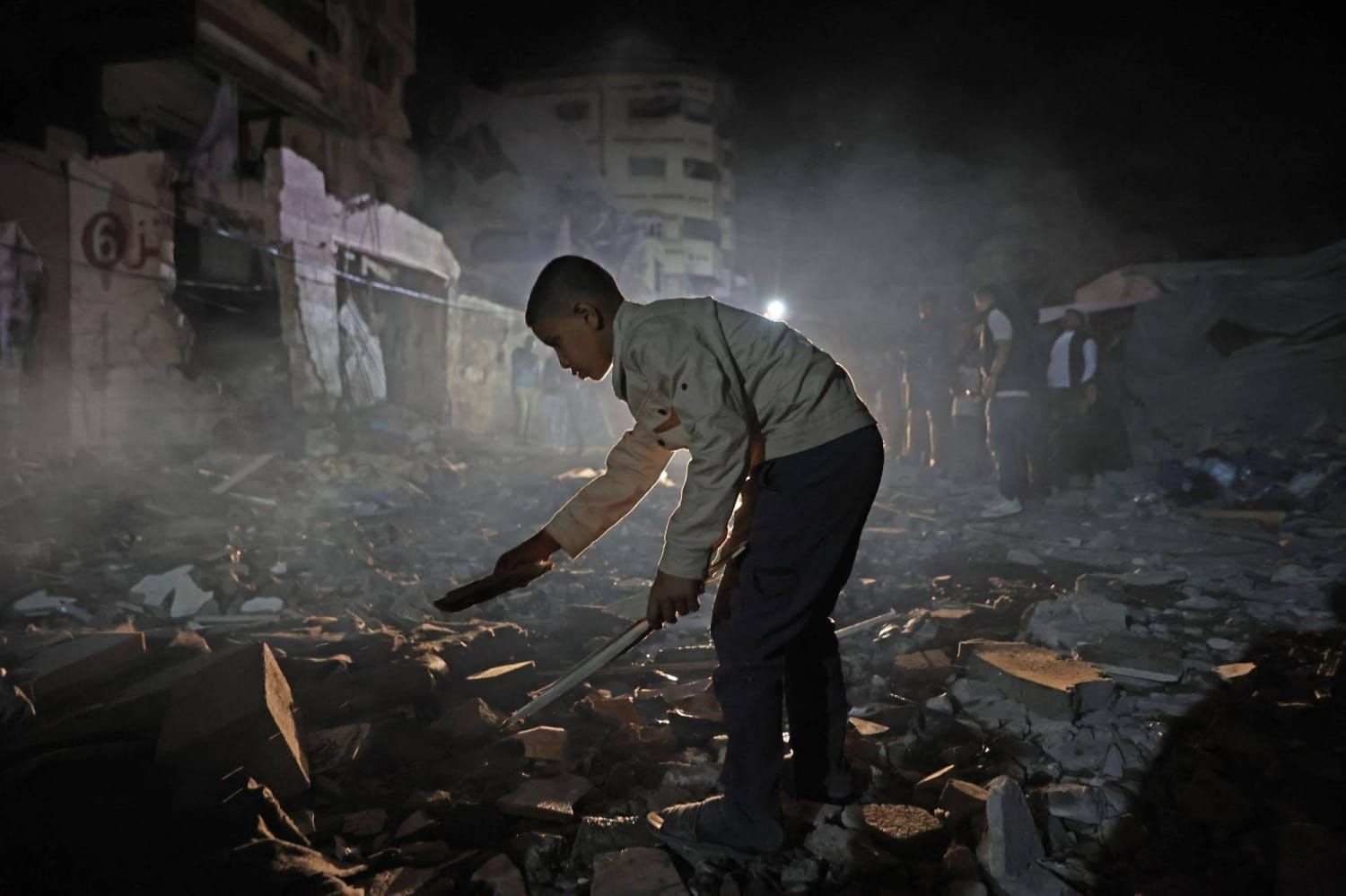
The October 2025 Gaza ceasefire has not held in any meaningful sense. Israel has carried out near-daily strikes throughout the Strip since the deal came into effect, justifying them as targeting "imminent threats" to forces inside Gaza. UNICEF reported in January 2026 that more than 100 children had been killed in Gaza by Israel since the ceasefire began in October, roughly one girl or boy killed every day. By May 2026, at least 229 children had been killed and 260 injured in Gaza since the October ceasefire date, according to UNICEF tracking.
"A ceasefire that slows the bombs is progress," UNICEF spokesperson James Elder said, "but one that still buries children is not enough."
On 15 May, Israeli strikes killed Izz al-Din al-Haddad, the leader of Hamas in the Gaza Strip, in an apartment in the Rimal area of Gaza City. Netanyahu had authorised the strike and described it as part of the IDF's ongoing mission. The assassination undercuts any reading of the ceasefire as a pause in hostilities: Israel targeted and killed the senior Hamas leader in Gaza while the deal was nominally in force.
The total Gaza toll as of early May 2026 stands at approximately 73,770 Palestinians killed, according to the Gaza Health Ministry, with more than 75,000 including Israeli fatalities. Independent academic analyses published in 2025 estimated the MoH undercounted trauma deaths by 41%, suggesting the actual toll is substantially higher. More than 64,000 children have been reported killed or injured since October 2023.
On the legal battlefield, Israel submitted its counter-arguments to South Africa's ICJ genocide case on 12 March 2026, after the court granted two deadline extensions. Israel's submission argues the court lacks jurisdiction and should dismiss the case. South Africa's response has not yet been filed. Oral hearings are expected in 2027. In March 2026, Germany, which had pledged in January 2024 to intervene on Israel's behalf, withdrew from the case, citing the need to prepare for its own ICJ proceedings brought by Nicaragua alleging Germany violated international law by arming Israel.
Germany's foreign ministry spokesperson Josef Hinterseher confirmed: "We are now ourselves part of a contentious case before the ICJ and have therefore decided not to make use of this option."
Germany did not retract its earlier position that the genocide allegations were baseless. Among the countries that filed interventions was the United States, whose submission argued for a restrictive interpretation of genocidal intent , that intent to destroy a group must be "the only reasonable inference" from the evidence, and that civilian harm in urban warfare does not in itself constitute genocide.
In Lebanon, the pattern is parallel. Israeli forces have continued striking Lebanese territory under the ceasefire with Hezbollah. UNICEF's May 14 statement noted that 59 children had been killed or wounded in Lebanon in a single week. In the West Bank, OCHA reported in April 2026 that March was the highest month for settler violence injuries to Palestinians in twenty years. UNICEF documented 70 children killed in the occupied Palestinian territories, excluding Gaza, since early 2025, roughly one per week.
The ICJ has issued multiple binding provisional orders since January 2024, each commanding Israel to enable humanitarian access and prevent genocide. None has been enforced. The court's January 2024 ruling found South Africa's claims "plausible." The provisional measures remain outstanding. A Mladenov letter cited by the Wikipedia source for this briefing suggested the UN Board of Peace did not intend to hold Israel to ceasefire terms if Hamas refused disarmament, effectively making accountability conditional on Hamas compliance, a structural incentive for Israel to create conditions that allow it to claim justification for continued strikes.
The ICJ case is on track for oral hearings in 2027. EU member states and Canada can file declarations of intervention under Article 63 of the ICJ Statute. Netherlands and Iceland did so in March 2026. Each such intervention strengthens the interpretive record the court will work from. Parliamentary motions for EU Magnitsky designations of individuals responsible for civilian targeting are viable and have precedent.