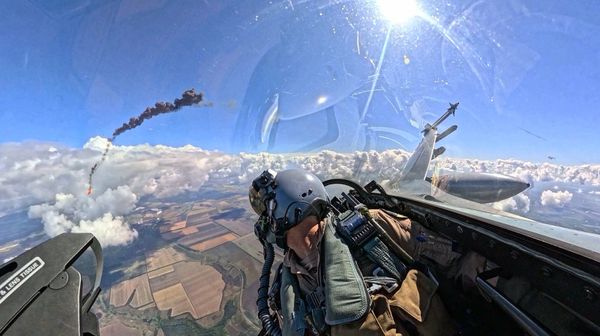
Mykhailo Fedorov, Ukraine's former Minister of Defence and former First Deputy Prime Minister and Minister of Digital Transformation, launched the Army of Robots on 26 September 2026 at the IT Arena technology conference in Lviv. "We're launching the Army of Robots," Fedorov wrote on X. "In 2022, we launched the Army of Drones. Today, drones account for over 95% of battlefield strikes, and Ukraine has more than 700 UAV manufacturers. Now we need the next technological breakthrough: the robotization of warfare." He summed up the aim in one line: "Robots should fight, not people."
A humanoid robot is to strike its first Russian soldier within six months, Fedorov said. Within 12 months, Ukrainian forces are to take a Russian position with robots and drones working together under shared algorithms and no infantry committed to the assault.
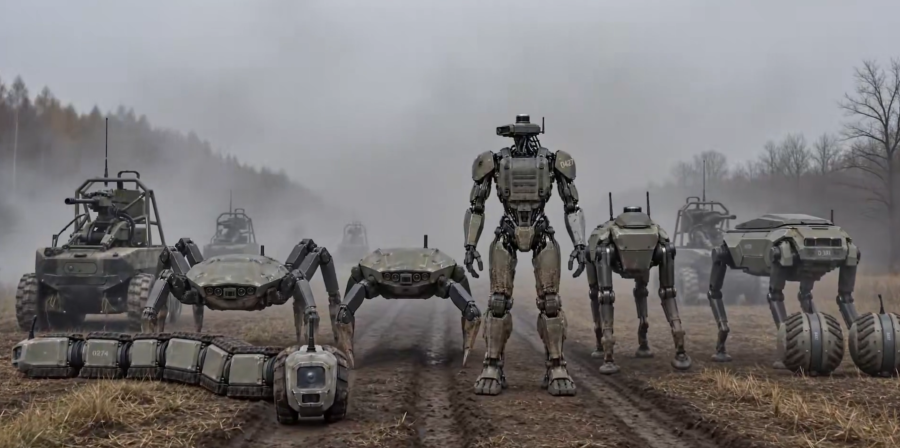
Humanoid machines would begin with simple, repeated front-line jobs: reloading a machine gun, replacing a battery and installing a sensor. Ground and humanoid robots would then take over approaching enemy positions, laying and clearing mines, reconnaissance, logistics and casualty evacuation, the tasks in which Ukrainian infantry now take the heaviest losses.
"We will invest in defense tech companies, launch our own technology projects, create R&D capabilities, test solutions together with the military, and scale up as quickly as possible the things that actually work on the battlefield," Fedorov said in Lviv. He said the effort needs "Western capital, the best engineers in the world and private initiatives," and that Russia "will stop only when we can break its backbone and take away all opportunities to finance the war."
Fedorov's team opened recruitment on the day of the launch for engineers, technical leads, chief technology officers and companies in Ukraine and Western countries. The Army of Robots is organised as a network of private defence technology firms linked to the company Fedorov is founding with backing from Palantir chief executive Alex Karp, with testing carried out alongside Ukrainian military units.
Six years in government
Fedorov entered government in August 2019, aged 28, as Ukraine's youngest minister, heading the new Ministry of Digital Transformation. He held the post for more than six years, a long tenure by Ukrainian standards, and became First Deputy Prime Minister in July 2025.
Diia, the "state in a smartphone" his ministry built, is used by 23 million Ukrainians and is installed on 77 per cent of the country's smartphones. The government credits it with savings of 184 billion hryvnias over five years. Diia City, the special tax regime for technology companies he created, had more than 3,400 member firms that paid nearly $1 billion in taxes in 2025. Mobile 4G coverage reached 97 per cent of the population.
Russia's full-scale invasion in February 2022 turned the digital ministry toward the war. Fedorov secured Starlink terminals for Ukraine in the first days of the invasion. On 2 July 2022 he launched the Army of Drones with the General Staff and the United24 fundraising platform. Its first priority was 200 tactical reconnaissance drones able to fly for up to 24 hours at ranges up to 160 kilometres. By 25 July 2022 the programme had signed contracts worth 260.5 million hryvnias for 78 Matrice multicopters, 20 Warmate loitering munitions and 20 Fly Eye reconnaissance drones. Ukrainians could donate money through United24 or hand over their own drones through the Dronate scheme.
Brave1, the state defence technology cluster Fedorov's ministry founded in 2023, gave start-ups grants, access to military test ranges and a path to procurement. It has paid out 6.2 billion hryvnias, about $139 million, and awarded more than 1,000 grants, the Ministry of Defence said in September 2026. Its standard programme alone has funded 977 projects worth 2.3 billion hryvnias, led by 215 drone projects and 199 ground robot projects. Individual grants range from 500,000 to eight million hryvnias, require no repayment and leave ownership and intellectual property with the developer. According to Brave1, 79 per cent of the manufacturers it funded could not have found comparable money elsewhere. More than 3,600 developments are registered on the platform and about 300 items have received NATO codification.
Ukrainian drone makers increased from seven to more than 500, electronic warfare firms from two to 200, missile makers from none to more than 20 and ground robot producers from none to more than 100, according to government figures published when Fedorov became defence minister.
Defence minister
Parliament appointed Fedorov Minister of Defence on 14 January 2026 by 277 votes, with none against. "I am taking the position of defense minister not as a minister who built a digital state ... but as a person whose team has spent a great deal of time working for the war since 2022," he said.
Fedorov moved purchasing power to front-line units. Under the Army of Drones Bonus programme, units earn e-points for results confirmed by video in the Delta battlefield management system and spend them on the Brave1 Market, a catalogue of Ukrainian-made weapons. Units had ordered 240,000 drones through the market by 29 January 2026, and average delivery took 10 days. "The formula is straightforward: the military eliminates the enemy, the state provides funding, and technologies are rapidly delivered to the front," Fedorov said. By April 2026 the system had delivered more than 181,000 drones, ground robots and electronic warfare systems worth about 14 billion hryvnias. About 95 per cent of drone units took part, and the scheme was extended to air force crews, mobile air defence teams hunting Shahed drones and sniper units.
The ministry planned to contract 25,000 ground robots in the first half of 2026, more than double the total for all of 2025, and had contracted more than 22,000 by late August. "Our goal: 100% of frontline logistics should be performed by robotic systems," Fedorov said in April.
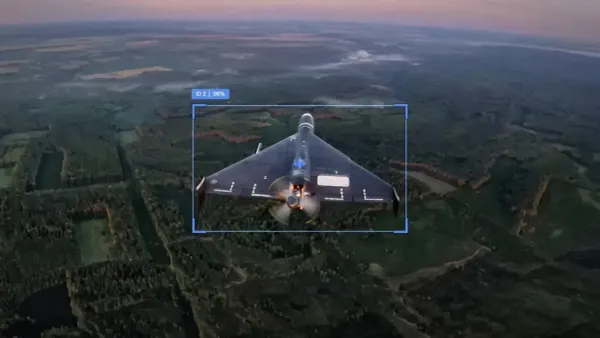
Palantir and the ministry opened the Brave1 Dataroom in January 2026, a secure environment where Ukrainian companies train artificial intelligence on real combat footage. More than 100 companies were using it by 11 June 2026, working first on visual and thermal datasets of aerial targets for automatic detection and interception of Shahed drones. One participant built software that automates 95 per cent of the interception process, the ministry said.
The Ministry of Defence said in June 2026 that 95 per cent of the drones it buys are made in Ukraine. President Volodymyr Zelensky has said that at least four of every five successful Ukrainian strikes on Russian forces are carried out by drones. Between January and August 2026 the ministry codified 650 types of drone for military use, including 238 strike copters, 231 fibre-optic models that cannot be jammed, 42 interceptors, 32 middle-range strike drones and nine deep-strike types. Of 1,526 weapons and equipment models approved in those eight months, 91 per cent were made in Ukraine.
Zelensky dismissed Fedorov on 15 July 2026, citing a conflict between Fedorov and Oleksandr Syrskyi, then commander in chief, over how fast to modernise the army. "I wanted unity very much. The sides did not find it," Zelensky said. Thousands of Ukrainians protested in Kyiv and other cities to demand Fedorov's reinstatement. A deputy air force commander called the dismissal "a great blow to the country's defense capability," and a defence industry executive said of Fedorov: "He totally changed the rules. He's not afraid to take some risk or responsibility." Zelensky replaced Syrskyi six days later with Mykhailo Drapatyi.
Investors and allies
Alex Karp, chief executive of Palantir, agreed on 1 September 2026 to be the first investor in the defence technology company Fedorov is founding. Karp called it "a project of defining importance for the world" that could turn Ukrainian experience of war into products for allied countries. Palantir, valued at about $440 billion, has worked with Fedorov's teams for about five years, and Karp visited Kyiv soon after the 2022 invasion.
Fedorov named battlefield robotics, low-cost missiles guided by artificial intelligence and jet-powered interceptor drones as the company's priorities, alongside an investment fund for Ukrainian defence technology. He met investors and venture funds in Washington before the announcement. "The more international investment and expertise we attract to Ukraine's defense-tech sector, the faster we will be able to develop and scale technologies that give Ukraine an advantage on the battlefield," Fedorov said. "During the full-scale war, our team gained unique experience working with defense technologies in Ukraine and seeing firsthand how technology is transforming modern warfare."
Guido Crosetto, Italy's defence minister, appointed Fedorov on 28 August 2026 as his adviser on military innovation, uncrewed systems and air defence. Fedorov serves without pay and remains in Kyiv. Crosetto chose him to bring into Italian defence the Ukrainian method of short cycles, in which a problem reported from the front is answered with a new product, tested in combat and revised.
Robots on the front line
Ukrainian ground robots carried out 25,143 logistics and evacuation missions in August 2026, more than three times the 7,511 recorded in January, according to Ministry of Defence data from the Delta system. The monthly count rose without a break: 7,960 in February, 9,072 in March, 11,028 in April, 14,059 in May, 16,664 in June and 19,940 in July. About 112,000 missions were completed in the first eight months of the year. The number of units using ground robots rose from 117 in 2025 to 230 in 2026. "Every UGV mission can potentially help protect the lives and health of service members," the ministry said.
Ground robot missions in early 2026 divided into about 47 per cent logistics and evacuation, about 25 per cent engineering work such as mine laying and clearance and the remainder combat. Robots now deliver ammunition, food and water to positions that supply vehicles cannot reach under drone surveillance, and bring out wounded and fallen soldiers.
Named Ukrainian systems include:
- Termit, a tracked carrier for about 200 kilograms of cargo and the most widely used logistics robot
- Bizon-L, a logistics robot with a 300-kilogram payload and 50-kilometre range, which received NATO cataloguing in April 2026
- Gnom L2 by Temerland, a hybrid wheel-and-track carrier for loads up to 210 kilograms over broken ground
- VORON by Smart Birds, fitted with up to eight Pavuk net launchers to catch attacking drones
- Droid TW 12.7, a heavy machine gun platform used by the 3rd Separate Assault Brigade, which disabled a Russian MT-LB armoured vehicle in December 2025
- MAUL, an armoured evacuation capsule built by the 1st Separate Medical Battalion, which reached a wounded soldier after six failed attempts by other means, covered 64 kilometres on one mission and is due to be produced in Sweden
- Sirko-S1 for reconnaissance and evacuation
- Plyushch, which holds a reconnaissance and signal relay post for four days
- Ratel H, a launch platform for fibre-optic drones
- Dwarf Miner, a mine-laying platform
Remote weapon stations with stabilised machine guns and thermal sights have been in Ukrainian service since 2024, controlled by operators on tablets from protected positions hundreds of metres away.
Russian soldiers in a fortified shelter in Kharkiv region surrendered to Ukrainian ground robots in summer 2025 after a robot breached the entrance. In April 2026 Ukrainian forces captured a Russian position using drones and ground robots alone. Russia has fielded 32 ground robot models, at least 20 with a combat record, but uses them far less: documented losses by April 2026 were about 71 Russian machines against 207 Ukrainian ones. Russian operators lost Starlink access in February 2026 and fell back on short-range radio, which forces them to stay close to the machine.
Brave1 chief executive Andriy Hrytseniuk announced a grant competition for humanoid robots for the Defence Forces on 2 July 2026, making humanoids a separate funding category. Brave1 describes Ukraine as the first state to fund combat humanoid robots. The same round opened grants for infantry exoskeletons, munitions to break into reinforced Russian dugouts, evacuation drones, laser air defence and systems against Russian glide bombs. Two Phantom MK-1 humanoids from the US company Foundation, each about 1.75 metres tall and 80 kilograms, were trialled in Ukraine from February 2026 on supply tasks, and Ukrainian testing found them of limited use in their current form. Humanoids can move through trenches, stairwells and buildings designed for human bodies, where wheeled and tracked robots cannot go.
Artificial intelligence and air defence
More than 70 systems using artificial intelligence and computer vision now strike targets for Ukrainian forces, the Ministry of Defence said, and the ministry wants computer vision on every front-line drone. The software guides drones without satellite navigation by matching terrain to stored maps, identifies equipment and people in video and carries a drone to its target after Russian jamming cuts the control link. "A human operator retains the final decision on target selection and engagement," the ministry said.
More than 200 Ukrainian companies build drones with artificial intelligence, and the Brave1 Market lists 46 such products. Avengers Labs, built on five million annotated frames of battlefield video, detects about 70 per cent of enemy equipment appearing in video streams. The Defence AI Centre A1, launched in March 2026, coordinates the use of artificial intelligence across the armed forces.
Ukrainian companies produce more than 2,000 interceptor drones a day, Hrytseniuk said, from more than 150 manufacturers including Wild Hornets, maker of the Sting. An interceptor costs about $1,000, against more than $5 million for a Patriot missile. Ukrainian air defence hit 97 per cent of incoming drones during Russia's large Shahed attack in May 2026, Hrytseniuk said.
Cyber Forces
InformNapalm, the Ukrainian volunteer intelligence community, answered Fedorov's announcement by asking whether Ukraine should also speed up the creation of its Cyber Forces. Draft law 12349 on the Cyber Forces of the Armed Forces of Ukraine was registered on 19 December 2024 by Oleksandr Fediyenko and 29 co-sponsors. It passed first reading on 9 October 2025 with 255 votes. The national security committee recommended it for second reading on 15 December 2025 and again on 25 February 2026. Parliament lists it as awaiting second reading.
Bill 12349 would create the Cyber Forces as a separate branch of the armed forces under the commander in chief. Its tasks would be to gain and hold superiority over the enemy in cyberspace, weaken enemy capabilities through operations in the electromagnetic spectrum and protect military information systems. The branch would include command bodies, combat units, training and research institutions, specialist laboratories and test ranges for malware analysis. The General Staff describes cyberspace as a separate dimension of war alongside land, sea, air and space.
An operation that prevents armed aggression at strategic level would earn a cash reward of 400 subsistence minimums, about 1.33 million hryvnias. Operations against enemy targets would earn 100 minimums, about 332,800 hryvnias, and tactical operations 25 minimums, about 83,200 hryvnias. Base pay would be 1.8 times standard military rates.
A cyber reserve would admit Ukrainian citizens, foreigners and stateless people with the right skills, including men exempt from mobilisation. Reservists would receive military status and combatant protection when they sign a contract and could serve remotely from anywhere when technically possible. A Cyber Forces command already operates under an acting commander. "Without involving civilian specialists, highly professional mastery of the cyber domain is impossible," said Valerii Churkin, cyber security coordinator at the National Security and Defence Council.
Ukrainian cyber units caused about $220 million in direct damage to Russia in 2025 and more than $1.5 billion in indirect losses, according to the General Staff. Ukraine's military intelligence agency, the HUR, said it broke into the systems of Tupolev, maker of Russia's strategic bombers, in June 2025 and took 4.4 gigabytes of internal files. In December 2025 the HUR and the hacker group BO Team said they wiped more than 700 computers and servers and destroyed 165 terabytes of data at Eltrans+, a Russian customs broker handling sanctioned electronics for Russia's arms industry.
Voltage, founder of the volunteer hacking group Team OneFist, replied to InformNapalm that robotics and artificial intelligence work for Ukraine was "already happening," that a major news organisation would soon report on it and that "the Centaur is one path." He did not say which Centaur he meant, and his claims could not be independently verified.
International law
Ukraine and Russia are both party to Additional Protocol I to the Geneva Conventions. Any weapon either side uses, robotic or crewed, must meet its rules on distinction between combatants and civilians, proportionality and precautions in attack. Article 36 requires each state to review new weapons for compliance before adopting them. A remote-controlled robot is governed by the same rules as a crewed vehicle or a drone, and its operator carries the same legal responsibility.
No treaty bans autonomous weapons. States negotiating under the Convention on Certain Conventional Weapons are due to bring a draft text to the convention's review conference in November 2026 that would require human control and judgement over weapons that select targets, the ability to switch them off and limits on where, when and against what they are used. The UN General Assembly's First Committee backed resolutions on autonomous weapons by 161 votes to three on 5 November 2024 and by 156 to five on 6 November 2025. Ukraine's Ministry of Defence says a human operator makes the final decision on every strike by its artificial intelligence systems.
Article 41 of Additional Protocol I protects soldiers who surrender or are otherwise out of combat. The Russian soldiers who surrendered to a Ukrainian robot in Kharkiv region in 2025 came under that protection.
Civilian hackers who attack an enemy lose protection from attack while they take part in hostilities, and the International Committee of the Red Cross set out eight rules for them in October 2023, including bans on attacking civilian objects, hospitals and infrastructure civilians need to survive. Bill 12349 would give cyber reservists military status and combatant protection. Article 47 of Additional Protocol I excludes members of a party's armed forces from the definition of a mercenary, which covers the foreign specialists the bill would admit.
How to join
Fedorov said the aim of the Army of Robots is to save lives. "Robots should take on the most dangerous missions: evacuating the wounded, delivering ammunition, mining and demining, reconnaissance, defending positions and engaging targets," he wrote.
Fedorov describes the Army of Robots as an ecosystem of companies. It will invest in defence technology firms, start its own technology projects, test them with the military and scale the ones that work on the battlefield.
The Army of Robots is recruiting defence technology companies and engineers working on robotic technologies, and a chief technology officer or technical lead for the project. Engineers, companies and investors can apply through a form at https://thearmyofrobots.com/en, which asks for a CV or portfolio, a description of previous work and the type of involvement sought, from individual contributor to corporate partner. Investors can choose to co-invest, join a syndicate or form a strategic partnership. The contact address is hello@thearmyofrobots.com.