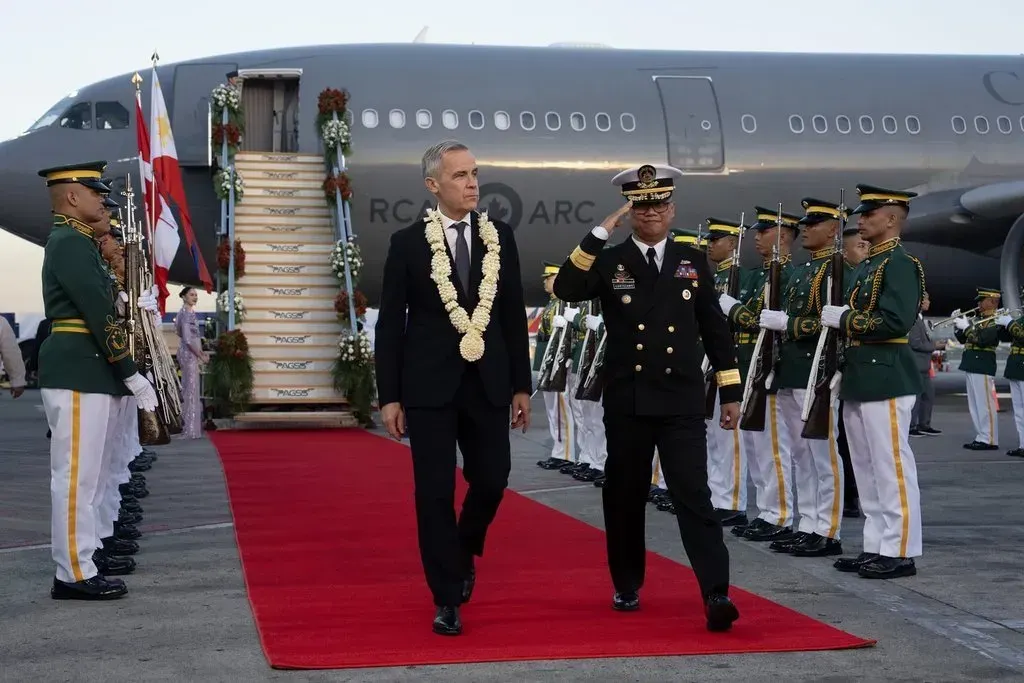
Prime Minister Mark Carney announced in Manila on 14 November that Canada had substantially concluded free trade talks with the 11-member Association of Southeast Asian Nations and finished negotiating a separate deal with the Philippines.
ASEAN was Canada's fifth-largest merchandise trading partner in 2025, with two-way trade of C$52.5 billion, up 22.7 per cent on 2024, according to the Prime Minister's Office. The government projects that the ASEAN-Canada Free Trade Agreement will add nearly C$2 billion to Canada's GDP and close to 14,000 jobs, mostly in agriculture and manufacturing, once in force. Both agreements are due to be signed in 2027. Carney has set a target of doubling Canada's exports to countries other than the U.S. by 2035.
Philippine Executive Secretary Ralph Recto announced the ASEAN deal the same day at the ASEAN Business and Investment Summit. "We have concluded the negotiations for the ASEAN-Canada free trade agreement," Recto said, and the agreement makes Canada the bloc's first free trade partner in North America. Negotiations began in 2021.
Carney attended the 49th ASEAN Summit, held from 15 to 17 November, as a guest of the chair, Philippine President Ferdinand Marcos Jr. "In a more dangerous and divided world, a dense web of connections holds strong," Carney said in the government's announcement. He was joined by Trade Minister Maninder Sidhu and Rechie Valdez, secretary of state for small business and tourism.
Talks with the U.S. on a separate trade deal, which collapsed in August, have made progress, Carney said in Manila on 14 November. "There is the possibility of a deal, a bilateral deal. But we're not yet there," he told reporters.
The Philippine agreement
Carney and Marcos signed a document formally ending the bilateral negotiations at their meeting on 14 November. Marcos said the two countries had "moved on from just the diplomatic relations to strategic partnership" since his visit to Vancouver in July. Talks on a deal date back to 2015, and the two leaders announced at the 2025 ASEAN summit in Kuala Lumpur that they would relaunch them. During public consultations, Canadian corporations broadly backed the deal while civil society groups raised the Philippines' record on the environment, labour and human rights.
Two-way merchandise trade with the Philippines reached C$3.4 billion in 2025, up 7.4 per cent, and Canadian direct investment there stood at about C$1.7 billion, up 44 per cent, the Prime Minister's Office said. Canada sells mineral ores, meat, cereals, fertilisers and aircraft to the Philippines and buys cooking oils, leather and rubber goods. The government projects that the agreement could triple Canadian exports to the Philippines by 2035, with forest products and agriculture gaining most. Carney told reporters the deal was about six months from signature.
A 60-day global safeguards investigation by the Philippine government could restrict pork imports from many countries, Canada among them. "Canada is not the culprit," Sidhu told reporters in Manila, adding that the investigation's findings would show it. Canada exported about C$279 million in pork products to the Philippines in 2024.
Where the ASEAN deal adds access
Four ASEAN members, Brunei, Malaysia, Singapore and Vietnam, already trade with Canada tariff-free under the Comprehensive and Progressive Agreement for Trans-Pacific Partnership, known as the CPTPP. Canada signed a bilateral agreement with Indonesia in September 2025. ASEAN accounts for roughly 3 per cent of Canada's total merchandise trade, Alan Bron of Université Laval wrote in July. Bron argued that the bloc-wide agreement's main commercial value lies in common rules of origin, which let a company count inputs sourced anywhere in the region towards duty-free treatment. Separate bilateral deals would have to settle those rules country by country.
Sidhu said in Manila that a bilateral deal allows more detail and can be upgraded later, while an agreement with 11 partners reaches the smaller economies Canada has yet to cover. ASEAN's own modelling estimated that an agreement combining tariff cuts, lower non-tariff barriers and faster customs procedures could raise the bloc's GDP by US$39.4 billion.
Each member must ratify the agreement before it takes effect. Canada will give C$5 million to help all ASEAN economies through ratification, on top of C$25 million in technical assistance Carney announced in Kuala Lumpur in 2025.
Satellites, cyber talks and drones
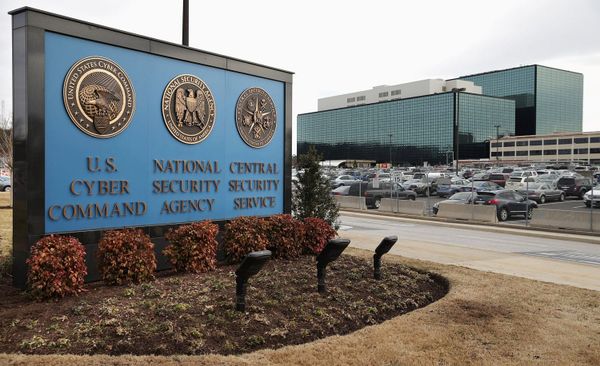
Canada and the Philippines agreed on closer cooperation between their armed forces, a new cyber security dialogue and steps towards agreements on customs cooperation and the protection of sensitive information. Canada extended its Dark Vessel Detection programme in the Philippines to 2033. The programme, built with MDA Space, uses satellites to track vessels that switch off their location transmitters and supports Philippine enforcement against illegal, unreported and unregulated fishing. The two governments are also implementing a Status of Visiting Forces Agreement signed in Manila in November 2025 and a logistics support arrangement signed in July 2026.
Canada committed C$26 million to the Philippines for nuclear security and safety, climate-resilient agriculture, food security and infrastructure, including the G7-backed Luzon Economic Corridor. Carney also announced more than C$15.9 million in new ASEAN-related funding for public safety, ocean protection, nuclear security and clean energy, a figure that includes the C$5 million for ratification. Canadian companies signed three memorandums of understanding with Philippine partners, among them a drone technology agreement between Draganfly Inc. and the Razon Group covering ports, critical infrastructure and disaster response.
Lula, Sheinbaum and Xi
Carney met Brazilian President Luiz Inácio Lula da Silva on the summit's sidelines on 15 November and announced up to C$560 million over four years for the Tropical Forest Forever Facility, which Brazil and Norway co-lead. The facility pools public and private capital and pays tropical forest countries for conservation out of its investment returns, with at least 20 per cent reserved for Indigenous Peoples and local communities. Lula, speaking through an interpreter, said the contributions were meant to earn a return and were not "donations, money for free".
Brazil is Canada's largest trading partner in South America, with two-way merchandise trade of C$14.7 billion in 2025, according to the readout of the meeting. The two leaders discussed trade in critical minerals and energy and closer military ties under the Canada-Brazil Defence Cooperation Agreement. The two leaders agreed to exchange visits in 2027 with business delegations, starting with a Carney trip to Brazil in the first quarter. Canada is also negotiating a trade agreement with Mercosur, the South American customs union that includes Brazil.
Carney left Manila for Phnom Penh on 15 November, two days before Trump arrived. The Prime Minister's Office said before the trip that no meeting with U.S. President Donald Trump was scheduled. Trump reached Manila on 17 November almost an hour after the closing ceremony, and ASEAN leaders stayed for an informal ASEAN-U.S. special summit.
In Cambodia, Carney attended the Francophonie summit and told a session on French in technology that French-speaking countries should partner with Canada on artificial intelligence. His itinerary for 16 November scheduled meetings with Cambodian Prime Minister Hun Manet, whose government must ratify the ASEAN agreement, and Beninese President Romuald Wadagni.
Chinese President Xi Jinping agreed with Carney in Shenzhen on 17 November to suspend tariffs on about C$400 million a year of Canadian frozen pork and seafood. The suspension runs from 1 January 2027 to 31 December 2028, according to the Prime Minister's Office. Canada in return will extend by two years its remission of tariffs on some Chinese steel and aluminium products and add 32 tariff lines to it. Xi told Carney the two sides should "seize the momentum to enhance political mutual trust".
Carney met Mexican President Claudia Sheinbaum in Shenzhen the same day, and the two reaffirmed their commitment to renewing the Canada-United States-Mexico Agreement. Merchandise trade between Canada and Mexico rose 19 per cent in the first nine months of 2026 on the same period of 2025, the readout says. Mexican companies have put nearly C$1 billion into Canadian mining and food production, and Canadian companies more than C$3.7 billion into Mexican manufacturing, renewable energy and mining.
Sheinbaum and Carney agreed to look at further cooperation on critical minerals, defence and partnerships in the Asia-Pacific, a year after launching a strategic partnership under which more than 130 initiatives have started. Sheinbaum said in Spanish that what mattered most to her was the "extraordinary relationship" between the two countries. Both governments are in stalled negotiations with the U.S. over the agreement's future.
Three EU states join the amity treaty
Cyprus, Slovakia and Slovenia acceded to the Treaty of Amity and Cooperation in Southeast Asia at a ceremony in Manila on 14 November, the ASEAN Secretariat said, bringing the treaty's parties to 65. The Philippine foreign ministry describes the treaty as the bloc's core peace and security agreement. Slovak Foreign Minister Juraj Blanár said in Manila on 12 November that Slovakia intends to be "more and more visible in this region".
The EU itself was absent from the list of 19 confirmed leaders the Philippine foreign ministry released before the summit. The ministry's schedule named Australia, China, India, Japan, New Zealand, South Korea, Russia, the United Nations and the U.S. as co-chairs of the related summits. A year earlier, European Council President António Costa attended the 47th summit in Kuala Lumpur as a guest of the chair, the first EU participation in an ASEAN leaders' summit.
EU High Representative Kaja Kallas told ASEAN foreign ministers in Manila on 22 July that the two sides should turn their plans into specific results in time for the November summit, according to her published remarks. She set 2027 as the target for raising EU-ASEAN relations to a Comprehensive Strategic Partnership, with Singapore to host a commemorative summit marking 50 years of relations.
The EU-Philippines deal
Von der Leyen and Marcos spoke by phone on 22 September, the day the EU and the Philippines reached substantial agreement on their own trade deal. The talks opened in 2016, stalled in 2017 and resumed in March 2024. EU-Philippine trade exceeds €17 billion a year.
Von der Leyen said she would travel to the Philippines in 2027 to sign the agreement. Kallas and Philippine Foreign Secretary Theresa Lazaro signed a joint statement on 24 July raising relations to an Enhanced Partnership. The Council of the EU adopted its first assistance measure for the Philippines under the European Peace Facility the same month, €15 million to improve the Philippine Navy's monitoring of its maritime zones.
Costa told the Kuala Lumpur summit in October 2025 that the EU is ASEAN's third-largest trading partner and its third-largest investor, according to the text of his speech. He said that talks with Thailand and Malaysia were progressing, and the EU already has trade agreements with Singapore and Vietnam. ASEAN Deputy Secretary-General Satvinder Singh told a business summit in Manila in September that European companies still expect a region-to-region agreement between ASEAN and the EU.
Carney and the presidents of the European Council and Commission launched a Canada-EU Alliance for the Future in Montréal on 30 October, a joint statement shows. At the World Economic Forum in Davos in January, Carney backed building a bridge between the CPTPP, which includes four ASEAN members, and the EU, Bron wrote.
Myanmar and the South China Sea
ASEAN leaders agreed on 15 November that they may gradually restore Myanmar's full representation at top-level meetings if its military-backed government makes progress on the bloc's five-point peace plan. Lazaro said ASEAN and China had provisionally agreed about 80 per cent of a South China Sea code of conduct, leaving the Philippines short of its goal of finishing the code during its year as chair. Three of four main issues remain open, including whether the code will be legally binding. Leaders adopted or noted about 100 outcome documents and received the signed ASEAN Digital Economy Framework Agreement.
Marcos handed the chairmanship to Singaporean Prime Minister Lawrence Wong at the closing ceremony on 17 November. Singapore will chair the bloc through 2027, the year set for signing both Canadian agreements and for the EU-ASEAN commemorative summit.